Questo vino
Vineyard and terroir
Anchoram is made from a single organically cultivated Bellone plot at Via Fontana Parata in Lanuvio. The vineyard lies at 130 metres above sea level on sandy-clay loam of volcanic origin. Planting density is 4,300 vines per hectare and yields are 90–100 q/ha. Grapes are harvested by hand, with bunches selected in the vineyard.
Grapes
100% Bellone.
Vinification
Gentle pressing is followed by cold static settling to clarify the must naturally. Fermentation with selected varietal yeasts takes place at a controlled 18°C for 12 days. The base wine is then transformed into sparkling wine by the Charmat method.
Technical data
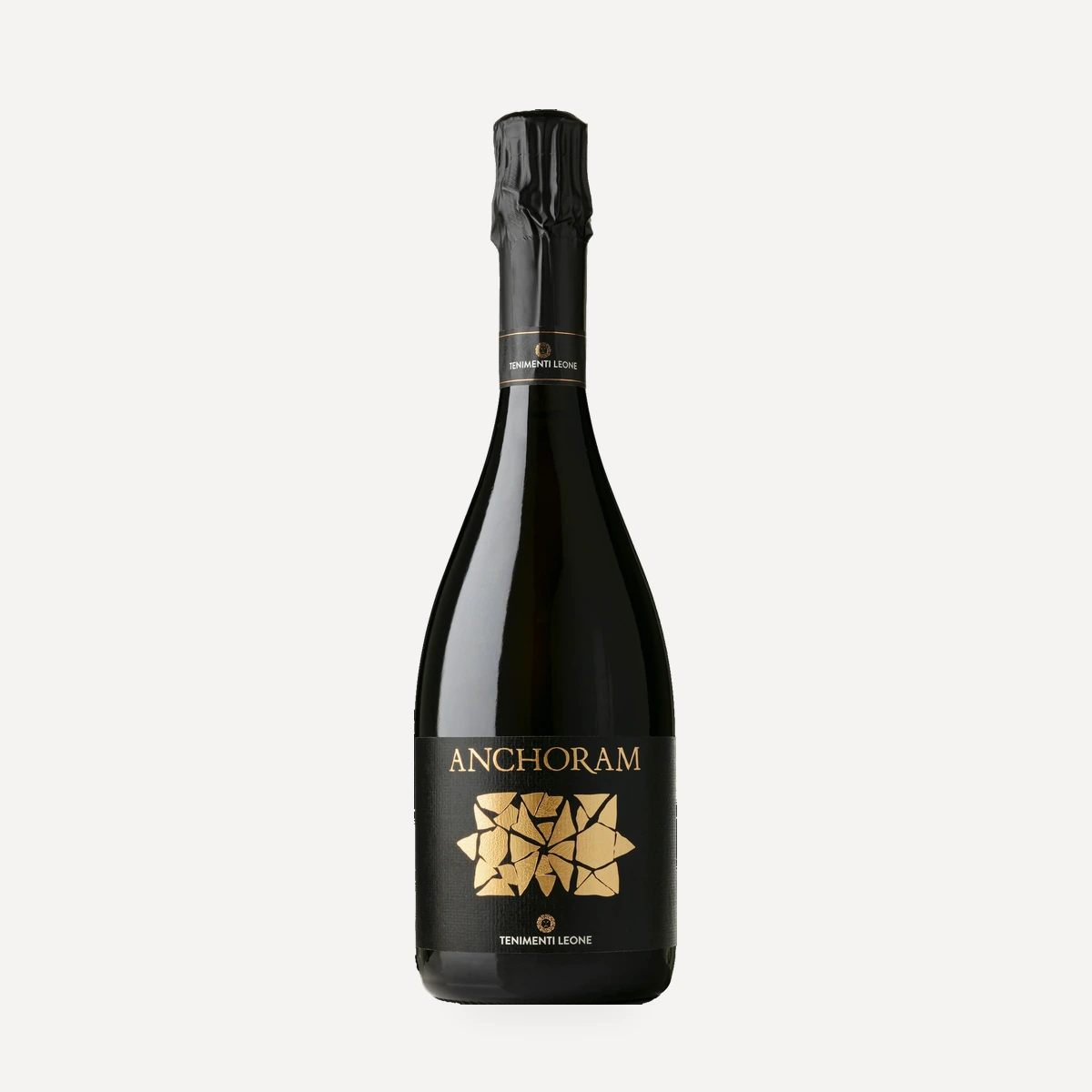
Vino Spumante Brut. Alcohol: 12.5% vol. The vineyard is farmed organically.
Tasting profile
Bright straw yellow with greenish reflections and a fine, persistent perlage. The intense, refined nose brings together white flowers, pear, citron and grapefruit with mineral, smoky and flinty nuances and a light saline accent. Fresh and vibrant on entry, the palate is savoury, taut and vertical. Bellone provides structure, while the finish is citrus-led and mineral.
Serving and pairing
Serve at 5°C. Pair with raw seafood, oysters, fish carpaccio, light fried dishes, fresh cheeses or plant-based Mediterranean cooking.
Label / history
The name draws on the vocabulary of ancient navigation and the anchor as a gesture of stillness and suspension. The phrase Ad ancoram stare, in ancoris stat evokes remaining balanced upon the water while ready to depart again. Its mosaic recalls the precious decorative surfaces of great Roman ships, while Anchoram itself is conceived as a tribute to an inward voyage already oriented toward the next wind.