Storia
Historical origins of Cascina Nuova
Cascina Nuova stands on the historic Gallina hill in Neive. Its six hectares of vineyards once formed part of the extensive viticultural holdings of the Conti Riccardi Candiani, lords of Neive. The property subsequently passed to the Marcarino family.
Early 1980s: the first releases
Ugo Lequio began signing and releasing his own bottles in the early 1980s. He personally selected the fruit from Cascina Nuova, establishing rigorous grape selection as a central element of his work.
Development of the estate’s approach
Experience accumulated over subsequent years was accompanied by research and experimentation in both vineyard and cellar. This work placed quality ahead of volume and shaped an approach intended to balance inherited practice with innovation.
Extended maturation also became fundamental to Ugo Lequio’s production. Rather than releasing wines quickly, he allows them a prolonged period of rest, regarding time as necessary for the development of class, stature and longevity.
Terroir
Gallina, Neive
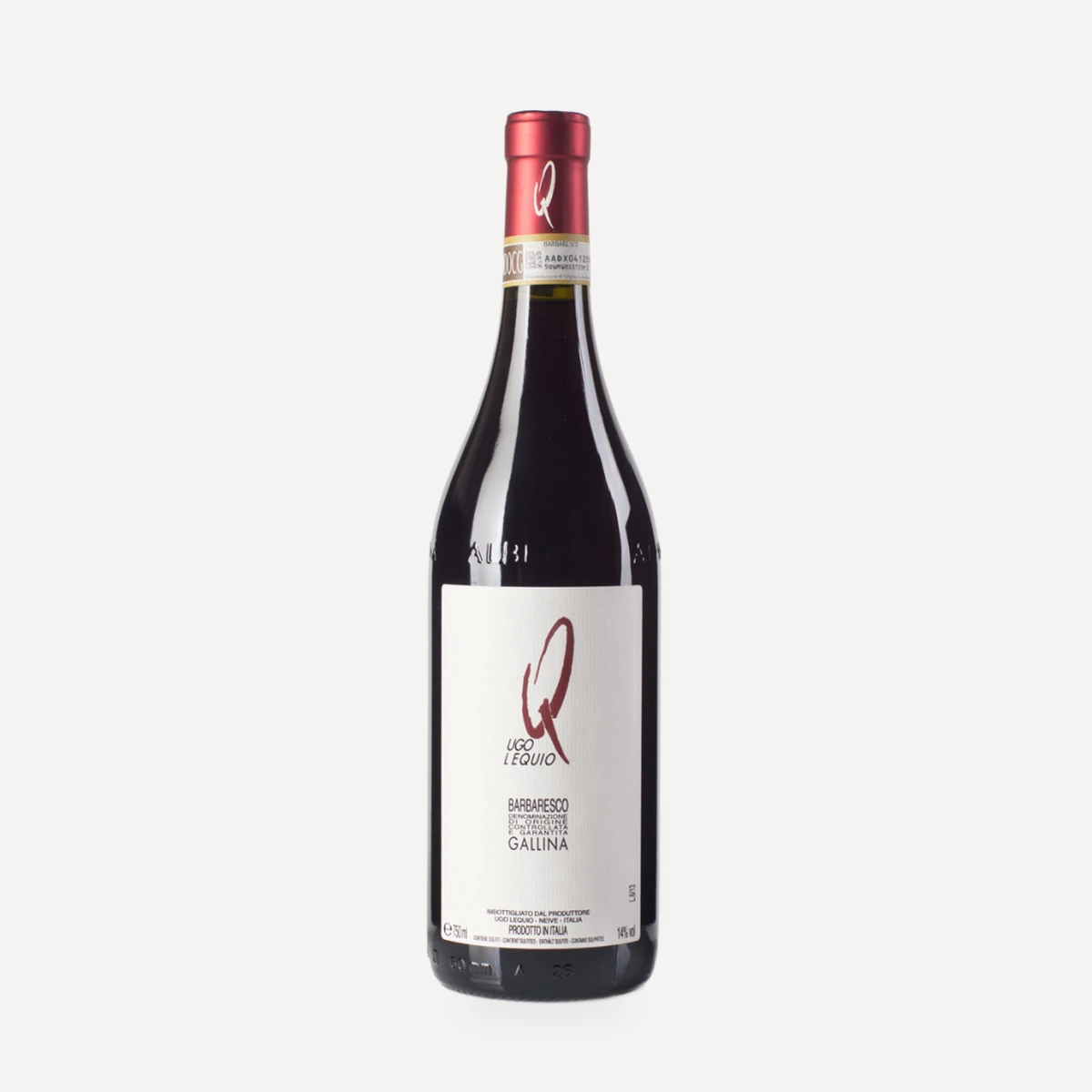
Cascina Nuova occupies six hectares in the heart of Gallina hill at Neive. The Nebbiolo vineyards associated with the Gallina bottlings face south and lie between 170 and 250 m above sea level. Plantings date to 1953, 1963 and 1971. The location is associated with structured, persistent and long-lived wines distinguished by elegance. Barbera also comes from south-facing vineyards in Gallina, a location associated with richness and complexity.
Castellizzano, Treiso
The Castellizzano site lies in the commune of Treiso at 400 m above sea level. It faces northwest, was planted in 2000 and is devoted to Nebbiolo.
Guarene d’Alba
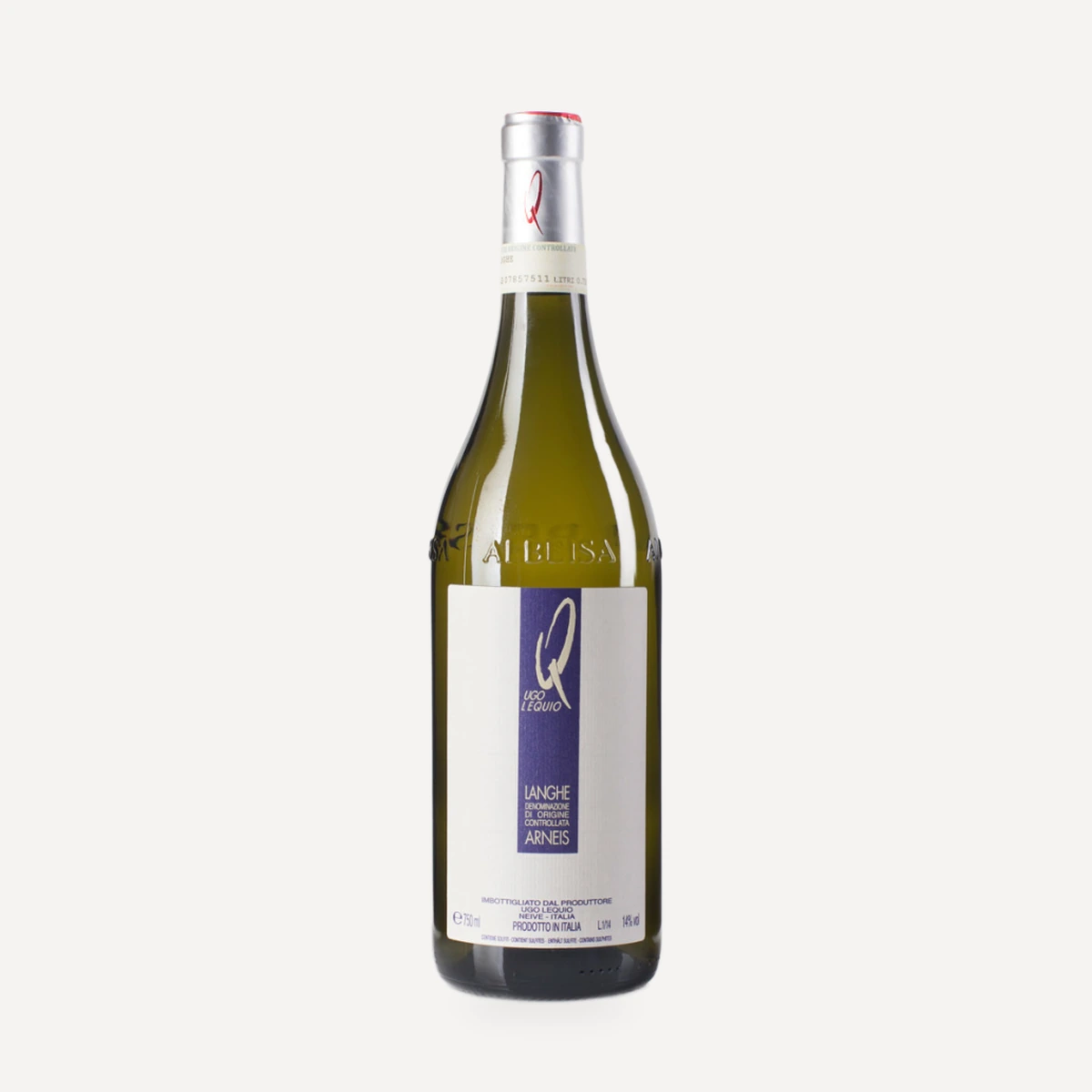
Arneis comes from vineyards at Guarene d’Alba with a southeast exposure.
Exposure and the “science of snow”
Ugo Lequio has passed on an old Langhe method for recognizing favorable sites: after winter, growers watched which brown patches of hillside appeared first as the snow melted. The earliest-thawing places indicated warmer, better-exposed conditions considered suitable for Nebbiolo.
Vinificazione
Rigorous fruit selection has defined Ugo Lequio’s work since his first releases in the early 1980s, when he personally selected grapes from the six hectares of Cascina Nuova. Vineyard research and experimentation subsequently became part of the estate’s quality-focused development.
Site selection is informed by close attention to exposure. One traditional Langhe indicator taught by Ugo Lequio is the pattern of snowmelt: hillside patches that lose their snow first reveal comparatively warm, well-exposed positions considered favorable for Nebbiolo.
Declared vineyard yields vary by location and variety: 40–45 hl/ha for the south-facing old Nebbiolo plantings in Gallina, 60–65 hl/ha for Barbera in Gallina, an average of 50 hl/ha for the Castellizzano Nebbiolo vineyard and 60–70 hl/ha for the Arneis vineyards at Guarene d’Alba.
Production combines temperature-controlled stainless-steel fermentation with maturation regimes adapted to the different grapes and intended styles.
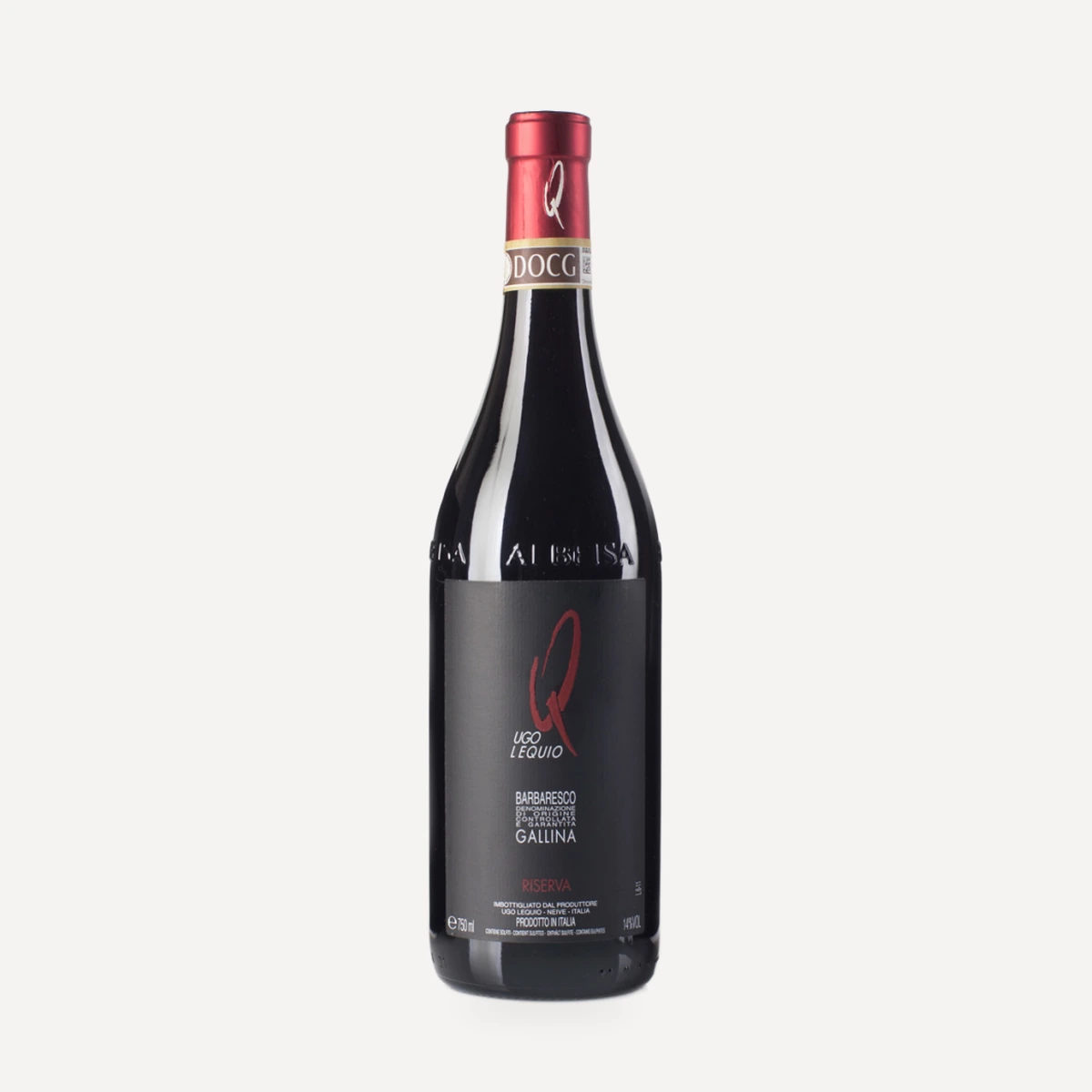
Nebbiolo from Gallina undergoes 15–18 days of fermentation and skin contact in temperature-controlled stainless-steel tanks. The principal maturation route uses 25 hl Slavonian oak casks for 20 months, followed by six months in bottle. The Riserva route adds 15 months in 5–7 hl French-oak vessels before six months of bottle maturation.
Nebbiolo from Castellizzano is vinified in stainless steel at a controlled 28 °C for six to seven days, then spends five to six months in used French-oak vessels.
Barbera ferments with its skins for eight to twelve days in temperature-controlled stainless steel. It matures for 20 months in 25 hl oak vessels and rests for a further four to six months in bottle.
Arneis is softly pressed, after which the must is cold-settled and fermented at 13 °C. It remains in stainless steel for six months and then rests in bottle for three months before release.
Across the production, extended cellar and bottle maturation reflects Ugo Lequio’s conviction that time is essential to the development of class, stature and longevity.
Filosofia
Ugo Lequio’s guiding aim is to unite ambition and professional rigor with a measured balance between tradition and innovation. Research and experimentation in both vineyard and cellar serve a quality-over-quantity approach rather than innovation as an end in itself.
Time is treated as an active part of production. Ugo Lequio holds that a serious wine develops class, stature and longevity through unhurried evolution, so the wines receive a prolonged and deliberate rest before release.
Vini
Barbaresco Gallina
Barbaresco Gallina Riserva

Barbera d’Alba Superiore