Questo vino
Vineyard and terroir
The grapes come from the Poggiarelli and Orto vineyards in Greve in Chianti. Poggiarelli occupies a fully sun-exposed plateau with little limestone, where ripening is generally early. Orto is cooler and predominantly clay-rich, conditions associated with its Malvasia and Trebbiano vineyards.
Grapes
Malvasia Lunga del Chianti and Trebbiano Toscano.
Vinification
The grapes are harvested manually in mid-September. The bunches are placed in small aerated crates and kept in a cool, well-ventilated room, where they dry naturally for almost three months. After drying, the grapes are gently pressed and the must is lightly decanted. It is then transferred without the skins to small oak caratelli of 75–100 litres, where fermentation takes place.
Ageing
The wine remains in its oak caratelli for at least four years and receives a minimum of six months of bottle refinement.
Technical data
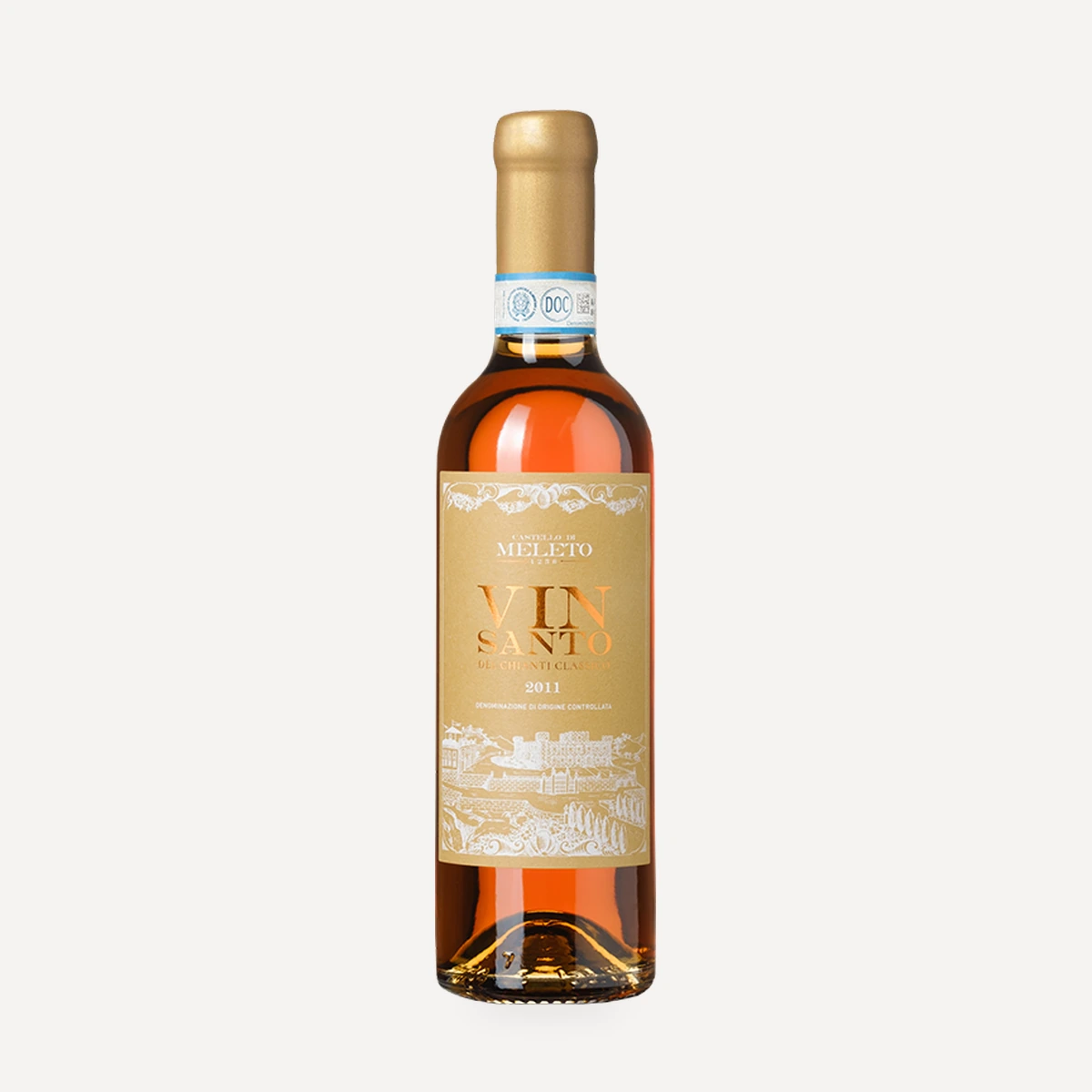
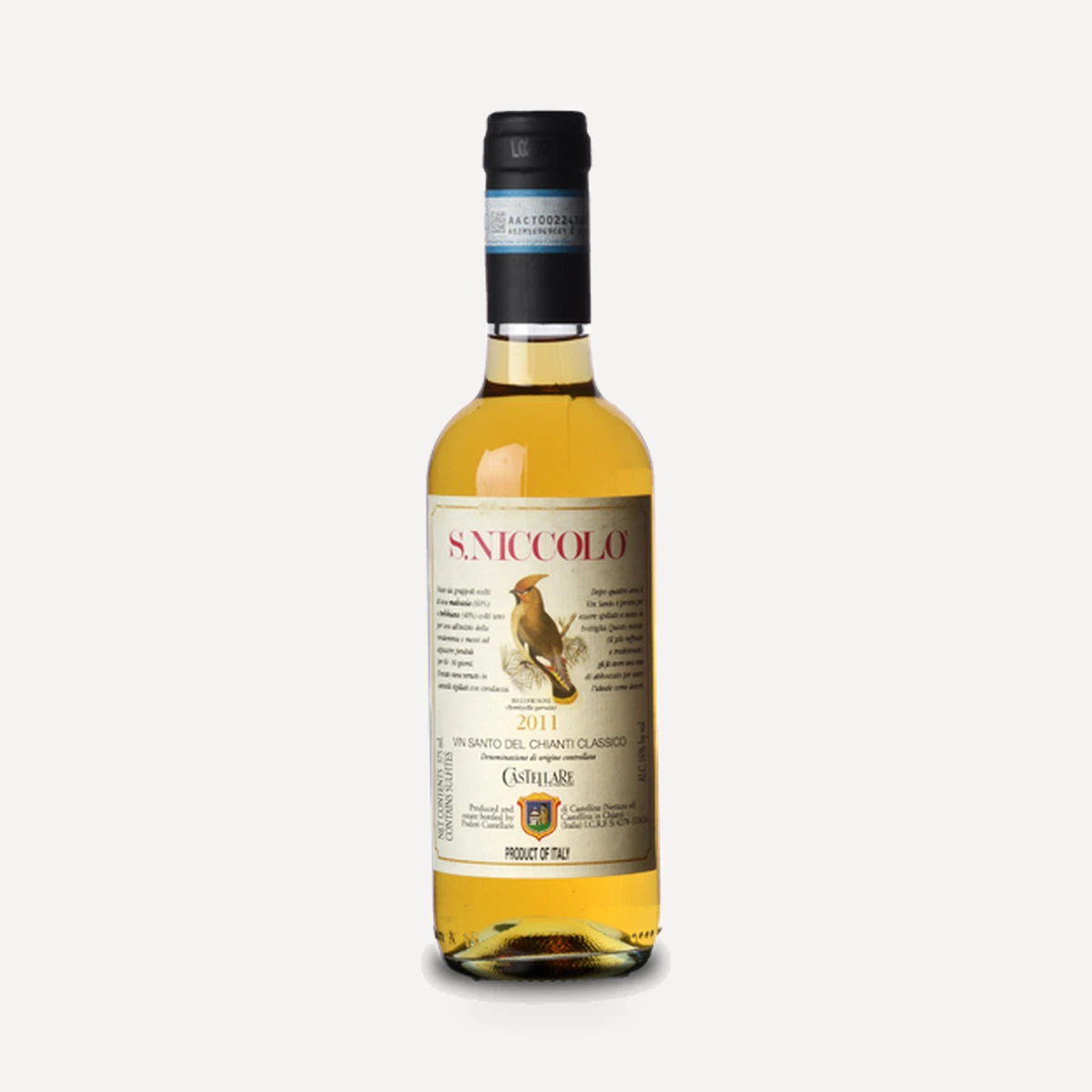
Alcohol: 16–17% vol. Bottle size: 375 ml. Production: 2,500 bottles.
Tasting profile
Golden yellow with amber reflections. The bouquet is enveloping, with characteristic notes of honey, nuts and dried fruit. The palate is warm, intense and distinctly sweet, with sufficient acidity to hold the richness together.
Serving and pairing
Serve at 10–12°C. Vinsanto may be offered before or after dinner or served with pastries and blue-veined cheeses. Its rich, sweet profile also suits celebratory occasions.
Label / history
Vinsanto is presented as a traditional Chianti wine and as Tuscany’s wine of hospitality. Its name has several unverified explanations: it may recall a supposedly miraculous wine offered to plague sufferers, the passito wines of the Greek island of Xantos, or the holy wine used during Mass. Its precise etymology remains unresolved.