Storia
A family tradition beginning in the early 20th century
The Sanfilippo family's relationship with these vineyards reaches back to the early 1920s. The vines were cultivated and the resulting wine was made for personal enjoyment rather than as a commercial undertaking. The vineyard also became a gathering place where relatives and friends shared wine, food and time together.
A second account of the family's development places the beginning of the present story more than 60 years ago. The grandfather led the first phase, followed by the father, transmitting both vineyard work and an attachment to Sicilian land through successive generations.
The present generation
The current generation comprises a narrator and a sister who live away from Sicily. Distance strengthened their connection with the family's land and encouraged them to create a tangible link with home. The vineyard rows became that link: a means of carrying forward family values, memories and traditions while continuing the story begun by their grandfather and father.
With the support of their mother and father, the siblings helped transform the inherited family activity into the young project called Vigne di Confine. Its purpose is to continue the family's legacy and share wines shaped by the natural conditions of Etna.
The first natural wines
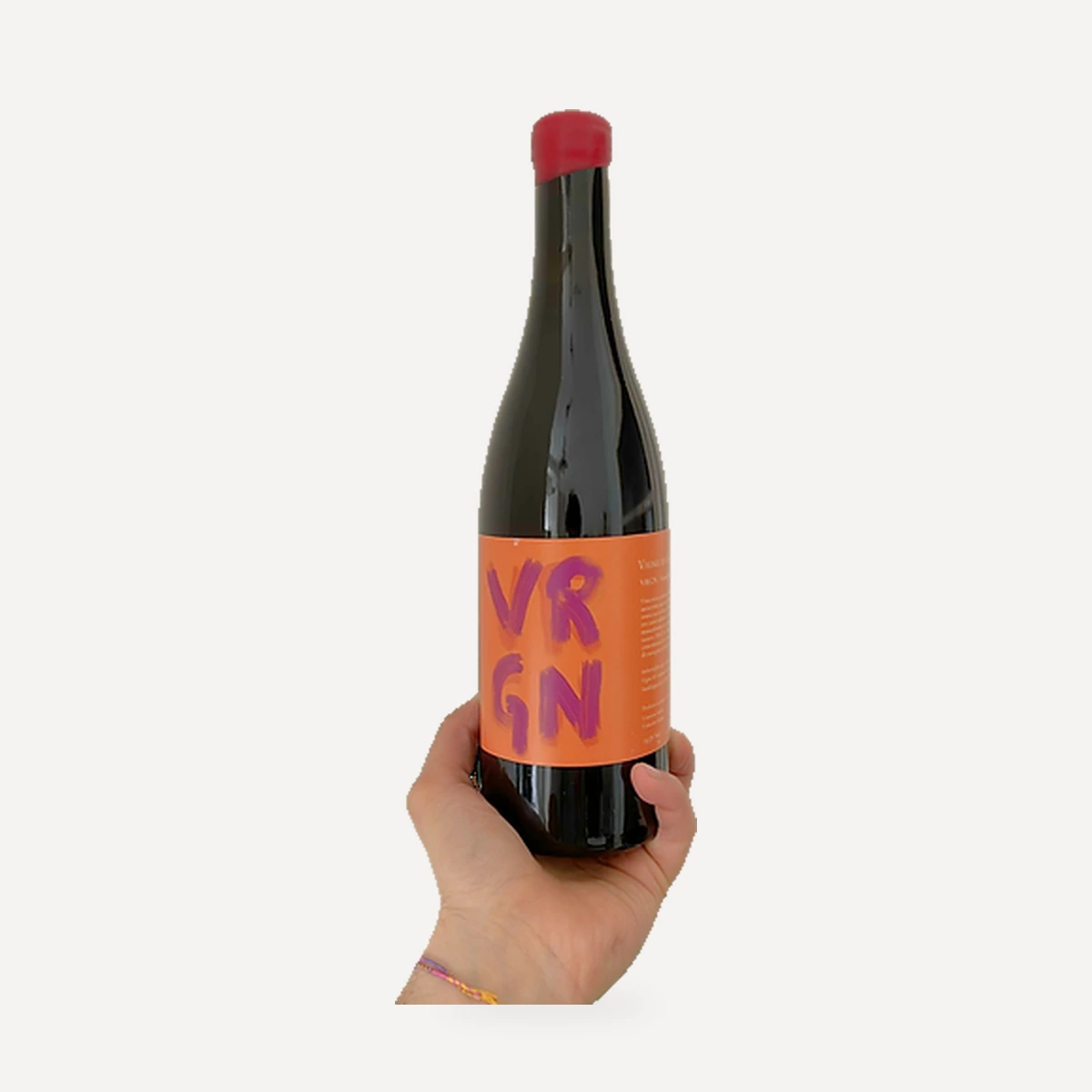
VRGN, BN and BN Macerato were introduced as the first three natural wines associated with Vigne di Confine. They marked the transition from wine made for family pleasure and convivial gatherings to a named project presenting the family's work beyond its own circle.
Terroir
Vigne di Confine lies at Biancavilla on the southwestern slopes of Etna. The principal elevation is given as 960 metres above sea level, while the vineyards represented in the current range extend from approximately 960 to 1,000 metres.
Thousands of years of continuing volcanic activity have formed and repeatedly transformed the ground. The resulting volcanic soil combines mineral character with fertility and effective drainage.
The mesoclimate is marked by substantial temperature differences between day and night. Elevation and sea breezes further moderate the site, contributing to slow grape ripening and the development of aromatic complexity.
Vinificazione
All vineyard work, from cultivation through harvest, is performed manually. Machinery and chemical products are excluded from this work, with the aim of preserving the grapes' natural qualities.
The approximately 14,000 vines are trained either as alberello or on spur-pruned cordons. The plantings focus exclusively on four indigenous Etna varieties: Nerello Mascalese, Nerello Cappuccio, Carricante and Catarratto. Harvesting is manual, continuing a family practice transmitted across generations and grounded in respect for natural processes.
The production approach begins with grapes cultivated and harvested entirely by hand, without mechanical intervention or chemical products in the vineyard. Spontaneous fermentation is used across the wines currently presented, and stainless-steel vessels form the common basis of maturation. The cellar also employs chestnut barriques within its maturation program.
The production philosophy is directed toward retaining the natural qualities of fruit grown at high elevation on Etna's volcanic soils. No general description is given for grape reception, sorting, pressing, fermentation temperatures, malolactic conversion, cellar movements, filtration, clarification, sulphur additions or bottling.
Filosofia
Vigne di Confine is conceived as a continuation of the Sanfilippo family's relationship with its Sicilian land. Its central principles are family inheritance, conviviality and respect for natural processes. The vineyard is treated not only as productive land but also as a place where relatives and friends meet, eat, drink and share stories.
For the current generation, which lives away from Sicily, the rows of vines provide a bridge back to home. Each row carries family memories while creating material for new stories. This emotional connection underpins the effort to continue the work begun by the grandfather and father.
The project presents genuineness and naturalness as its production goals. Manual vineyard work, the exclusion of machinery and chemical products from cultivation through harvest, indigenous grape varieties and spontaneous fermentation give practical expression to that position. The wines are intended to convey both the Etna landscape and the identity of the Sanfilippo family.
Vini