Questo vino
Vineyard and terroir
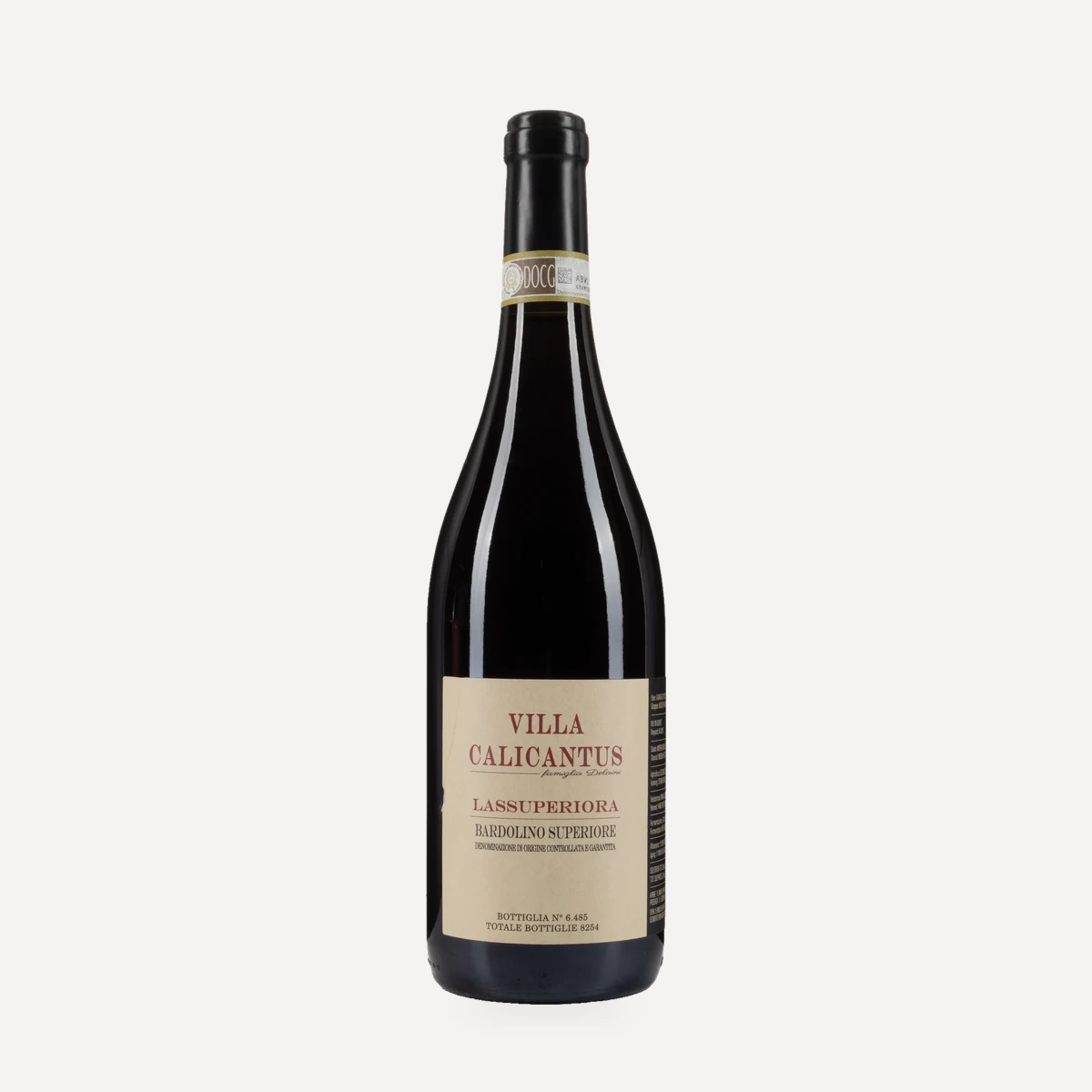
The vineyard occupies the upper part of a hill near the border between Bardolino and Pastrengo, in the Calmasino area approximately 6 km from Bardolino. The wine specifications place it at 180–185 m a.s.l., while the hilltop is described as reaching 200 m. The vines are nine years old, Guyot-trained and planted at 5,000 vines per hectare on moraine soil. Exposure is variously given as south and south-west. The stated yield is 60 t/ha.
Grapes
Corvina, Rondinella, Molinara and Sangiovese.
Vinification
The grapes are harvested by hand into 18 kg boxes in September. Fermentation is spontaneous with indigenous yeasts. The individual product page specifies stainless steel, whereas the wine catalogue specifies concrete tanks. The wine is neither filtered nor clarified.
Ageing
One year in wooden barrels, followed by six months in bottle.
Technical data
Alcohol: 12.3%. Residual sugar: 0.6 g/L. Total acidity: 4.9 g/L. Volatile acidity: 0.64 g/L. pH: 3.55. Total sulphites: 22 mg/L. Production: 4,634 bottles in 0.75 L format.
Tasting profile
A Bardolino Superiore built around finesse, elegance and lively complexity, conceived as a return to the character associated with Bardolino before more interventionist winemaking became widespread.
Serving and pairing
Served at the estate with Sanvigilini biscuits.
Label / history
The wine is presented as an interpretation of Bardolino rooted in the denomination’s earlier history and traditional identity.