Storia
The old rural setting
Villa Calicantus operates from a historic rural complex in Calmasino di Bardolino. Its holiday house occupies the first floor of a seventeenth-century country house, while the agriturismo and tasting activities are presented within a nineteenth-century courtyard. The cellar, hospitality spaces, vineyards, olive trees and gardens share this setting near Lake Garda.
1966 — the old pergola vineyard
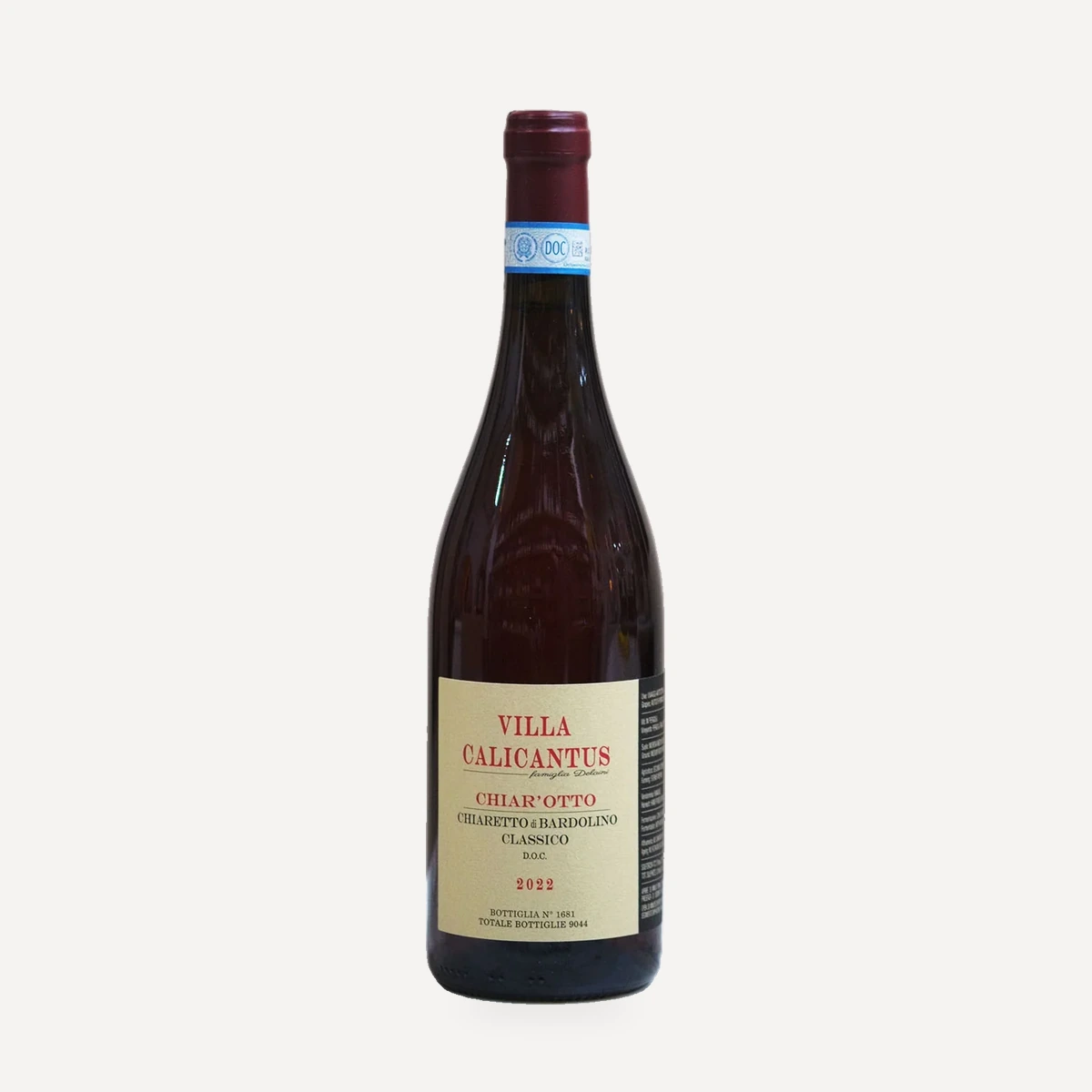
Six parcels planted in 1966 under Pergola Veronese were established together on the side of a hill immediately above Bardolino. These old parcels later became the source of Chiar'Otto and an important part of the estate's identity.
2011 — first production and organic farming
2011 was Villa Calicantus's first production year. The vineyards were managed organically from that first vintage, beginning a deliberate move toward farming focused on soil fertility, vine balance and the long-term health of the land.
2014 — transition to biodynamics
Biodynamic agriculture began in 2014. The change was conceived as the completion of the natural path begun with organic farming. The wines subsequently obtained organic certification from Bioagricert and biodynamic certification from Demeter.
2017 — Soracuna and a family milestone
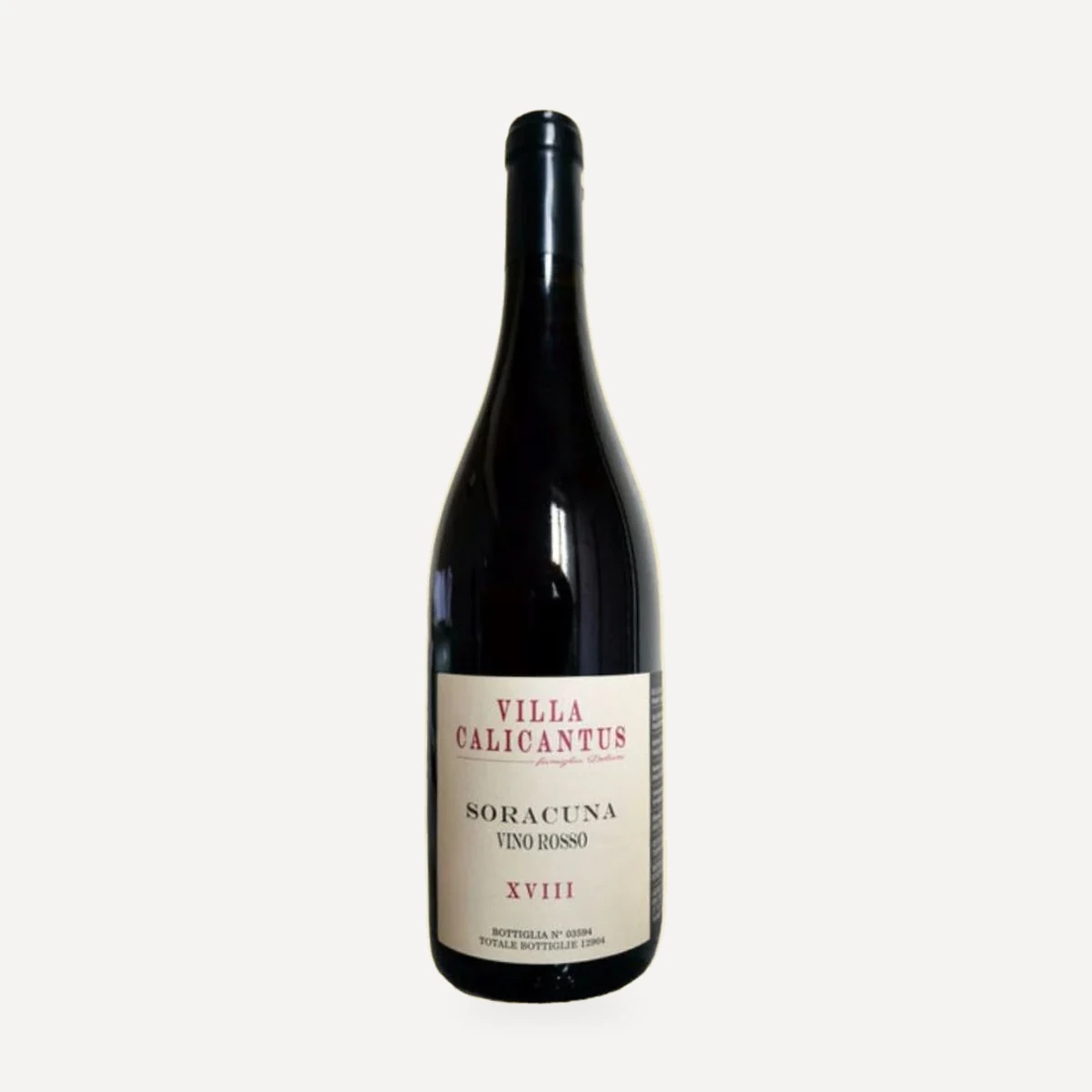
Soracuna was produced for the first time in 2017, the same year Chiara and Daniele's daughter Anna was born. Its name joins the local-dialect words sora and cuna, meaning “above” and “cradle.” In local usage, andar de sora cuna means visiting the home of a newborn to celebrate. The wine was named to connect its debut with Anna's birth and the idea of a day of celebration.
2021 — preparing a vineyard for the future
By February 2021, land was being prepared for a new vineyard dedicated to Bardolino Chiaretto. Different herbs were sown to enrich the soil in several ways, applying biodynamic principles before planting land intended to carry vines for decades.
2022–2024 — closer definition of individual sites
The estate increasingly documented the distinctions among its vineyards. Its soils were described in 2022 as limestone-rich morainic deposits with sand, silt and, in some places, abundant drainage stones. During the difficult 2023 season, heavy rain complicated vineyard work and delayed the ripening of the grapes reserved for Avresir, although canopy management was used to protect grape quality. Warm, settled weather in August and September subsequently supported ripening, and the harvest was organized so that each wine's parcels could be picked at their optimum moment.
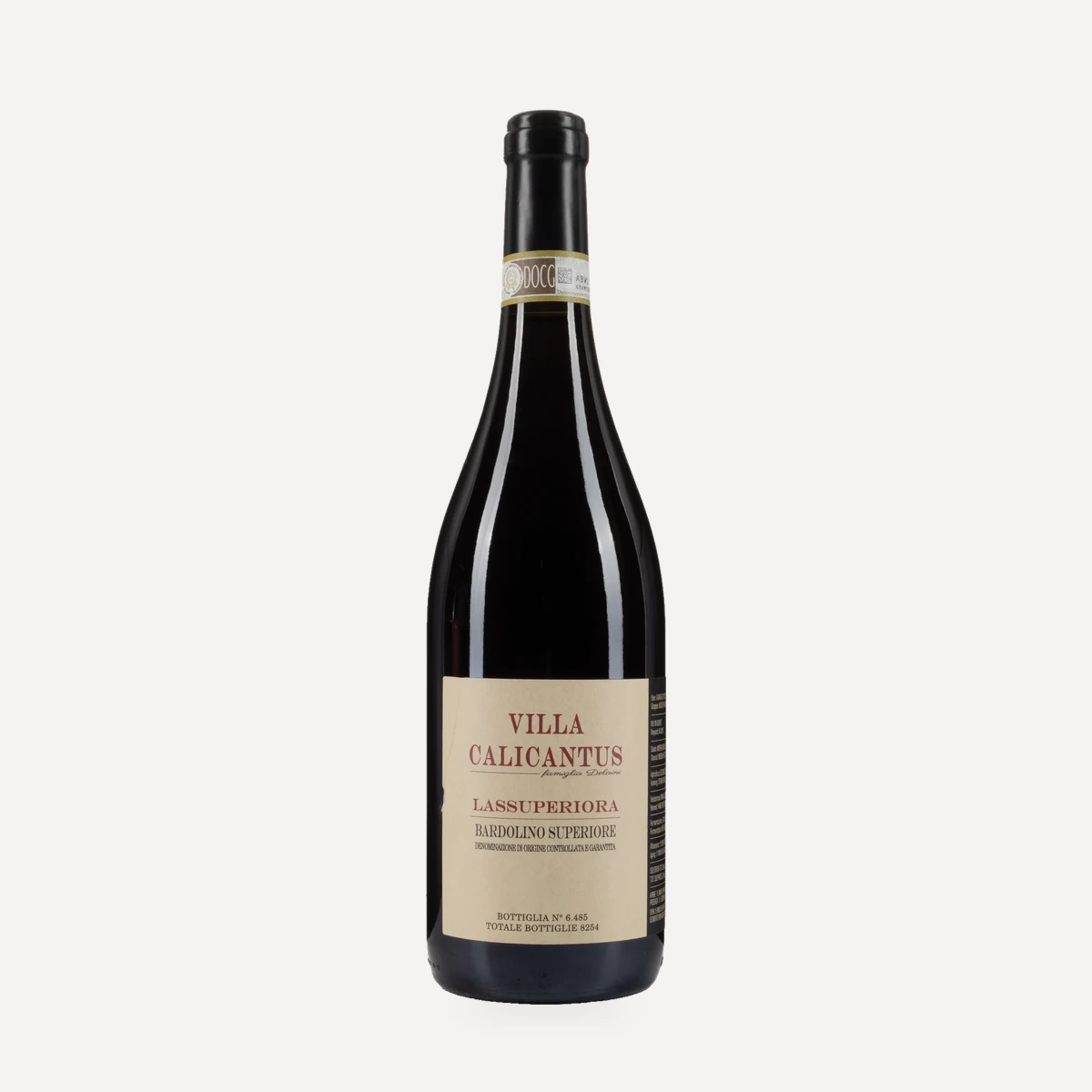
Soracuna 2023 was bottled on 18 October 2023 after fermentation and roughly ten months in concrete. In March 2024, Villa Calicantus gave a detailed account of the approximately 2-hectare LASSUPERIORA vineyard: a high, stony and sandy site governed more by the pre-Alps than by Lake Garda. The same month, the estate reopened its seasonal tasting activity, combining its wines with local foods, vineyard walks and guided visits.
Terroir
Villa Calicantus works 8 hectares on three high hills of the Bardolino Classico area, close to the southeastern shore of Lake Garda. The vineyards occupy three distinct areas with different exposures, soils and microclimates. Several sites overlook the lake, while the LASSUPERIORA vineyard is the estate's exception: it faces away from the water and is influenced predominantly by the pre-Alps.
The soils derive from the morainic deposits of the last glaciation that formed Lake Garda. They are limestone-rich and described as free of clay, with substantial proportions of sand and silt. Stone content varies by position; the stoniest sectors drain even heavy rainfall effectively. These relatively poor soils do not naturally favor powerful, high-alcohol wines. Their viticultural potential is instead associated with finesse, elegance, minerality and sapidity, provided that crop levels per vine are kept low.
Lake Garda and the Alps create different climatic balances across the estate. In the high Calmasino sector used for Avresir, lake influence combines with Alpine influence and assists ripening. The approximately 2-hectare LASSUPERIORA site, at 300 metres in its 2024 description, consists mainly of stones and sand and is shaped principally by the pre-Alpine climate. The lower hillside vineyards immediately above Bardolino lie much nearer the lake, including the Soracuna vineyard at approximately 160 metres and less than 1 kilometre from the shore.
The vineyards adjacent to the villa overlook Lake Garda and Monte Baldo. From the hilltop, the view extends from the Sirmione peninsula to Punta San Vigilio, illustrating the estate's position between the lake basin and the surrounding relief.
Vinificazione
Organic farming has been practiced since Villa Calicantus's first production year in 2011, followed by biodynamic agriculture from 2014. The wines carry Bioagricert organic certification and Demeter biodynamic certification.
The central viticultural objective is balance: each vine should be in equilibrium with its soil, neighboring vines and the crop it carries. Soil is cultivated between the rows, while spontaneous or sown vegetation is allowed to grow through flowering. Crop load is reduced according to seasonal conditions, vine age and the intended wine. On these relatively poor morainic soils, yield restriction is considered essential if the vine is to transmit a clear site expression to every cluster.
New vineyard preparation also follows this soil-centered approach. Before establishing the Chiaretto planting announced in 2021, different herb species were sown to contribute distinct forms of soil enrichment and prepare the land for decades of vine growth.
Canopy and vegetation management become especially important in wet seasons. During the rain-heavy 2023 vintage, vineyard work was substantially more difficult and ripening was delayed in the Avresir parcels, but careful management of vine growth was used to preserve grape quality. When dry, fine conditions arrived in August and September, picking decisions were made parcel by parcel so that the grapes for each wine could be harvested at their optimum maturity.
Harvesting is manual, using small 18-kilogram boxes. Depending on site and wine, picking extends from early or mid-September through the end of September. The adjacent vineyards are also used during guided visits to explain organic and biodynamic work without synthetic chemical products.
The cellar is located within the same historic rural courtyard as the agriturismo and hospitality spaces. Winemaking is designed to retain the original character of the grapes, individual parcels and each vintage rather than correct color, alcohol, aroma or other parameters through modern oenological manipulation.
Fermentations begin spontaneously with indigenous yeasts and continue for the time required by the vintage. Concrete and wood are the principal fermentation and maturation materials, supplemented by steel for selected lots. Concrete vats are used for estate reds such as Soracuna; its 2023 bottling followed fermentation and approximately ten months of maturation in concrete. Wood includes 225-litre oak vessels as well as larger wooden barrels. Chiar'Otto established a distinctive precedent by fermenting and maturing Bardolino Chiaretto in wood.
The high-site Bardolino Superiore wines receive longer élevage. LASSUPERIORA undergoes roughly three weeks of fermentation in concrete, followed by one year in wooden barrels and one year in bottle before release. Avresir is matured for two years in wooden barrels and a further year in bottle. The estate also retains the first 100 bottles from every vintage, protects their labels against cellar humidity and releases them only after several years to demonstrate Bardolino's capacity to age.
Decanting and bottling are coordinated with lunar cycles. The wines are neither filtered nor clarified. Sulphites are the sole additive, used at very low total levels generally between 15 and 35 mg/L. The production philosophy accepts natural differences among vintages instead of seeking technical uniformity.
Filosofia
Villa Calicantus defines its approach through three connected ideas: balance, love of nature and respect for terroir.
Balance means bringing each vine into equilibrium with its soil, surrounding plants and crop. Vineyard work—soil cultivation, allowing vegetation to flower and adjusting the number of clusters—is directed toward the health of the vine and the production of grapes capable of yielding complex, age-worthy wines.
Love of nature places the winegrower in the role of farmer and custodian rather than merely business operator. The land is to be cultivated with judgment and foresight so that its health and fertility remain intact for future generations. Organic farming from 2011 and biodynamics from 2014 are practical expressions of this principle.
Respect for terroir begins with accepting the character of Bardolino's morainic soils. The objective is not to force body or high alcohol—qualities the estate considers too readily confused with complexity—but to pursue finesse, elegance, sapidity and layered expression through Corvina, Rondinella and Molinara.
Each vineyard is intended to have its own wine, and each wine its own vineyard. Parcel selection is therefore used to reveal both site distinctions and the changing influence of nature from one year to the next. The winemaker's role is understood as interpreting the vineyard's changing language rather than erasing vintage variation.
The same restraint governs the cellar. The estate rejects interventions intended to alter color, alcohol, aroma or comparable parameters. Spontaneous fermentation, concrete and wood élevage, no filtration, no clarification and minimal sulphite use are intended to carry the grapes' original characteristics into the finished wine.
The broader ambition is to restore Bardolino's identity as a fine, elegant and complex wine capable of aging, and to return it to a prominent place among Italian wines. Long cellar maturation and the retention of 100 bottles from every vintage are part of that effort.
Vini
Chiar’otto
Lassuperiora