Storia
Childhood and the origins of the project
Bruno Ferrara Sardo's relationship with vines began during childhood. He spent almost every day in the countryside with his grandfather, observing workers hoe and prune while learning to cultivate and appreciate the vineyard himself. His strongest memories are of harvest, when adults and children worked together to turn grapes into wine.
A return to viticulture
Those harvest memories remained with him for years and eventually led him to undertake vine growing himself. The vineyard in Contrada Allegracore includes two age groups: one portion was planted more than 50 years ago and another approximately 40 years ago. It has been cultivated without herbicides, fertilizers or other chemical products for over 20 years.
From family wine to 'nzemmula
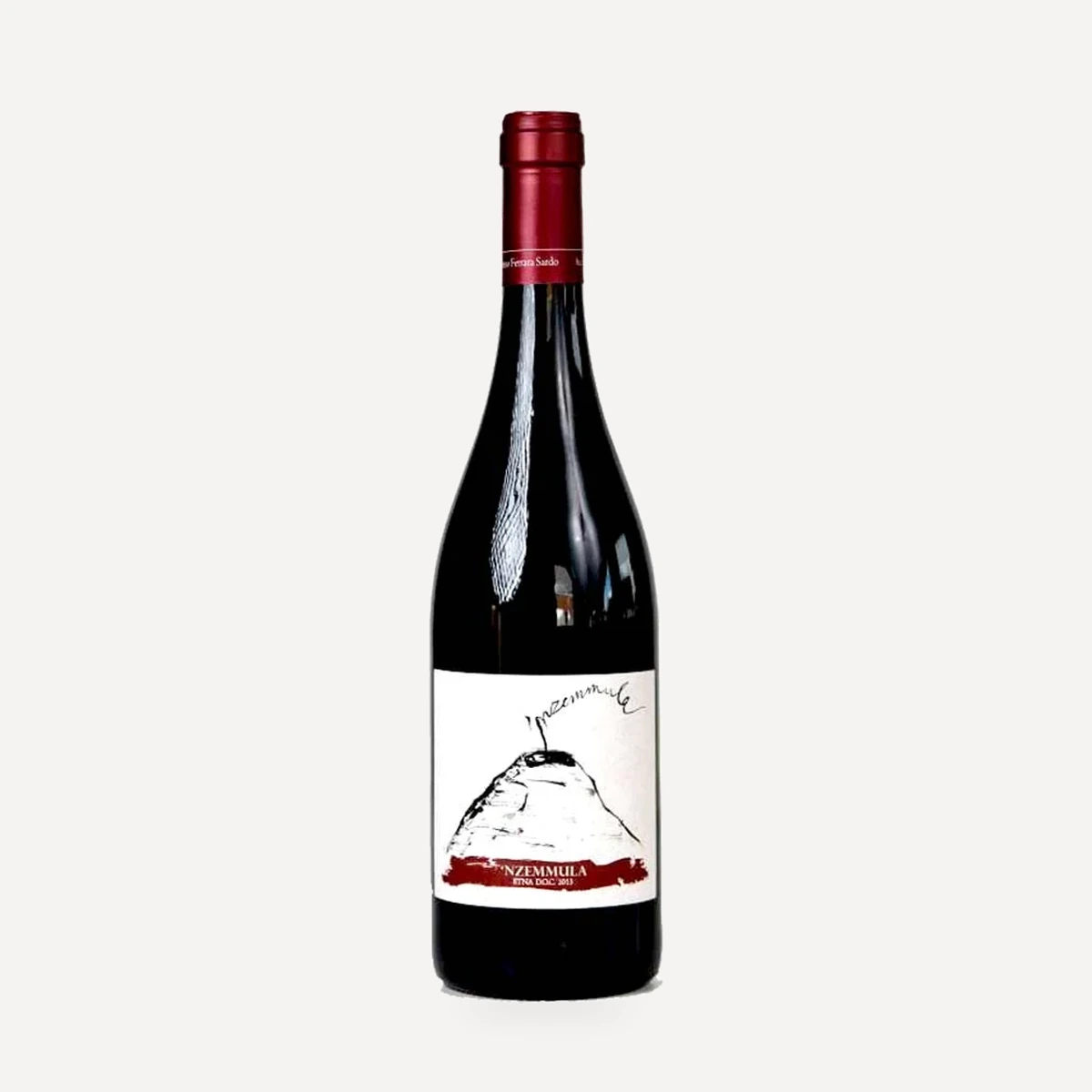
Over time and successive bottles, the wine became associated among Bruno's friends and relatives with generosity, conviviality and celebrations both large and small. These experiences shaped the identity of 'nzemmula, a name derived from the local dialect word for “together.” The name expresses the project's emphasis on sharing, relationships and the pleasure of gathering around wine.
Bruno describes the bottled wine as something that gradually found its present expression over the years. Rather than prescribing a fixed interpretation, he leaves the relationship between wine and drinker open, allowing each taster to identify its qualities and choose the language used to describe the experience.
2014
On 14 April 2014, Le contrade dell'Etna 2014 was held in Passopisciaro–Randazzo and appeared among the project's recorded events.
Terroir
Contrada Allegracore
The Nerello Mascalese vineyard lies in Contrada Allegracore, a few kilometres from the centre of Randazzo in the province of Catania. It occupies the northern side of Etna at an elevation of 700 metres. Its soils are volcanic, with a lava substrate encountered at varying depths.
Etna landscape
Etna Park surrounds Europe's highest active volcano. Established in 1987 as Sicily's first regional park, it encompasses 20 municipalities in the province of Catania: Adrano, Belpasso, Biancavilla, Bronte, Castiglione di Sicilia, Giarre, Linguaglossa, Maletto, Mascali, Milo, Nicolosi, Pedara, Piedimonte Etneo, Ragalna, Randazzo, Santa Maria di Licodia, Sant'Alfio, Trecastagni, Viagrande and Zafferana Etnea. The park area has a population of approximately 250,000. The nearby Nebrodi Park and Alcantara River Park add to the wider environmental setting.
Human occupation over millennia has profoundly reshaped Etna's slopes. Agricultural activity has had to accommodate the demands of this terrain and has also served as a means of environmental stewardship. Because the land is irregular, terraces were built to make vine cultivation possible. A favourable local microclimate supported the establishment and development of vineyards.
Etna remains a physically active presence, marked by rumbling, slight earth tremors and continuing ash emissions. Within the area's cultural imagination, the volcano is presented not only as a threat but as an archaic, paternal presence around which agriculture, social life and a sense of community have developed.
Vinificazione
The Contrada Allegracore vineyard has been cultivated in a manner intended to respect the natural environment for over 20 years. Herbicides, fertilizers and other chemical products are excluded.
The vineyard belongs to a landscape shaped by irregular volcanic terrain. Terracing has historically enabled vines to be established on Etna's slopes, while agriculture is understood as both productive activity and a form of environmental stewardship. Across the wider Etna area, organic and biodynamic cultivation have received increasing attention as approaches intended to combine product quality with respect for the environment and consumer health.
The wine is presented as handmade and rooted in the communal practice of harvest, in which grapes were transformed into wine through shared work. The wider Etna landscape has also seen disused traditional wine presses and cellars restored and adapted to contemporary production requirements.
Filosofia
Vini Ferrara Sardo is conceived around memory, conviviality and the bonds created by sharing wine. Bruno Ferrara Sardo connects the project to childhood days spent with his grandfather, to the sight of vineyard workers hoeing and pruning, and especially to harvests in which adults and children worked toward the same purpose.
The name 'nzemmula means “together” in the local dialect. It embodies the wish that wine should accompany both important celebrations and ordinary occasions, forming and strengthening relationships through shared enjoyment.
Bruno presents the wine as the outcome of memories preserved through images, words, silences, aromas and the people of his childhood. He avoids imposing a predetermined tasting description: wine and drinker should establish their own exchange freely, allowing each person to recognize the wine's qualities and find an individual vocabulary for the experience. The wine itself is understood as having evolved over the years toward the expression ultimately achieved in bottle.
In the vineyard, respect for nature is expressed through more than two decades without herbicides, fertilizers or other chemical products. Within the wider Etna setting, agriculture is also understood as an activity capable of protecting the environment while sustaining the area's tradition of gathering and social life.
Vini