Marche and Abruzzo restrict the market release of 2026 wines as stocks rise
Authorities and consortia in Marche and Abruzzo are limiting how much wine from the 2026 harvest can reach the market under key denominations. The measures combine lower claimable yields with temporary reserves intended to moderate supply and price pressure.
National inventories frame the measures
Wine authorities in Marche and Abruzzo are restricting the volume from the 2026 harvest that can be marketed under several regional designations. Lower claimable yields and temporary storage rules are being used to delay part of the supply and ease pressure on prices amid an imbalance between available wine and demand.1
The latest Cantina Italia report from the ICQRF recorded 47.7 million hectoliters of wine in Italian cellars on 31 October, 7.2% more than at the same point a year earlier. High stocks do not necessarily represent unsold wine: some inventory is part of normal aging and release schedules, although slower sales can leave producers’ capital committed for longer than intended.1
Verdicchio limits proposed in Marche
The Istituto Marchigiano Tutela Vini has asked the Marche regional government to extend the production restrictions for Verdicchio dei Castelli di Jesi DOC. Its proposal keeps the maximum at 110 quintals of grapes per hectare instead of the 140 quintals permitted by the denomination’s standard rules, reducing the claimable DOC yield by about 21%.1
Up to 21 quintals per hectare produced beyond the reduced threshold would also be blocked until 30 June 2027. The institute wants to control wine remaining after the particularly abundant 2025 harvest and prevent additional supply from exerting further downward pressure on prices.1
Verdicchio dei Castelli di Jesi extends across approximately 1,900 hectares in 25 municipalities and produces around 90,000 hectoliters of bottled wine annually. Figures cited by the institute show that bottling increased 2.7% in the 1st half of 2026, while sales through Italian distribution declined only slightly.1
Institute director Alberto Mazzoni identified both volume management and promotion as priorities. The organization considers a continuous campaign of at least 4 years necessary to support Marche wines.1
Abruzzo creates reserves for Montepulciano and Pecorino
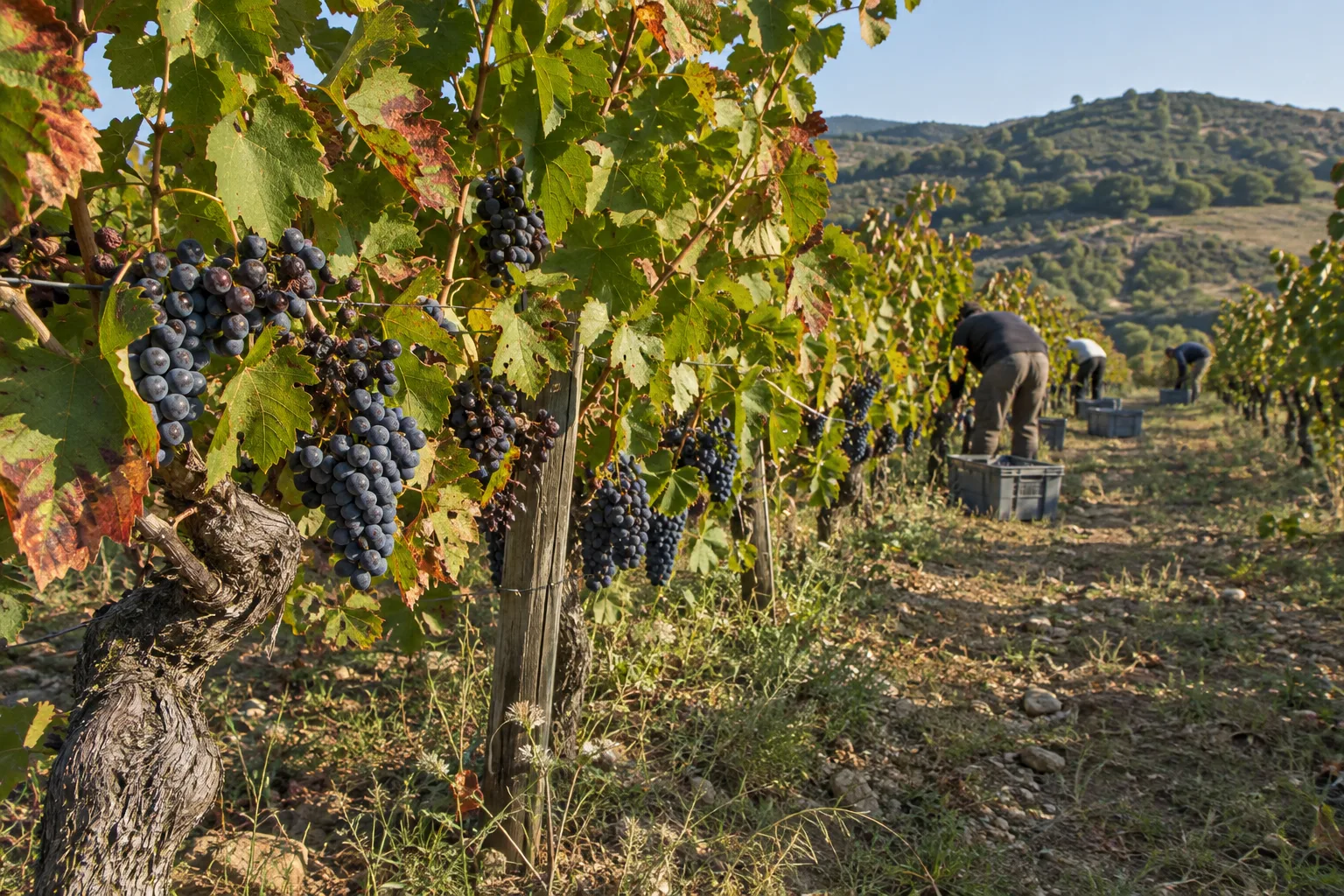
The Abruzzo regional government has already approved measures proposed by the Consorzio Tutela Vini d’Abruzzo for the 2026 harvest. The maximum yield claimable as Montepulciano d’Abruzzo DOC falls from 150 to 135 quintals per hectare.1
Of that volume, 110 quintals per hectare may be used without restriction, while 25 quintals enter a harvest reserve that cannot be marketed before 30 June 2028. This administrative mechanism postpones the release of part of the production instead of eliminating it.1
Pecorino IGT Terre d’Abruzzo, also called Terre Abruzzesi, has a claimable ceiling of 140 quintals per hectare for the 2026 campaign. Output between 140.01 and 220 quintals per hectare must remain in storage until 30 September 2027 unless the restriction is extended.1
Consortium data showed more than 1.08 million hectoliters of Montepulciano d’Abruzzo DOC and approximately 240,000 hectoliters of various Pecorino types in cellars on 31 May. Consortium president Alessandro Nicodemi said the measures are intended to preserve the balance between supply and demand and prevent excessive availability from damaging prices and wine-business profitability.1
Effects on production and winery finances
A lower denomination ceiling reduces the quantity of grapes that can be sold under the protected name. A reserve or administrative block leaves the wine in existence but delays market access, providing flexibility if demand recovers while requiring additional decisions about storage capacity and sales schedules.1
In the near term, these rules may reduce saleable volumes, increase storage requirements and affect winery cash flow. Firmer prices could protect margins for some growers and producers, but weak demand would limit that benefit while the expense of carrying stocks continued to weigh on profitability.1
Maremma argues for structural intervention
The debate extends beyond Marche and Abruzzo. Consortium representatives in Tuscany’s Maremma area favor structural measures because actual vineyard output there is often already below the ceilings in denomination rules, making further formal reductions likely to have only a limited effect on production.1
Their proposals include reviewing permits for new plantings and considering targeted vine removals in less suitable locations. The position raises a wider question for the Italian sector: whether temporary stock controls are sufficient or production capacity must also change as demand evolves.1
Consumer demand and the longer-term outlook
The Maremma consortium has also highlighted a growing consumer preference for white wine over red. That shift could alter planting and promotional choices, particularly in Abruzzo, where Montepulciano d’Abruzzo is an important red category, and Marche, where the leading white denomination Verdicchio has recently recorded stronger bottling figures.1
Yield restrictions can help contain supply in the short term, but the sector’s prospects also depend on promotion, access to export markets and a closer match between production and consumer demand. Those priorities remain important because pressure intensifies when sales weaken and stocks stay in cellars beyond planned aging and release cycles.1
Sources
Written by the Dionysus editors from the sources above.