South American wine markets face divergent pressure in Argentina, Chile and Uruguay
Argentina’s domestic wine shipments weakened in September 2026, Chile recorded declines in bottled and bulk exports, and Uruguay’s larger harvest added supply to a market already constrained by subdued demand and accumulated stocks.
Three distinct sources of pressure
South America’s wine sector is confronting three different strains in 2026: weaker domestic demand in Argentina, softer export demand in Chile, and increased inventories in Uruguay following a larger harvest. The resulting difficulties span consumption, the placement of available supply and winery margins.1
WineMag.it reported on November 11 that the strain is neither confined to one country nor limited to a single wine category. Producers are consequently revising sales plans, product ranges and market strategies in response to different national conditions.1
Argentina: September weakness led by varietal wines
Argentine wine shipments to the domestic market totaled 707,145 hectoliters in September 2026, a decline of 4.7% from September 2025. Across January to September, the decrease was a milder 0.2%, leaving nine-month shipments at 5.48 million hectoliters and showing that the year-to-date market was more stable than the latest monthly result.1
Performance varied substantially by category. Varietal-wine shipments dropped 14.3% in September and 18.1% over the first nine months of the year, while wines without a varietal indication declined 0.2% in September. Sparkling wines grew 3.6% that month, and other categories advanced 13.4%.1
Demand also diverged by color in September: white-wine shipments increased 8%, whereas red and rosé wines together fell 9.3%. The figures indicate a shift among segments rather than a uniform contraction throughout the market.1
Chile: bottled and bulk exports retreat
Chile’s principal pressure came from foreign markets. Bottled-wine exports declined 5.3% by volume and 5.2% by value between January and September 2026. WineMag.it, citing the October bulletin from Chile’s agricultural agency Odepa, also reported that total wine exports over the period fell 8.8% in volume and 6.4% in value.1
Bulk wine performed still more weakly, with exported volume down 11.4%. The decline shows that the difficulty extended beyond premium and branded channels to the high-volume trade on which the absorption of substantial supplies depends.1
Results differed among destinations. Chilean bottled-wine sales grew in Brazil, the United Kingdom and Russia but decreased in the United States, China and Japan, encouraging producers to diversify their markets rather than depend on a broad recovery in global demand.1
Chilean companies are also investing in wine tourism, narrowing brand portfolios more selectively and emphasizing fresher, lighter and lower-alcohol wines, including dealcoholized products. These measures respond to evolving preferences and stronger competition from low- and no-alcohol choices across the wider beverage market.1
Uruguay: a larger harvest meets weak demand
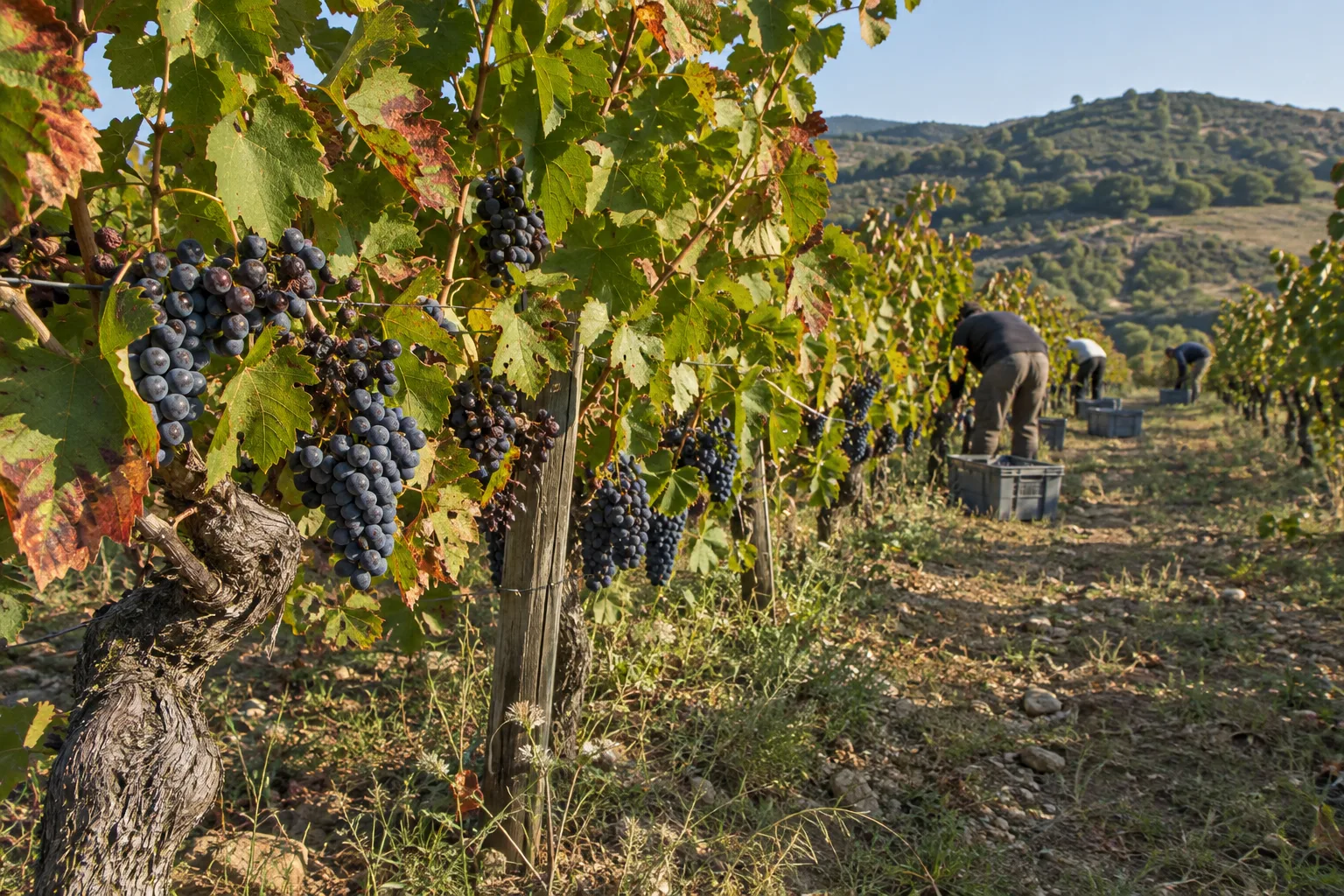
Uruguay produced 70.39 million liters of wine in the 2026 harvest, 13.2% more than in 2025, from approximately 93.2 million kilograms of grapes. The harvest ended in April after favorable weather; the absence of damaging rain allowed picking at optimal ripeness without the premature harvesting that sanitary risks can sometimes require.1
The production recovery coincided with weak domestic consumption and inventories carried over in winery cellars. Reports of unsold wine and commercial difficulties have raised concerns about winery liquidity, because tighter cash flow could constrain purchases of grapes for the following season and transfer the pressure to growers.1
Logistical and port problems have also been identified as obstacles to commercial management, although their precise effect has not been quantified. Even without such an estimate, the combination of greater output, existing stocks and soft demand has made sales more difficult for Uruguayan wineries.1
Consequences across the wine chain
The regional picture therefore consists of distinct but simultaneous challenges: Argentina has slower internal demand, most visibly in varietal wines; Chile has weaker bottled and bulk exports; and Uruguay must market a larger harvest while inventories remain elevated in a subdued market.1
These conditions can affect pricing, promotions and product development throughout the beverage sector. They may also accelerate producers’ efforts to develop lighter, lower-alcohol and alternative products as consumer drinking habits change.1
Sources
Written by the Dionysus editors from the sources above.