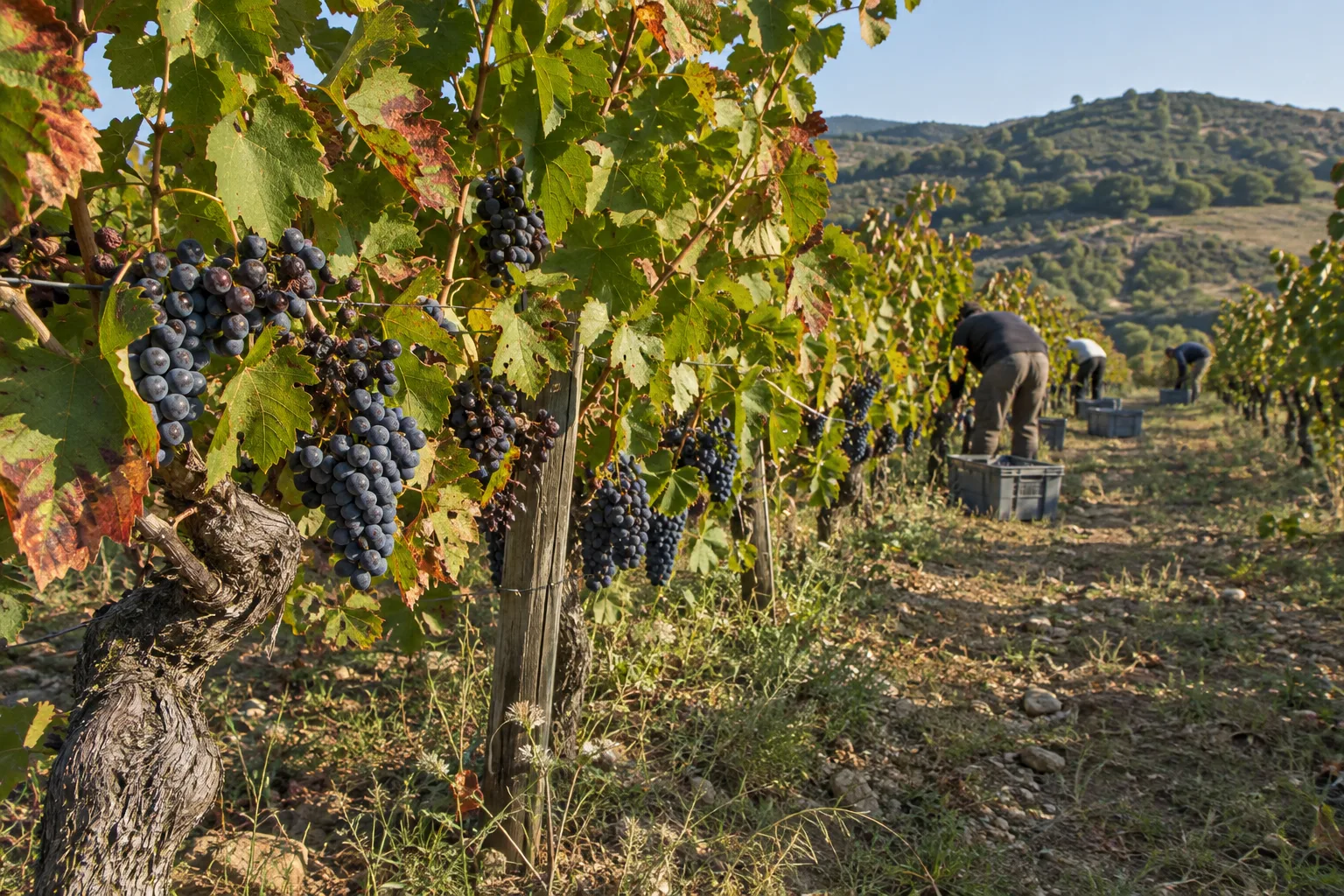
Spain’s wine cooperatives forecast 34 million hectoliters for 2026/27
Cooperativas Agro-alimentarias de España expects Spanish wine and grape must production to total about 34 million hectoliters in 2026/27, potentially the fourth consecutive campaign below 37 million hectoliters, as weaker consumption and exports add to pressure from a heat-reduced harvest.
An early, heat-affected harvest
Cooperativas Agro-alimentarias de España presented its estimate at a sector meeting in Cariñena, in Zaragoza province, on November 11. National wine and grape must production is expected to reach about 34 million hectoliters in the 2026/27 campaign. If confirmed, this would be Spain’s fourth consecutive campaign below 37 million hectoliters.1
The harvest began especially early and was affected by successive heat waves, which reduced vineyard yields. The organization nevertheless reported that grape quality was strong.1
Consumption and exports retreat
The smaller crop coincides with weaker demand in Spain and overseas. Domestic wine consumption declined by 8.3% in the 12 months through August 2026, while Spanish wine exports fell by 9.4% in volume during the previous campaign. The combination of lower production and softer demand could affect stocks, prices and trade flows, particularly in export markets where Spain is a major supplier.1
The national wine conference was organized with support from Cooperativas Agroalimentarias de Aragón and sponsored by Santander Agro. About 100 cooperative representatives from several regions, industry professionals and specialists attended to assess market conditions and potential sources of growth.1
Tourism and younger consumers
Fernando Ezquerro, president of the organization’s wine sector council, called for new channels to increase recognition and consumption of Spanish wine at home and abroad. He identified international tourism as an opportunity: Spain receives nearly 100 million foreign visitors annually, but many do not fully recognize it as one of the world’s leading wine-producing countries. The sector sees potential to connect those visitors with wine purchases, winery visits and wine culture.1
Ezquerro also argued that the industry must reach younger consumers by presenting wine as part of a broader cultural and rural experience, rather than only as a beverage. Cooperatives are consequently giving wine tourism a larger role in introducing people to vineyards, winemaking and local culinary traditions.1
Diversification beyond conventional wine
Diversification was a central conference theme as changing drinking habits make reliance on the traditional wine market more difficult. Participants discussed dealcoholized wine as an additional field for innovation and growth, not as a substitute for conventional wine. The aim is to offer more choice and create occasions that do not fit established patterns of wine consumption.1
The approach responds to moderation, health concerns and lifestyle changes affecting wine, beer and spirits. Cooperatives consider lower- and no-alcohol products a possible means of retaining retail space and reaching people who might otherwise leave the wine category.1
Policy and international markets
The conference examined the European Union’s Common Agricultural Policy for 2028–2034. No specific policy outcome was announced, but the organization said the next framework would matter to Spanish winegrowers as negotiations over funding and support proceed amid climatic stress, volatile markets and pressure on profitability.1
Cooperatives are also seeking countries with stronger growth prospects and ways to improve the position of Spanish wine abroad. This effort is intended to help exporters recover from the recent contraction in overseas volumes and adjust to tougher conditions in established markets.1
Cooperativas Agro-alimentarias de España represents 398 cooperative wineries that, according to the organization, account for about 70% of national wine production. Its forecast therefore points to broad sector pressures: despite good grape quality, low harvest volumes, falling domestic consumption and declining exports are pushing cooperatives toward new products, consumers and markets.1
Sources
Written by the Dionysus editors from the sources above.