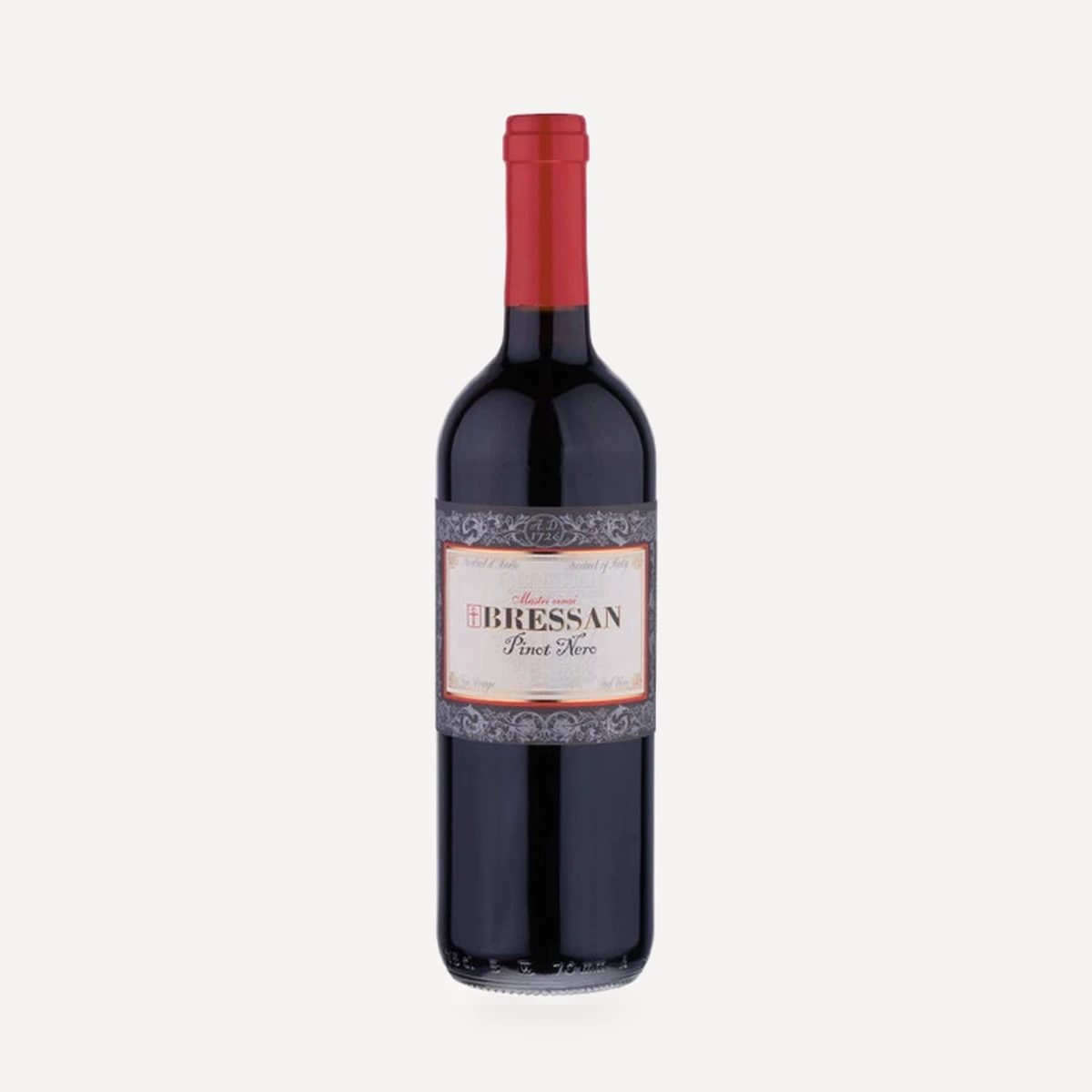
About this wine
Vineyard and terroir
The 1.3256-hectare holding is divided between Corona, a hamlet of Mariano del Friuli, and Farra d’Isonzo in the province of Gorizia. It comprises part of parcel 1389/1 on land-registry sheets 1, 3, 4 and 5 at Corona and parcel 161/10 on sheet 10 at Farra d’Isonzo. The vineyard was planted in 1990.
The calcareous mineral soils contain abundant iron sesquioxides but little organic matter and few nutrients. These restrictive conditions slow vegetative growth and help limit production. The vines face south, with rows oriented northwest–south. Spacing is 2.70 × 0.80 m, equivalent to 4,630 vines per hectare. Unilateral Guyot training retains four to five buds per cane; light summer trimming balances foliage and clusters. No fertiliser is applied. Rootstock is SO4 Kl. 31 Op., while the clonal material comprises 113, 115, Lb4, Lb9, R4, R18, 777 and 828.
Grapes
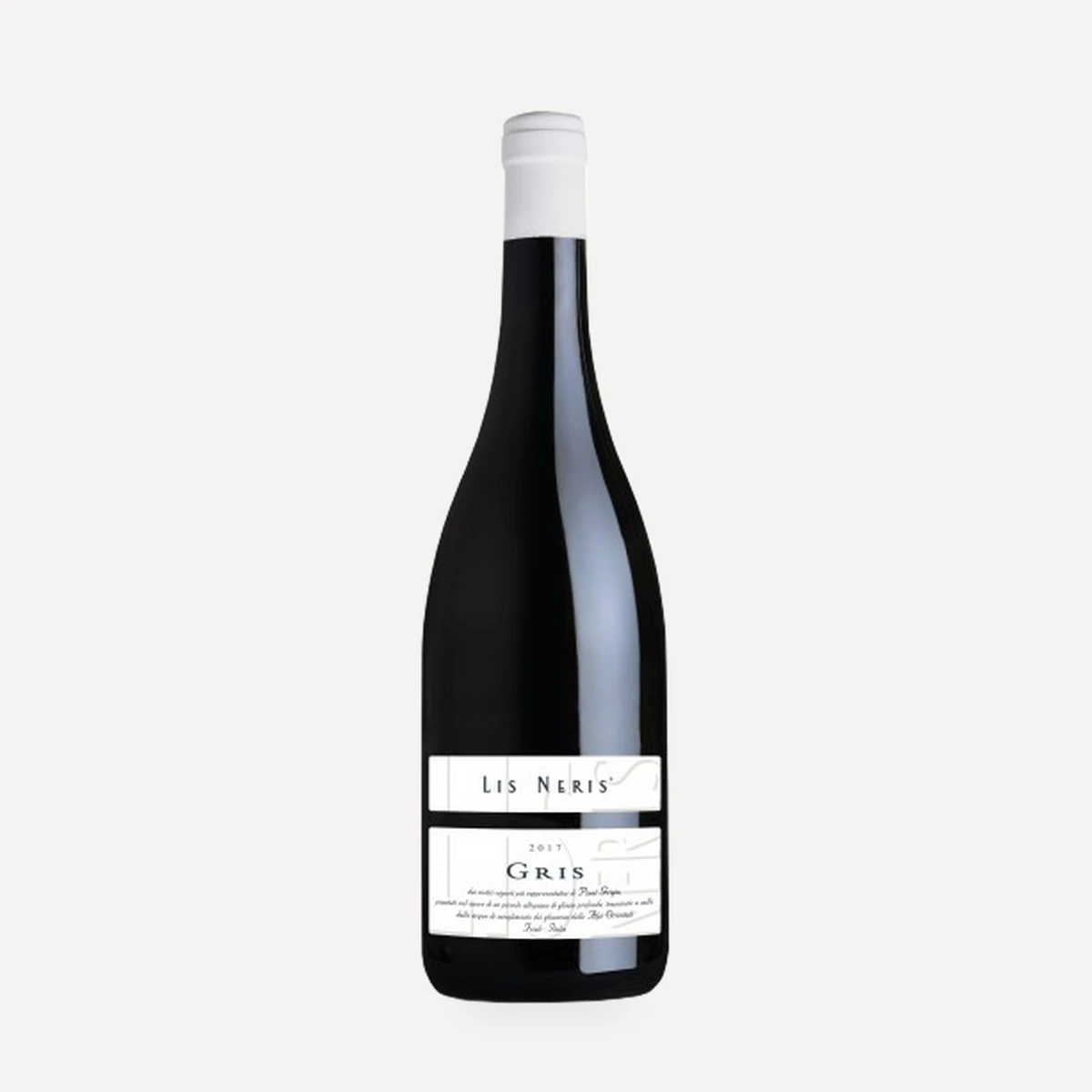
100% Pinot Nero from the Isonzo del Friuli and Collio DOC zones. Yield is 3,500 kg per hectare, approximately 0.8 kg per vine.
Vinification
Harvesting is exclusively by hand at physiological maturity, timed according to the ripening curve. The grapes are destemmed and gently pressed, then undergo extended skin maceration during primary fermentation. Continuous cooling with well water maintains a controlled temperature of 25–28°C. After racking, slow secondary fermentation continues for another 30 days. The wine is subsequently held in AISI 316 stainless-steel tanks.
Ageing
Maturation continues for at least five years in 2,000-litre oak casks. After bottling, groups of 500 bottles are packed in large chests and kept in temperature-controlled warehouses for further ageing. Extended maceration and elevated fixed acidity provide the foundation for prolonged development.
Tasting profile
Ruby red, dry and lightly aromatic. With time in oak and further maturation, its character develops towards goudron, burnt wood, truffle, raspberry and wild blackberry. At maturity, the bouquet becomes elegant and ethereal, with notes of underbrush and musk.