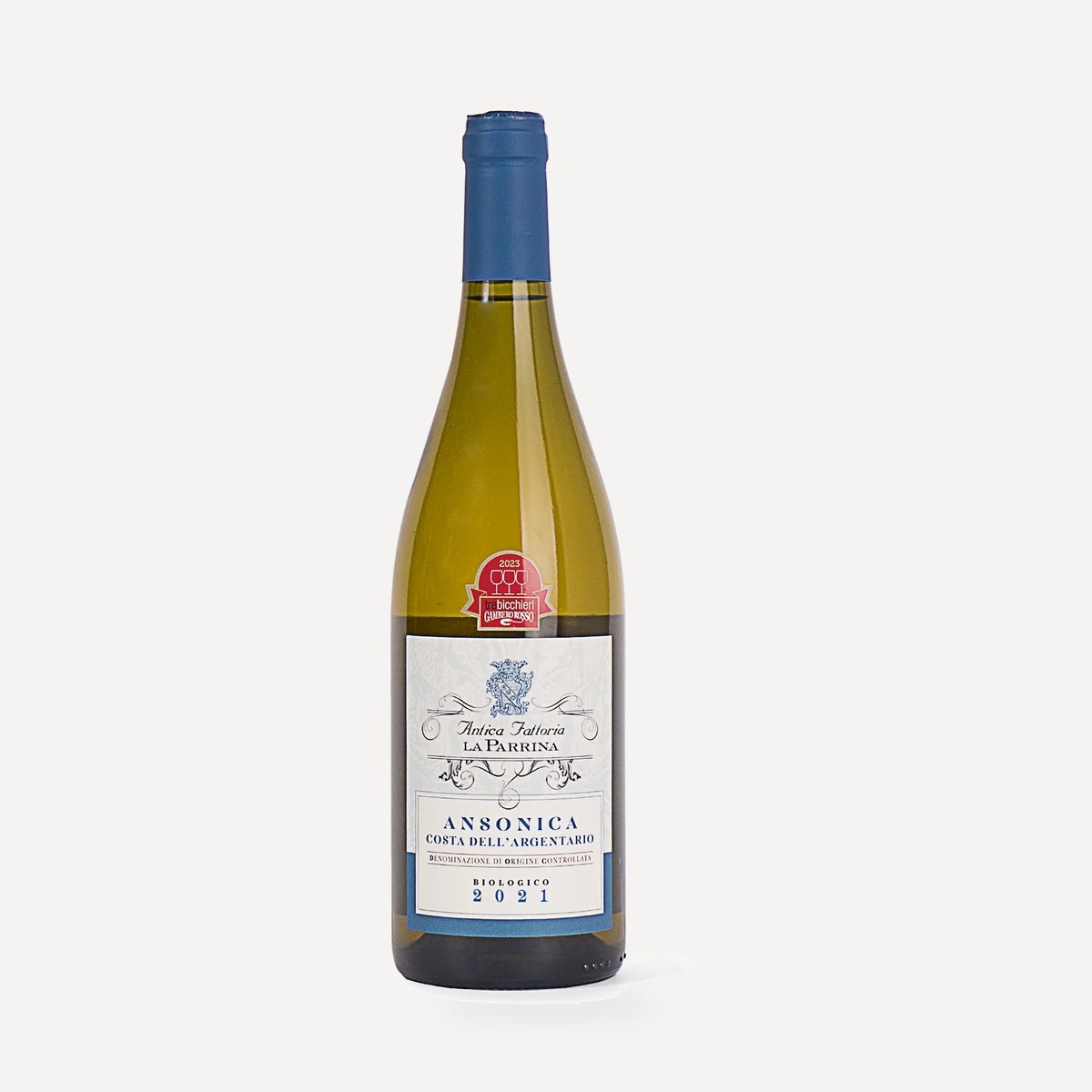
About this wine
Vineyard and terroir
A blend of Ansonica, Trebbiano, Vermentino and Sauvignon Blanc from the Muraccio, Laura and Casetta di mezzo vineyards in Parrina. The vineyards stand on silty, clay and calcareous soils. The varieties are harvested separately according to their individual ripeness.
Grapes
Ansonica, Trebbiano, Vermentino and Sauvignon Blanc; proportions are not specified.
Vinification
Small bunches are removed and the grapes are softly crushed. Cooling to 8–10°C with liquid and/or gaseous CO₂ limits oxidation and preserves primary aromas. The juice then settles for several hours at low temperature, producing a clear must free of impurities. Fermentation takes place in stainless steel at 16°C. Published fermentation times differ: the detailed fact-sheet narrative gives approximately 12 days, while its summary and the product description give approximately 17 days.
Ageing
After fermentation, the wine is transferred under inert gas and remains on fine lees in stainless steel for at least six months. The closure is a one-piece natural or technical cork.
Technical data
- Alcohol: 12.0% vol.
- Bottle: 750 ml
Tasting profile
Straw yellow with greenish reflections. Delicate and lightly aromatic on the nose, with distinct medlar and hawthorn notes. The palate is soft, fresh and finely structured: clean, savoury and dry yet velvety, with delicate fruit, liveliness and freshness.
Serving and pairing
Serve at 10–12°C. Pair with cold starters, broth-based soups, fish, shellfish and fresh cheeses.
Label / history
White wine from the Parrina area has long been consumed in the Tuscan Maremma, traditionally accompanying fish dishes such as marinated and smoked eels from the nearby Orbetello lagoon.