About this wine
Vineyard and terroir
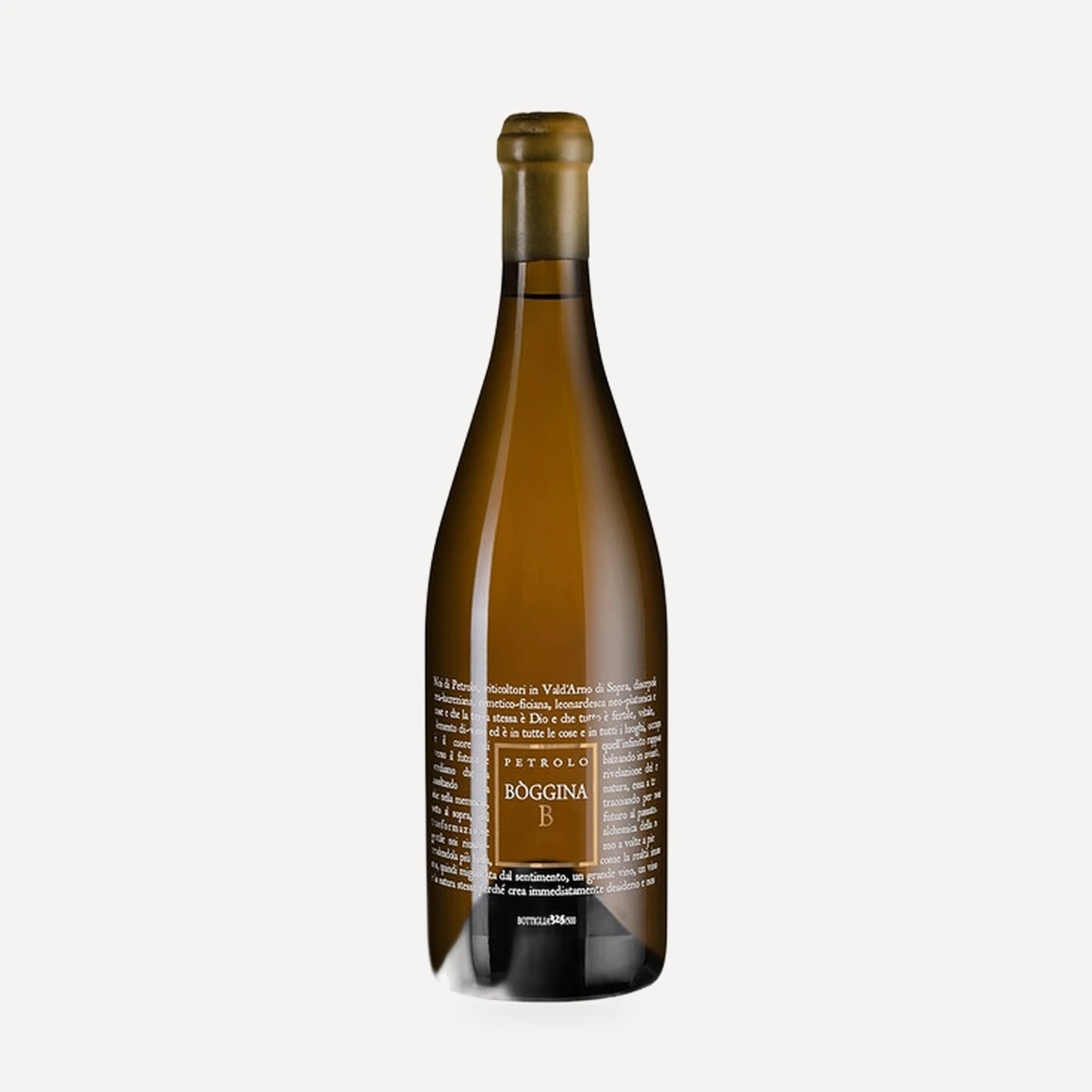
The fruit comes from Petrolo’s younger Trebbiano vineyards. The wine emerges from the same selection process used for Bòggina B, with suitable lots directed toward this separate expression.
Grapes
100% Trebbiano. Torrione Trebbiano is a non-vintage wine assembled from different lots and harvests that share the same cellar approach. Each release is identified by a lot number reflecting its composition and constituent vintages; the first release combines the 2023 and 2024 harvests.
Vinification
The grapes are harvested by hand into crates. Both bunches and individual berries are selected on a sorting table. Fermentation begins spontaneously with indigenous yeasts in tonneaux.
Ageing
The wine matures on its lees in specially selected French oak tonneaux. Bâtonnage is regular during the opening months and gradually becomes less frequent thereafter. The wine is not racked before bottling. The narrative description gives approximately 20 months on the lees, while the technical ageing section specifies more than 15 months.
Technical data
IGT Toscana Trebbiano. The wine is produced and bottled at the estate. Production is approximately 4,000 bottles in the English presentation; the Italian version gives approximately 5,000 bottles.
Label / history
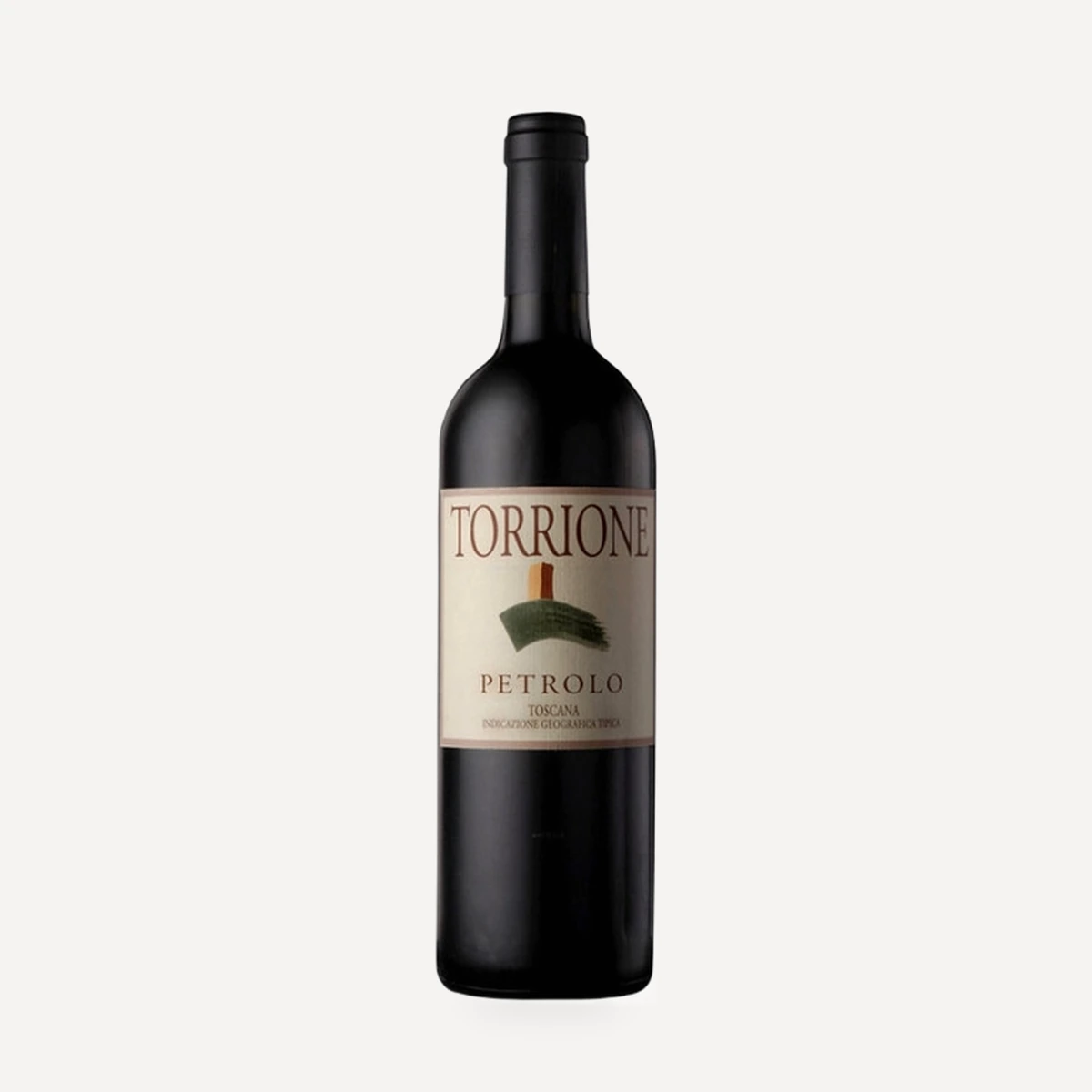
Torrione Trebbiano takes its name from Torrione, Petrolo’s first wine of its modern era, introduced with the 1988 harvest. It extends the original Torrione concept into a Trebbiano expression, combining the precision of the Bòggina B selection process with a focus on younger vines. Rather than a conventional vintage wine, it is released as a blend of compatible lots from different harvests, with each bottling distinguished by its lot number.