History
Historical roots of Val d’Arno di Sopra
Viticulture around Petrolo predates the modern estate. In 1716, Grand Duke Cosimo III de’ Medici issued an edict identifying four Tuscan areas noted for fine wine and olive oil: central Chianti, Carmignano, Pomino and Val d’Arno di Sopra. Petrolo lies among the hills of the latter area, between Florence and Arezzo.
In 1834, Petrolo belonged to Giorgio Perrin, a Swiss-born agronomist and honorary member of Florence’s Accademia dei Georgofili. Writing in the Giornale Agrario Toscano, Perrin praised the estate’s Sangiovese, particularly the vines at Campo Asciutto, the place now known as Bòggina. He also recorded the local practice of blending Sangiovese with “uve franzose”—French varieties—on the principle that the character of the land prevailed over varietal differences.
The Bazzocchi acquisition and foundation
The Bazzocchi family acquired Petrolo during the 1940s. Engineer Gastone Bazzocchi is identified as the founder of the modern estate in 1947. His ambition was to produce a distinguished Sangiovese, and he established the historic Bòggina vineyard between 1951 and 1952.
Production in the 1950s followed a very different model from the present one: vineyards averaged about 1,500 plants per hectare and yielded approximately 3,500 hl of wine. Petrolo also produced Vinsanto del Chianti from this decade onward. Several rows of Malvasia Bianca associated with that production survive from the 1960s, while Sangiovese and Trebbiano plantings dating from the 1970s remain part of the estate’s vineyard heritage.
The modern quality project
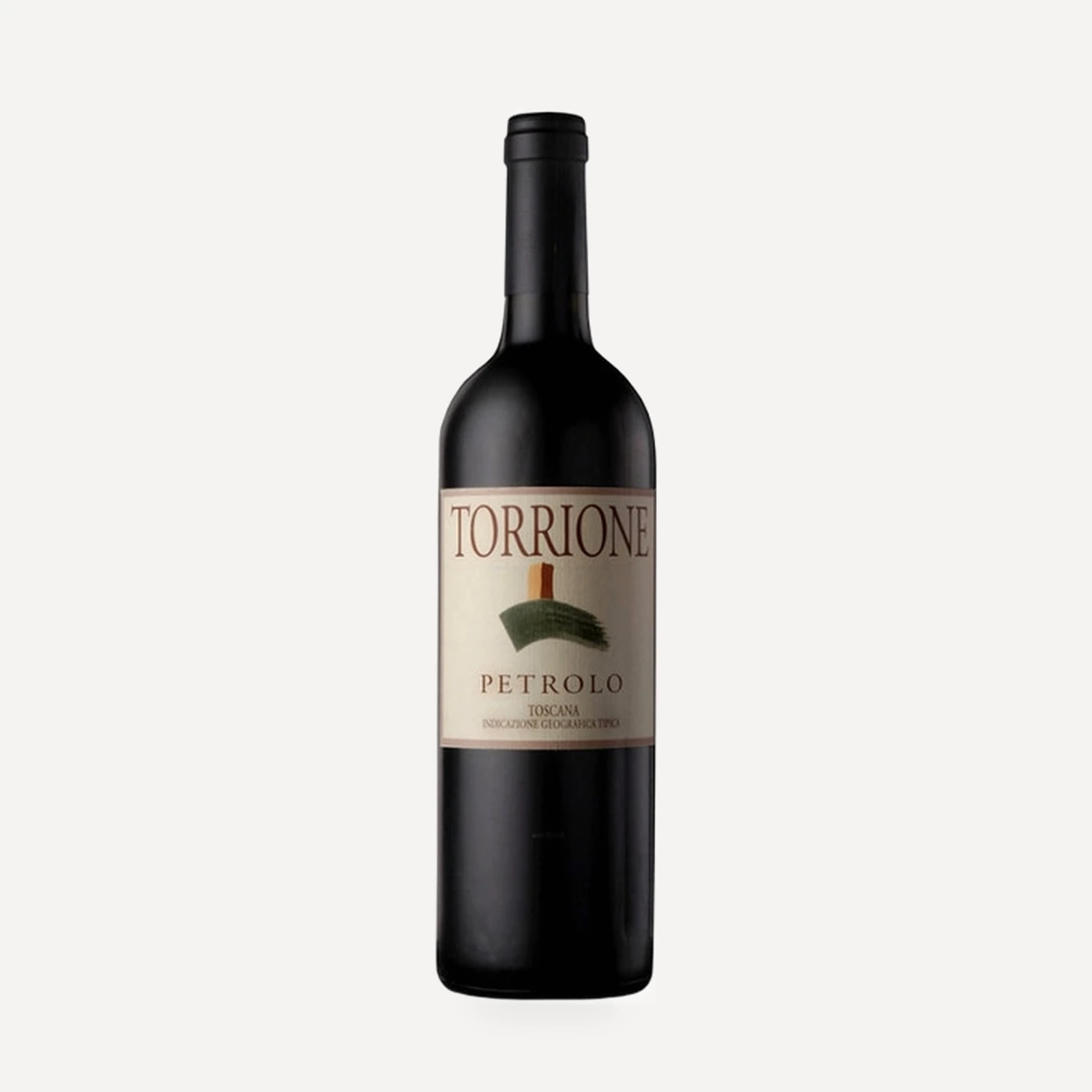
From the second half of the 1980s, Petrolo redirected production toward a smaller number of characterful, site-related wines. Lucia Bazzocchi Sanjust initiated Torrione in 1988 with consulting oenologist Giulio Gambelli. The project marked the decisive reduction in volume and much stricter grape selection. Bòggina supplied the core Sangiovese, joined by fruit from other estate vineyards and, subsequently, Merlot and Cabernet Sauvignon.
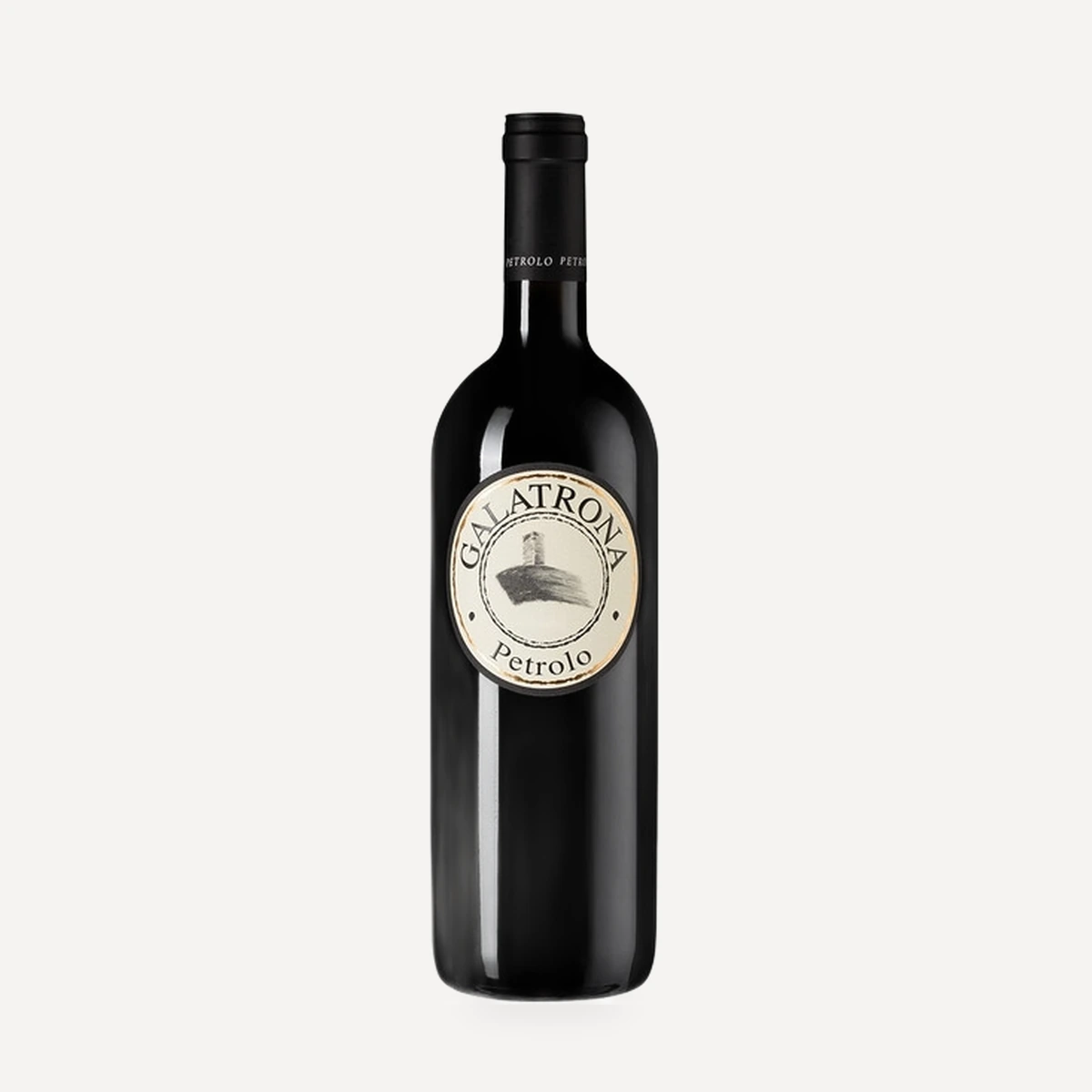
The first Merlot vines at Galatrona were planted around the end of the 1980s and in 1990; planting continued into the mid-1990s with low-vigour Bordeaux clones. Galatrona was first produced in 1994. Lucia’s ideas were later developed by her son, Luca Sanjust.
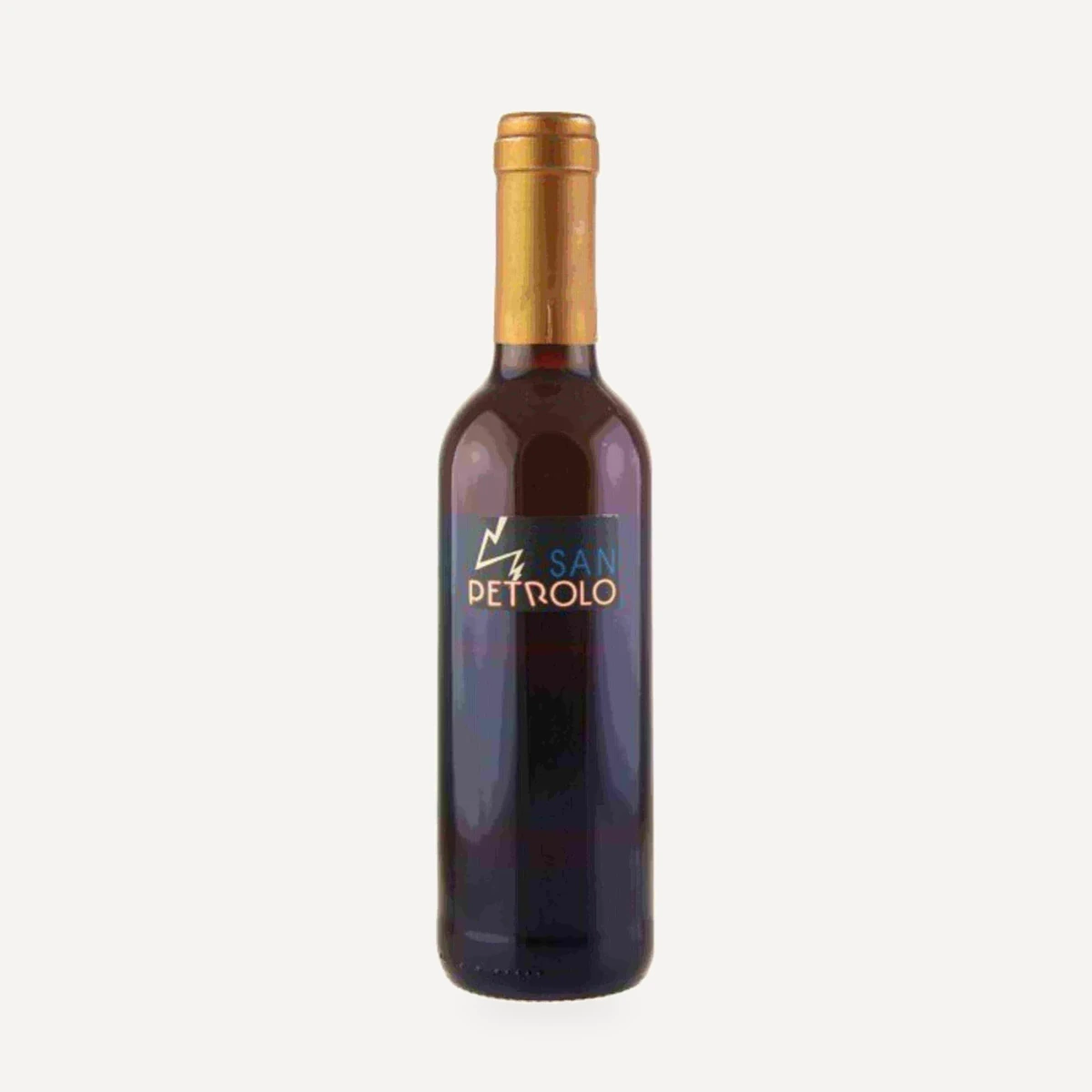
Campo Lusso was planted with Cabernet Sauvignon on 11 September 2001. The same vintage brought a change to the estate’s historic sweet wine: the Vinsanto del Chianti produced since the 1950s was renamed Sanpetrolo and released as Toscana Passito IGT because its nine-year maturation, moderate alcohol, high residual sugar and unfiltered character did not fit the estate’s interpretation of the Vinsanto regulations. Campo Lusso’s first vintage followed in 2004.
Sustainable conversion and vineyard-designated wines
In 2004 Petrolo began replacing conventional cultivation with dry farming, permanent grass cover and mulch management, while eliminating tillage, fertilization and synthetic pesticides. Bòggina C first appeared with the 2006 vintage, giving the historic Sangiovese vineyard a vineyard-designated bottling. Petrolo joined the Toscano IGP olive-oil system in 2009.
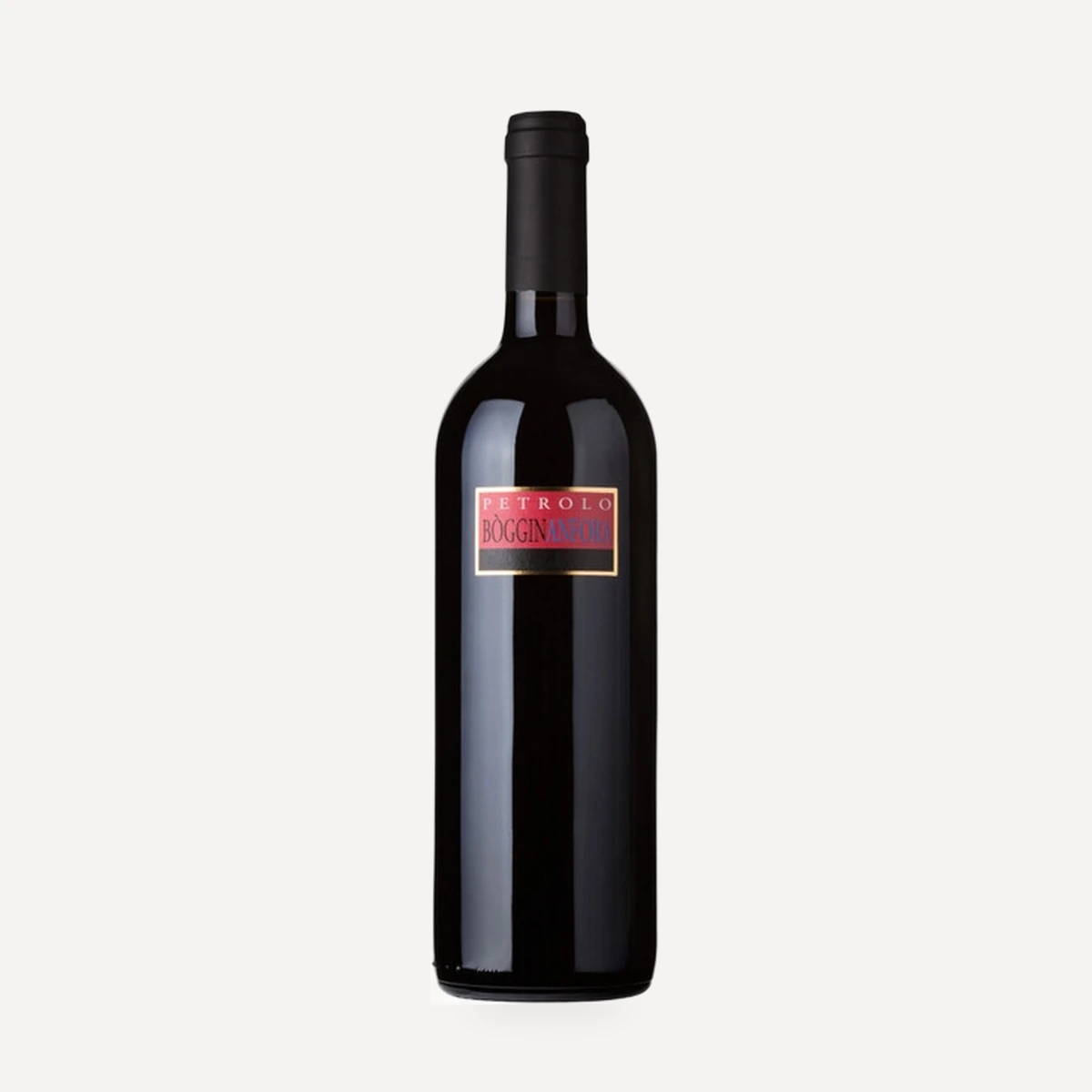
The Val d’Arno di Sopra denomination was formally recognized by ministerial decree on 13 June 2011. That year Petrolo introduced Bòggina A, fermenting and ageing selected Bòggina Sangiovese in terracotta amphorae. Bòggina B followed in 2014, reviving Valdarno’s historic white-wine tradition through Trebbiano selected locally and descended from the estate’s 1970s material.
Ospedale and Piani were planted with Sangiovese in 2015. From the 2016 vintage, Petrolo’s vineyards and wines obtained organic certification. For Bòggina C, the 2019 vintage introduced Riserva status and a new label based on a commissioned painting by Sabina Mirri.
Recent developments
A new Mori-Tem olive mill entered service with the 2022 harvest, adding controlled temperature and micro-oxygenation, adjustable kneading and decanter speeds, and nitrogen-protected storage to the estate’s olive-oil production.
Torrione Trebbiano extended the modern Torrione project to the estate’s younger Trebbiano vineyards. Its first release blends the 2023 and 2024 harvests and is presented as a non-vintage wine identified by lot number. Across the estate, the transition from the 1950s production model is marked by approximately 5,500 vines per hectare, yields of about 20–25 hl/ha and total output of roughly 650–700 hl.
Terroir
Petrolo occupies the hills of Val d’Arno di Sopra on the southeastern edge of Chianti Classico, within the municipality of Bucine. Its vineyards cover 35 ha at elevations between 250 and 500 m. Woods are a defining presence: vineyards and olive groves form a mosaic with extensive oak woodland, while small lakes moderate individual sites such as Casariccio.
Estate soils are moderately loose and layered with galestro or shale, sandstone, marl and alberese. The balance of geology, elevation and exposure varies by vineyard. Galatrona, at approximately 300 m with southeastern exposure, has loam with a higher concentration of clay together with shale, marl and sandstone. The clay retains moisture needed by Merlot during hot, dry summers. Campo Lusso occupies a natural terrace at roughly 450–500 m below the Torre di Galatrona; its stony loam is rich in living organic matter and faces undisturbed woodland.
Within the broader Val d’Arno di Sopra setting, the eastern and western slopes of the Arno valley lie between the Arezzo plain and the Florentine hills. The area is intermediate on the Rocchi climatic scale, meaning adverse climatic trends tend to have less intensity than favourable ones. A temperate-cool Apennine influence combines with Mediterranean conditions in summer, supporting progressive final ripening without severe peaks. Average rainfall is 550–700 mm, approximately 70% of it falling in autumn and winter. Lower-Miocene formations include sandstone with small amounts of calcite, schist, marl and fine sandstone containing quartz and feldspar or greater carbonate content.
The estate’s vineyards coexist with olive groves and woods as a single agricultural ecosystem. From the Torre di Galatrona, this landscape extends across the Chianti woodland and Val d’Arno di Sopra toward the Pratomagno mountains.
Winemaking
Petrolo began abandoning conventional viticulture in 2004. All vineyards are now dry-farmed without irrigation, tillage, organic manure, inorganic fertilizer or synthetic pesticides. Permanent grass cover is maintained throughout the rows and cut as conditions require. The cut vegetation remains as mulch, returning micro- and macroelements, moderating excessive solar heating and balancing soil moisture. During wet periods and winter, living cover absorbs excess water, reduces erosion and helps prevent waterlogging.
The coexistence of herbaceous and woody plants is intended to create a self-regulating balance and more uniform, healthy vines and olive trees. Pressed grape skins are returned to the rows as natural fertilizer, closing the biological cycle of grape production.
Canopy and vine management are performed by hand through targeted intervention. Mature, naturally balanced vineyards require little severe pruning or crop thinning; extraordinary growth management is largely reserved for difficult seasons. Planting density averages approximately 5,500 vines/ha, compared with 1,500 vines/ha in the 1950s. Average yields are restricted to about 20–25 hl/ha, and individual vines used for principal red-wine production may be limited to no more than 1 kg of fruit.
Harvesting is manual into crates or perforated boxes. Grapes are subsequently selected on a sorting table. Petrolo obtained official organic certification for its vineyards and wines beginning with the 2016 vintage; its olive groves had already been farmed organically since the 1990s.
Production is based on hand-harvested fruit carried in crates and selected by bunch and berry on a sorting table. The principal red-wine approach uses natural fermentation with native yeasts in cement or glazed-concrete vats, accompanied by frequent but gentle manual pump-overs. Malolactic fermentation may occur spontaneously in wood. Depending on the selection, maturation takes place in concrete, French-oak casks of 22 or 40 hl, 7 hl tonneaux and barriques. Fine-lees bâtonnage is used during the first six months for selected Merlot and Cabernet Sauvignon lots.
The estate also works with terracotta amphorae of 300 and 500 litres. Selected Sangiovese ferments with native yeasts and manual punch-downs; after fermentation, the amphorae are sealed with the skins for an extended maceration of approximately eight months. Following separation from the skins, maturation continues in amphora for roughly six months. This approach supplies oxygen exchange without adding oak flavour and allows the wine to remain naturally protected during long skin contact with almost no added sulphites.
Trebbiano is naturally fermented with native yeasts in tonneaux. White-wine maturation takes place on the lees for more than 15 months in selected French-oak tonneaux, with frequent bâtonnage initially and progressively fewer interventions thereafter. The wine is not racked before bottling. The non-vintage Torrione Trebbiano concept blends compatible lots from different harvests and extends total lees ageing to approximately twenty months.
For the historic passito method, selected Malvasia Bianca and Trebbiano bunches are placed in ventilated openwork crates and dried in an airy room until close to Easter. Healthy whole bunches are then gently pressed in a pneumatic press. After roughly two days of settling, the must is transferred to new 50-litre oak caratelli filled to about 70%. Fermentation and nine years of maturation occur in the ventilated vinsantaia, where the barrels experience wide temperature fluctuations. Only the best casks are assembled, followed by bottling and bottle maturation. The wine is not filtered.
Across the estate, the production model has shifted from approximately 3,500 hl in the 1950s to roughly 650–700 hl, supported by higher planting density, very low yields and increasingly exact selection.
Philosophy
Petrolo’s modern project seeks wines with a distinct relationship to the estate rather than a hierarchy built around a basic bottling. Its guiding model combines severe grape selection, low production per vine and attentive cellar work intended to support the character of the fruit without obscuring it. Quality is understood as the conjunction of favourable soils and climate, careful work in vineyard and cellar, and the unavoidable influence of each season.
Luca Sanjust defines a great wine as something that must speak the language of its particular ground, carry the stories of the people who conceived and made it, and embody generations of life and work on the same land. Variety is therefore subordinate to place: the estate’s historical justification for combining Sangiovese and French grapes is that Petrolo’s terrain remains the dominant influence.
The estate’s more philosophical self-description treats the earth as a living unity connecting human, animal and plant life. Progress is paired with a return to ancient materials and ideas, including terracotta, native fermentations and sustained attention to nature. Wine is conceived not as nature alone, but as nature transformed into culture through a light human hand. This position also underpins permanent grassing, organic cultivation and the effort to maintain an internally balanced agricultural ecosystem of vines, olives and woodland.
Wines
Galatrona
Torrione
San Petrolo
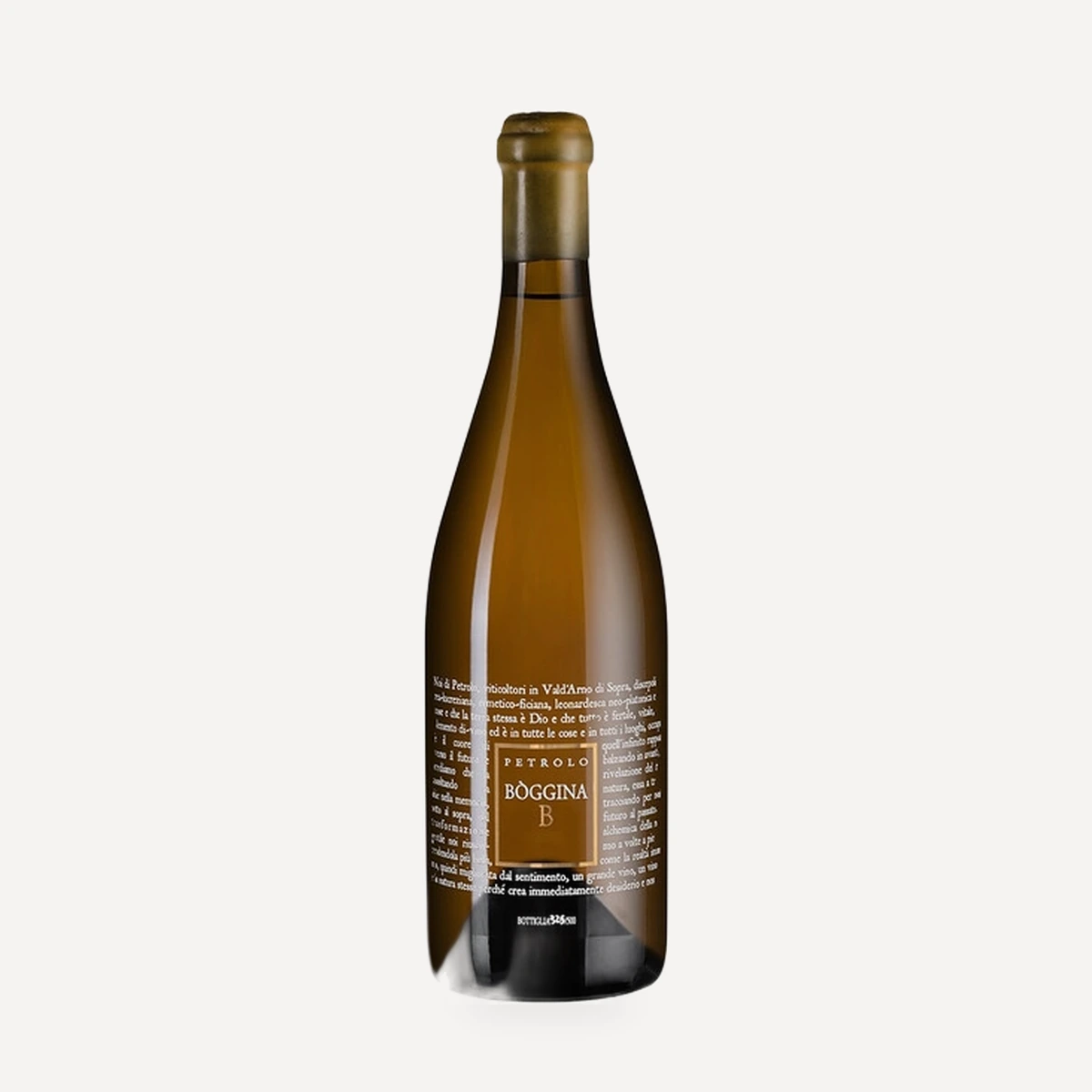
Bòggina A
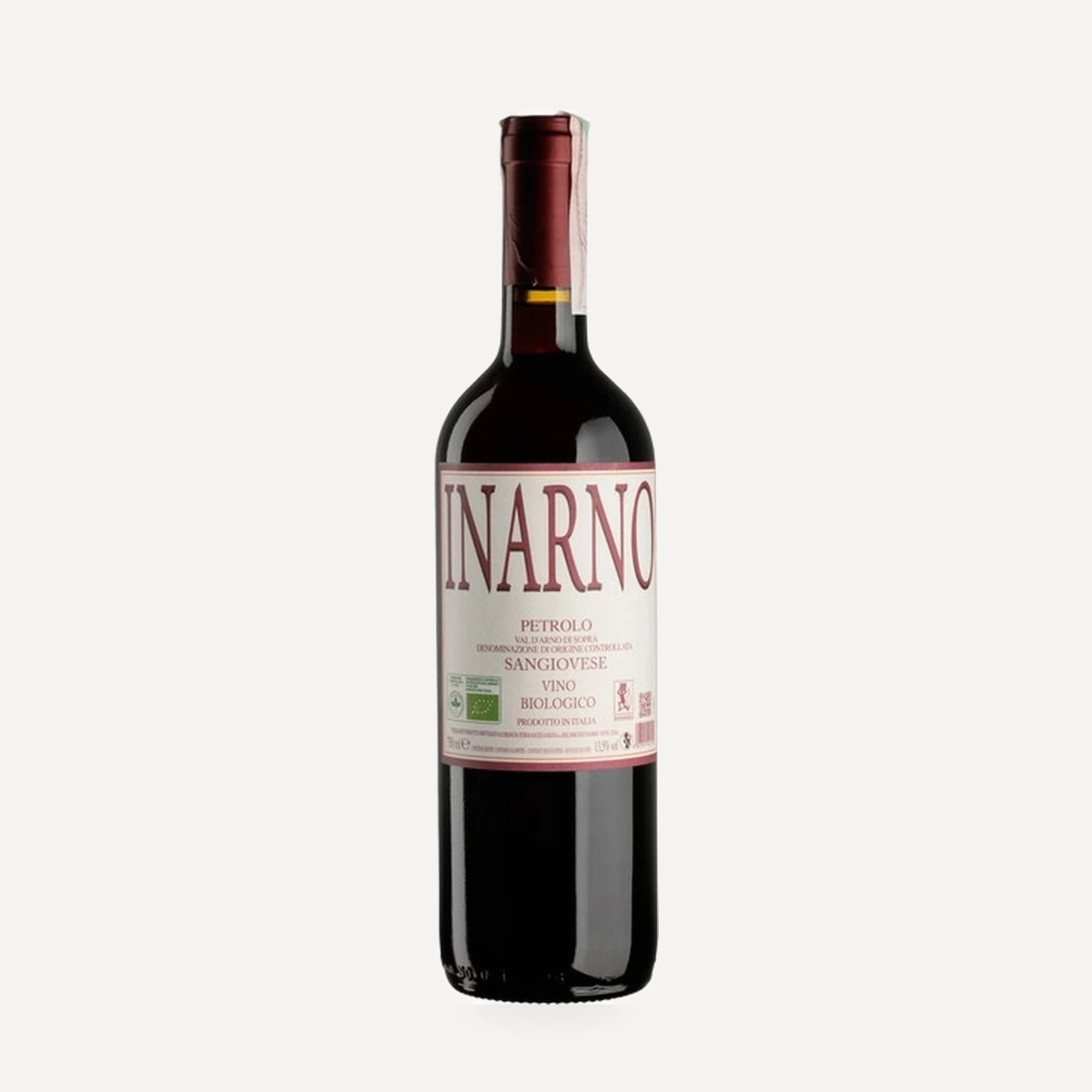
Inarno