About this wine
Vineyard and terroir
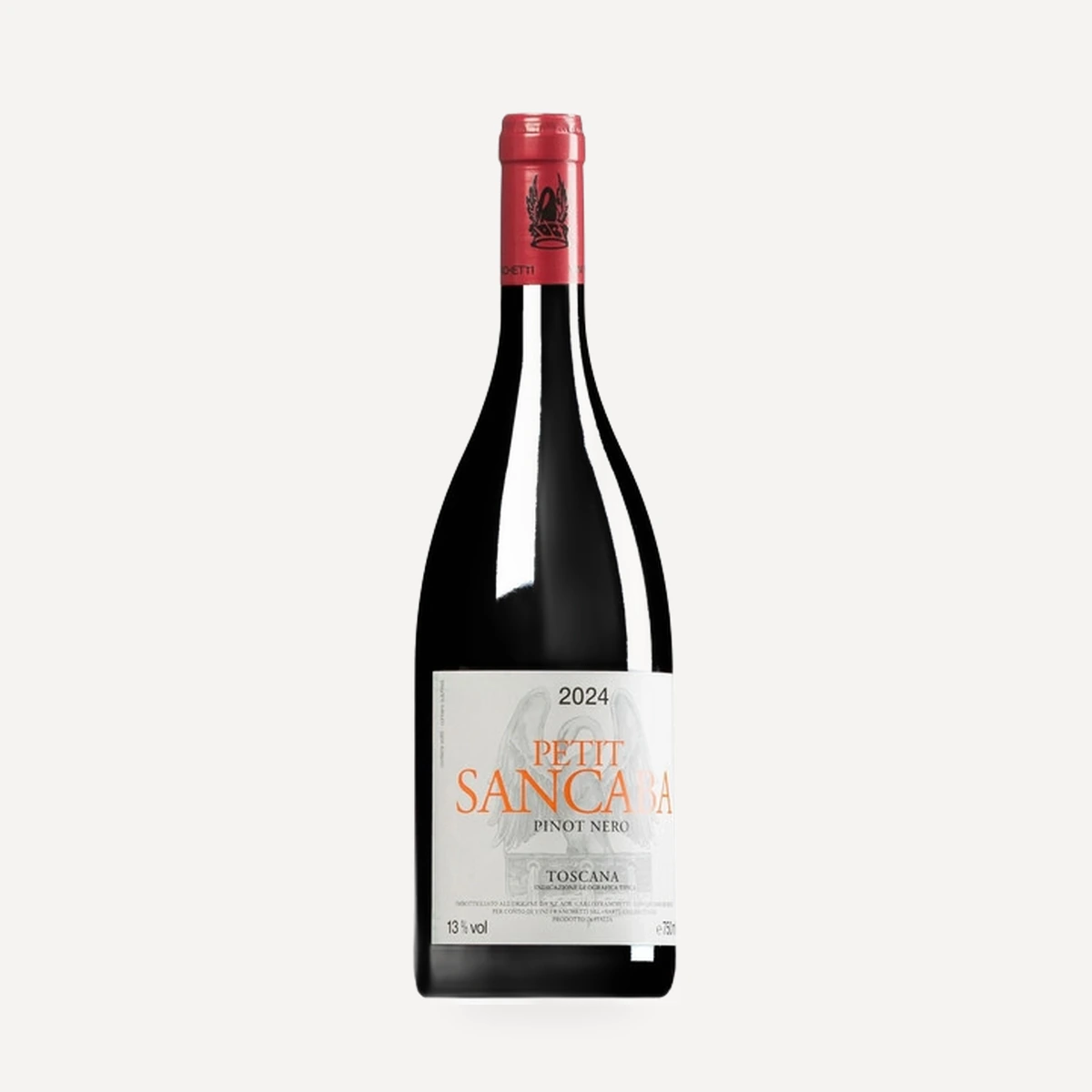
Petit Sancaba is the estate’s second wine. Fruit for the 2024 vintage came from the youngest Pinot Nero vineyard, planted in 2019, together with second-pick grapes from the remaining vineyards. The production area is San Casciano dei Bagni in the province of Siena, at 650 m a.s.l. Vine age ranged from 6 to 18 years, with planting densities of 5,000 and 8,000 vines per hectare and a yield of 4 tonnes per hectare.
The vineyards are certified organic. Fertilization consists of animal manure and green manure, while treatments are limited to copper and sulphur permitted in organic cultivation.
Grapes
Blend proportions vary by vintage. Latest published vintage (2024): 100% Pinot Nero.
Vinification
The grapes were manually selected between the end of August and 11 September. Fermentation proceeded with indigenous yeasts for 10 days in stainless-steel vats, with 25% whole clusters. There were no punch-downs; gentle pump-overs were used solely to keep extraction to a minimum.
Ageing
The wine underwent a relatively short élevage of approximately six months in cement vats. It was bottled during the waning moon in April 2025.
Technical data
- Appellation: IGT Rosso Toscana
- Alcohol: 13.0%
- Production: 5,300 bottles
Tasting profile
Pale in color, the 2024 combines freshness with pronounced fruit and strong aromatic intensity. The palate is dynamic and shaped for immediate enjoyment.
Vintage notes
The 2024 growing season had two contrasting phases. A cool, damp spring and early summer brought abundant rain through early July, though conditions were less intense and phytosanitary management less complicated than in 2023. Grape health remained under control.
The mild conditions ended abruptly in August, when temperatures reached 37–40°C and rapidly accelerated ripening after its previously slow, steady progress. This unexpected heat shifted the vintage away from the initially anticipated cool, delicate profile, producing a more robust, fully ripe wine with intense fruit aromas.