History
The estate and the first Pinot Nero
In 2011, Carlo Franchetti acquired an estate at San Casciano dei Bagni containing a small Pinot Nero vineyard. The name Sancaba is an acronym derived from San Casciano dei Bagni. Carlo's interest in Burgundy, the cool high-altitude conditions and the assistance of his cousin Andrea Franchetti encouraged him to develop the project.
Carlo made the first experimental Pinot Nero in 2012. This initial, home-scale vinification demonstrated sufficient character and potential to justify further investment. Sancaba was formally born in 2013 as the cousins' first collaboration, intended to explore the richness, depth and identity Pinot Nero could express in this particular high-elevation terroir.
Integration into Vini Franchetti
In 2014, Carlo and Andrea brought their businesses together in the newly created Vini Franchetti company. This provided the commercial framework for Sancaba. Production subsequently grew from approximately 1,200 bottles to 3,300 and then to about 6,000 bottles.
The vineyards obtained organic certification in 2016. Newly planted, high-density vineyards entered production in 2017, supplementing the original Pinot Nero parcel. A Grechetto vineyard was planted in 2018–2019, while the youngest Pinot Nero vineyard was planted in 2019.
Farming trials and an estate cellar
Experiments with biodynamic practices began in 2020. In 2021, production moved into a new cellar created by converting part of the estate's original farmhouse at San Casciano dei Bagni. The 2022 vintage was the second made in this facility and consolidated a stylistic shift toward greater finesse, aromatic expression, earlier fruit character and deliberately restrained extraction.
Development of the range
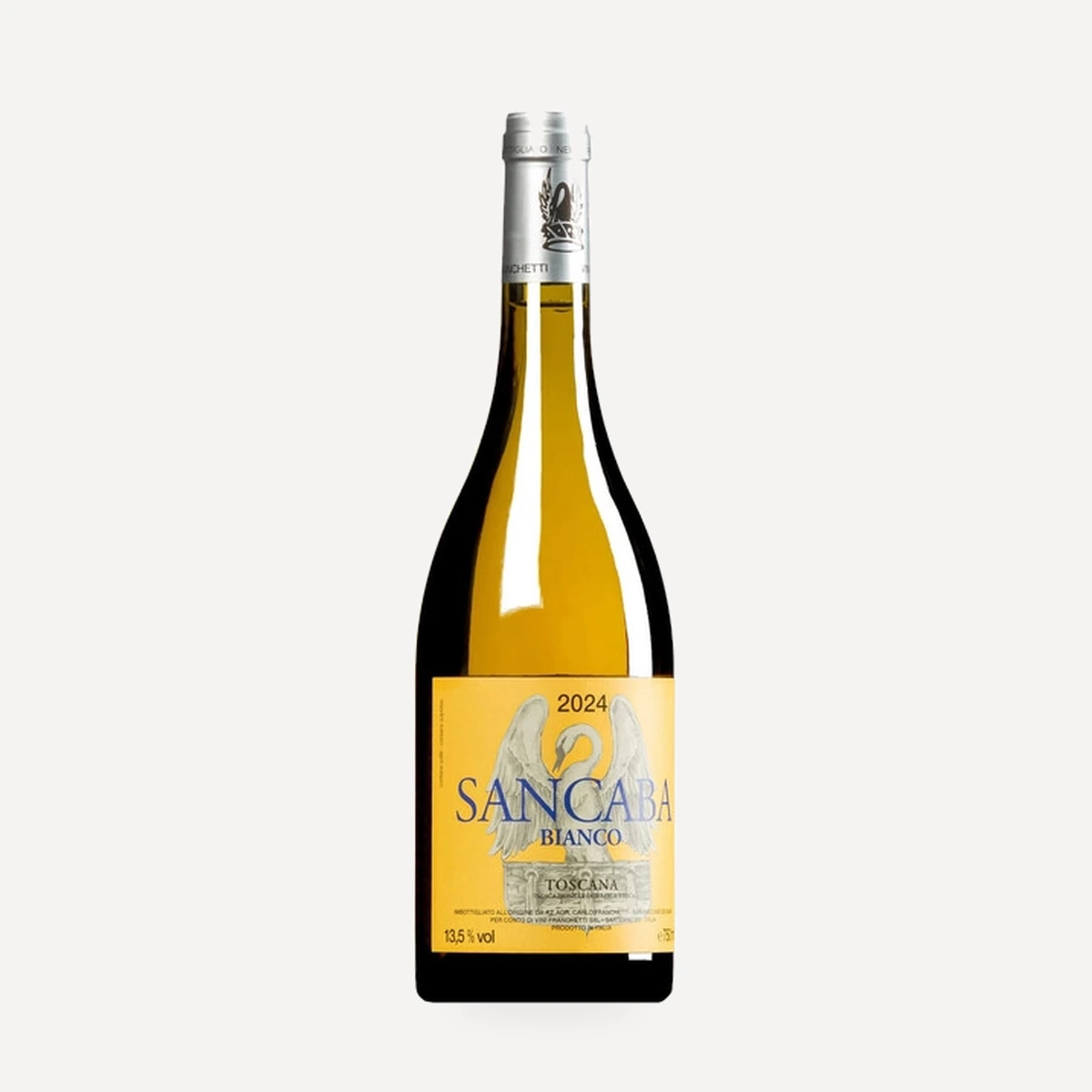
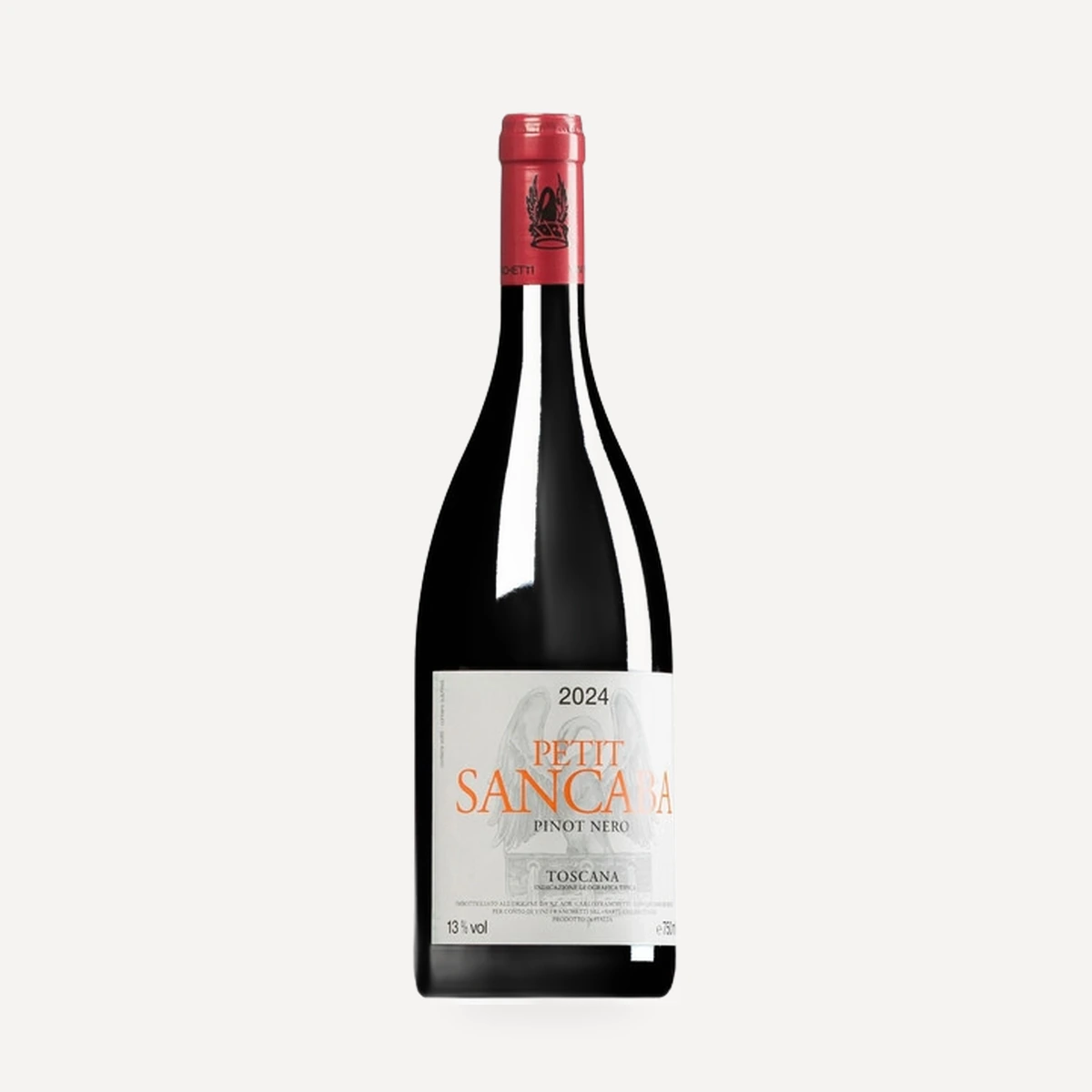
Petit Sancaba was developed as the estate's second Pinot Nero, drawing on the youngest vineyard and second selections from the other vineyards. The first Sancaba Bianco was produced from the 2023 harvest, five years after the initial Grechetto planting. By the 2024 vintage, the estate was producing three expressions: Sancaba Pinot Nero, Petit Sancaba and Sancaba Bianco.
Terroir
Sancaba lies in the hills above San Casciano dei Bagni, at the southern edge of the province of Siena. The vineyards occupy a remote, historically inhospitable border landscape at high elevation. Current technical descriptions place the producing vineyards at approximately 650 metres, while the broader estate setting is described as ranging from 650 to 750 metres.
The site has a mountain-influenced climate, with cool winds arriving from the Apennines, lower average temperatures and marked changes between warm days and cool nights. Rainfall is generally scarce, although individual seasons can depart sharply from this pattern. The altitude and a distinctive northern influence historically extend the growing season, with Pinot Nero harvests sometimes continuing well into October. Recent warmer, drier seasons have moved picking forward in drought-prone parcels.
The Pinot Nero soils are dominated by Galestro, a friable, shaly calcareous clay, interspersed with banks of Alberese, a compact limestone rock. The Grechetto vineyard combines Galestro with sandstone. These crumbly, calcium-rich clay, shale, limestone and sandstone formations create variations within the estate's high-altitude setting.
Winemaking
The vineyards have been certified organic since 2016. Fertility is maintained with mature animal manure, green manure and cover crops. Treatments are limited to copper and sulphur permitted under organic cultivation. Experimental biodynamic practices began in 2020.
Pinot Nero is trained to Guyot, with Poussard pruning used to manage the permanent structure and sap flow of the vines. Planting densities are 5,000 or 8,000 vines per hectare, depending on the vineyard; Grechetto is planted at 8,000 vines per hectare.
Increasingly warm and dry seasons have led to additional soil- and canopy-management measures, particularly on drought-prone Galestro soils. These include abundant straw mulching and tucking shoot tips back into the trellis wires instead of trimming them, thereby avoiding unnecessary stress to the plants. During the dry 2022 season, harvest began at the end of August in the most drought-sensitive parcels and continued until 10 September elsewhere.
Harvesting and selection are manual. Picking dates are treated as central to the intended style: the estate seeks ripe but still vibrant fruit and considers precise timing essential to finesse and aromatic expression. In wet seasons, organic disease control can be particularly demanding. Heavy rainfall and mildew in 2023 severely reduced the Pinot Nero crop, while the thicker-skinned Grechetto proved more resistant.
Vinification has taken place since 2021 in a cellar converted from space within the estate's original farmhouse at San Casciano dei Bagni.
Pinot Nero
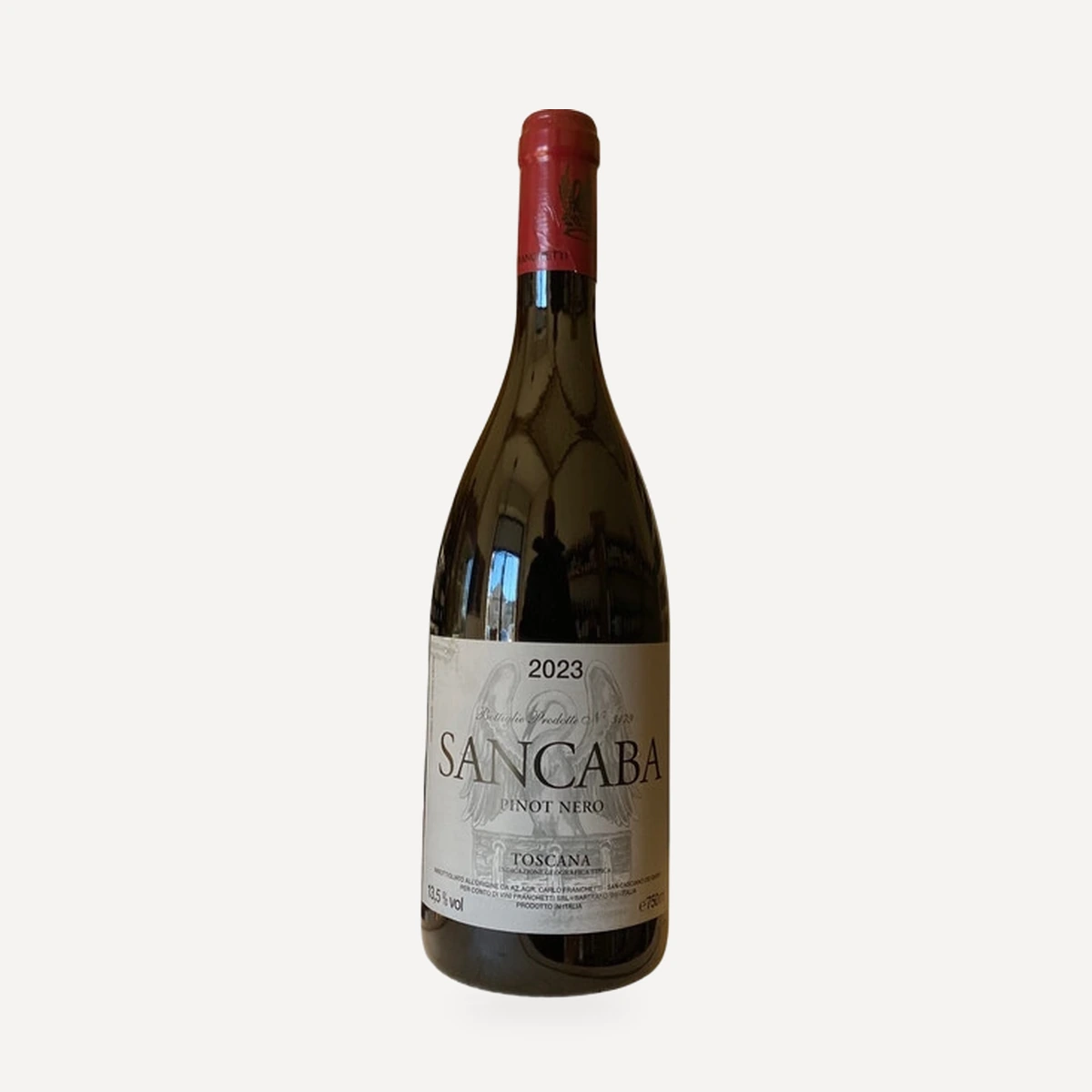
The principal Pinot Nero protocol is designed for limited extraction. Fermentation takes place in temperature-controlled stainless-steel vats without punch-downs and with only light pump-overs. Malolactic fermentation occurs naturally in cement. The wine is then transferred to second- and third-use French oak barriques for approximately 12 months. After barrel ageing, the lots are assembled in a large cement tank and allowed to settle for a further six months, with frequent rackings, before clarification, filtration and bottling.
Petit Pinot Nero selection
The lighter Pinot Nero selection is fermented with indigenous yeasts in stainless steel for approximately ten days. The 2024 protocol incorporated 25% whole clusters. Extraction is kept low by avoiding punch-downs and using only gentle pump-overs. Maturation lasts approximately six months in cement.
Grechetto
Grechetto is harvested by hand and gently pressed, with only the free-run or first-run juice retained. Alcoholic fermentation takes place in stainless steel at a controlled 12°C with indigenous yeasts for approximately two weeks. Most of the wine then spends six months on its fine lees in a 20-hectolitre cement tank, with frequent lees stirring; a small component matures in a 225-litre oak barrique. The components are blended, clarified and filtered before bottling.
Bottling for the documented Pinot Nero and Grechetto releases was scheduled during the waning moon.
Philosophy
Sancaba's stylistic direction emphasizes finesse, elegance and the aromatic expression of its varieties. For Pinot Nero, this means choosing the picking date carefully to preserve vibrant, crunchy fruit and applying a deliberately gentle, low-extraction vinification rather than pursuing weight or concentration.
The project was conceived to test how Pinot Nero could express the richness and depth of the high hills around San Casciano dei Bagni. Its approach combines high-density vineyards, Burgundy-derived plant material and precise cellar work with adaptations to the estate's own altitude, mountain influence and Galestro-based soils.
Vintage conditions are allowed to shape the result, while vineyard and cellar decisions respond to the particular season. Earlier harvesting, straw mulching and reduced canopy stress have become increasingly important as growing seasons become warmer and drier.
Wines
Sancaba
Petit Sancaba