About this wine
Vineyard and terroir
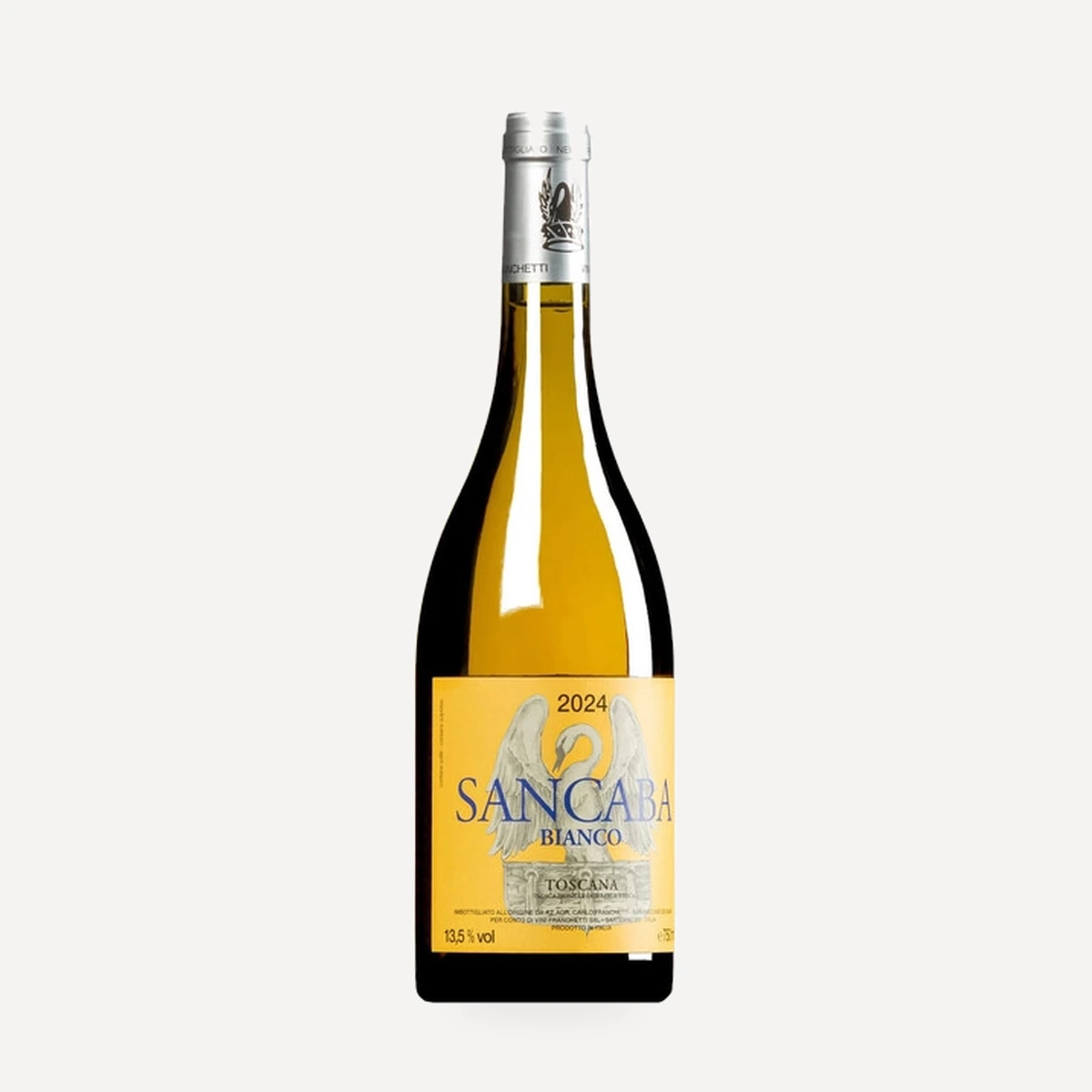
Sancaba Bianco comes from a Grechetto vineyard planted in 2018–2019 at San Casciano dei Bagni. The site lies at 650 m above sea level on Galestro—friable calcareous clay—and sandstone. In 2024 the vines were 6–7 years old, planted at 8,000 vines per hectare, with a yield of 4 tonnes per hectare.
The vineyard is certified organic. Fertilisation uses manure and cover crops, while treatments consist of copper and sulphur permitted in organic cultivation.
Grapes
100% Grechetto.
Vinification
The grapes were selected and harvested by hand between 7 and 11 September 2024. They were gently pressed, with only the free-run juice retained. Fermentation lasted about two weeks in stainless-steel vats at a controlled 12°C with indigenous yeasts.
Ageing
The wine spent approximately six months on fine lees in a 20 hl concrete tank with frequent lees stirring. A small portion matured in a 225 L oak barrique. After blending, the wine was clarified and filtered, then bottled during the waning moon in April 2025.
Technical data
- Appellation: IGT Bianco Toscana
- Production: 2,950 bottles
Tasting profile
The 2024 vintage produced a more robust, fully ripe expression with intense fruit aromas.
Vintage notes
The 2024 growing season was divided between a cool, wet spring and early summer and a very hot, dry August. Abundant spring rain persisted into early July, though less intensely than in 2023, requiring close phytosanitary management while allowing grape health to remain under control. Temperatures rose abruptly in August, peaking at 37–40°C and rapidly accelerating the previously slow, steady ripening process. The unexpected heat shifted the wine away from the initially anticipated delicate profile toward greater ripeness and fruit intensity.
Label / history
The inaugural Sancaba Bianco vintage was 2023, five years after the first Grechetto vines were planted.