About this wine
Vineyard and terroir
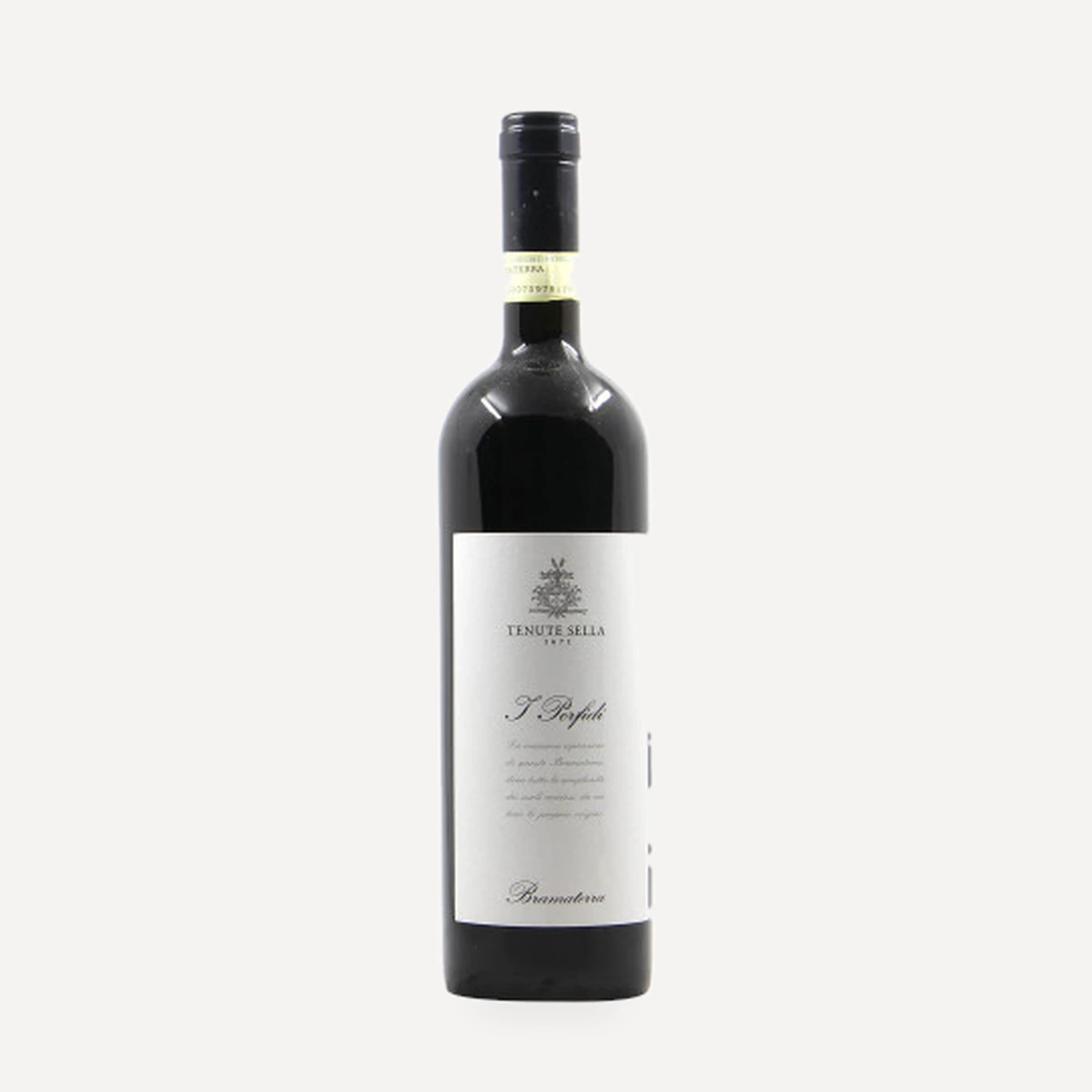
The fruit comes from selected Bramaterra parcels in Villa del Bosco and Brusnengo. The 2024 technical sheet identifies the production zone more narrowly as the vine-covered slopes of the Bramaterra estate in Villa del Bosco. The hillside vineyards face southwest at 300–350 metres and are trained to classic Guyot. The producing vines average 48 years of age.
The estate stands on weathered red porphyry with intermittent clay deposits. Its loose volcanic soils are acidic and range in colour from pale yellow to dark red and brown according to oxidation. The technical sheet specifies red-brown porphyritic sands of volcanic origin. Almost all work is manual, from winter pruning through harvest. Older parcels naturally yield less than 1,000 grams per vine; younger vineyards are selectively thinned to promote balanced ripening.
Grapes
70% Nebbiolo, 20% Croatina and 10% Vespolina.
Vinification
The grapes are cooled, destemmed and crushed, then traditionally fermented in stainless-steel tanks with pump-overs and rack-and-return. The 2024 technical sheet gives an average maceration of 24 days and malolactic fermentation alongside alcoholic fermentation. The product page instead specifies 30 days for Nebbiolo and Vespolina, 16 days for Croatina, and malolactic fermentation by co-inoculation.
Ageing
The 2024 technical sheet gives 24 months in medium-toast French oak, divided between 50 hl casks and barriques. The product page instead gives 28 months in 10 hl Slavonian oak casks. Cellaring potential exceeds 20 years.
Technical data
Annual production is stated as 12,000 bottles. The harvest runs from mid-September to mid-October.
Tasting profile
A mineral character associated with Bramaterra brings richness, clarity and precision to the palate.
Label / history
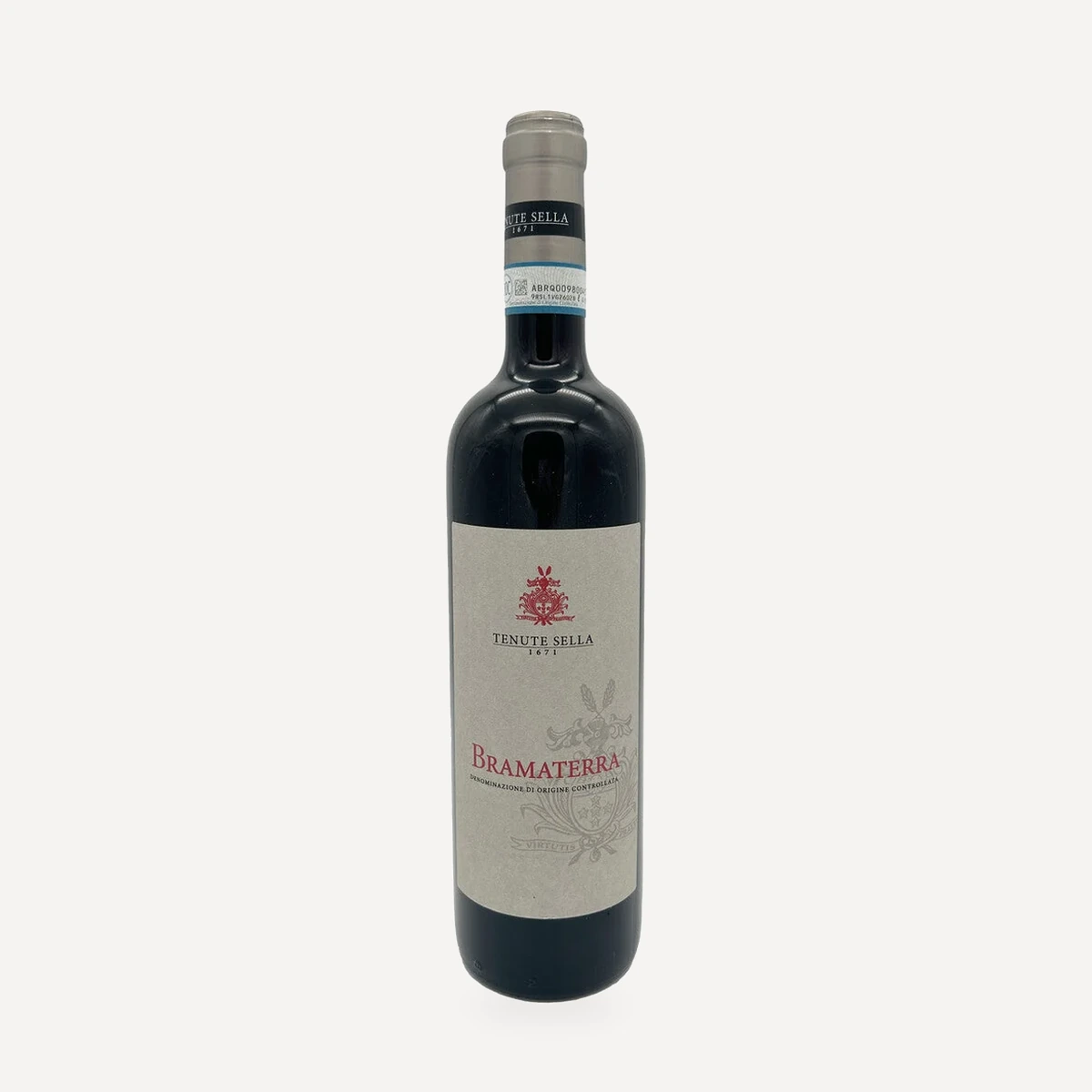
Bramaterra was first mentioned in a historical document dated 1447. Sella’s first vintage was produced in 1902. The original estate, established at the end of the nineteenth century, grew through successive plantings to approximately 20 hectares in a single parcel.