About this wine
Vineyard and terroir
Vigna Massimo covers 0.78 hectare on a gently inclined convex slope at an average altitude of 500 metres, with west-facing exposure. Planted in 1972 with a massal selection of Sangiovese Grosso, it benefits from strong temperature variations that promote aromatic development and balanced structure.
The site belongs to the Sillano–Santa Fiora Formation of the Upper Cretaceous–Paleocene period, dating back approximately 60–75 million years. Its deep soils have a usable depth of about 120 cm and contain frequent fragments of marly limestone and siltstone. Predominantly loam-clay in texture, they are moderately calcareous and subalkaline, with good structure, effective drainage and high water reserves. The planting layout is 125 × 290 cm, with spur-pruned cordon training.
Clay released from the marly limestone supports structure and colour intensity. The limestone component contributes aromatic persistence, while marly limestone minerals and arenaceous fragments encourage fine notes of red fruit and forest berries. Wines from this geological sector are characterised by power, deep colour, abundant polyphenols, robust structure and longevity.
Grapes
Sangiovese Grosso from a massal selection.
Vinification
The grapes are harvested by hand and undergo 20 days of spontaneous fermentation in stainless-steel vats.
Ageing
The wine matures for 24 months in French oak tonneaux.
Tasting profile
Solid and balanced in structure, with a soft entry that develops into a broad, layered body. Silky, well-integrated tannins are supported by vibrant freshness, bringing harmony and depth. The site’s loam-clay and marly limestone soils are associated with concentrated colour, red-fruit and forest-berry nuances, aromatic persistence and long-lived structure.
Label / history
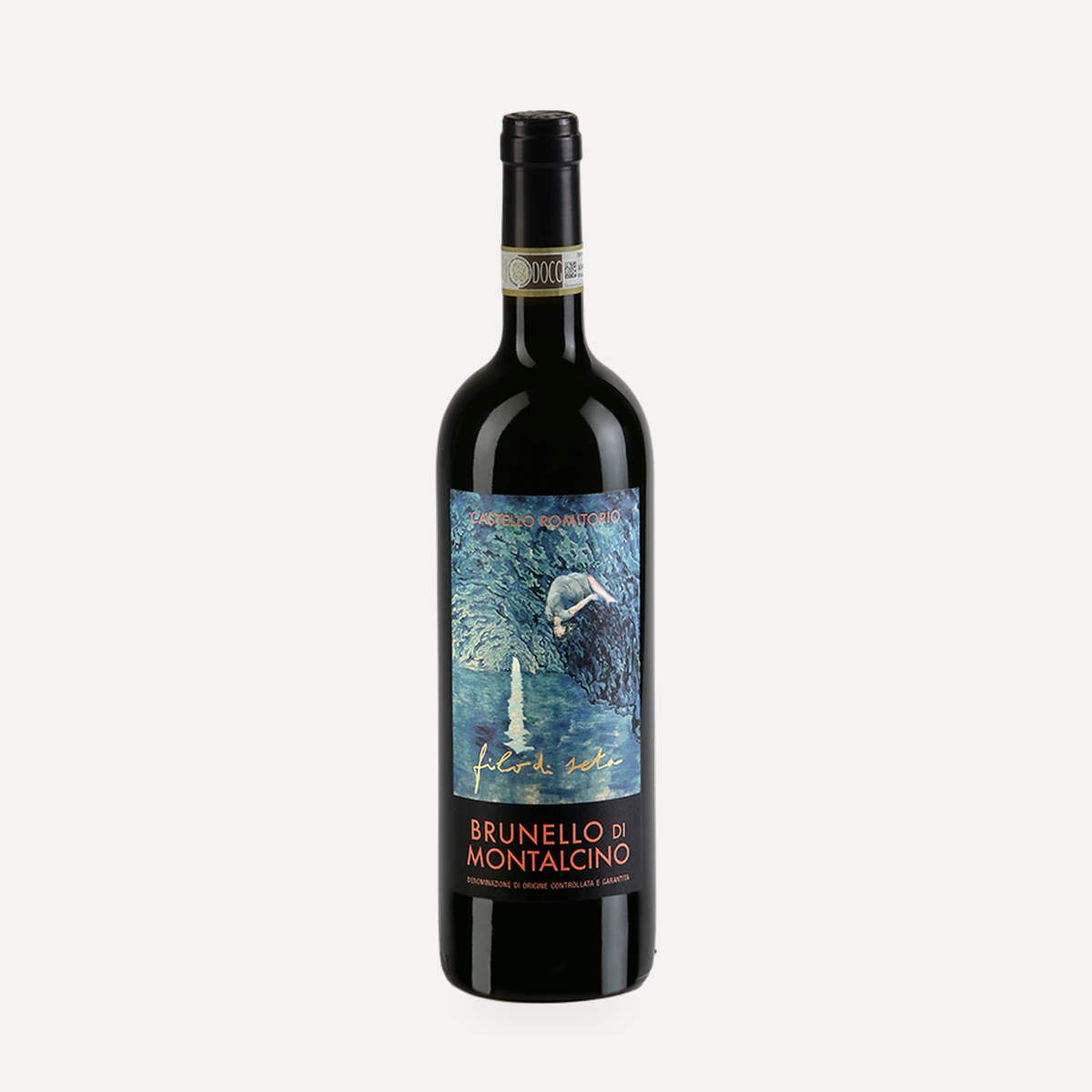
The wine and vineyard bear the name Massimo. The label illustration was created by Florentine artist Arianna Papini.