About this wine
Vineyard and terroir
Filo di Seta comes from a 2.5-hectare site in the north-western area of Montalcino, where the landscape is wilder, darker and enclosed by forest. For the 2021 vintage, the site is described at 270 m above sea level, with bluish galestro schist. Other published vintage descriptions refer to dark, black slate-like soils containing pockets of slate and shale.
The vineyard was planted in 1995 with old Sangiovese clones that naturally form small clusters. The older vines are carefully managed to produce harmonious, balanced yields and achieve optimal ripeness. Filo di Seta is selected from this individual site, with the 2021 release described as a barrel selection.
Grapes
100% Sangiovese. Grapes undergo hand sorting in the cellar both before and after destemming.
Vinification
Fermentation takes place in temperature-controlled cement tanks with skin contact. Spontaneous malolactic fermentation follows. The wine is then rested so that it separates from the lees.
Ageing
Ageing takes place in oak for a minimum of 24 months, followed by at least 4 months in bottle in temperature-controlled cellars. Published notes for the 2018 and 2015 vintages specify 30 months in oak.
Technical data
The 2021 vintage was produced in a limited quantity of 6,500 bottles.
Tasting profile
The 2021 has a deep red colour and combines ripe red and dark fruit with considerable aromatic detail. Sour cherry, dried black cherry, wild berries, plum and blue fruit are joined by violet, lavender, mint, rosemary, sweet and exotic spices, cocoa, iron and saline mineral tones. The wine is full and concentrated but remains fresh, energetic and precisely defined.
Its structure is vertical and firmly built, with poised acidity and a glossy, tightly woven texture. The tannins are abundant, sweet and dusty, while citrus and tart raspberry bring lift. The finish is long, balanced and mineral, gaining breadth with air.
Published drinking guidance for the 2021 ranges from 2028 onward to windows of 2030–2042 and 2030–2050.
Vintage notes
The 2020 is described as bright and fresh despite its concentration, with cherry, blackberry, violet, graphite, tobacco and wild-herb notes. It has a silky texture, finely wrought tannins and a persistent finish. Production was reported as 7,760 bottles.
The 2019 combines blackberry and dark fruit with wet slate, petrichor, violet and iris-root nuances. Its velvety tannins match a generous texture. Production was 9,000 bottles.
The cooler 2018 vintage shows tart red fruit, cassis, balsamic herbs, crushed stone and pencil-shaving notes. It spent 30 months in oak, and 7,300 bottles were produced.
The 2017 reflects a cool, forest-enclosed site during a hot year, with vibrant fruit, smoke, spice and wet-stone notes supported by bright acidity and age-worthy tannins.
The 2016 combines lifted fruit with grounded spice and oak, brought together by softly integrated tannins. Production was 6,900 bottles.
The 2015 has focused mineral aromas associated with the schist-rich site, accompanied by fruit, flowers, spice, leather and tobacco. It spent 30 months in oak; 7,472 bottles were produced and the wine was released in January 2020. Filo di Seta was not released in 2014.
Label / history
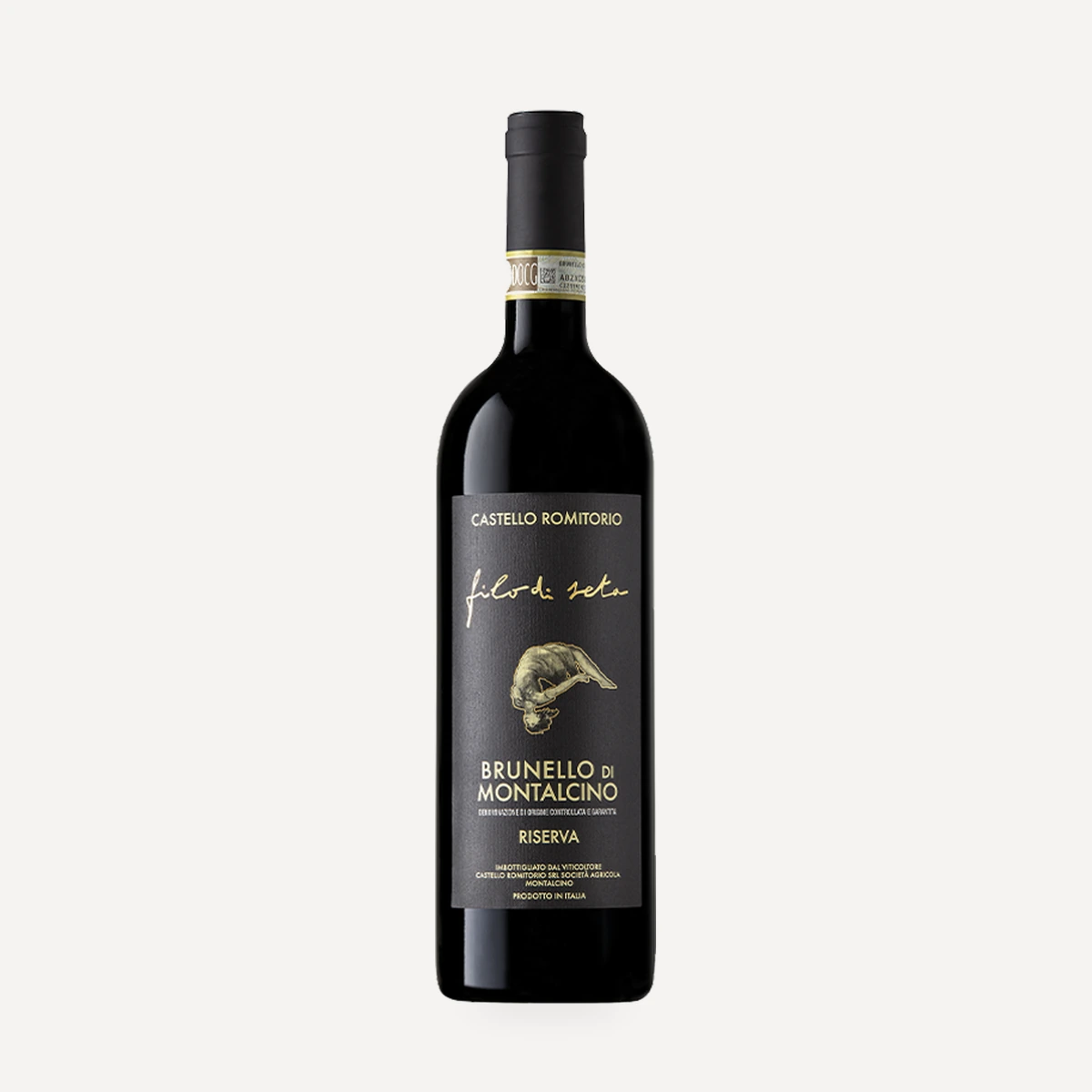
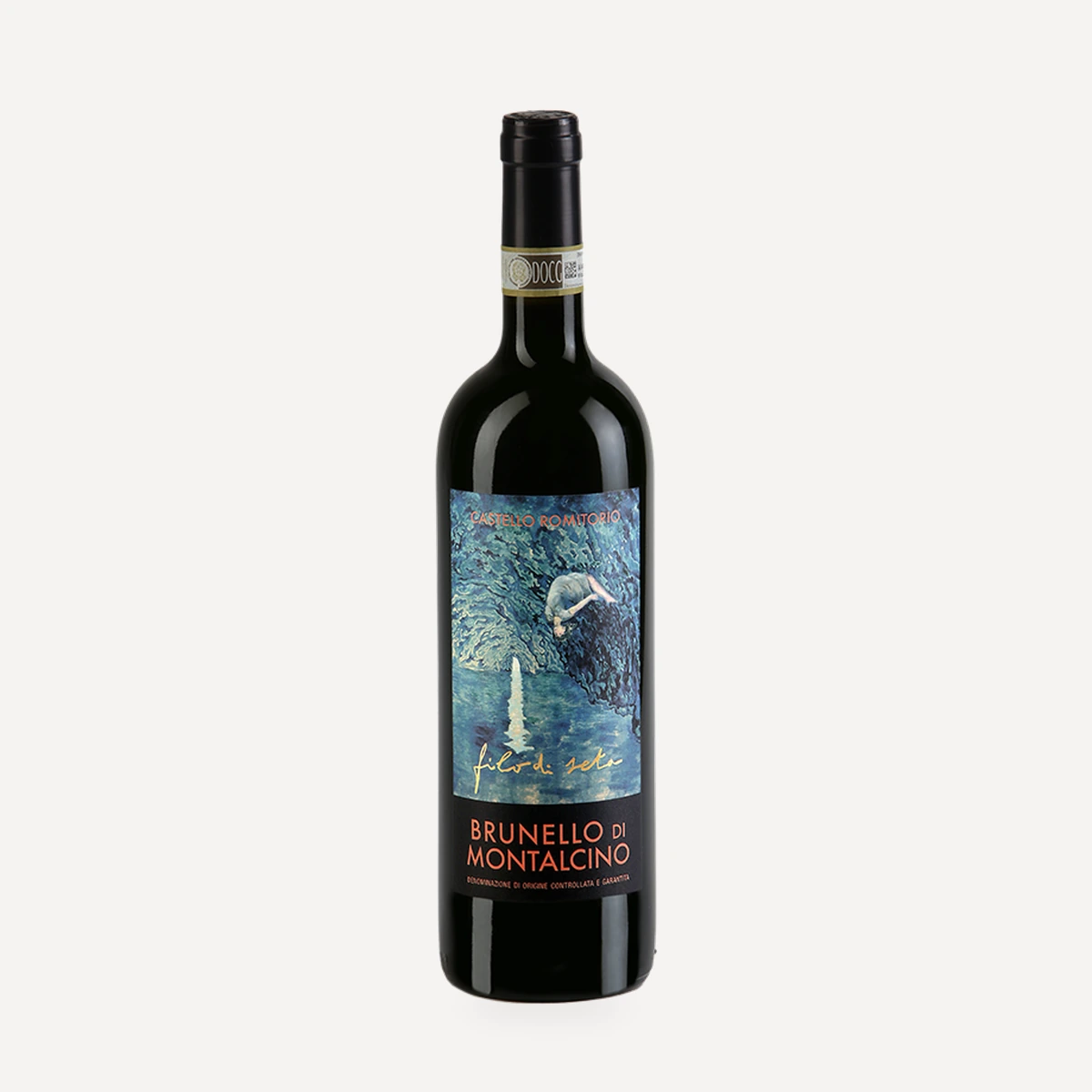
“Filo di Seta” means “silk thread” and takes its name from a small creek running through the unspoiled forests of the Castello Romitorio hill. Filippo Chia first conceived the idea of bottling the wine separately during the 2010 harvest, choosing the nearby creek as its namesake.
The label reproduces an early-1980s oil painting by Sandro Chia, now held by Amsterdam’s Stedelijk Museum. It depicts an androgynous figure performing a backflip into Capri’s Grotta Azzurra. The image explores flight, the interval between sky and water, suspended gravity and the relationship between what lies on the surface and what lies beneath.