Storia
1946: the first vintage
The history of Santa Cristina wine begins with its first vintage in 1946. It became the reference point around which the later Santa Cristina range and dedicated winery were developed.
2006: a dedicated winery in Cortona
The Santa Cristina winery was established in 2006, exactly 60 years after the inaugural vintage. Its purpose was to reinforce the continuity of the original wine while renewing its production tradition. The facility stands at Cortona, on a high Tuscan hillside between the broad plain on one side and the hill and historic town on the other, within reach of both Siena and Perugia.
Development of the range
Santa Cristina subsequently expanded its work beyond the original wine, exploring both indigenous Italian grapes and international varieties. This development produced wines of different origins and styles while retaining an artisanal identity founded on vineyard care, cellar work and the relationship among vineyards, terroir and human skill.
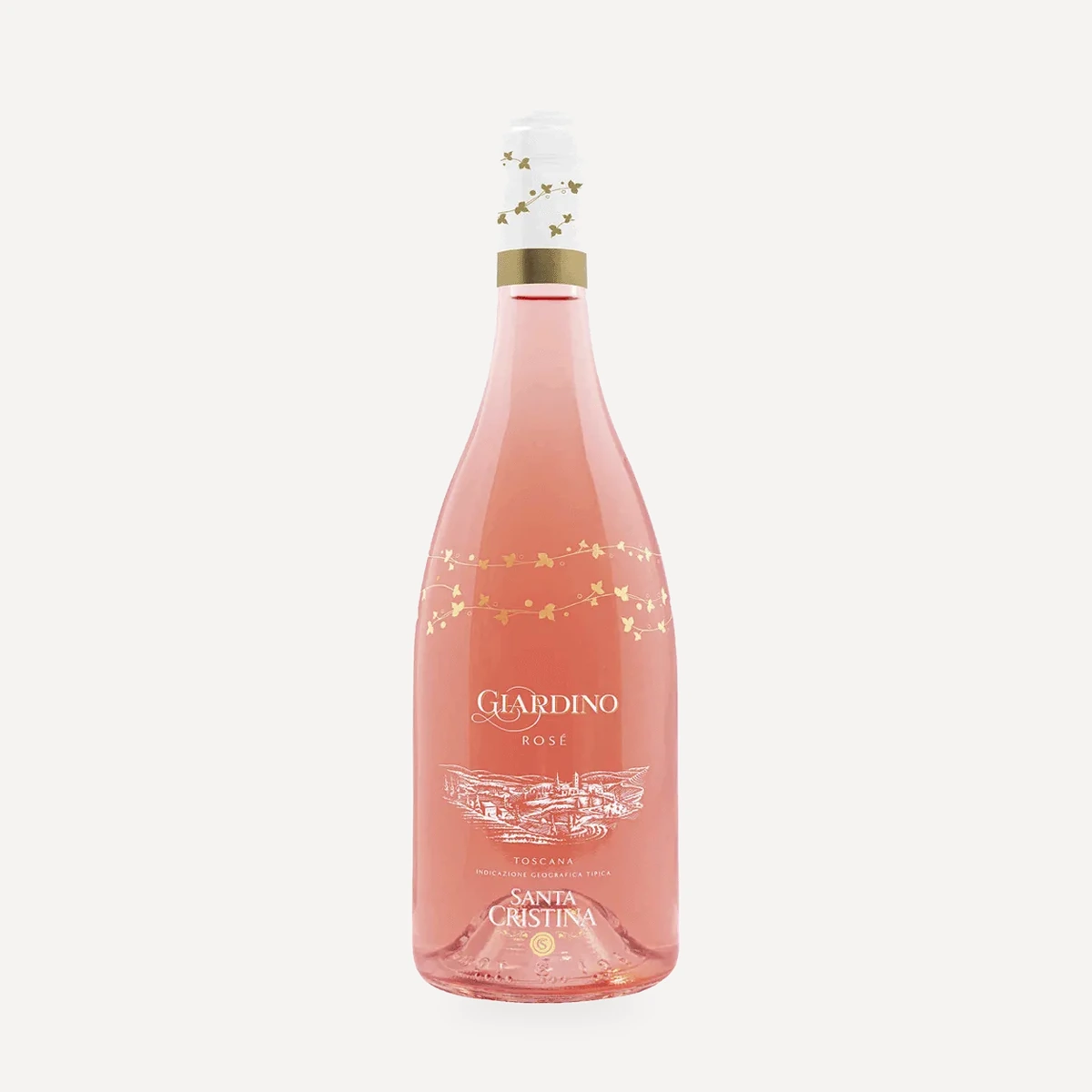
The documented range has encompassed Tuscan and Umbrian wines, including Toscana IGT, Toscana Vermentino IGT, Umbria IGT, Chianti Superiore DOCG and Vin Santo della Valdichiana Toscana DOC, as well as a traditional-method sparkling wine. The contemporary presentation centres on Santa Cristina Rosso, Santa Cristina Bianco and Giardino Rosé.
Terroir
The winery is based at Case Sparse Centoia 52/A, Cortona, in the province of Arezzo. Cortona occupies a high hillside in Tuscany, not far from Siena and Perugia. The setting opens onto a broad plain in one direction and the hill and historic town in the other.
Santa Cristina’s documented sourcing extends beyond a single estate or appellation. Its wines have drawn on Tuscan vineyards for red, rosé, Vermentino, Chianti and Vin Santo production, while Santa Cristina Bianco originates from vineyards in Umbria. The available descriptions do not define a single estate-wide soil profile, altitude range, exposure or mesoclimate.
Vinificazione
Vineyard care is presented as one of the foundations of Santa Cristina’s approach, coupled with continuing experimentation involving indigenous and international grape varieties. Harvest timing is adapted to the maturity of each variety and vineyard source. No estate-wide farming system, certification, soil-management programme, disease-control regime, irrigation policy or biodiversity plan is defined.
Santa Cristina connects cellar work with attentive vineyard management and continued technical development. Its production model accommodates grapes of different varieties and origins, allowing the range to include red, white, rosé, sweet and sparkling styles while maintaining an artisanal identity.
The dedicated Cortona winery was established in 2006 to provide a contemporary production base for the tradition begun with the first Santa Cristina vintage in 1946. The broader approach is framed around the interaction of vineyard, terroir and human work rather than a single standardized cellar recipe. No estate-wide specifications are given for reception, sorting, fermentation vessels, extraction, maturation, filtration or bottling.
Filosofia
Santa Cristina defines quality through continuity between vineyard work and cellar practice. Tradition is not treated as static: the original identity established with the 1946 vintage is combined with ongoing innovation and the exploration of both indigenous and international grape varieties.
The resulting wines are intended to differ in origin and expression while sharing an artisanal character. The central principle is an enduring connection among vineyard, terroir and human work. In its contemporary presentation, Santa Cristina Rosso is framed as a refined expression of modern Tuscan elegance, Santa Cristina Bianco as a naturally light expression of its origins, and Giardino Rosé as an interpretation of the Tuscan landscape through delicacy and finesse.
Vini
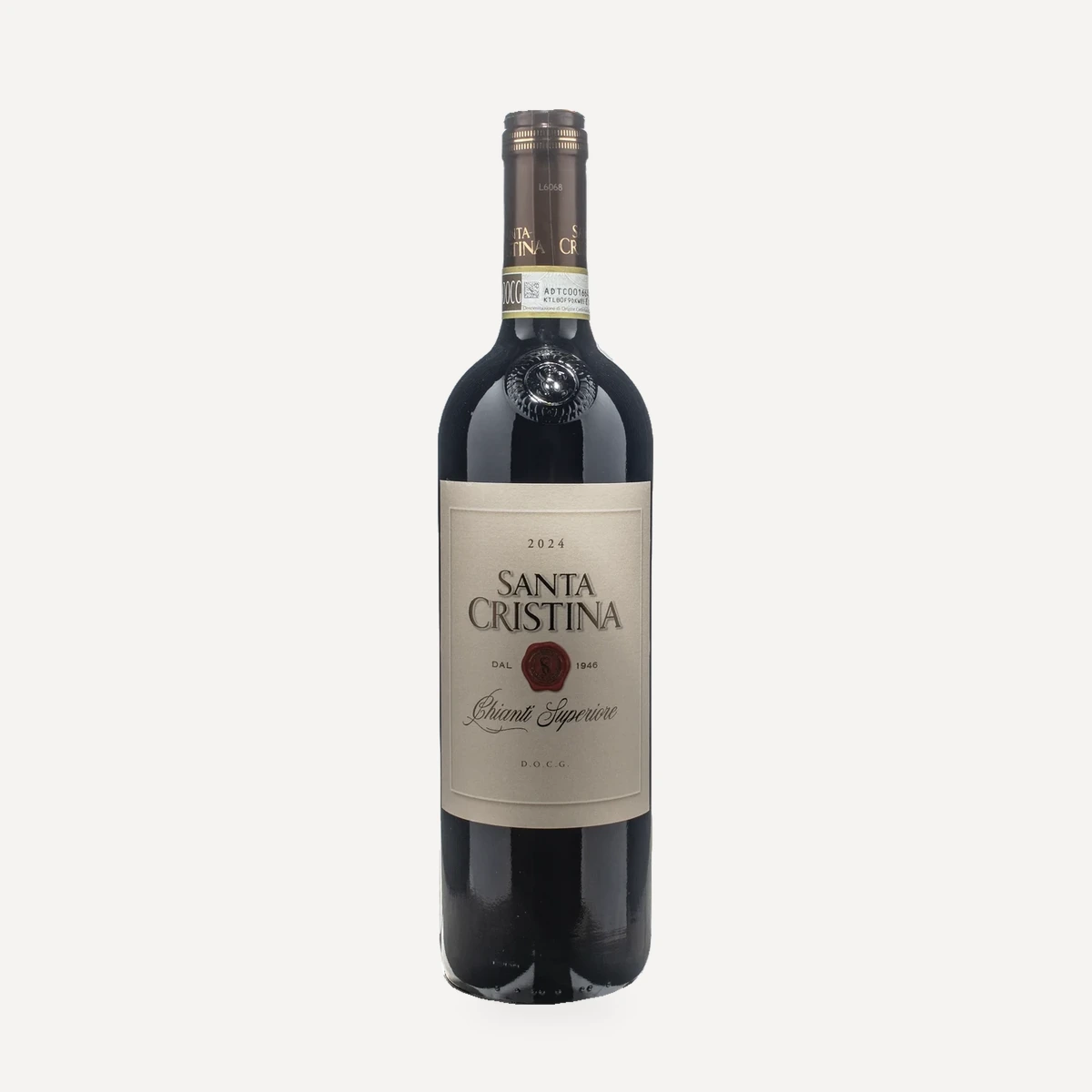
Santa Cristina Chianti Superiore
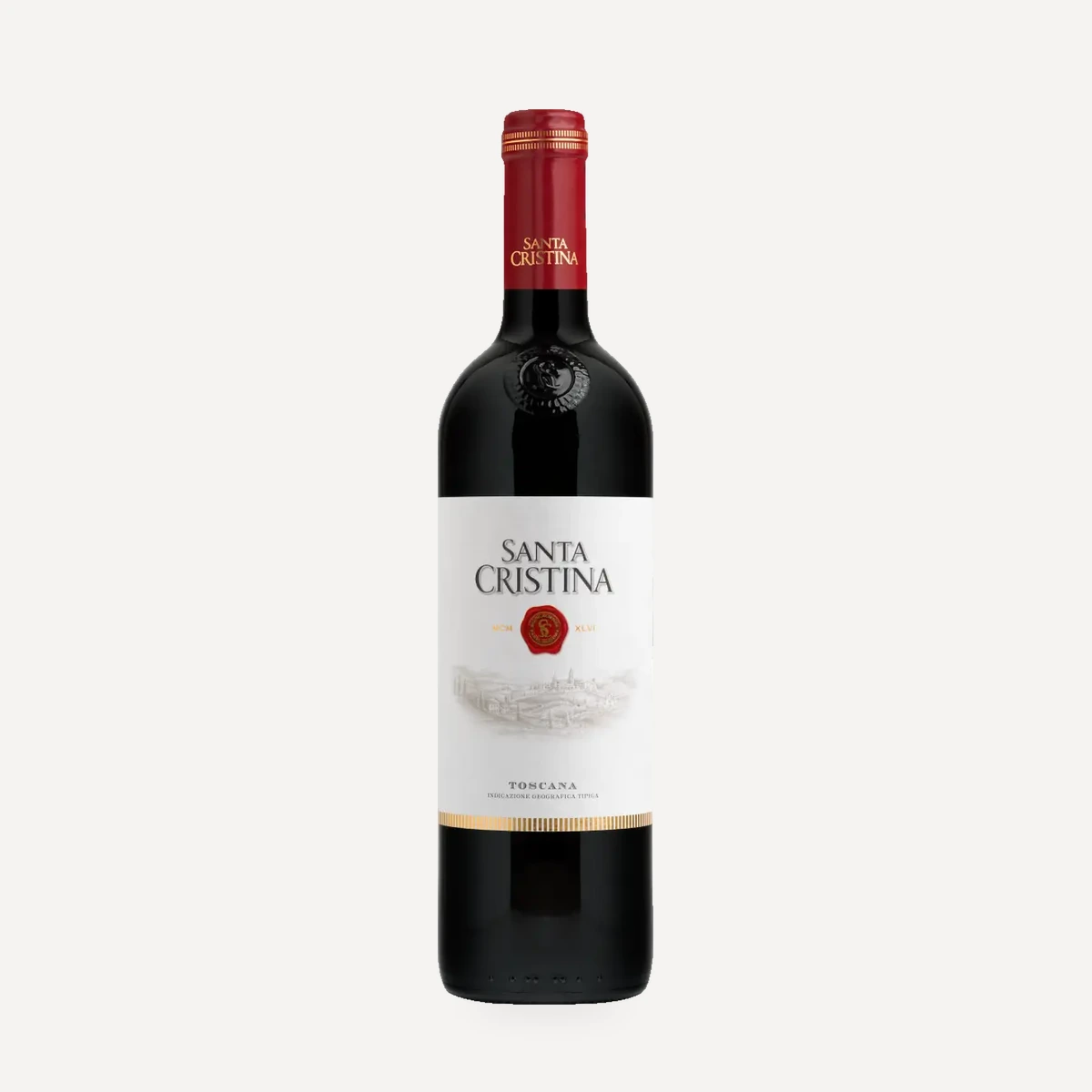
Santa Cristina Rosso
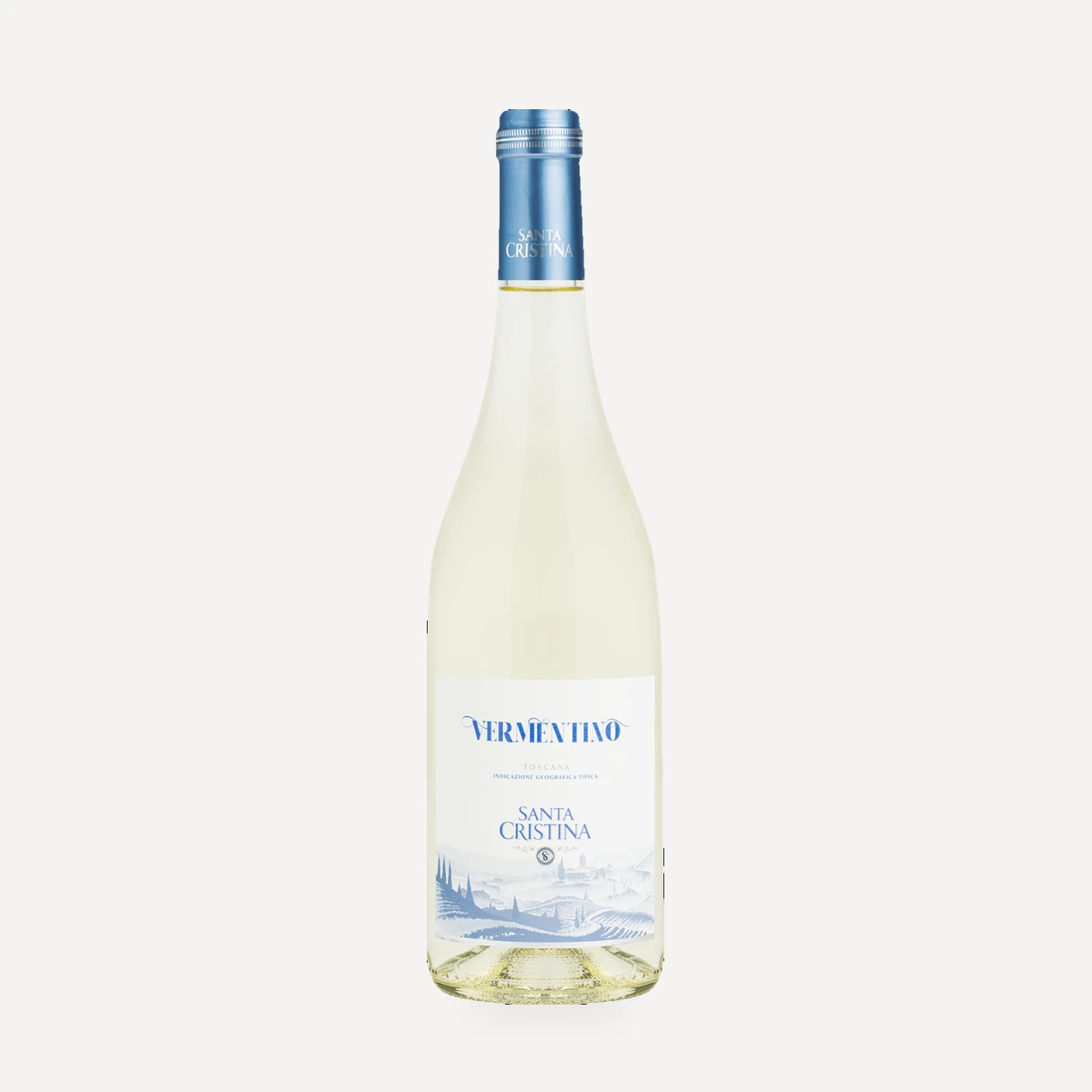
Santa Cristina Vermentino
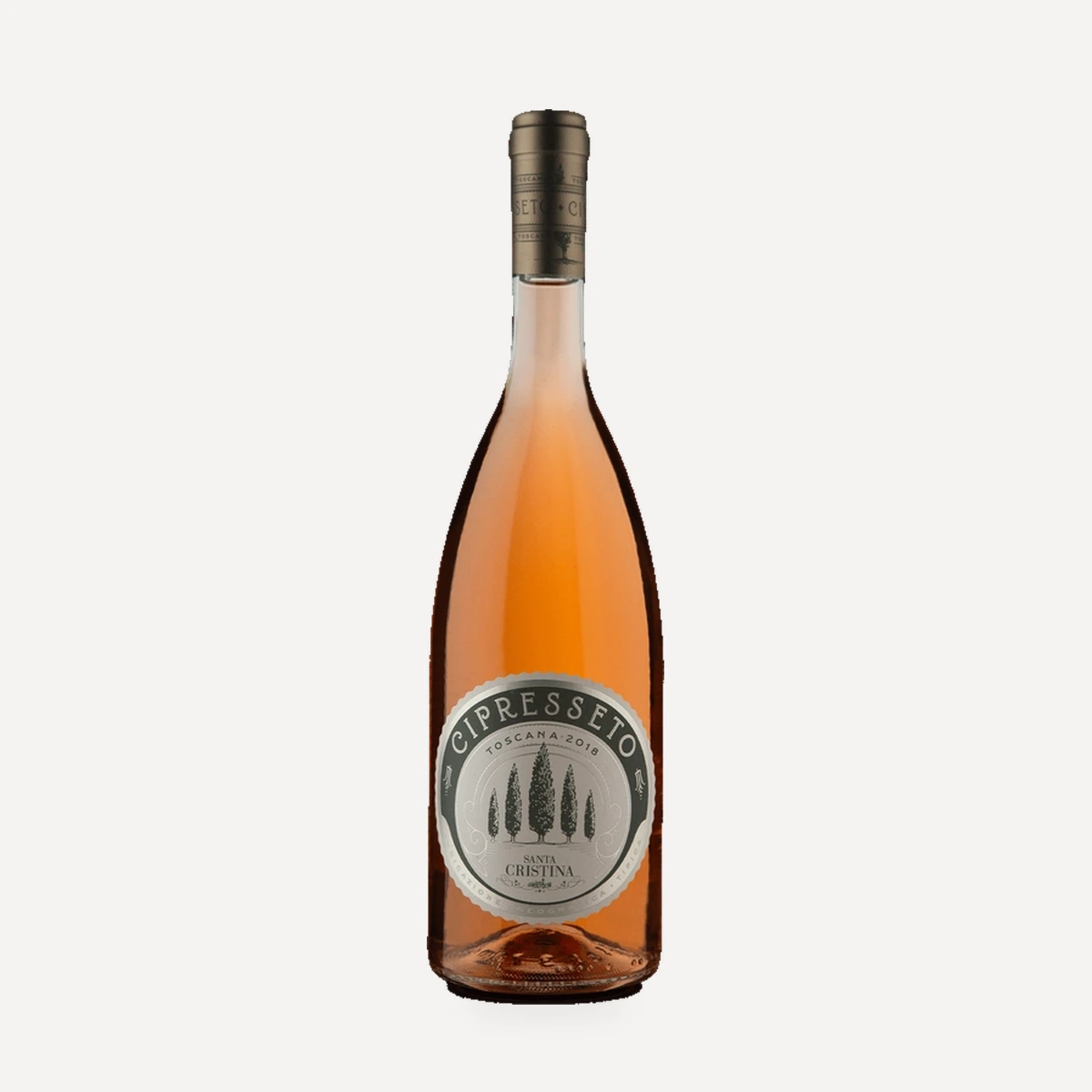
Cipresseto