Storia
2003: a father’s project
Antonio Ligabue was established in 2003 through Fausto Ligabue’s passion for wine and nature and his love for his son, Antonio. The estate is presented as the realization of a father’s dream dedicated to his child: a sustainable future built from the most fundamental starting point, the land.
An agricultural and cellar identity
The project developed around vineyards in Capo di Ponte, on the Concarena alluvial fan in Val Camonica. Its identity rests on certified-organic cultivation, deliberately low yields, the preservation of an active vineyard ecosystem and minimally interventionist cellar work. Traditional equipment, open-vat fermentation, long maturation in old wood and gravity bottling form the practical expression of that approach.
Terroir
Location
The vineyards lie at Capo di Ponte in the heart of Val Camonica, a locality associated with a UNESCO prehistoric-art site. Two mountain massifs face one another here: the Concarena and Pizzo Badile, both regarded as sacred by the ancient Camuni.
Concarena setting and soils
The vines occupy an alluvial fan on the Concarena, growing among limestone rocks and small pockets of earth. The poor ground slows vegetative growth and naturally limits production, while supporting healthy fruit.
Mountain microclimate
The Concarena’s narrow gullies and vertical rock faces release cold air during the night and radiate accumulated heat during the day. The resulting marked diurnal temperature variation supports the vines’ vegetative cycle and contributes to the organoleptic development of the grapes.
Vinificazione
Organic cultivation and biodiversity
The estate is certified organic. Propolis, copper and sulfur are the only vineyard treatments identified. Interventions are kept to a minimum so that the vines can follow their natural growth and life cycle.
Flowers and many kinds of herbs grow among the vines, and the vineyards are bordered by trees and hedges. Animals and insects are treated as contributors to vineyard health. Grass has been allowed to grow freely between the rows for more than ten years, protecting the soil and fostering microorganisms and insects that sustain a fertile, productive subsoil.
Fertility and yield management
The soil is not fertilized. Pruning leaves few buds on each cane, resulting in three or four bunches per plant and an average yield of approximately 0.5–0.6 kg per vine. Pruning is understood primarily as a means of determining vine form and wine quality rather than as something required for the plant’s survival.
Canopy management
Shoot-tipping is normally avoided. In particularly rainy years it is reduced to the minimum necessary, and the shoots are wound along the upper wire instead.
Varietal approach
Barbera, Merlot and Ciliegiolo represent the estate’s historical side. Experimentation is entrusted to Alpine varieties: Petite Arvine, Fumin, Cornalin and Prie Rouge.
Cellar and equipment
The cellar follows the same principles of restraint and respect applied in the vineyard. Its equipment is deliberately simple: a press, vats, barriques already used for many years and a small number of stainless-steel vessels. An old, uncomplicated crusher gently breaks the bunches while separating the berries from their stems. Juice, skins and seeds are then left together to begin their transformation.
Fermentation and cap management
Fermentation takes place in open vats. Its duration depends on the vintage and may range from a few days to several months. The cap of skins that forms at the surface is worked manually to keep it moist.
Racking, pressing and maturation
Fermentation is followed by racking and pressing. A traditional screw press extracts the remaining liquid from the skins. The young wine then rests and matures for years in barriques or tonneaux without further additions. Wood is regarded as a natural extension of both the transformation process and its container.
Bottling
Bottling is performed by gravity into conventional bottles. It is scheduled during the waning moon and during periods when vegetation is dormant. The restrained use of technology is intended to preserve the grapes’ characteristics while limiting the cellar’s environmental and economic impact.
Ancestral-method sparkling wine
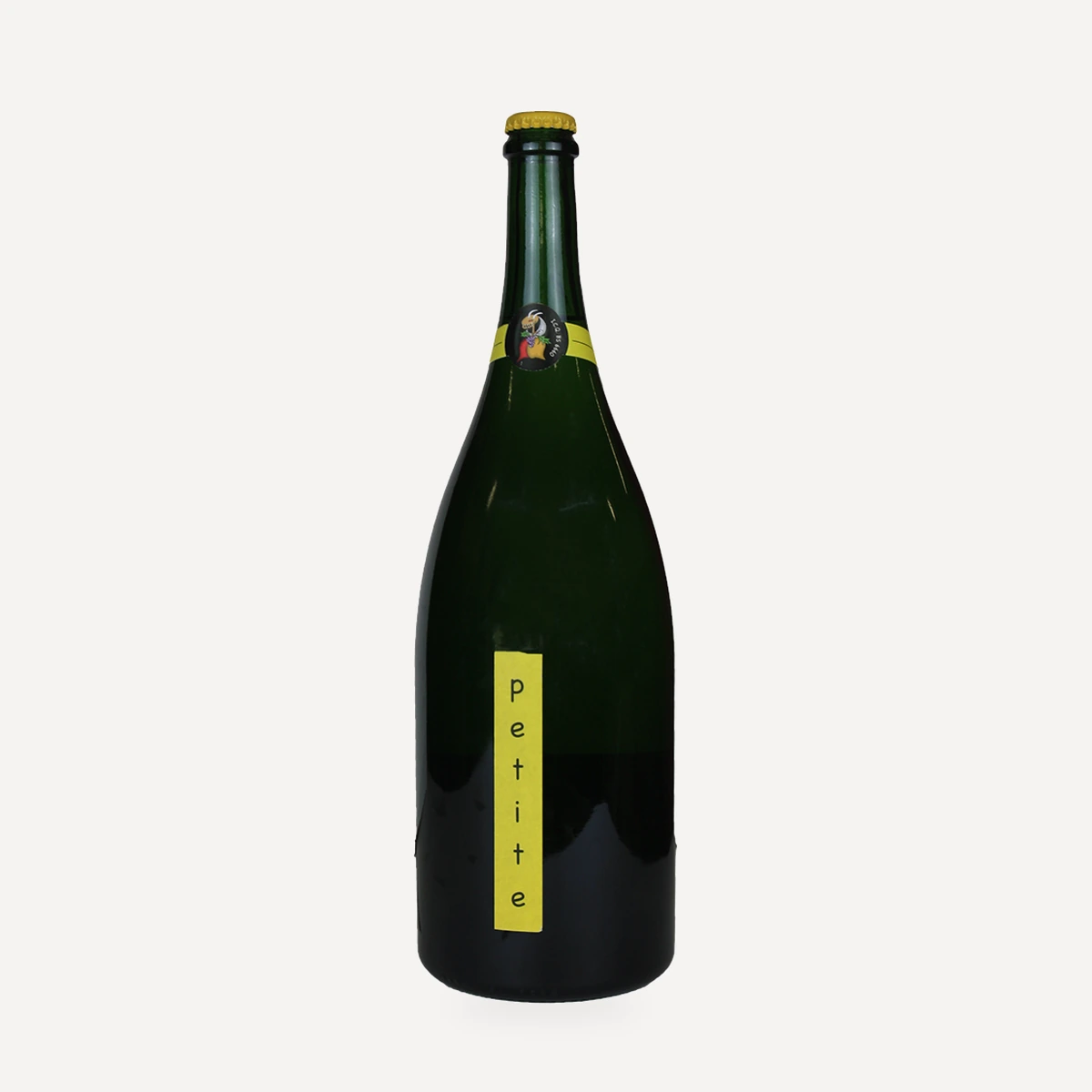
Sparkling wines are produced by the ancestral method. Wine is bottled before fermentation has finished, allowing the must’s remaining sugars and yeasts to complete fermentation in bottle and generate alcohol and carbon dioxide. No additional yeast, sugar or concentrated must is required.
Filosofia
Antonio Ligabue defines its work through love, care and respect, extending the restraint practiced in the vineyard into the cellar. Its central objective is to maintain a natural ecosystem both in the soil and throughout transformation, without chemical processing and with minimal human intervention.
The estate presents healthy, high-quality grapes as the indispensable basis of good wine. Vineyard practices are designed around ecological continuity rather than maximum production: permanent vegetation, surrounding trees and hedges, useful insects and animals, no fertilization and very low yields all belong to the same approach.
In the cellar, simplicity is both practical and philosophical. Old equipment, manual work, long natural timings and limited technology are intended to preserve the grapes’ character while keeping environmental impact modest. Each decision is directed toward making wine as simply and naturally as possible.
The founding idea adds a family and intergenerational dimension: Fausto Ligabue created the estate for his son Antonio as an agricultural expression of a sustainable future rooted in the land. Wine is also understood as something to be enjoyed in company.
Vini
Crus
Petite
i
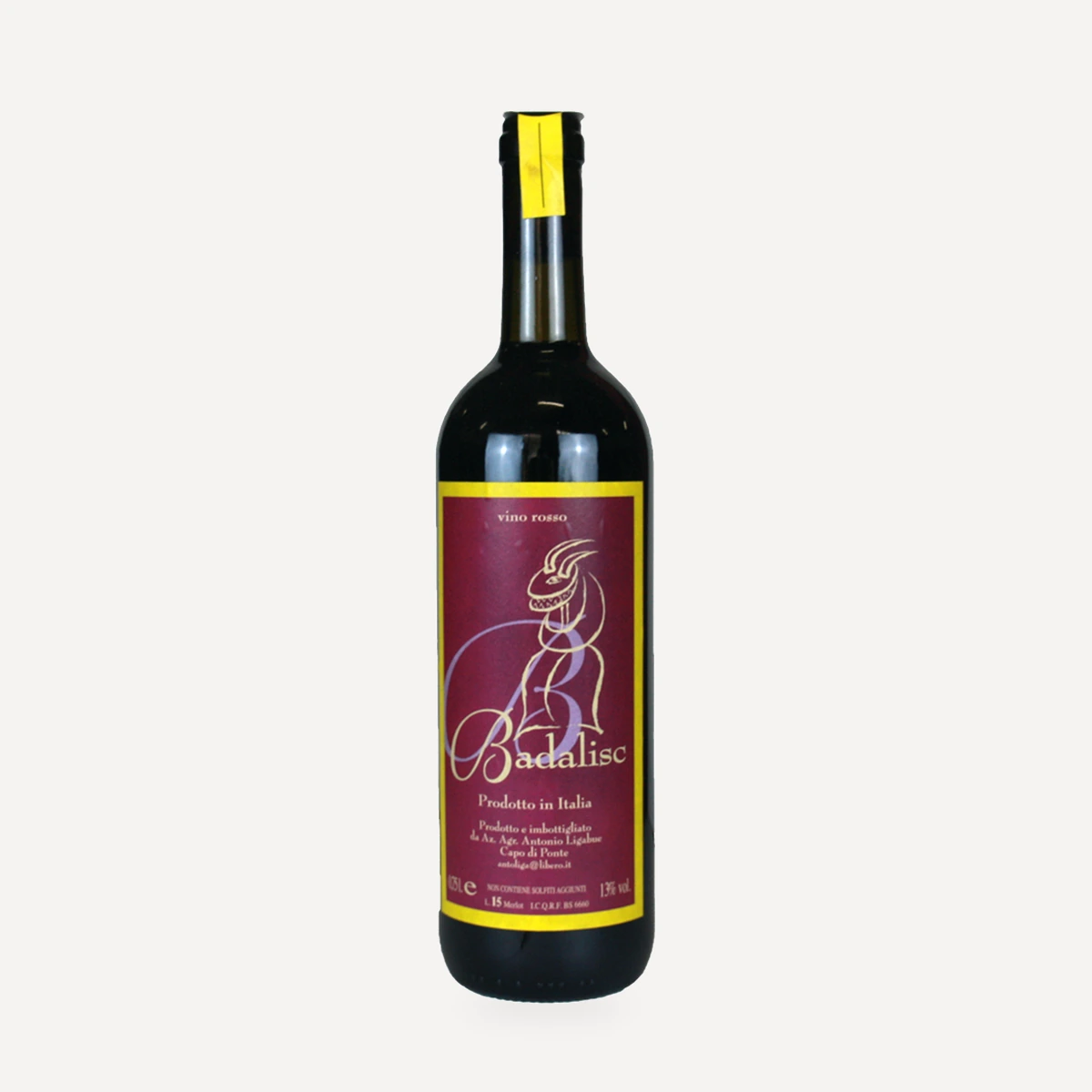
Badalisc
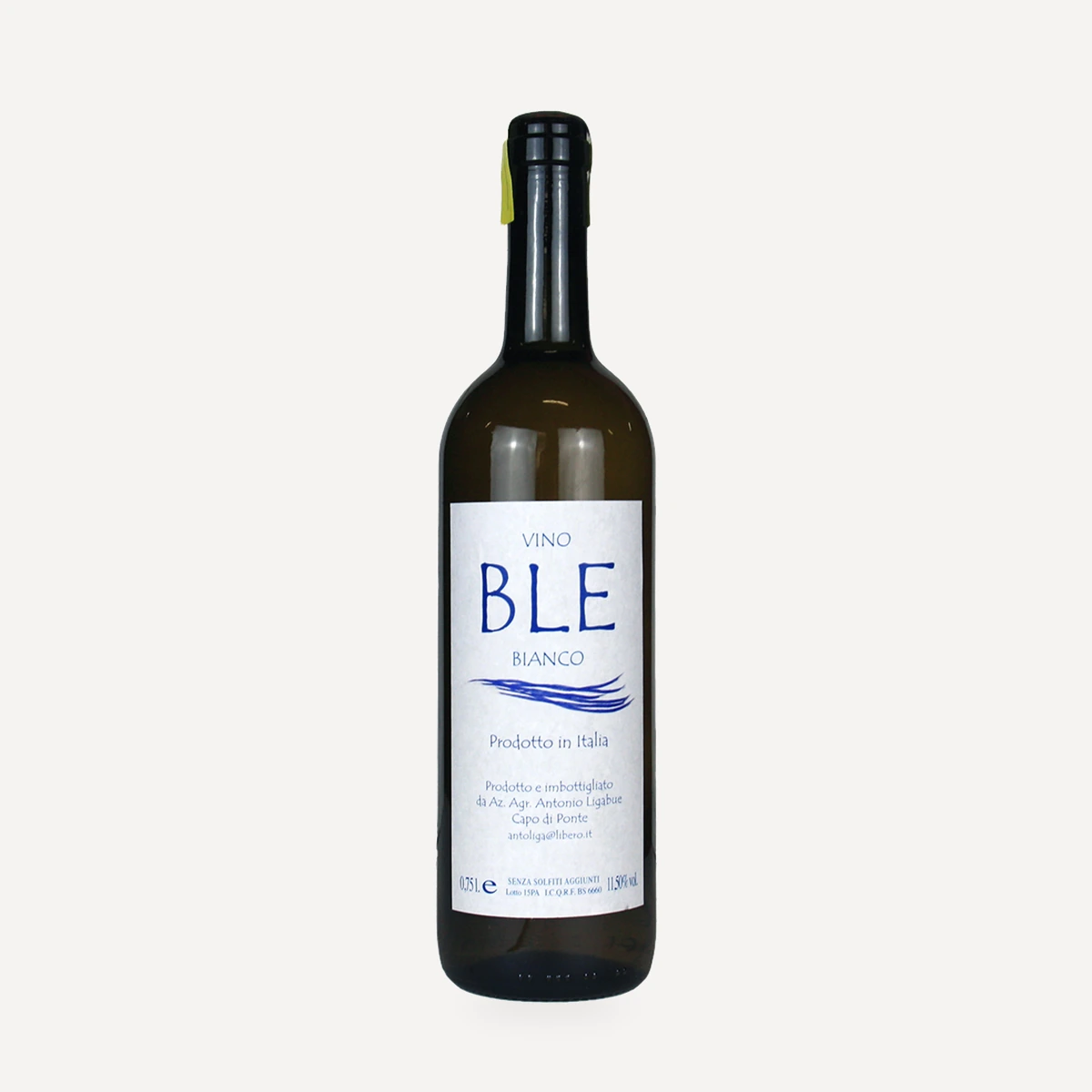
Ble
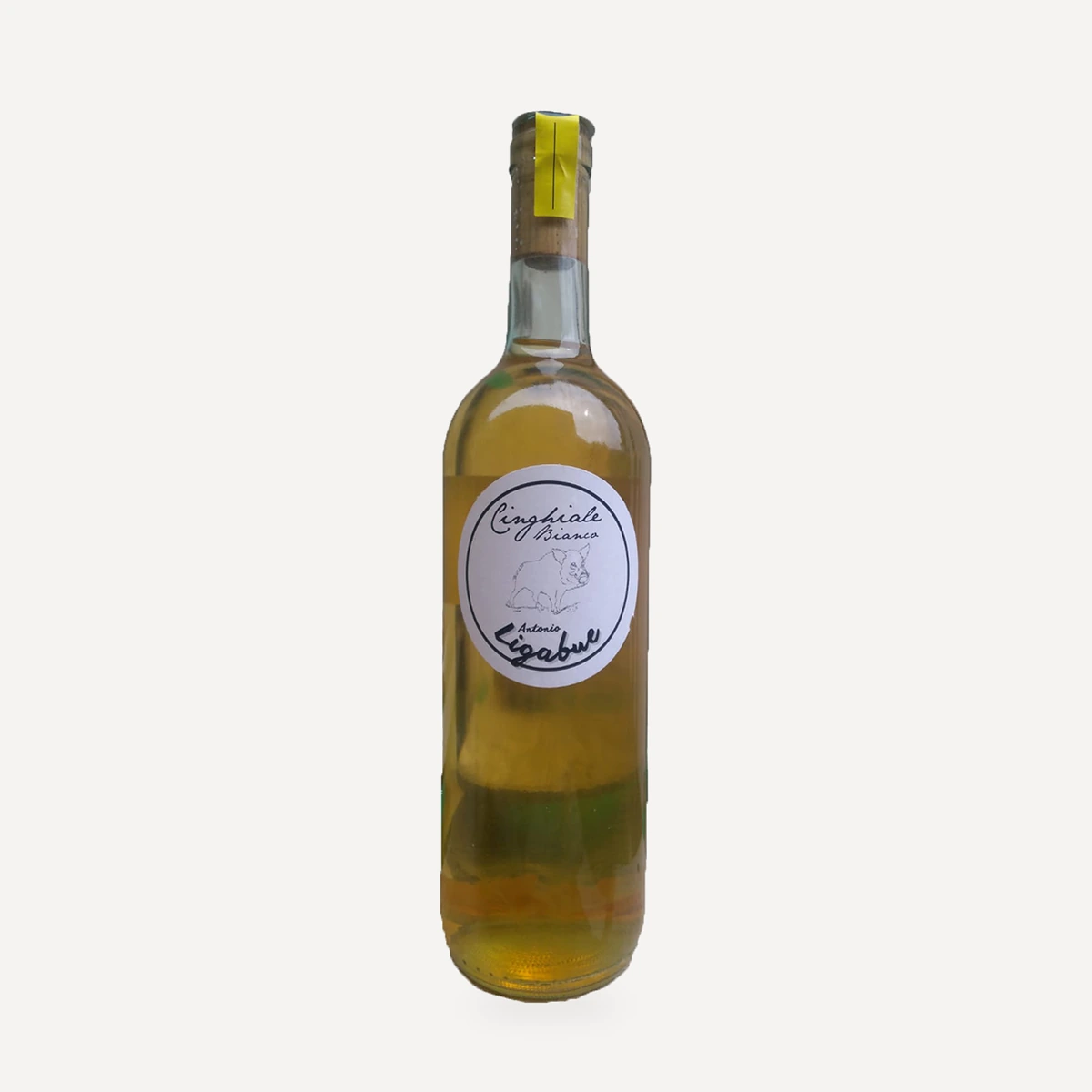
Cinghiale Bianco
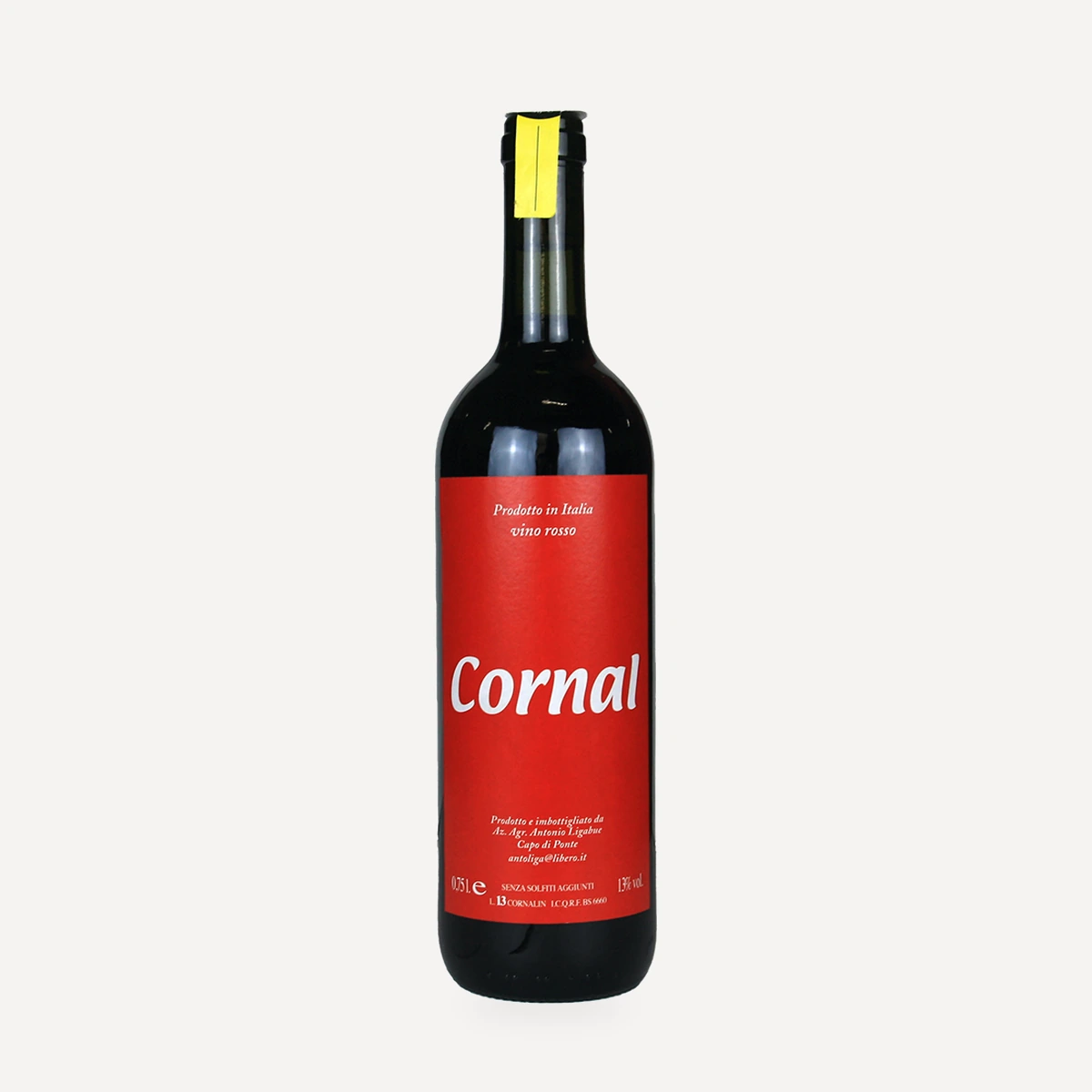
Cornal
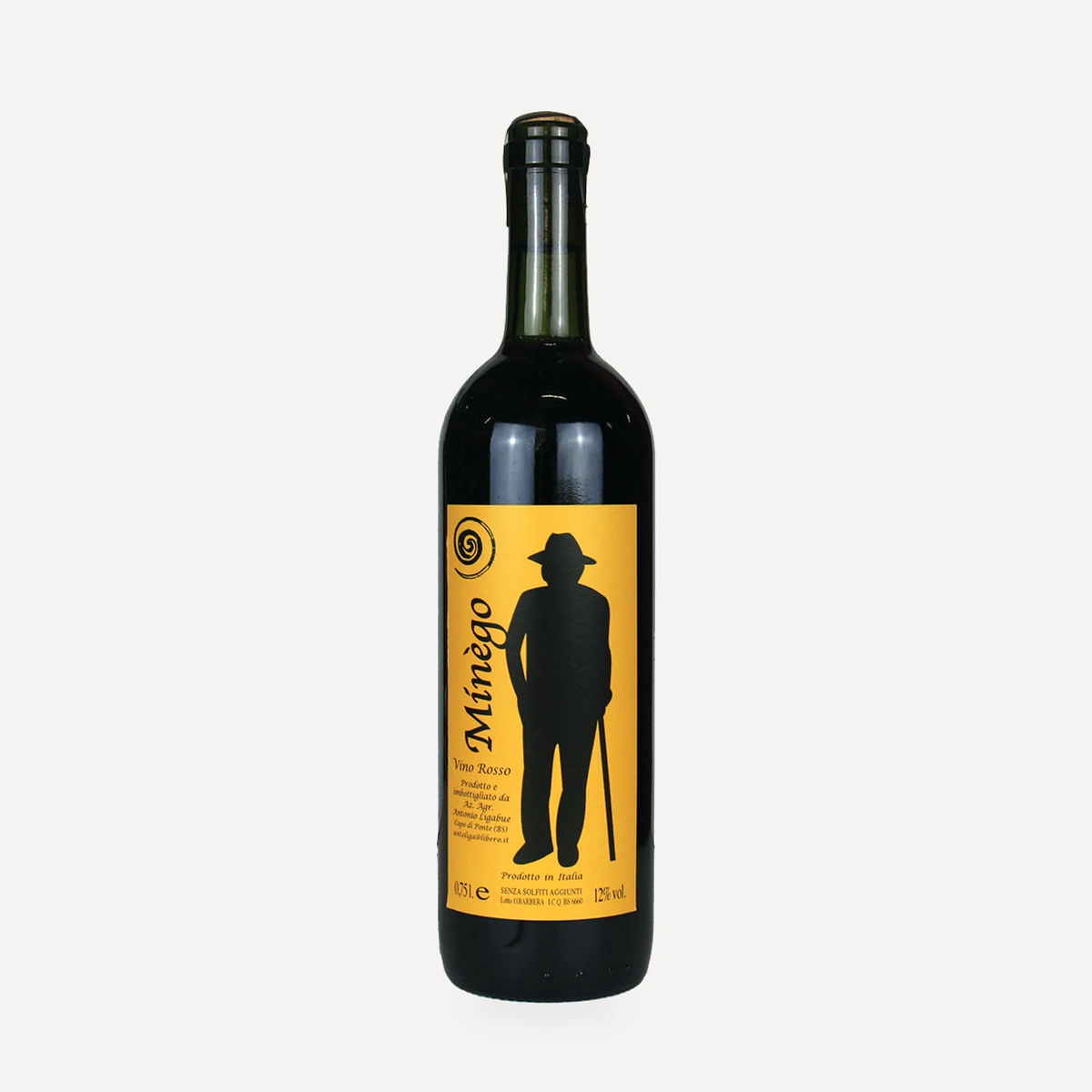
Minego