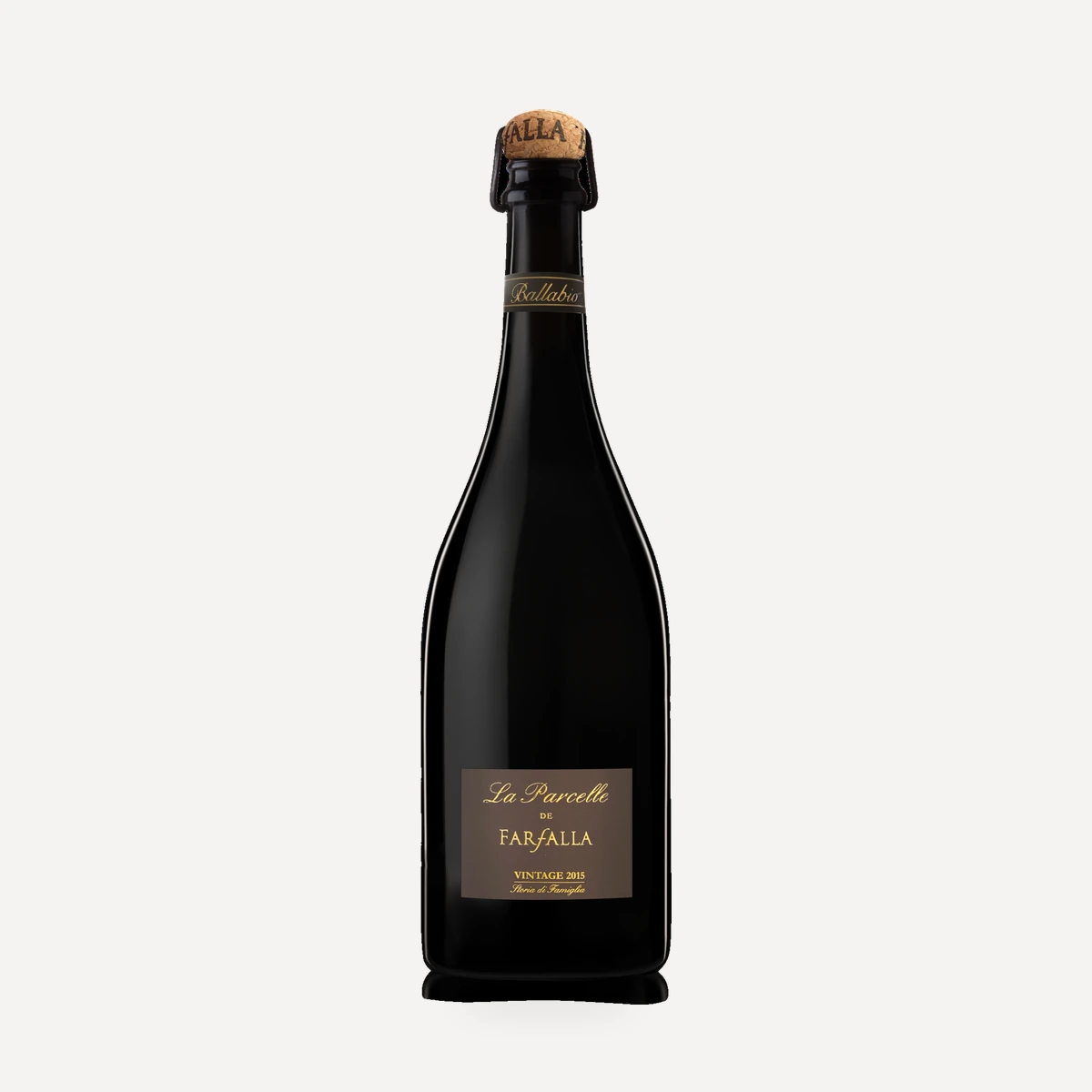
Storia
Angelo Ballabio and the beginning, 1905
Ballabio was founded in Casteggio in 1905 by Angelo Ballabio, a self-taught wine producer whose ambition was to make a bottle-fermented traditional-method sparkling wine solely from Pinot Nero, capable of standing alongside the leading Champagnes of the period. He sought to give his wine a clearly recognizable identity at a time when much of the area's small-scale production still lacked a defined commercial character. Angelo subsequently became regarded as one of the formative figures of Oltrepò Pavese sparkling-wine production.
The SVIC partnership, 1907–First World War
In 1907, Società Vinicola Italiana di Casteggio—SVIC—was established. Pietro Riccadonna was entrusted with its direction and worked alongside Angelo Ballabio. Their partnership received a diploma with a bronze medal at the 1910 Universal Exhibition in Brussels, held under the patronage of the King of Belgium.
The venture soon reached an international audience. In 1912, an advertisement for “Gran Spumante SVIC” was displayed prominently beside the Statue of Liberty in New York. SVIC closed with the onset of the First World War, after which the two entrepreneurs followed separate paths: Angelo remained in Casteggio, while Pietro Riccadonna moved into nearby Piemonte.
Angelo and Giovanni Ballabio
Angelo's experience was later complemented by the modern technical knowledge of his son Giovanni, who graduated from the Umberto I School of Viticulture and Oenology in Alba. Their combined work became the basis for a new phase of development.
By 1931, the reputation of Azienda Agricola Ballabio's dry metodo champenoise sparkling wine had grown sufficiently for Prince Emanuele Filiberto, Duke of Aosta, to appoint Angelo Ballabio a supplier to the Royal House and authorize the use of the ducal insignia. The appointment became the most prominent among the production-related distinctions accumulated by the Ballabio family.
Giovanni's succession and the ownership transition
Angelo eventually passed responsibility to Giovanni. Until his death in 1975, Giovanni was known locally as the wine “doctor” and founded the first Consorzio Volontario Tutela Vini Tipici e Pregiati Oltrepò Pavese.
Giovanni had no children and therefore sought successors capable of carrying the project forward. He selected a group of local entrepreneurs from among several candidates. The Nevelli and Mariotti families subsequently acquired the Ballabio legacy.
The Farfalla project and vineyard renewal
The Farfalla vineyard supplied the grapes for Ballabio's first Metodo Classico production. At the outset of the Noir Collection project, base wines from vineyards with different elevations, exposures and soils were compared. Farfalla demonstrated the strongest qualitative potential, and during the project's first years the Metodo Classico wines were produced exclusively from this parcel.
The Farfalla vineyard was completely replanted in 2007 at Montesereno, in the commune of Calvignano. Pinot Nero clone 386 was planted at a density of 4,500 vines per hectare. As the project expanded beyond this original parcel, grapes for the Farfalla cuvées continued to be selected against defined criteria covering elevation, soil type, exposure, vine age and clone.
Ballabio today
Ballabio is currently directed by Filippo, Mattia, Alfio and Nicolò Nevelli, a group of brothers and cousins. Under their leadership, the cellar has been modernized and dedicated exclusively to traditional-method sparkling wines from Pinot Nero. The business maintains 48 hectares of vineyards and focuses its identity on the relationship among Pinot Nero, calcareous hillside sites and long bottle maturation.
Terroir
Oltrepò Pavese and the 45th parallel
Ballabio's vineyards lie in the hills of Oltrepò Pavese, the southern part of Lombardy where Lombardia, Piemonte, Liguria and Emilia-Romagna meet. The area lies on the 45th parallel, equidistant from the Equator and the North Pole. Its landscape alternates among vineyards, meadows and woodland.
The hills have a temperate climate and pronounced day-to-night temperature variation. These conditions are central to Ballabio's focus on Pinot Nero.
Soils and water availability
The vineyard soils contain marl, limestone, galestro and gypsum. Their mineral porosity allows the ground to hold approximately 300–400 litres of water per cubic metre, maintaining a supply for the vines even during dry summers. Gypsum holds water through capillary action, requiring the roots to work harder to extract it. This produces moderate water stress during the growing season and supports the balance among fruit acids, sugars and aroma precursors.
The Farfalla parcel has predominantly calcareous soil with abundant coarse mineral material, sand and silt. A more detailed description of the replanted vineyard identifies a calcareous-clayey matrix with gypsum and sand. Other estate vineyards occupy calcareous-clayey hillsides, while the historic high-elevation sites are predominantly calcareous.
Pinot Nero in the area
The history of viticulture around Casteggio extends far beyond the estate. A prehistoric vine shoot was found near Casteggio, historically called Clastidium, while the area's reputation for wine is traced to the era of Strabo. Some ampelographers have proposed that early Pinot genotypes were present on the Oltrepò hills in Roman times.
Pinot Nero in its modern form reached Oltrepò Pavese during the second half of the nineteenth century. Although it was subsequently tested elsewhere in Italy, its early ripening and cultivation difficulties led many producers to abandon it or treat it principally as a blending grape. Ballabio's work is centered on the variety's adaptation to Oltrepò Pavese's calcareous hills, temperate conditions and marked thermal variation.
Vinificazione
Ballabio follows a self-developed, adaptive viticultural system rather than a fixed farming protocol. Decisions respond to the conditions encountered during each growing season and to the requirements of individual parcels.
The agronomic regime is designed for very low environmental impact. Herbicides and pesticides are excluded, the natural properties of the soil and the vine's vegetative cycle are respected, and fertilization is kept to a minimum using organic fertilizers only. Grasses, melliferous plants and legumes are sown between the rows to increase organic matter and humus, improving soil fertility and structure.
Woodland around the vineyards provides habitat for biodiversity. Beehives placed in these wooded environments support pollination and form part of the estate's biodiversity approach.
Every phenological stage is closely monitored through physiological ripeness. Ripening analysis intensifies over a fifteen-day period beginning at the end of July: measurements are initially weekly and then daily for each individual vineyard. These observations determine the optimal harvest date parcel by parcel.
Grapes are selected rigorously and harvested by hand. They are transported rapidly to the cellar in small crates; the general production charter specifies crates of approximately 20 kg, while individual vineyard selections use 18 kg crates. Selection criteria for the Farfalla cuvées include altitude, soil type, exposure, vine age and clone.
Harvest reception and pressing
Handpicked Pinot Nero reaches the cellar quickly in small crates and is pressed without delay. Pneumatic presses are managed to isolate the heart of the juice: the first fraction produced by berries damaged during transport is rejected, and the following fraction is retained, up to a maximum of 48% according to vintage conditions. Whole-cluster soft pressing is used for individual selections, with juice recoveries adapted to the material and intended wine.
Each vineyard is pressed and vinified separately to preserve the identity of its site. The resulting musts retain high acidity and have a pH of approximately 3.00. They settle naturally without added fining agents and, after one day, are inoculated with a yeast strain selected by the estate.
Primary fermentation and maturation of base wines
Fermentation proceeds slowly, principally in stainless steel. Wines from selected parcels may ferment in French-oak vessels. The individual parcel protocols include temperature-controlled stainless steel alongside small French-oak barrels, sometimes in an 80% stainless-steel and 20% oak division.
After fermentation, the wines remain on their lees until spring to build structure, longevity and aromatic complexity. For the oak- and steel-fermented parcel wines, cold conditions are used to prevent malolactic fermentation.
Blending and tirage
The Farfalla cuvées are assembled in spring. Wines from the latest harvest are combined with reserve wines from earlier vintages. These reserves are held and matured in stainless steel and generally account for more than 20% of the final volume, with the precise proportion varying by cuvée and collection.
Tirage normally takes place toward the end of May using yeasts selected in-house. For single-parcel production, bottling with the selected yeast also takes place in spring.
Bottle maturation and release
Bottle maturation on the lees lasts for at least 30 months and can reach 90 months for reserve wines. During this period, bottles are held at a controlled temperature in complete darkness. Longer-aged selections remain in temperature-controlled cellar vaults for several years; the Farfalla single-parcel protocol includes approximately seven years on the lees.
Following disgorgement, the general release protocol provides at least 60 days of cellar rest so the wine can recover its equilibrium. Individual long-aged selections may receive longer post-disgorgement bottle maturation, ranging from six months to two years.
Filosofia
Ballabio defines its production ethic through a formal Carta Etica: a set of quality principles and rules intended to establish a consistent house style for Metodo Classico. In this conception, ethics means respecting the rules necessary to make the wine, from vineyard management through post-disgorgement rest.
The guiding objective is to produce healthy Pinot Nero that reflects the identity of its land while respecting nature. Vineyard work is deliberately adaptive rather than governed by a single predetermined farming method; decisions change with the season and the individual parcel. Low-impact cultivation, minimal organic fertilization, biodiversity, close ripeness monitoring and hand selection form the agricultural foundation.
In the cellar, the same principle is expressed through separate parcel vinification, restricted juice selection, natural settling without fining agents, slow fermentation, maturation on the lees and substantial use of reserve wines. Time is treated as an essential production element: bottles remain on their lees for extended periods under controlled conditions and rest after disgorgement before release.
The Farfalla identity grew from comparative evaluation of vineyards with different soils, elevations and exposures. The original parcel became the benchmark, while later selections continued to follow strict standards for altitude, soil, exposure, vine age and clone. The name is retained to preserve continuity with the project's origin.
The current family leadership presents continuous improvement, knowledge of the territory and the expression of Pinot Nero through Metodo Classico as its central commitments.
Vini
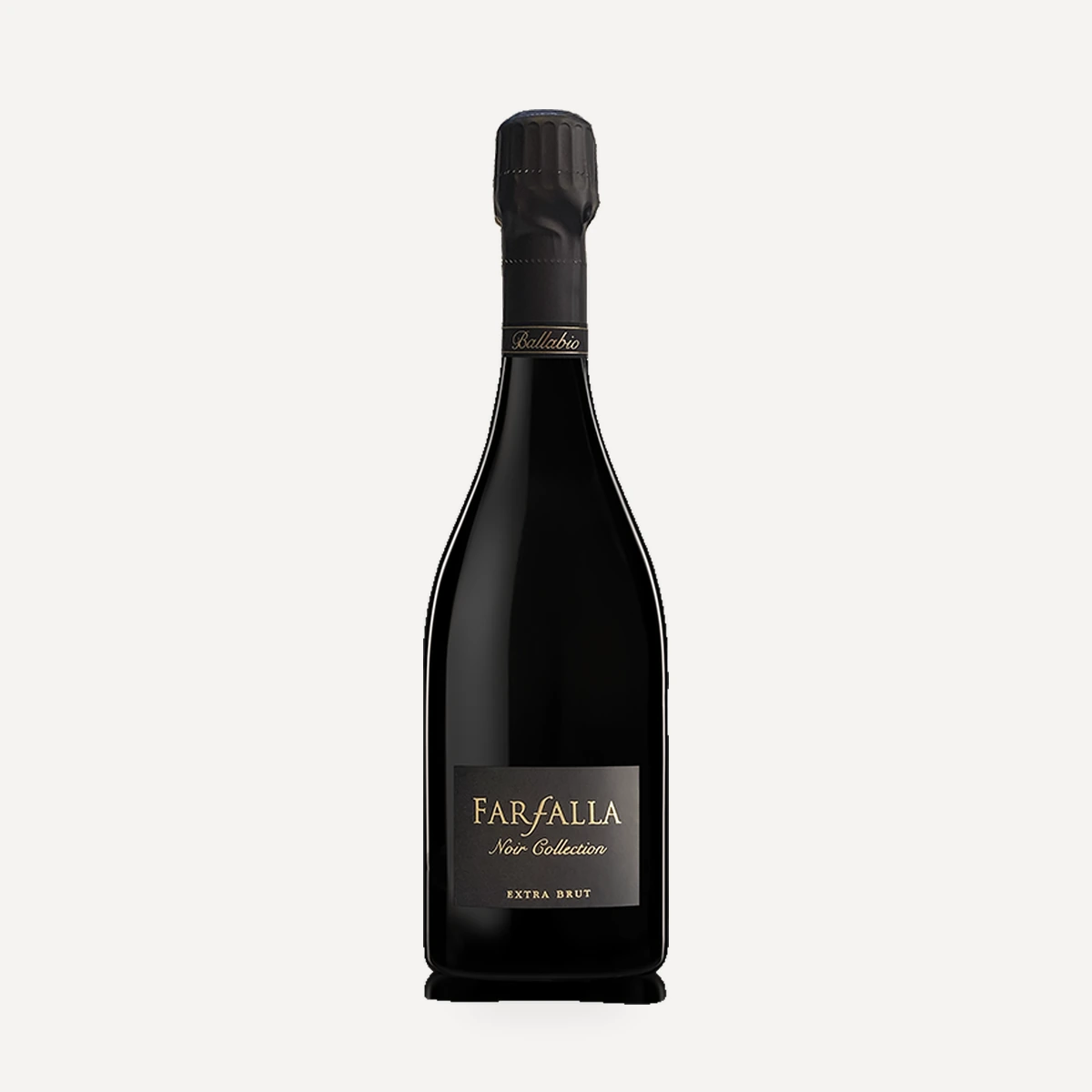
Farfalla Extra Brut
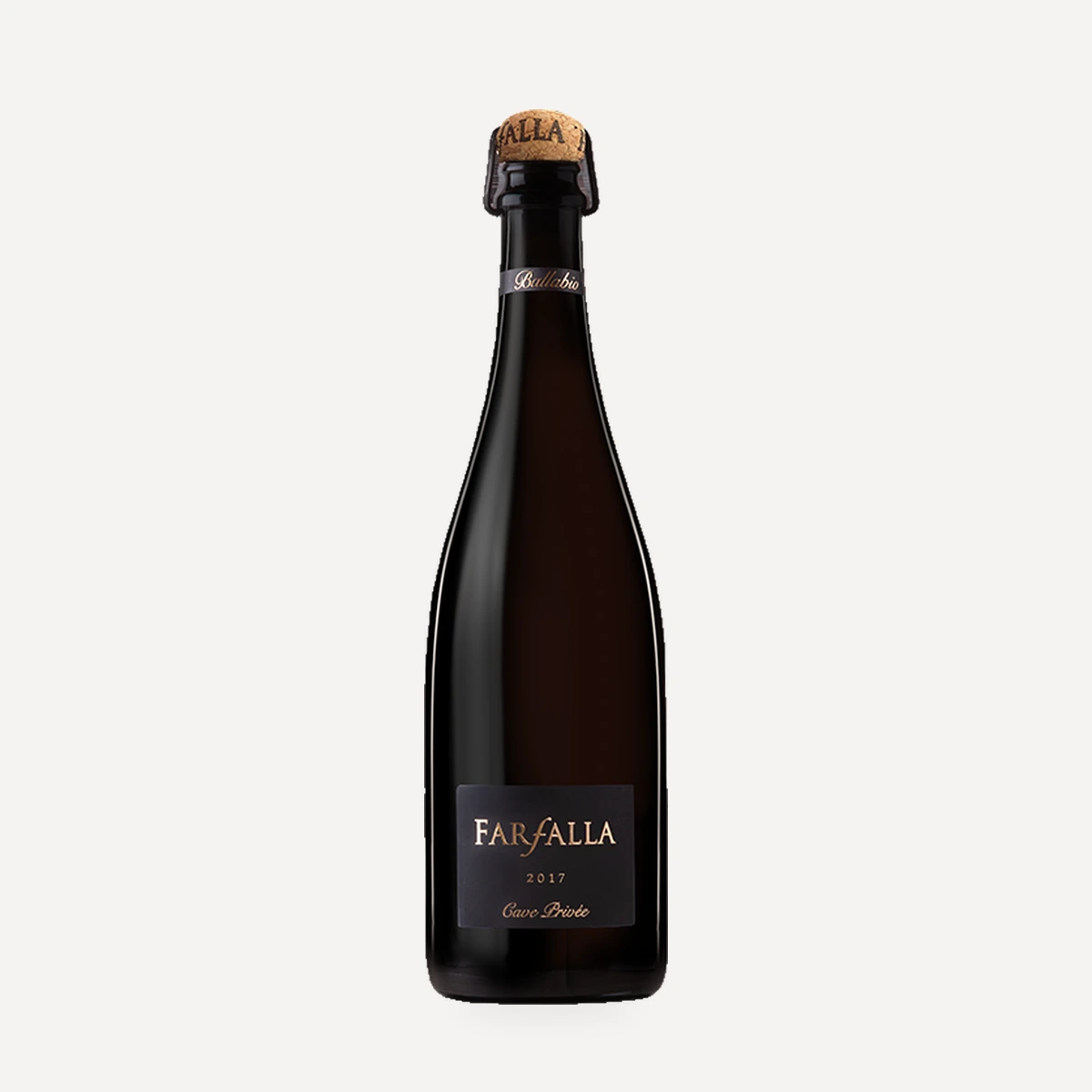
Farfalla Cave Privée
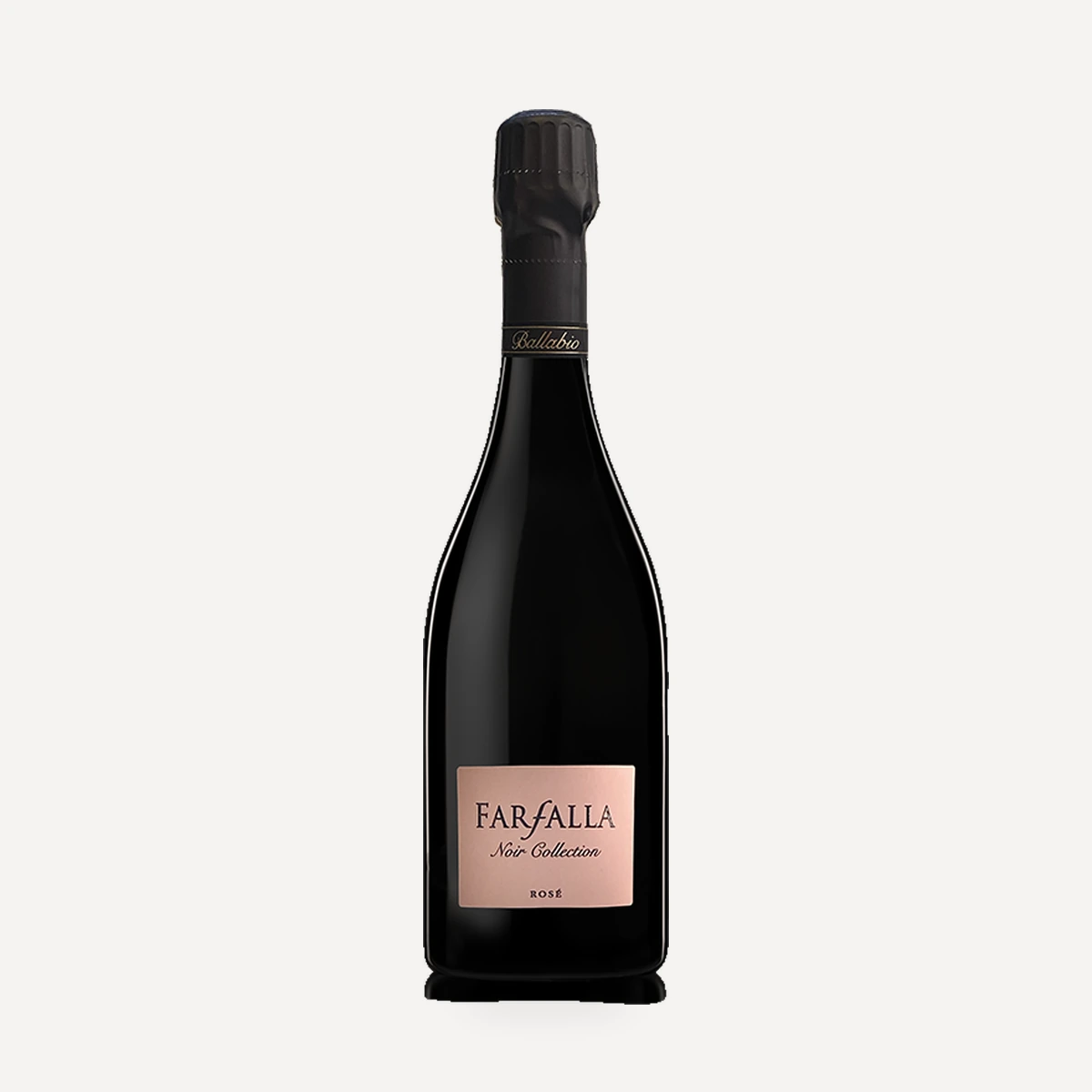
Farfalla Rosé