Storia
Fifteenth-century origins
The earliest family trace presented by Barba dates to fifteenth-century Naples. Francesco Barba, an ancestor of the present family, was an abbot and canon during the pontificate of Pope Sixtus IV.
Establishment in Abruzzo
The family subsequently moved towards the province of Teramo in Abruzzo. By the middle of the eighteenth century, records from the catasto onciario identified Carlo Barba as the owner of numerous properties at Santa Margherita di Atri and on the plains of Casoli and Fontanelle. These holdings marked the beginning of the family’s landed estate, which later generations continued to develop.
Direct management and modernization
At the end of the 1950s, Luigi Barba, a Cavaliere del Lavoro, brought the sharecropping period to a definitive close. He introduced direct family management and equipped the agricultural business with modern installations and infrastructure.
From the 1960s, the family also became active in brick manufacturing. Land and agriculture nevertheless remained the core of the family business, developed through a combination of continuity and technical innovation.
A purpose-built winery
The present winery was built in 1991 at Scerne di Pineto, at the foot of Colle Morino. Its total capacity exceeds the estate’s stated production potential of approximately 9,000 hl. The facility incorporates temperature-controlled fermentation and storage areas, stainless-steel fermenters and truncated-conical oak vats. Its grape-reception line was subsequently redesigned and renewed throughout.
Renewable-energy development
Barba began producing photovoltaic energy in 2007. The installations have since expanded to approximately 6 ha and also cover the roofs of the wine and livestock facilities, supplying clean energy to the estate’s operations.
Terroir
Barba’s vineyards occupy hilly ridges along the Vomano River in the province of Teramo, between the municipalities of Cellino Attanasio, Atri, Pineto and Roseto. The terrain lies between the Abruzzo foothills and the Adriatic coast, descending along the sides of the region’s river valleys.
Summers bring long sunny days followed by cool nights. Winters are moderated by the nearby Adriatic Sea. The estate gives an average annual temperature range of 12–16°C and describes the area as having good rainfall and ventilation.
The Vomano alluvial plain is marked by Plio-Pleistocene deposits. These accumulated through a marine sedimentary cycle that filled the Periadriatic basin between the end of the Tertiary and the beginning of the Quaternary. The resulting landscape is undulating, with broad, nearly level rises, rounded slopes and steep erosion-cut sections known as calanchi. The soils have a sandy-clay structure, variable depth according to slope and exposure, and medium-to-low water retention.
Vinificazione
Barba describes more than forty years of progressively refined vineyard management. Rigorous pruning is carried out at the end of winter. Leaf removal is followed by bunch thinning during the thirty days before harvest, with the work directed towards the estate’s quality objectives under the technical-agronomic management of Dr Stefano Chioccioli.
Montepulciano and Trebbiano are harvested between the end of September and the second ten-day period of October. Only the best intact bunches are selected for vinification, and they are collected in boxes.
The wider agricultural estate operates a circular nutrient system. Feed used by its dairy herd includes material unsuitable for human consumption, while manure is returned to the fields to nourish plants and reduce chemical-fertilizer use to the minimum considered necessary.
Vinification takes place in the winery built in 1991 at Scerne di Pineto, at the foot of Colle Morino. The facility has a capacity greater than the estate’s stated production potential of approximately 9,000 hl. Its grape-entry line has been comprehensively redesigned and renewed.
Only selected, intact bunches delivered in boxes are directed to vinification. Fermentation lasts approximately ten days. For red wines, the must remains in contact with the skins for a period adjusted to the type of wine being made.
Must temperature is controlled so that fermentation can proceed evenly while preserving and emphasizing aromatic expression. The winery uses batteries of stainless-steel fermenters together with truncated-conical oak vats. Large temperature-controlled rooms are dedicated to wine maturation and bottle storage.
Filosofia
Barba presents land and agriculture as the enduring centre of the family enterprise, even after its activities expanded into other industries. Its approach combines inherited agricultural traditions with continued investment in infrastructure and technical innovation.
Quality is pursued through detailed seasonal vineyard work, selective harvesting and coordinated technical-agronomic management. Sustainability is expressed through renewable-energy generation, a circular relationship between livestock and field cultivation, reduced dependence on chemical fertilizers and attention to animal welfare. These practices are presented as parts of a diversified working farm rather than as an organic or biodynamic certification claim.
Vini
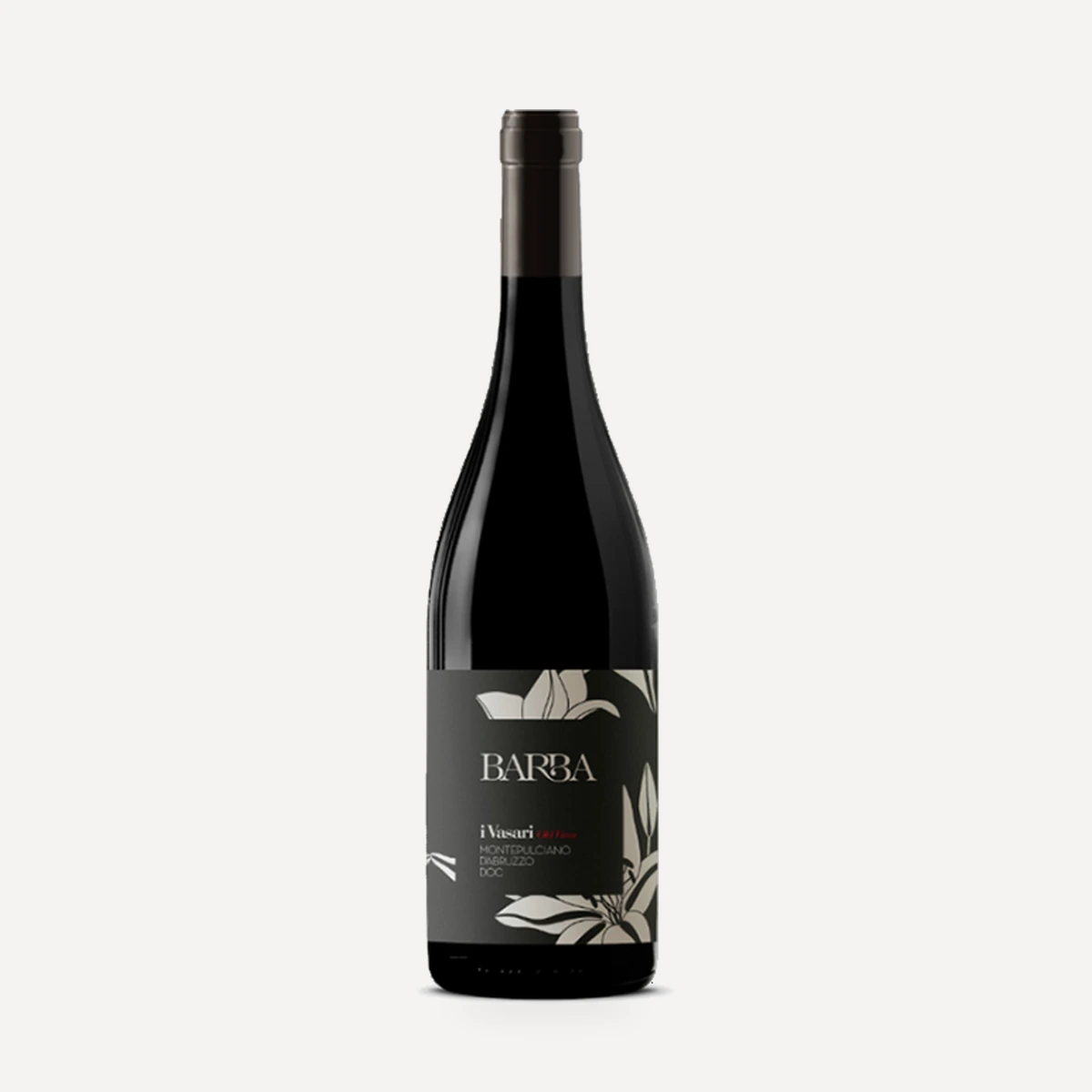
Montepulciano d’Abruzzo DOC I Vasari
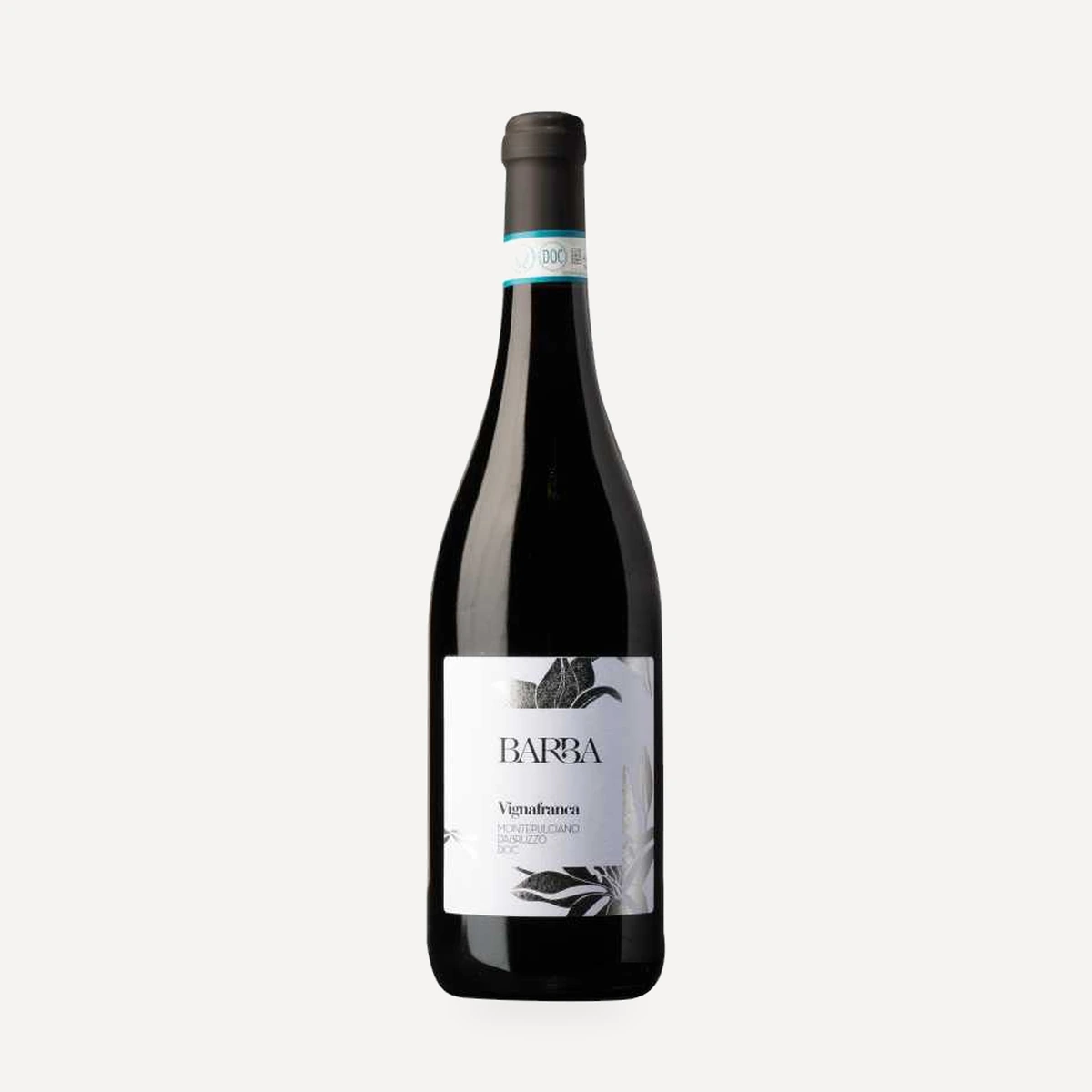
Montepulciano d’Abruzzo DOC Vignafranca
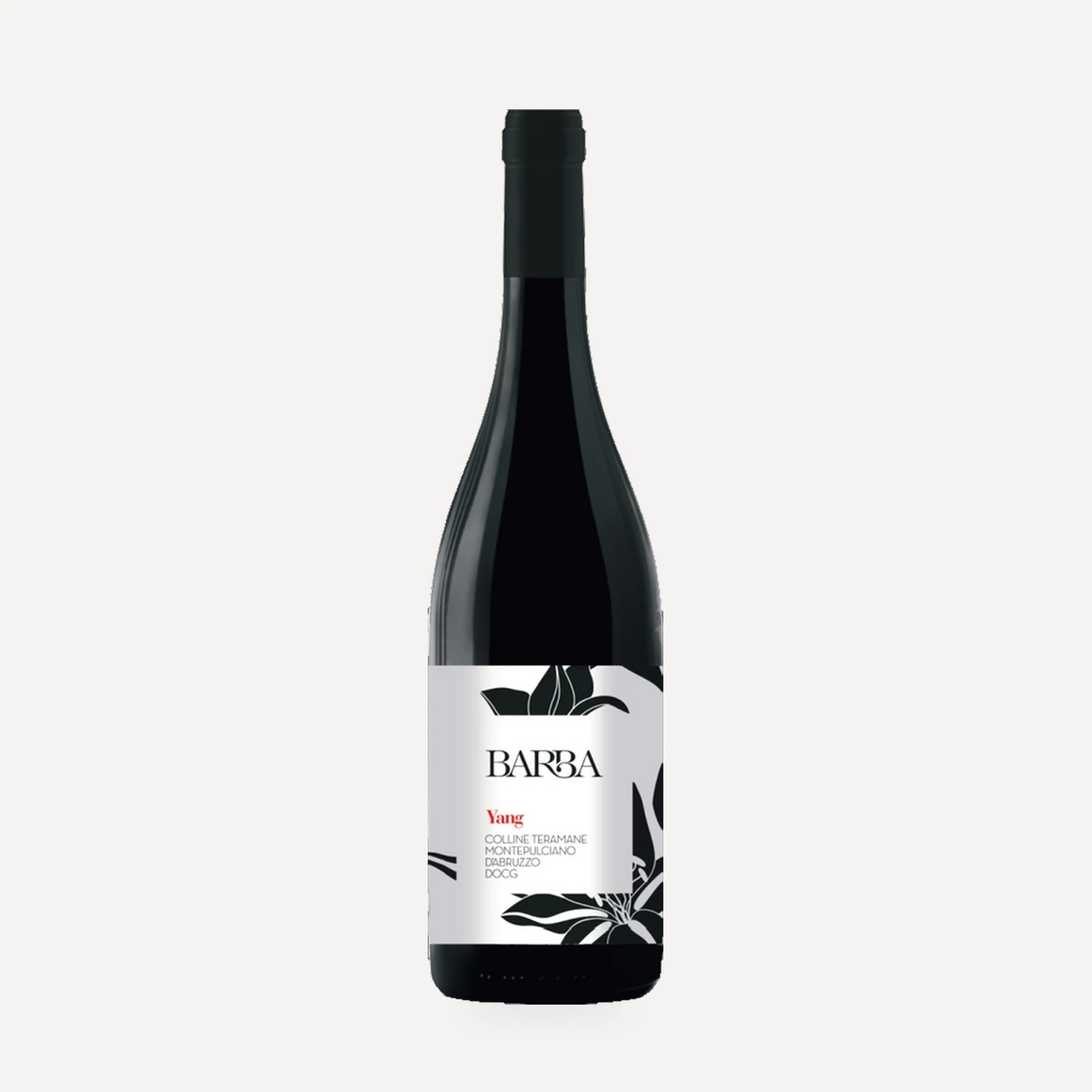
Montepulciano d’Abruzzo Yang DOCG Colline Teramane