Storia
From pharmacy to viticulture
Ausonia’s development began in 2005, when Simone Binelli, supported by Francesca Lodi, enrolled in Viticulture and Enology at the University of Florence. This was his second degree, completed with highest honors after six years working as a pharmacist. He subsequently left pharmacy, married Francesca and committed himself to viticulture and to a professional life in Abruzzo.
In 2006 Simone began managing the agricultural side of the family property. The existing vineyards underwent extensive restructuring: the free-cordon training system was replaced by Guyot to support the intended quality level.
The estate takes shape
Simone and Francesca formally began their shared Ausonia project in 2008. That year, the estate planted 2.5 hectares of Pecorino to strengthen its focus on native Abruzzo grapes. These vines joined 4.5 hectares of Montepulciano d’Abruzzo and 3 hectares of Trebbiano already under cultivation.
The winery was conceived with environmental performance in mind. It was built on two levels so that wine could frequently be moved by gravity, and two underground rooms were created for maturation and storage. The building was fully insulated and given a wooden roof. Rainwater is collected in a 200 m³ cistern for use during summer.
The cellar came into operation in 2011. From that year Simone, already responsible for the vineyards, also directed winemaking with assistance from trusted professionals.
New vineyards, research and the first public milestones
In March 2012 Ausonia presented a new 7,000 m² Montepulciano d’Abruzzo vineyard near the winery, with a south-western exposure. The estate also collaborated with the University of Enology in Teramo on vineyard research measuring leaf photosynthetic activity after early removal of the first six leaves from shoots during flowering.
The same year brought Ausonia’s first Vinitaly participation. At Vinitaly’s international competitions, the producer received the Special Packaging 2012 Prize, while individual 2011 labels received two gold-label awards, one bronze-label award and a special mention.
Organic and biodynamic conversion
Ausonia began its organic-certification process in 2013. The estate’s move away from conventional production developed further in 2014, when Simone and Francesca introduced biodynamic practices. Documented measures included green manure, composting and horn manure, dynamized before application and sprayed on the soil to increase humus, encourage root development and improve plant nutrition.
In 2015 the estate expanded its spontaneous-fermentation work. Pecorino and Chardonnay were harvested to prepare a pied de cuve for a proposed sparkling wine, and the spontaneously fermented Pecorino joined Trebbiano and Montepulciano in what was presented as the Natural Fermentation range.
The challenging 2016 season
The 2016 season included hail on 24 April, rain through May and the first half of June, and a mild but wet summer. A single storm on 16 July delivered 140 mm of rain. Spring humidity encouraged vineyard disease, while August and September were sunnier and drier. Hail destroyed shoots in some areas and downy mildew caused further losses, leaving the harvest almost half its normal quantity despite fruit quality being judged excellent.
For that harvest, roughly 200 kg of grapes were picked before the main vintage, crushed and allowed to ferment spontaneously. Once active, this pied de cuve was used to inoculate the newly harvested must. Experimental lots included a sparkling-wine base from a small Chardonnay vineyard scheduled for regrafting, and a skin-macerated Pecorino divided between terracotta amphora and stainless steel.
Terroir
Ausonia’s contiguous property lies in Contrada Nocella in the municipality of Atri, Province of Teramo. The vineyards stand on hills at approximately 270 metres above sea level, between the Gran Sasso massif to the west and the Adriatic Sea to the east. Gran Sasso rises to almost 3,000 metres, while the Adriatic coast is only a few kilometres away.
The hillside setting is ventilated and relatively dry, with pronounced differences between daytime and nighttime temperatures. Late spring is temperate and normally brings good rainfall. Long summer days are moderated by fresh breezes. During winter, snow may cover the vineyards for several days, shielding them from cold easterly winds.
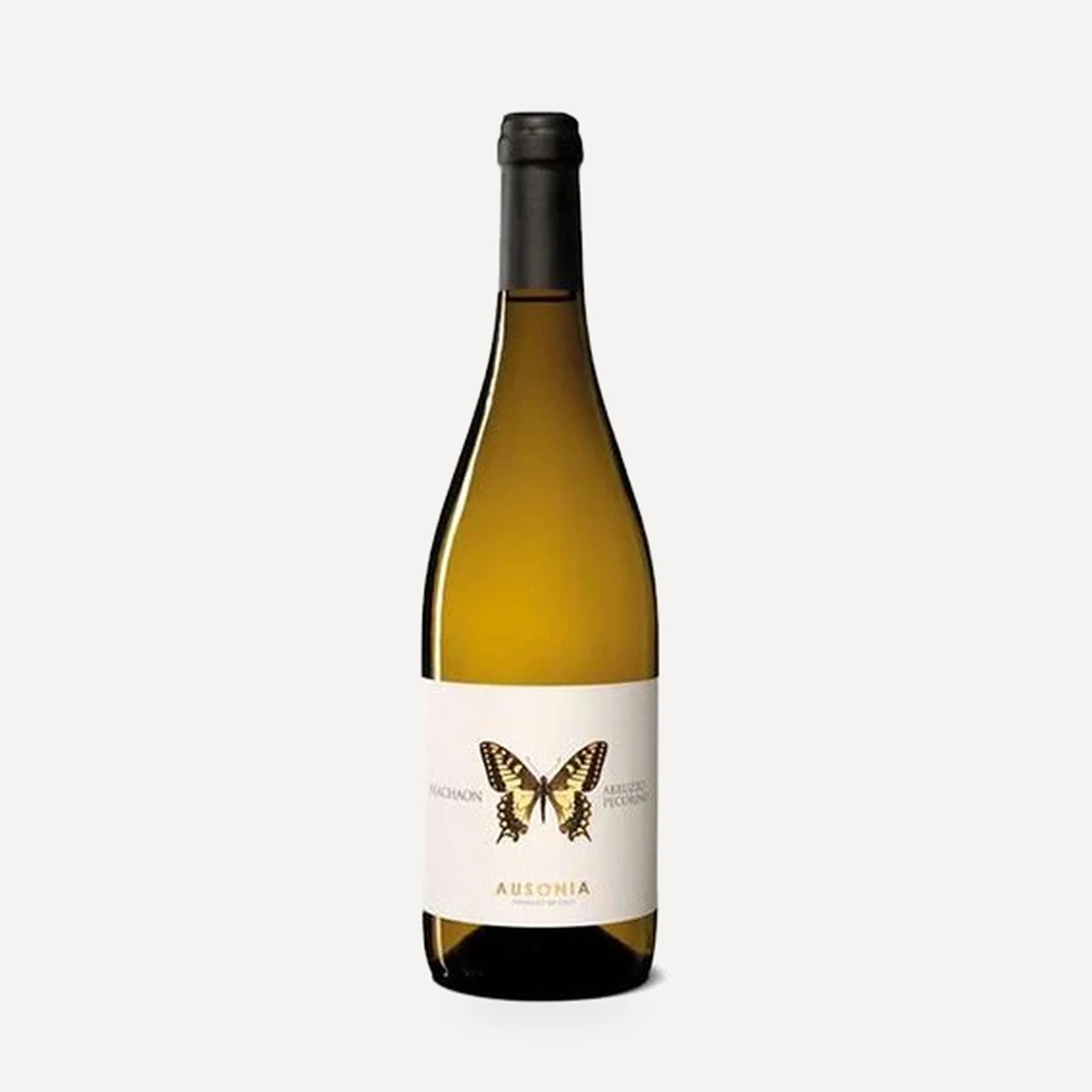
The property borders the landscape of the Riserva Naturale Regionale Oasi WWF Calanchi di Atri. These calanchi are erosion formations created when water washes over clay rock. The proximity of the reserve contributes to the estate’s immediate natural environment and provides habitat for the Euchloe ausonia butterfly from which the winery takes its name.
The soils are described in different estate materials as predominantly clay with a meaningful silt component, and as clay-limestone in the wine documentation. Their moisture-retention capacity helps vines endure extended dry periods.
Vinificazione
Ausonia’s vineyard work is organized around organic and biodynamic principles. The process of organic certification began in 2013, and biodynamic practices followed in 2014. Green manure, composting and horn manure were among the first documented biodynamic measures. Horn manure is dynamized before application and sprayed on the soil to increase humus, improve root development and support plant nutrition.
The estate treats prevention and soil health as the basis of biodynamic farming. Its stated objective is to build, maintain and preserve fertility through the care of humus rather than depend on corrective chemical intervention.
Selected, relatively non-competitive plant species were sown between the rows. This permanent cover reduces erosion, moderates vine vigor and creates a more complex vineyard ecosystem. Chemical herbicides beneath the rows were replaced by mechanical weed control. Sulfur and copper are preferred for plant protection when treatment is necessary, supported by biological and integrated-control measures. Vineyard equipment was selected to reduce water consumption during treatments.
Fertilization is organic. One documented source was manure from 140 Marchigiana cattle belonging to the estate’s friends Antonio and Tiziana. Small flocks of local sheep also graze the vineyards in winter, controlling weeds and contributing organic material to the soil.
Pruning is treated as a key operation because it determines vineyard development and yield. The estate has also investigated early defoliation with the University of Enology in Teramo, monitoring photosynthetic activity after the first six leaves of a shoot were removed during flowering.
Harvesting is manual. Grapes are transported and processed within no more than 50 minutes of picking. The short interval limits oxidation and helps reduce the quantity of sulfur dioxide required.
The winery is surrounded by the estate vineyards and was designed to combine modern equipment with reduced environmental impact. The insulated building has a wooden roof and two underground rooms dedicated to maturation and wine storage. Its two working levels allow wine to be moved frequently by gravity without pumps. Rainwater from the roof is collected in a 200 m³ cistern for summer use.
Ausonia processes only estate-grown fruit, maintaining control from vineyard to cellar. Grapes are hand-harvested and reach processing within a maximum of 50 minutes. Two pressing cycles are performed each day so that skins are not left exposed to air for extended periods. This rapid handling is intended to preserve aroma and allow restrained sulfur-dioxide additions.
Spontaneous fermentation is a central method in the documented natural-fermentation range. The fermentations rely on yeasts present on Ausonia’s grapes. In 2016, approximately 200 kg of fruit were harvested before the main vintage, crushed and allowed to begin fermenting spontaneously; the resulting pied de cuve inoculated the later musts. Fermentations require close monitoring because the cellar’s preventive approach leaves fewer corrective options once problems develop.
Stainless steel is a principal fermentation vessel. Documented trials have also included skin-macerated Pecorino divided between terracotta amphora and stainless steel. An experimental Chardonnay sparkling-wine base was made in 2016. The estate’s current wine pages additionally document spontaneous fermentation, completed malolactic fermentation and no filtration for selected wines; these details vary by cuvée and are not presented as universal cellar rules.
For packaging, the estate selected natural cork and lightweight bottles as lower-impact options. The stated reasoning links cork use to the continued cultivation of cork oak and carbon uptake by harvested trees.
Filosofia
Ausonia presents wine as the outcome of a living relationship among people, soil, sky and the surrounding ecosystem. Simone and Francesca’s stated goal is to make natural, living wines with a distinct Abruzzo identity rather than pursue passing fashions.
Their approach gives priority to prevention, observation and care. Vineyard health is built through humus, organic fertility, cover crops and biodiversity; cellar work is intended to guide sound fruit with simple handling and suitable modern technology. The estate regards excellent grapes as the indispensable starting point and limits production to fruit grown on its own property.
Native Abruzzo varieties are central to the project. The original company philosophy was to work exclusively with indigenous grapes, while the choice of butterfly names expresses the intended connection among the wines, nature and the landscape around Atri. Vintage differences are retained through spontaneous fermentation and a deliberately limited range of corrective cellar interventions.
Vini
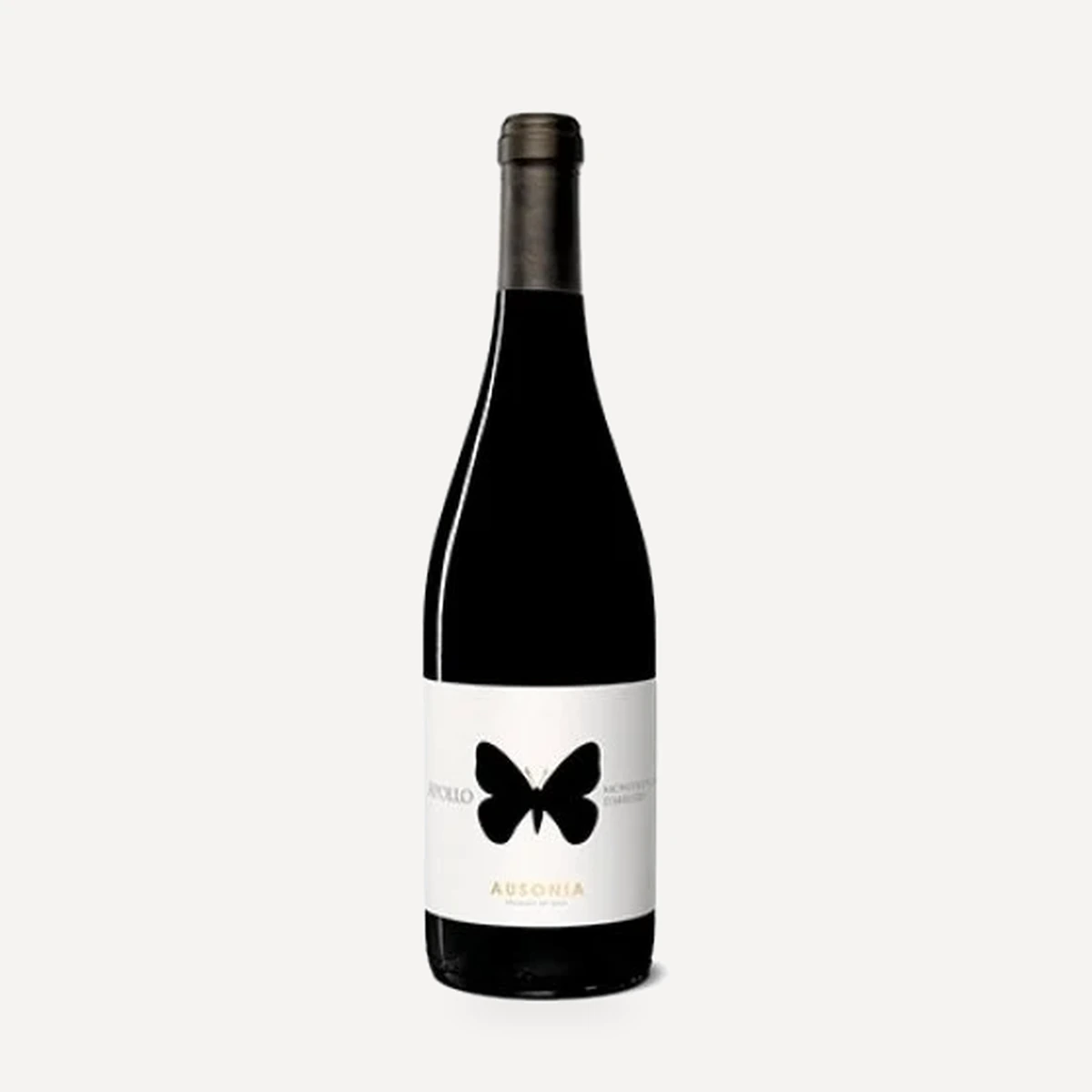
Apollo Colline Teramane Montepulciano d’Abruzzo D.O.C.G.
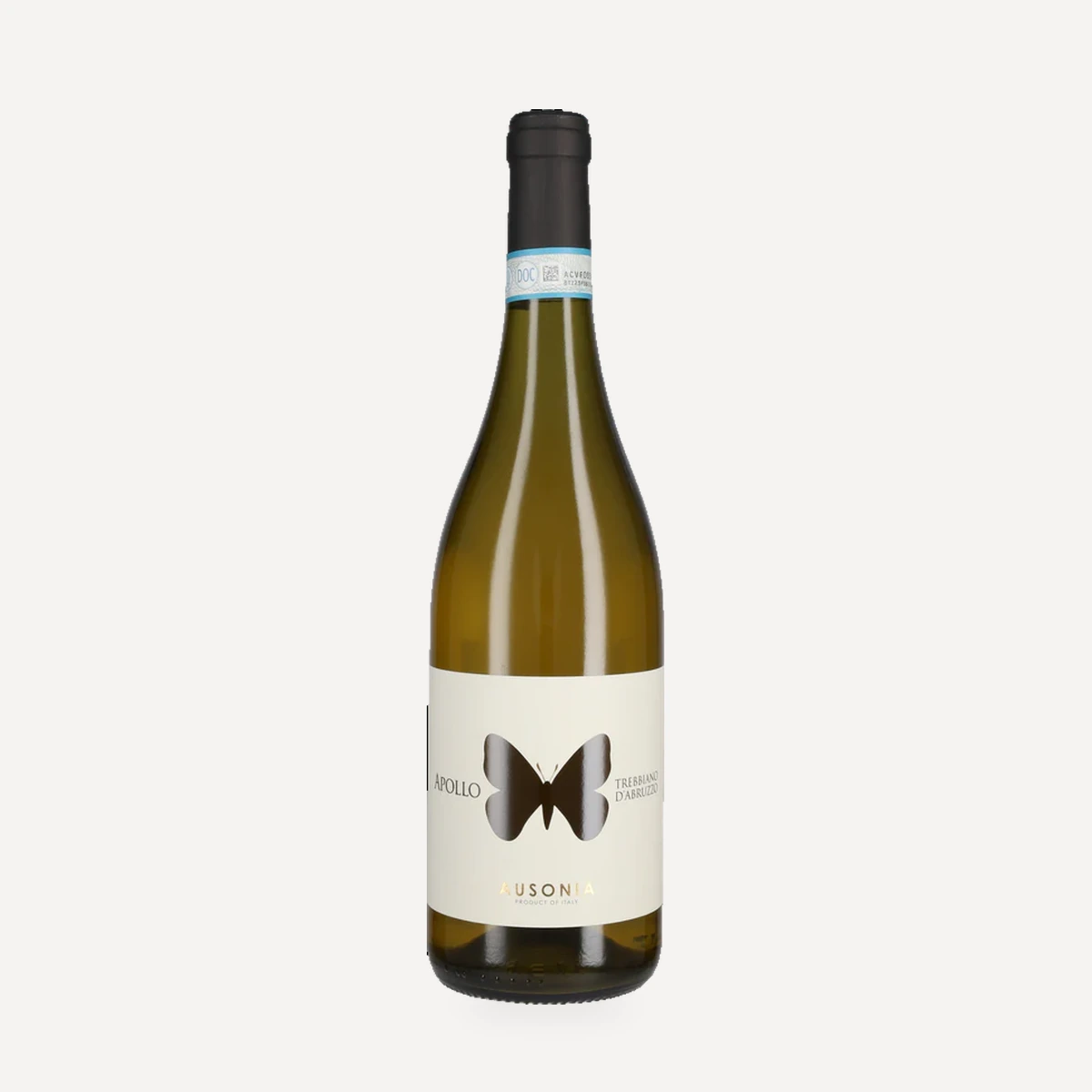
Apollo Trebbiano d’Abruzzo D.O.P.