Questo vino
Vineyard and terroir
Fanoi Negroamaro is made only when a strict selection of old-vine fruit provides sufficient quality and concentration. The vines have extremely low yields, and production is correspondingly rare and very limited. They are espalier-trained with spur-pruned cordons. Harvest runs from late September through the first ten days of October.
Grapes
100% Negroamaro.
Vinification
Fermentation takes place at controlled temperatures of 22–26°C. Maceration lasts 12–15 days. Daily délestage is performed during the first 4–5 days, followed by gentle wetting of the cap.
Ageing
Once malolactic fermentation is complete, the wine matures in barriques combining new, second-use and third-use French oak. Both vinification and maturation follow a deliberately slow, measured approach.
Tasting profile
Deep ruby red with subtle garnet tones. The intense, layered aroma brings together ripe black fruit, sour-cherry jam, carob, sweet tobacco, incense and oriental spices, with balsamic nuances and graphite. The palate is full-bodied, enveloping and powerful but controlled. Dense, refined tannins are integrated into the structure, while lively acidity balances the richness. The finish is long, austere and vibrant. Within the Fanoi pair, this is the more austere, vertical and saline expression.
Serving and pairing
Serve at 18°C. The wine calls for deeply flavored, richly textured dishes such as roast lamb, glazed short ribs, red-wine stews, braised game and mushroom preparations. It also pairs with blue cheese and well-aged hard cheeses. Salento matches include stewed horse meat, rabbit alla pignata, baked torcinelli, and offal cooked with onion and bay leaf.
It is approachable now and has ageing potential of at least ten years.
Label / history
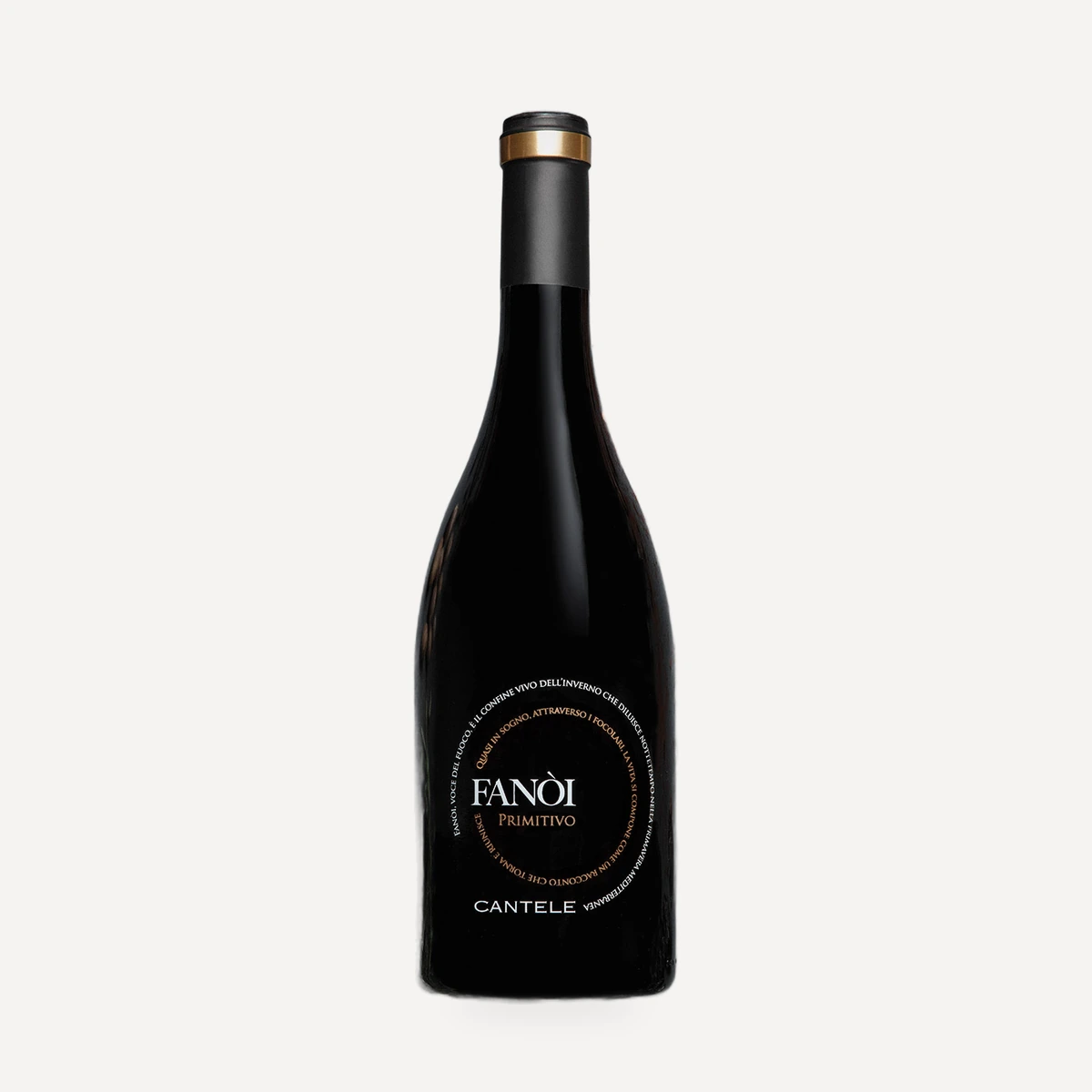
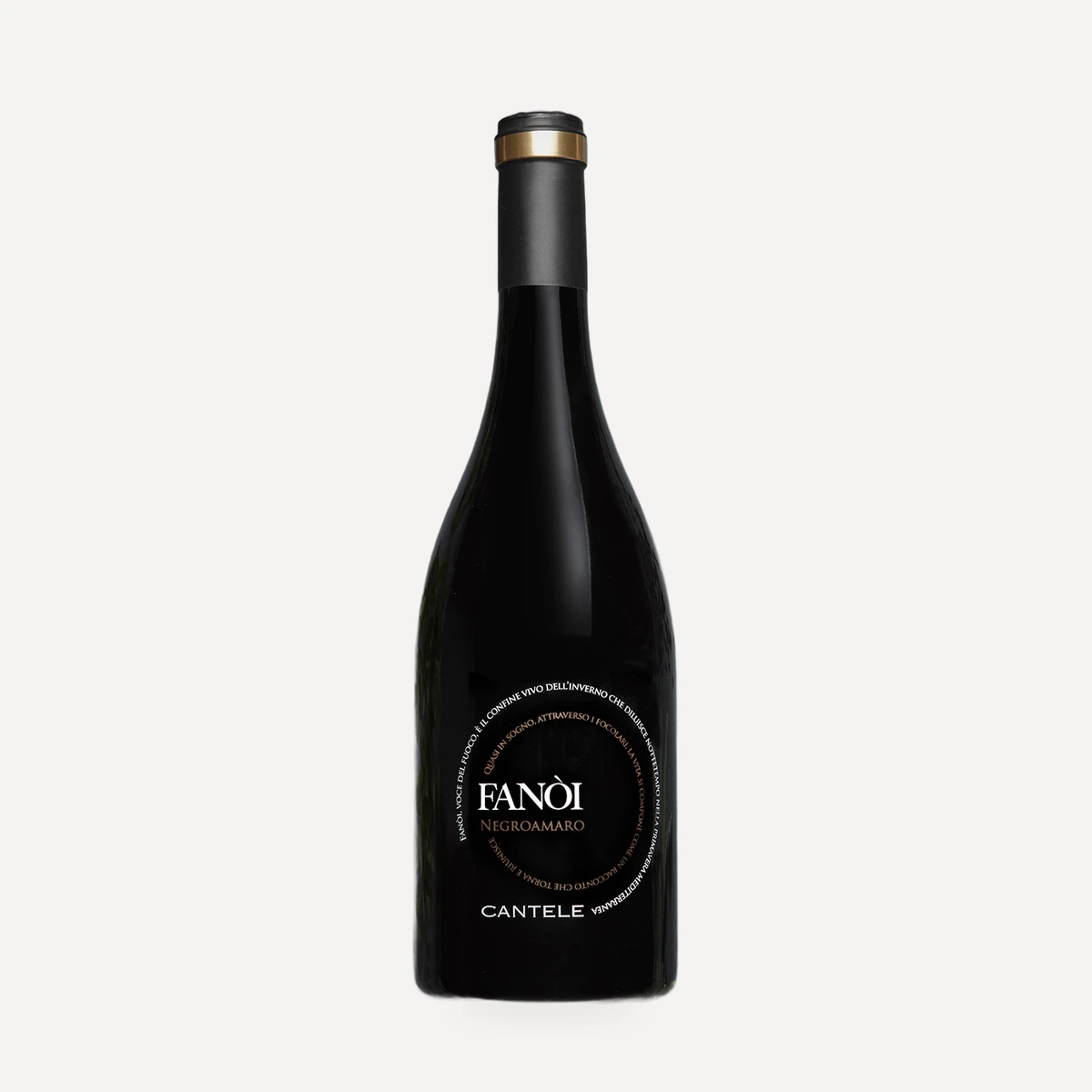
Fanòi is a Greek word for the large winter fires once lit in rural communities to thank the earth, ask for protection and mark the changing seasons. The name anchors a project devoted to land and time. Fanoi is conceived as an exception rather than a regularly produced label: it is made only in years when nature yields enough concentrated old-vine grapes.