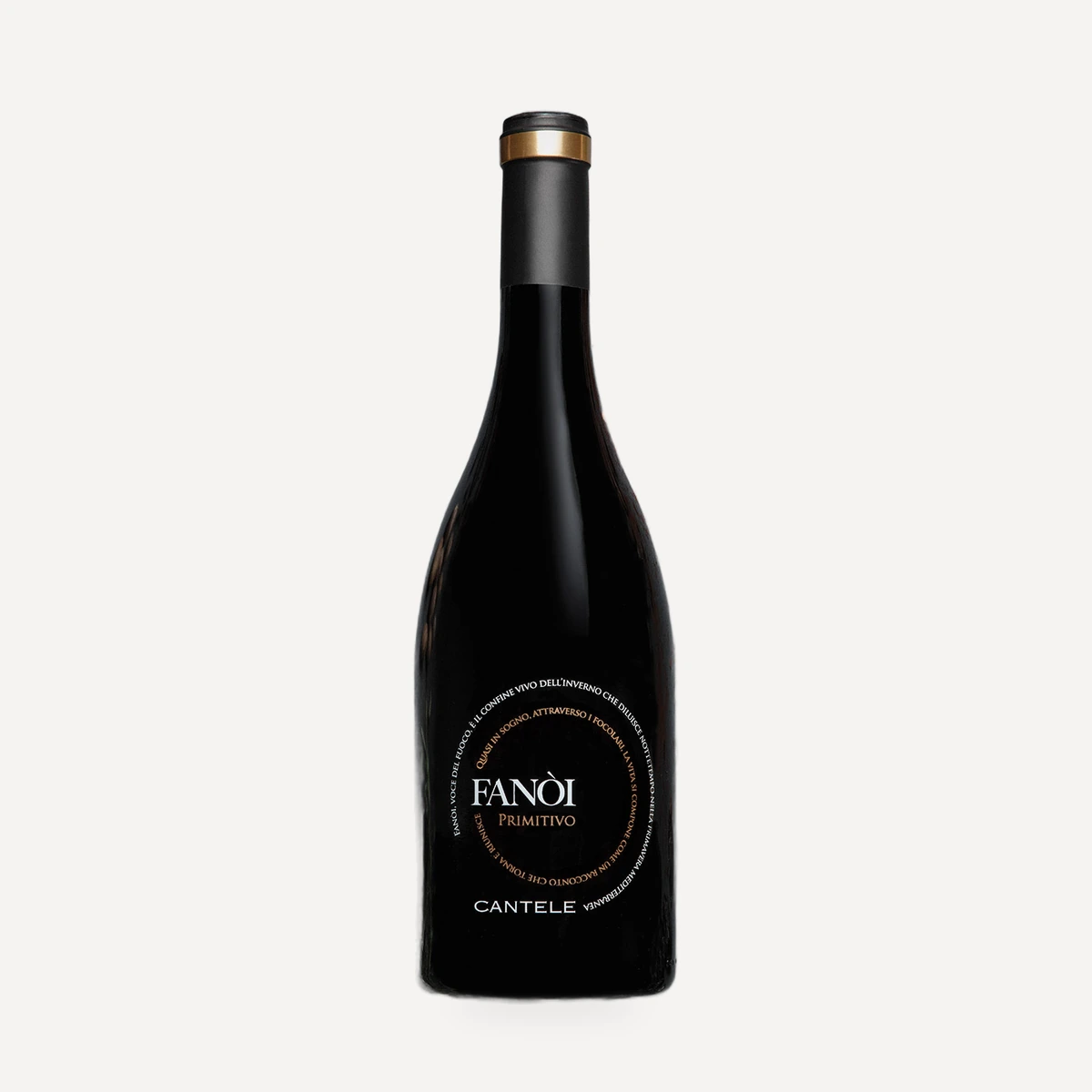
Questo vino
Vineyard and terroir
Fanoi Primitivo comes from old vines with extremely low yields and deep concentration. It is made only in years when enough suitable fruit is available, resulting in very limited production. The training systems combine bush vines with espalier vines pruned to spur cordons. Harvest takes place between late August and the first ten days of September.
Grapes
100% Primitivo.
Vinification
Fermentation is controlled between 22 and 26°C, with an 8–12-day maceration. Daily délestage is carried out during the first 4–5 days, with gentle wetting of the cap throughout.
Ageing
After malolactic fermentation, the wine rests in barriques assembled from new, second-use and third-use French oak. Vinification and maturation are deliberately slow and measured.
Tasting profile
Deep ruby red with purple highlights, dense and compact in the glass. The nose is deep and enveloping, opening with cherry in spirit, ripe plum, carob and liquorice, then developing cinnamon, clove, bitter cocoa, fine wood and a balsamic accent. The palate is rich, concentrated and composed, with a full, textured mouthfeel. Dense ripe tannins are supported by vibrant freshness. The long, layered finish carries dark fruit, pepper and chocolate. Within the two Fanoi expressions, the Primitivo is the warmer, more enveloping and sensual wine, emphasizing dark fruit, spice and depth while retaining restraint.
Serving and pairing
Serve at 18°C. Its structure and aromatic intensity suit braised meats, stews, game birds, wild game, grilled beef steak with a red-wine reduction and very mature cheeses. Salento pairings include carne di cavallo alla pignata, lamb in tomato sauce with lampascioni, oven-baked spicy bombette, and richly layered parmigiana.
It is ready to drink and has ageing potential of at least ten years.
Label / history
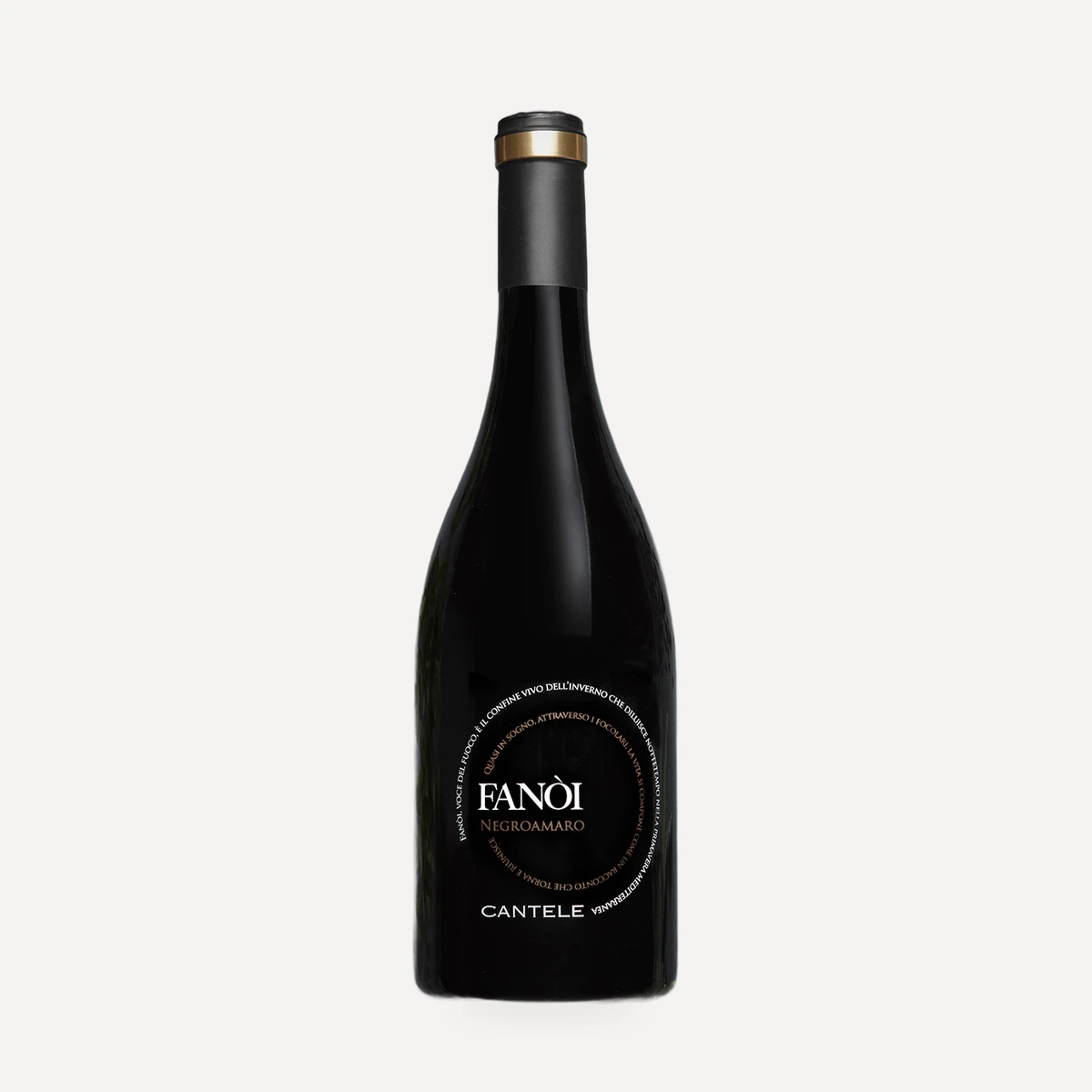
Fanòi is a Greek term for the great fires historically lit on winter nights to thank the earth, seek protection and mark the passage between seasons. The project connects that memory with wines made only when nature permits. It is an exceptional rather than continuous label, dependent on the availability of concentrated old-vine grapes.