Questo vino
Vineyard and terroir
The fruit comes from Vigna Addis and Vigna Tregge. At the time of the 2019 vintage, the vineyards were between 10 and 15 years old and planted at 6,250 vines per hectare in a 2 × 0.8 m pattern. The vines are trained to pruned-spur cordon.
Vigna Addis lies on calcareous clay soil containing a substantial rocky component. Its difficult subsoil requires fertility to be maintained through soil cultivation and green manure, contributing to balanced production and concentrated grapes. Its slope exposure is given as south-east, while the technical description of Vigna Addis and Vigna Tregge records a north/south exposure.
Sustainable growing protocols govern the vineyard work. Winter pruning selects the buds retained for production and seeks to preserve the vine's natural physiological balance. Summer canopy management includes shoot selection, suckering and defoliation. Bunch thinning after veraison regulates crop balance and concentrates aromas and tannins. The target yield is approximately 0.8 kg per vine.
Grapes
60% Petit Verdot and 40% Cabernet Sauvignon for the latest published vintage, 2019. The blend was conceived around Petit Verdot as a distinctive expression of the estate.
Vinification
Ripeness is followed through regular microbiological analysis. Harvest is performed by hand during the coolest hours of the day, using 10–12 kg crates. Grapes undergo an initial selection in the vineyard and a second selection on a vibrating sorting table at the winery.
After destemming and gentle crushing, the varieties enter separate conical tanks. Maceration lasts approximately 18–25 days, with daily pump-overs, manual punch-downs and délestage, accompanied by continuous monitoring of fermentation temperature. At the end of maceration, the wine is racked and the pomace is gently pressed.
Ageing
The wine is transferred immediately to French-oak barriques and tonneaux, where malolactic fermentation takes place. Maturation lasts approximately 20–24 months and is followed through laboratory analysis and periodic tastings by Carlo Ferrini and Vittorio Piozzo di Rosignano.
Technical data
- Classification: IGT Rosso Toscana
- Alcohol: 15% vol. for 2019
- First vintage: 2018
- Planting density: 6,250 vines/ha
- Planting pattern: 2 × 0.8 m
- Training system: pruned-spur cordon
- Target yield: approximately 0.8 kg per vine
Vintage notes
The 2019 season alternated cold, rainy periods with prolonged heat and drought. Budbreak occurred in the first week of April. Cold and rain during April and May slowed vegetative growth and delayed flowering by about ten days. June brought hot, dry weather, with temperatures reaching 37 °C late in the month. Summer remained sunny and approximately 2 °C warmer than average, including 45 consecutive rainless days. Rain in the final week of July restored more typical temperatures and favorable ripening conditions.
The estate's 2019 harvest began gradually on 5 September. Cooler temperatures in the final week of September helped preserve aromatic freshness and finesse. Following rain on 21 September, sunny weather returned, allowing the later-ripening varieties to be completed on 4 October.
Label / history
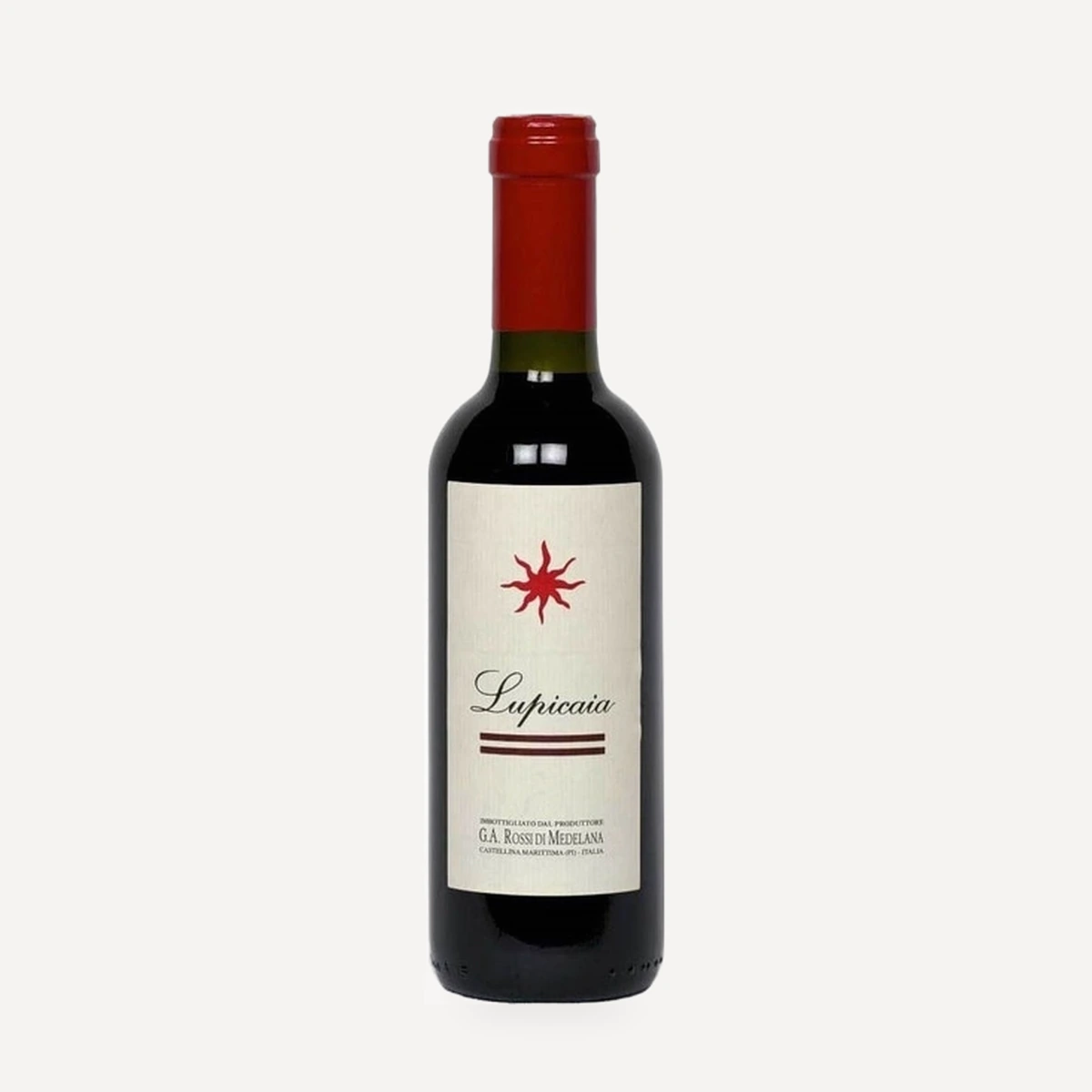
The wine is a tribute from Vittorio Piozzo di Rosignano to his uncle, Gian Annibale Rossi di Medelana, whose work he succeeded in managing Castello del Terriccio. Gian Annibale had begun developing a blend centered on Petit Verdot, believing the variety could become a distinctive element in expressing the estate's potential. Vittorio continued that project with Carlo Ferrini, nearly three decades after Ferrini's creation of Lupicaia. The resulting wine bears Gian Annibale's name and represents both the passing of responsibility between generations and continuity in the estate's work.