Questo vino
Vineyard and terroir
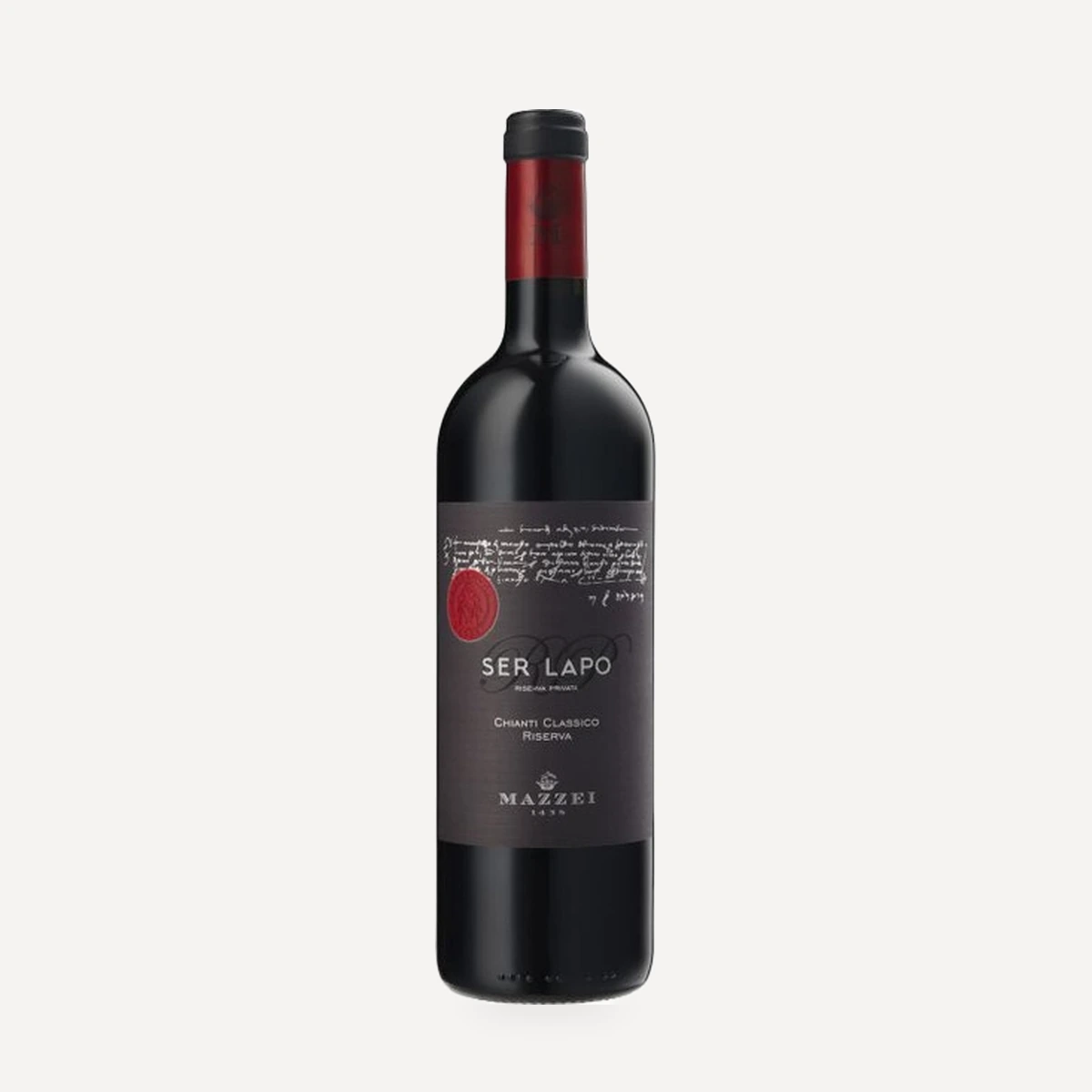
Ser Lapo is sourced from the Cornia and Caggiolo vineyards. Cornia lies at 250–330 m above sea level on clay and limestone, while Caggiolo ranges from 290 to 350 m on calcareous Alberese with a clay texture. The spur-cordon-trained vines are 20–35 years old and planted at 4,500–7,500 vines per hectare.
Grapes
90% Sangiovese and 10% Merlot.
Vinification
The 2023 fruit was harvested by hand from 26 September. Fermentation took place at 26–28°C, with 15–18 days of maceration.
Ageing
The wine matured for 12 months in small 225 L and 500 L French oak barrels, half of them new. It was bottled in December 2025 for release in April 2026.
Technical data
Alcohol: 13.59% vol. Total acidity: 5.42‰. Production: 310,000 bottles. Formats: 750 ml, 1.5 L and 3 L. The 750 ml format is packed in six-bottle cartons, while the 3 L format has a single wooden case. First vintage: 1983.
Tasting profile
Fresh and tannic, with berry aromas, an assertive structure and an earthy, intense palate.
Serving and pairing
Ageing potential exceeds 15 years.
Vintage notes
The 2023 season began with a mild, relatively dry winter. Spring brought rain and initially cool temperatures, followed by rapid warming that encouraged even vegetative growth. Budbreak began around 10 April and flowering around 1 June. Rain subsided as summer advanced and temperatures rose, thickening the skins and increasing berry volume. Timely vineyard work and continued monitoring after the wet early season supported a healthy harvest and wines of character. The estate harvest ran from 11 September to 10 October; rainfall from January through 10 October ranged from 597.7 to 1,203.8 mm. The vintage was evaluated as good.
Label / history
The wine honours the family's ancestor Ser Lapo Mazzei, author of the earliest known official document to mention “Chianti wine,” dated 16 December 1398.