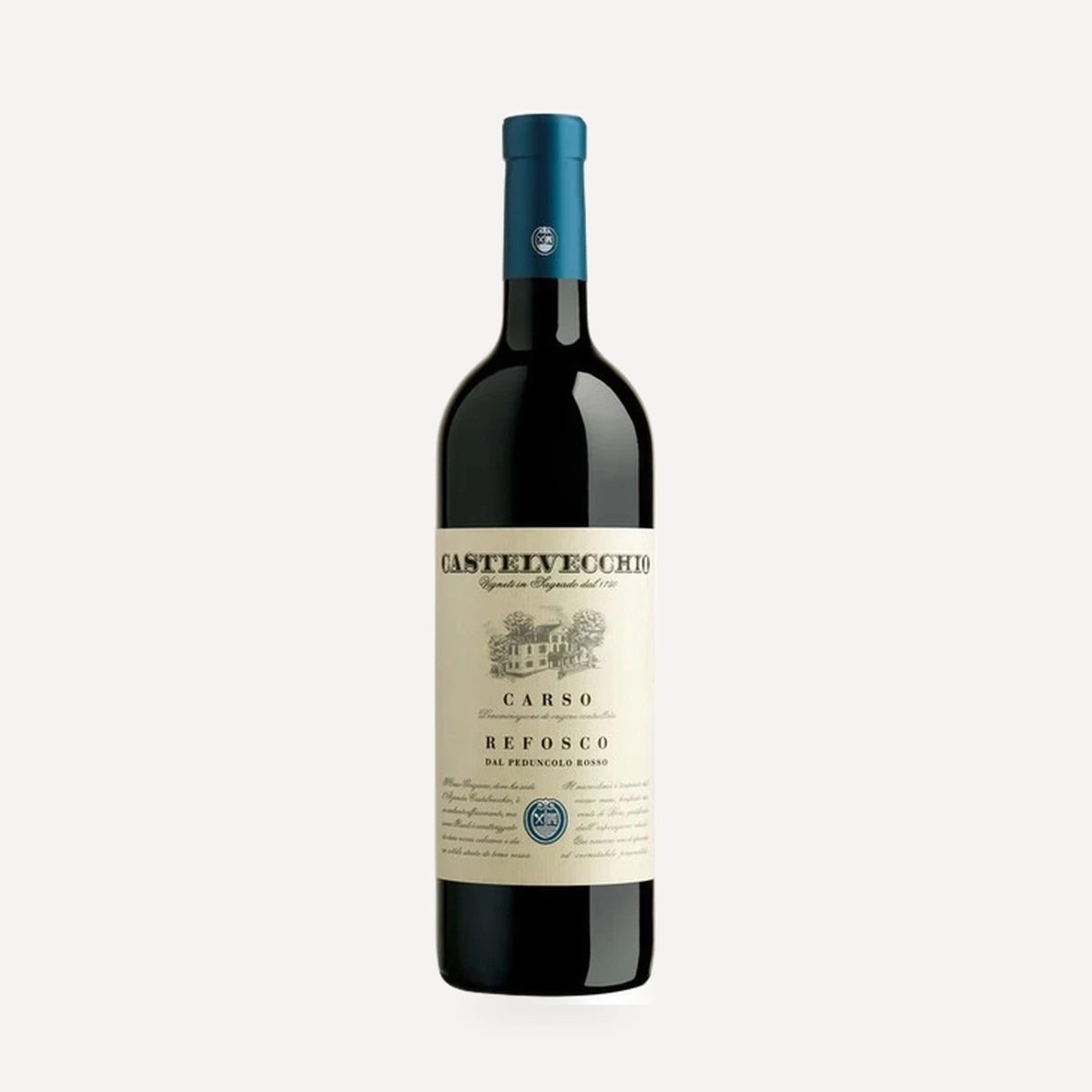
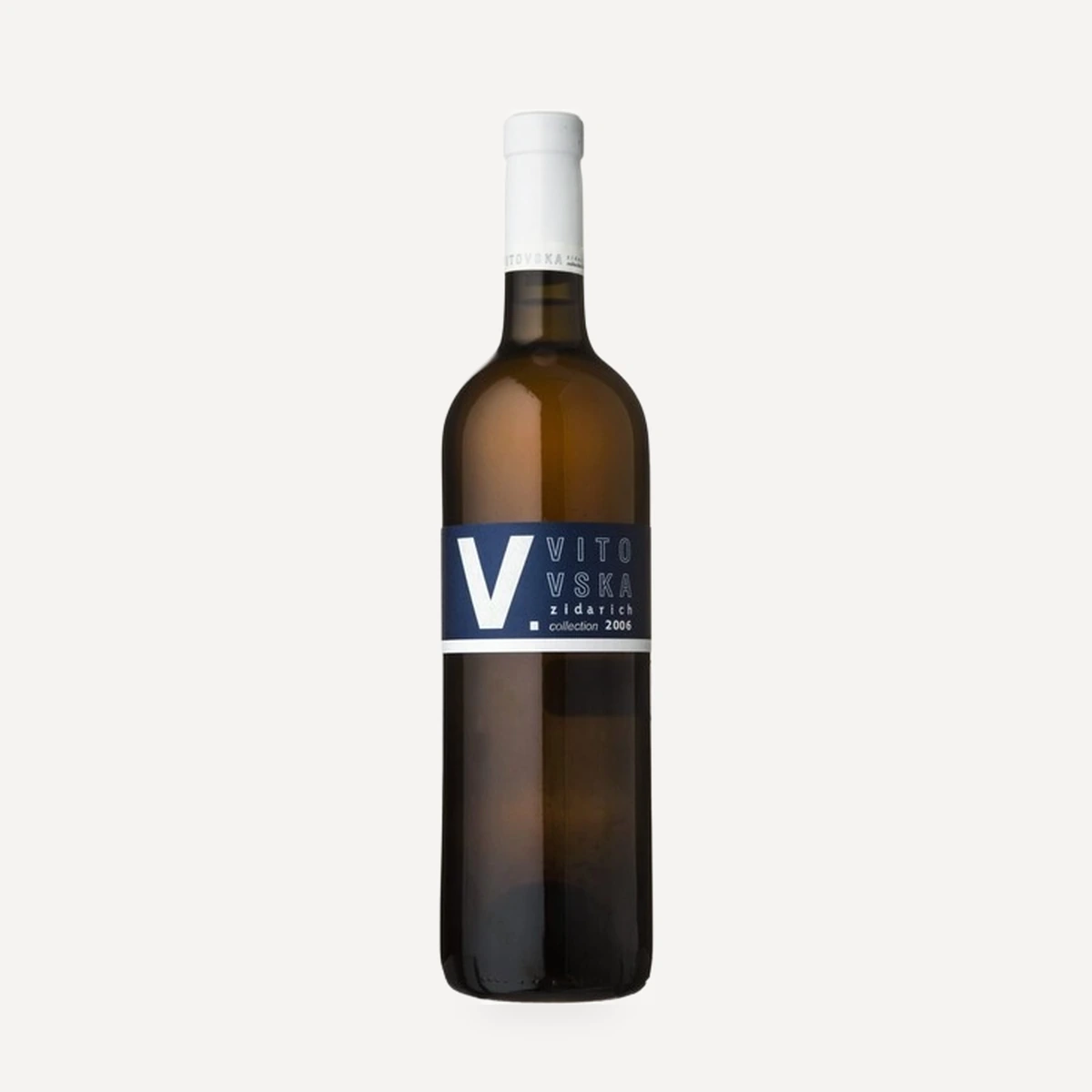
Questo vino
Vineyard and terroir
The grapes come from Castelvecchio at Sagrado, within the Carso area of the province of Gorizia. The terrain is arid and rocky, with a shallow stratum of red sand rich in iron and limestone. Constant ventilation and the nearby sea influence the site.
Grapes
100% Terrano. Terrano belongs to the Refosco d’Istria family.
Vinification
The wine remains in stainless-steel tanks for nine months. Malolactic fermentation is not carried out, preserving the malic acidity that characterizes young Terrano.
Ageing
Three further months in bottle precede release.
Technical data
The available format is 750 ml. Alcohol is described as moderate rather than given numerically. Acidity is a defining feature, while tannin content is limited and the structure medium-bodied. The product description highlights a high polyphenol content and characterizes these compounds as antioxidant, anti-radical, anti-ageing and antiviral.
Tasting profile
Intense ruby red in youth, edged with violet; the colour softens as the wine matures. Wild aromas evoke blackberry, bilberry, wild cherry, raspberry and plum. The youthful palate is lively and exuberantly acidic because of retained malic acid, with a slightly metallic impression. Limited tannins and moderate alcohol frame its medium body.
Serving and pairing
Serve at 16–18 °C. Pair with charcuterie, cured or salted meats and typical Karst dishes. When young and served chilled, it also accompanies fatty fish, particularly eel.
Label / history
The historical account links Terrano to the wine called Pucinum in Roman times and records a traditional association with iron and the blood, including historical use in connection with anaemia and recovery after childbirth.