Storia
The present-day project
Col Tamarie is led by Alberto and Marta in the hills of Vittorio Veneto. Their work began with the selection of grape varieties historically cultivated in the Alto Vittoriese area. They chose varieties suited to their land, seeking to connect the resulting wines with the history and character of the place.
The project combines traditional ideas with a modern non-interventionist approach. Its development encompasses holistic vineyard care, manual harvesting, variable skin maceration, natural seasonal stabilization and bottle refermentation. Alberto and Marta describe the wine not simply as a product but as a close companion shaped through their relationship with the land, natural elements, music and what they call the subtle energies of the surrounding environment.
Terroir
The vineyards occupy sunny slopes of the Pre-Alps in the hills of Vittorio Veneto, at approximately 450 metres above sea level. They stand on rocky morainic hills and are surrounded by woodland.
Morainic soils form the geological basis of the vineyards. The estate associates these soils with the grapes’ mineral complexity. The surrounding biodiversity is treated as a fundamental part of the vineyard ecosystem, with cultivation kept apart from intensive agricultural practices. This environment is intended to produce healthy grapes with substantial extract and to support balanced wines.
Vinificazione
Viticulture begins with close observation of the soil and vines so that work can respond to their perceived needs. The approach is described as extending beyond organic farming and emphasizes respect for the rhythms and cycles of the surrounding ecosystem.
The vines are nourished and strengthened with homeopathic and phytotherapeutic preparations. Copper and sulfur are minimized, with the objective of preserving plant health, environmental balance and the vitality of the fruit. The vineyards are worked outside an intensive-agriculture model, and biodiversity is regarded as the foundation of the ecosystem.
Holistic techniques are also incorporated. Lithopuncture involves positioning stones and geometric structures along what the growers regard as terrestrial meridians. Orgonites, made from metals and crystals, are placed in the vineyard with the stated aim of accumulating and purifying magnetic fields. Astrological knowledge is used to coordinate agricultural actions with natural rhythms. Harvesting is performed manually.
Minimal intervention
Winemaking is conceived as an exercise in humility, with the aim of preserving the integrity and quality of the grapes from vineyard to glass. The grapes are harvested by hand and transformed with as few interventions as possible.
Skin maceration is adapted to the natural rhythm of each vintage rather than being assigned a fixed duration. After maceration, the free-run juice is carefully separated from the skins; press must is not incorporated.
Seasonal development
Following fermentation, rackings separate the wine from sediment and other impurities. Winter cold provides natural stabilization. The deposit in the barrel is stirred to build complexity.
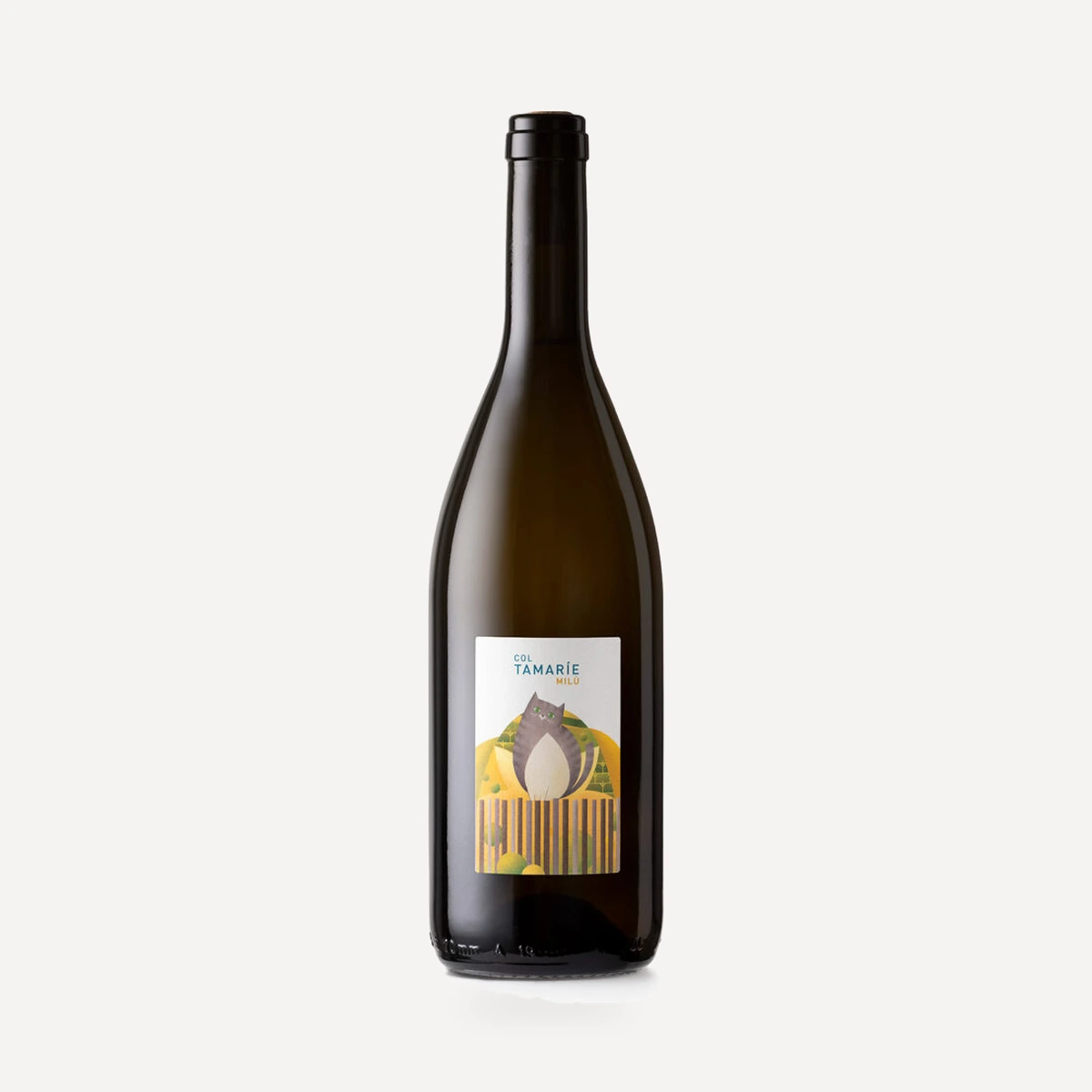
Bottling takes place in spring. The sparkling wine then undergoes spontaneous refermentation in bottle and remains on its lees until autumn. It is released unfiltered, with very low sulfur and without added chemical substances. The still Col Tamarie Milù is likewise gently macerated and unfiltered, with very low sulfur and no added chemicals.
Sound in the cellar
Music, crystals and sound form part of the cellar environment. Harmonic Tibetan bells are played during different production stages. This practice reflects Alberto and Marta’s belief that sound frequencies and vibrations can influence the wine’s development.
Filosofia
Col Tamarie’s philosophy is based on an ongoing dialogue with the land, natural elements and the subtle energies that Alberto and Marta perceive around them. Every decision is intended to respect the rhythms and cycles of the local ecosystem. They characterize this outlook as going beyond organic farming.
The choice of grapes is tied to a return to local roots: white varieties historically grown in the Alto Vittoriese area are selected for their suitability to the land and their capacity to convey its history. Biodiversity, healthy fruit and the avoidance of intensive farming are considered prerequisites for balanced wine.
In the cellar, non-intervention is intended to let the grapes and vintage express themselves with minimal alteration. Maceration is allowed to vary by year, seasonal cold replaces imposed stabilization, and the sparkling wine develops through spontaneous bottle refermentation and extended contact with its lees.
The project also brings together old traditions and contemporary intuitions through lithopuncture, orgonites, astrology, crystals and music. Alberto and Marta regard each bottle as a microcosm that resonates with life. They believe that exposure to selected music and sounds can make a wine feel lighter, and they describe their cellar as a small temple in which sacred music and harmonic Tibetan bells accompany the wine through its development.
Vini