Storia
The land before the modern estate
Corzano occupies a prominent stony hill above the Via Cassia. Archaeological traces in the vicinity include structures identified locally as Etruscan tombs, one of them immediately below Corzano beside the vineyard. The Roman road, locally called La Strada Romana, passes beneath the hill on its route between Rome, Siena and Florence.
During the conflicts between the Guelfi and Ghibellini in the 13th and 14th centuries, castles and villages across the territory between Florence and Siena were repeatedly destroyed. The legendary Cavalcanti castle stood on or near Corzano and was razed after the Battle of Montaperti. San Casciano was again heavily damaged when the front crossed the town during the Second World War.
Paterno has an equally long architectural history. Its central tower was mentioned around the year 900 as a Pitti family property. The estate was sold in the 15th century after construction of Palazzo Pitti placed a financial burden on the family. Paterno later passed to the Rangoni-Machiavelli family and was used as a hunting reserve. The villa developed around its tower as a rectangular complex with two internal courtyards; surviving octagonal pillars may date from the 13th century.
Wendelin Gelpke and the restoration of Corzano
Wendelin Gelpke was born in Basel in 1932. He studied ethnology and anthropology at the Sorbonne, undertook further research in Germany and completed architectural studies in Zürich. His professional work in Switzerland, France and Iran concentrated on modern structures in concrete and steel. He settled in Florence in 1969, initially intending to devote himself to study and writing in a deteriorated Renaissance villa formerly associated with the Medici.
His friend Marchese Ippolito Niccolini introduced him to Fattoria di Corzano. The Niccolini family had held the property for centuries, and an old arrangement directed its profits towards dowries for the family’s daughters. By the 20th century, numerous heirs and negligible returns made a sale unavoidable. Gelpke offered to acquire the property and promised that it would remain intact rather than being divided by speculators.
Gelpke bought Corzano in 1971. The approximately 70-hectare farm included Il Poggio, Corzanello and the larger Corzano complex. Its buildings were close to ruin and lacked running water, electricity and heating. Machinery was rudimentary, while the remaining vines and olive trees were sparse and neglected. Gelpke began reclaiming the land and restoring the buildings with his seven-year-old son Till and his 17-year-old nephew Aljoscha Goldschmidt. His sister Katerina moved from the Netherlands into Corzanello with her husband Peter and younger son Pascal.
The first phase included planting six hectares of vines in the best positions around Corzano. Old drainage methods were revived: trenches were dug through the rocky slopes and filled with stones to carry away excess water. Gelpke also bought approximately 50 Sardinian dairy sheep to clear abandoned fields of scrub. The family learned to milk by hand, and Gelpke made his first cheese in a cauldron suspended over the kitchen fire. His eldest son Wenzel later returned from school in England and joined vineyard work, harvesting, olive picking, shepherding, milking and haymaking. Other young relatives and friends also participated in rebuilding the farm.
The first estate wines were bottled in 1972. Wenzel and Aljoscha subsequently developed their skills at the wine school in Wädenswil near Zürich, adapting and refining the local methods used at Corzano.
The addition of Paterno
Gelpke next acquired the adjoining Fattoria di Paterno, another property of approximately 70 hectares, noted locally for its abundant water. He persuaded the Rangoni-Machiavelli owners to sell by again undertaking to preserve the estate as a single property. Corzano and Paterno were formally united in 1976. The Paterno buildings had been largely abandoned and required extensive restoration.
The estate still reflected the older mezzadria structure: a principal villa surrounded by houses and designated land for tenant-farming families, with returns traditionally divided between owner and farmer. That hereditary sharecropping system had been prohibited after the Second World War. The Paterno side later became the principal location for the sheep stables, while Corzano became the centre of winemaking and product sales.
Family life and the development of the farm
In 1977 Gelpke met Boston-born art historian Susan Doran at Heathrow Airport; she joined him at the estate soon afterwards. Their daughters Sibilla, Arianna and Aglaia were born at Villa Paterno. The household moved into the villa with Till and Aljoscha in 1979 and was joined by Wenzel, Sophie Partridge and Antonia Ballarin. Sophie later married Wenzel, and they established a nearby farm. Antonia married Aljoscha and became central to the estate’s cheese production.
Viticulture remained the estate’s primary activity. From the original six hectares, the vineyards expanded to approximately 20 hectares. Aljoscha directed the vineyards, served as agronomist and general farm manager, improved the standard of the wines and also worked on olive-oil quality. He remained directly responsible for winemaking until 2005.
Cheese developed into the second major branch of production. Milk was initially sold to other cheesemakers. In 1992 the estate opened its own dairy, and Antonia assumed responsibility after training with local Pecorino producers. Repeated trials led to a range of more than 15 sheep-milk cheeses. Till managed the sheep and stables for many years and developed the market for the cheeses.
Succession and the new cellar
Wendelin Gelpke died in 2001. Ownership remained with his heirs, who retained his commitment to keeping Corzano e Paterno undivided as the home and workplace of the extended family.
Arianna Gelpke studied Enology and Viticulture at the University of Florence and gained experience in New Zealand and Bolgheri. She returned permanently in 2005, assumed responsibility for the cellar and joined Aljoscha in agricultural work and management of the estate.
In 2005 a new underground winery was designed and built under Aljoscha’s supervision on the Corzano side. The more spacious, modern facility replaced the former cellar and formed part of a broader plan to bring the estate’s previously dispersed activities together. A garden was planted over its roof.
Around 2010 the dairy, office, farm shop and tasting room were also centralized at Corzano. The dairy moved into the former winery building and was modernized. At Paterno, the stables were refurbished and solar panels were installed on their roof.
Sibilla returned in 2016 after studies and work in philosophy, cooking, gastronomy and food communications, including five years in Singapore. She developed the estate’s hospitality activity and opened a small farm-to-table restaurant. Till’s management of the stables ended in 2016.
In 2018 Aljoscha and Antonia’s twin sons returned after their studies. William joined Arianna and Aljoscha in the wine and vineyard sector, while Oscar assumed responsibility for the stables and cheese distribution. The estate consequently incorporates the founder’s children and nephew as owners and managers, with a third generation participating in its agricultural work.
Recent vineyard development
In early 2020 a new vineyard was planted primarily with Canaiolo and Sangiovese, with its first production anticipated three years later. The 2020 white-grape harvest began in the last week of August, earlier than the historical norm. Merlot followed in September, then Sangiovese. At that time Sangiovese accounted for approximately 80% of the estate’s wine production.
Terroir
The estate lies at San Casciano in Val di Pesa, approximately 17 km south-west of Florence, extending across two hills along the ancient Via Cassia. The River Pesa separates its land from the Chianti Classico area.
The vineyards occupy steep, stony slopes surrounding the fortified Corzano farmhouse. At approximately 300 m above sea level, the principal vineyard zone forms a natural amphitheatre with a predominantly south-west to south-south-west exposure. Corzano itself rises like a natural outcrop along the hilltop.
The soils are gravelly and rich in clay and limestone, with abundant siliceous pebbles. The rocky ground historically required drainage trenches filled with fieldstones. Cooler positions within the property are used for white varieties and earlier-drinking red material.
Paterno was historically valued for its plentiful water supply. Substantial rainfall from November 2020 into the following winter replenished groundwater reserves important to both vines and olive trees. Changing climatic conditions have brought earlier harvest starts; in 2020 the white varieties were picked from the final week of August.
Vinificazione
The estate follows organic agricultural principles, and its wines are certified organic. Grapes used for the wines are grown on the property. Chemical pesticides are excluded from the estate’s farming.
Fertility is maintained through the integration of sheep and crops. Manure from the estate’s Sardinian dairy flock is used directly in the vineyards and olive groves, while vineyard compost combines sheep manure with pruning residues. The flock was originally introduced to clear abandoned land of scrub and remains part of the farm’s agricultural cycle.
Winter pruning is treated as a decisive preparation for the following harvest. The stony slopes have traditionally been drained through trenches filled with rocks. Harvesting is manual; fruit may be selected in the vineyard and again at the cellar. Grapes intended for fresher styles and white production are cooled promptly after picking, allowing processing at controlled low temperatures.
In 2020 the white harvest began in the last week of August, followed by Merlot in September and then Sangiovese. Sangiovese represented approximately 80% of the estate’s wine production at that time.
Biodiversity management also includes livestock-protection dogs. Maremmano-Abruzzese dogs have lived at the estate since the 1970s, and a dedicated group has guarded the flock since 2018. Six dogs were working at the stables by early 2021. The dogs are raised among the sheep and protect them as part of their own group; no wolf attack occurred from the beginning of 2020 through the winter update, compared with previous annual losses of as many as 50 sheep.
The first estate wines were bottled in 1972. Early local winemaking practices were progressively refined through the training Wenzel Gelpke and Aljoscha Goldschmidt received at the wine school in Wädenswil near Zürich.
A purpose-built underground winery was completed on the Corzano side in 2005 under Aljoscha’s supervision. It provided substantially more space and a modern production environment while allowing the former cellar to be reassigned to the dairy. A garden covers the winery roof, integrating the structure into the farm landscape.
Harvesting and cellar selection are performed by hand. Across the range, grapes are processed by variety, vineyard position and intended style. White and rosé fruit is cooled and may be pressed as whole bunches, followed by settling and temperature-controlled fermentation. Red production employs stainless-steel tanks, open wooden vats and small open fermenters. Principal red fermentations are spontaneous, without added commercial yeast; extraction is adjusted through gentle manual plunging or pump-overs. Some lots retain a small proportion of whole bunches in suitable years.
Malolactic fermentation and maturation vary by style and may take place in stainless steel or wood. The cellar uses barriques, tonneaux and large wooden vats, including 25- and 40-hl vessels. Longer-aged wines may remain in wood for up to approximately 26 months, while fresh wines are retained in stainless steel and bottled in the spring following harvest. The estate also maintains a ventilated Vinsantaia with traditional 50–100-litre caratelli for its long-aged passito production.
Filosofia
The guiding ambition established by Wendelin Gelpke was self-sufficiency: the estate should transform the raw materials available on its own land into finished products of the highest possible quality. The objective was not simply to supply an already crowded market, but to pursue what he described as the essential qualities and “sophisticated simplicity” of wine, olive oil and cheese.
This principle is expressed through the integration of vineyards, sheep, dairy, olive groves and hospitality. The sheep clear and graze the fields, provide milk for the dairy and supply manure for vines and olive trees. Grapes are grown on the estate, and the different agricultural activities remain connected rather than functioning as isolated enterprises.
Family continuity is equally central. Gelpke acquired both Corzano and Paterno on the promise that they would not be fragmented. His heirs retained that commitment: the property remains the shared basis of life and work for the extended Gelpke-Goldschmidt family, with the founder’s children and nephew joined by a third generation.
In the cellar, the balance of continuity and refinement began with local practices, subsequently developed through formal viticultural and enological study. Organic farming, manual harvesting, spontaneous fermentation and the separation of lots by grape and vineyard allow vintage and site differences to influence the final wines rather than being erased by a single standardized process.
Vini
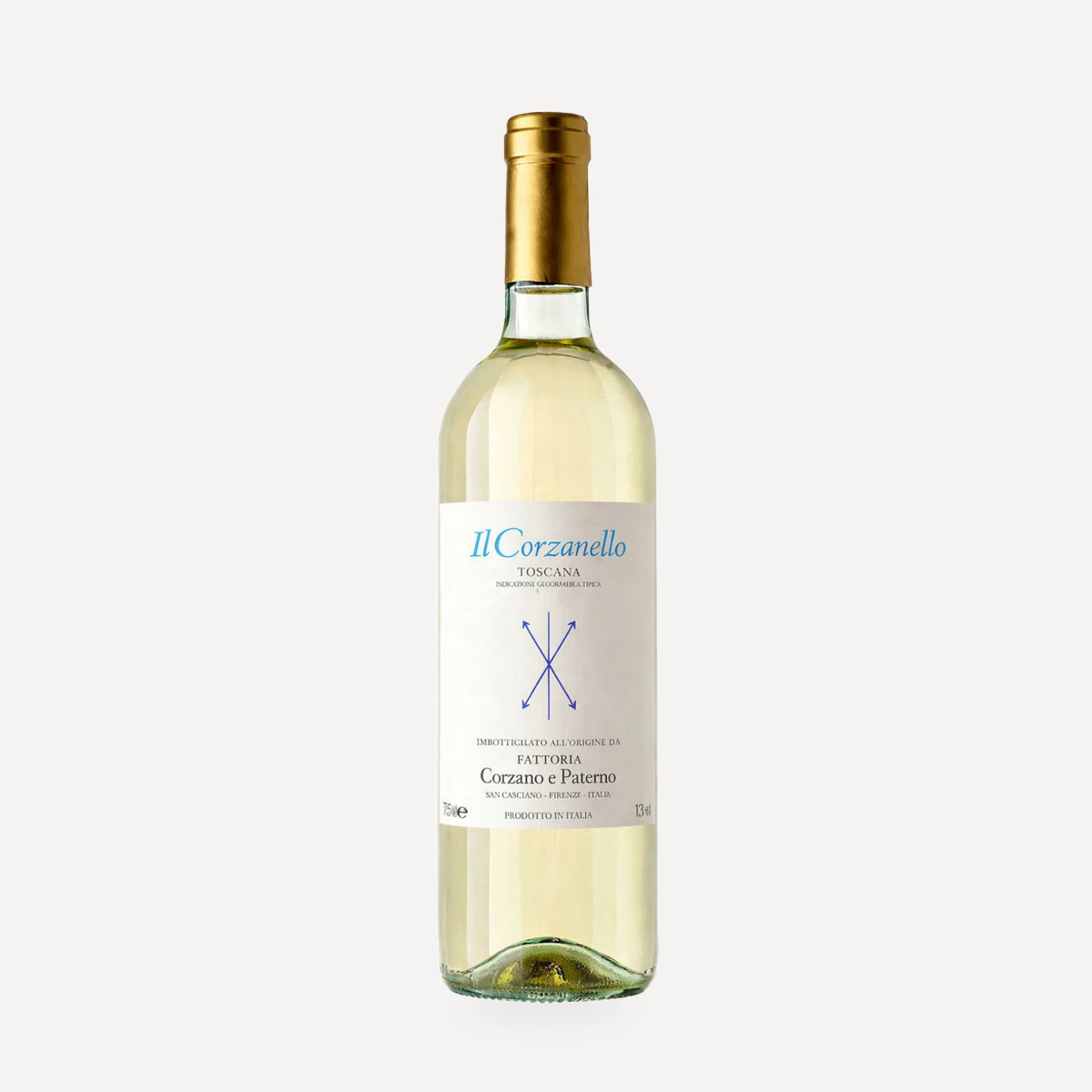
Il Corzanello Bianco
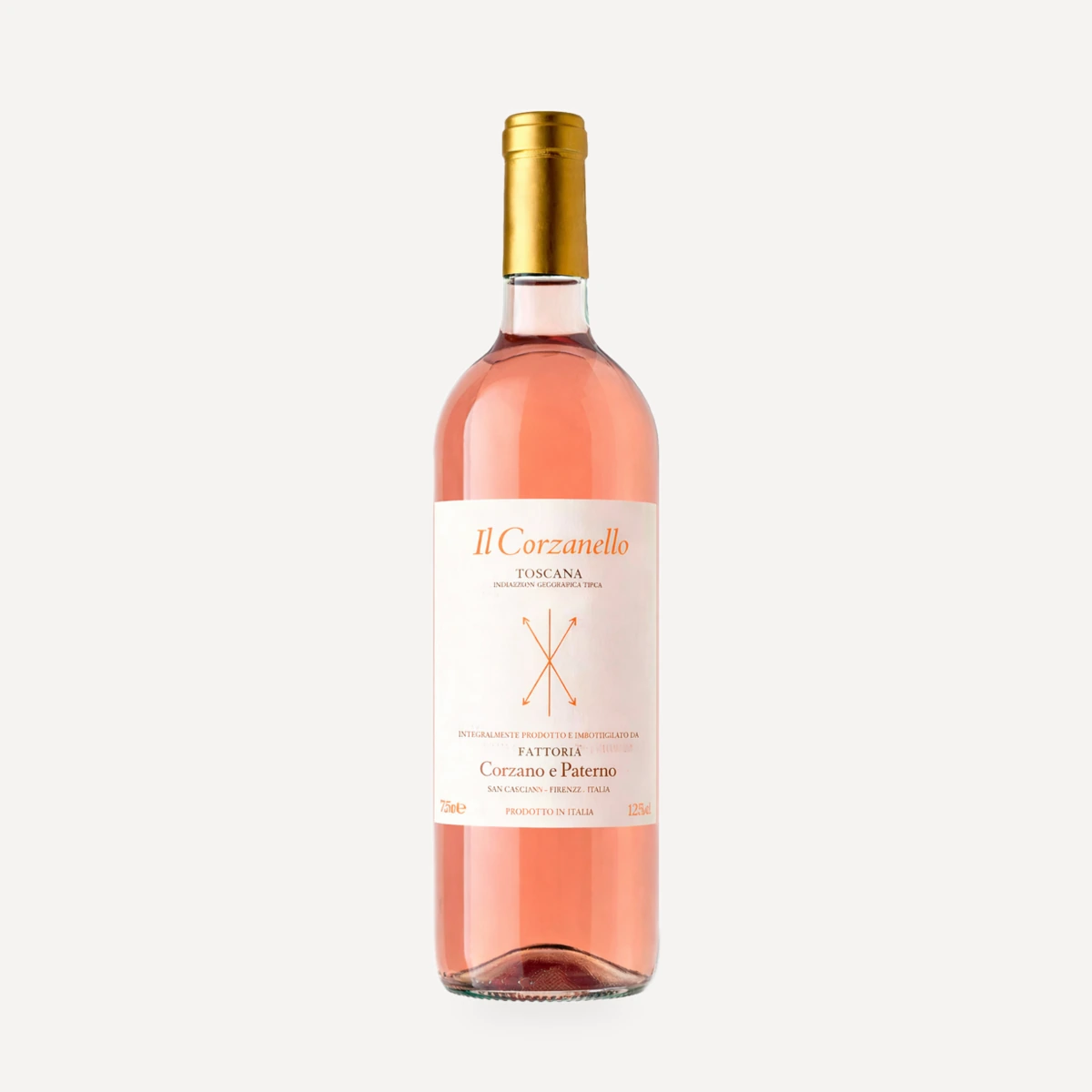
Il Corzanello Rosato
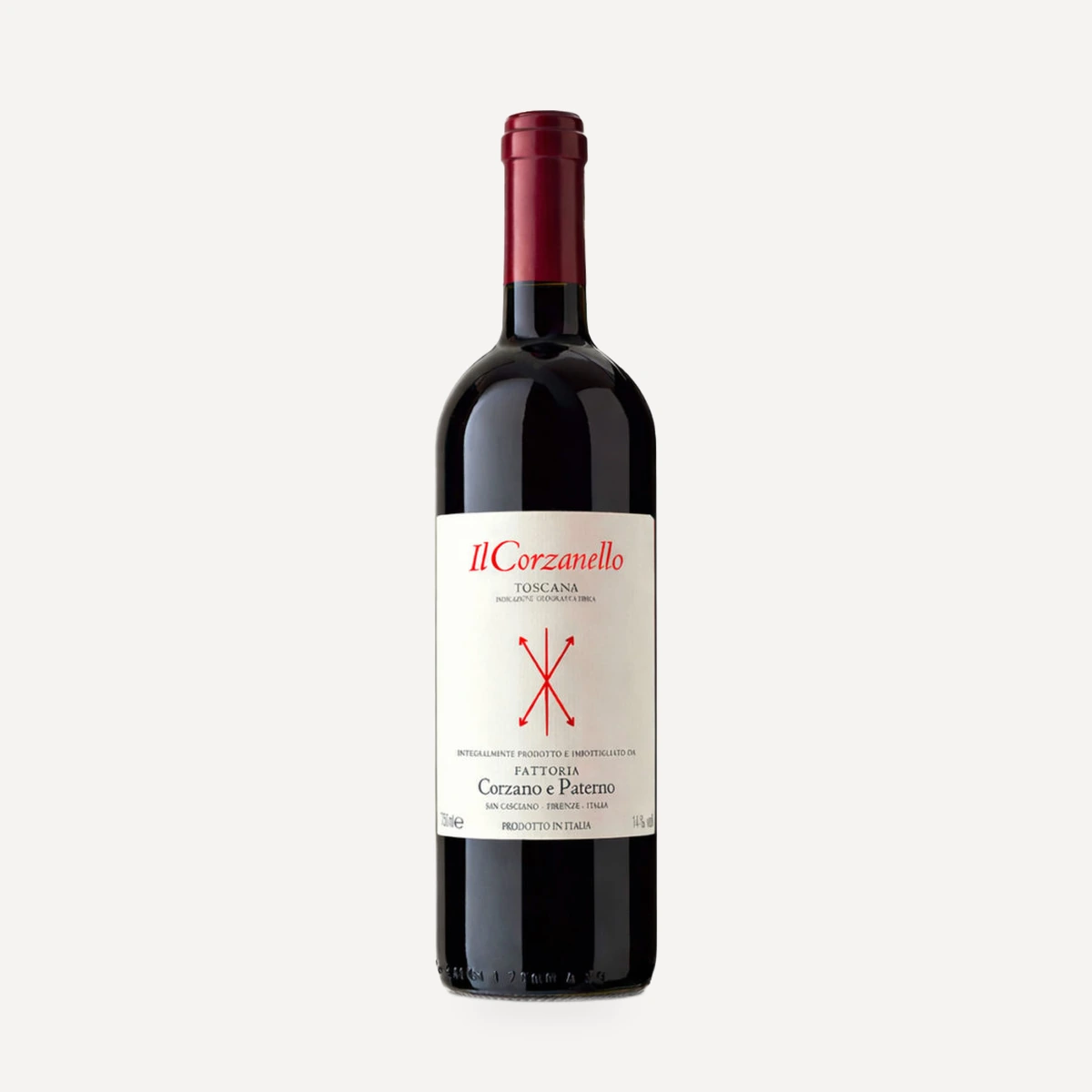
Il Corzanello Rosso
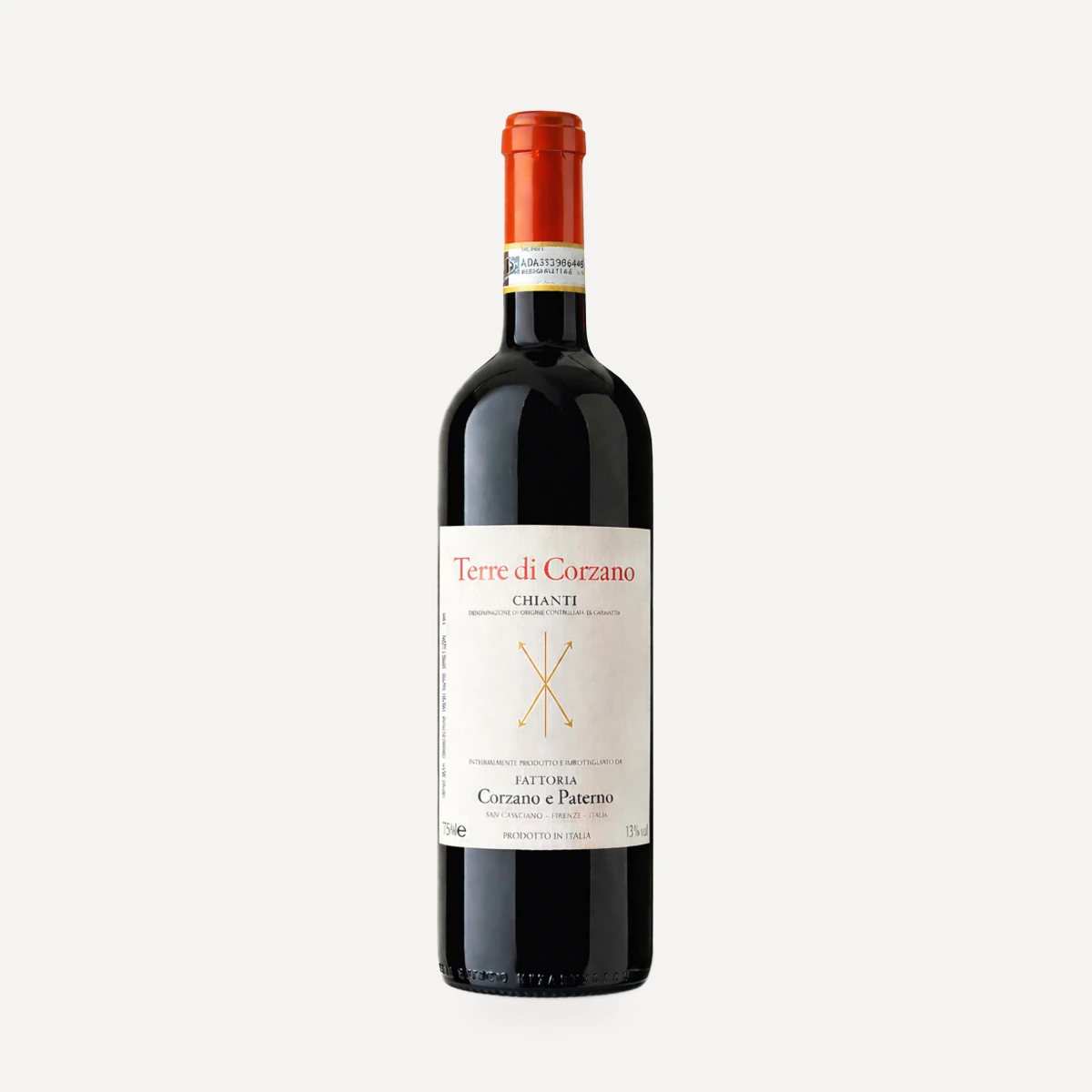
Terre di Corzano