Storia
Ancient viticulture and the Vallombrosan foundation
Viticulture around Coltibuono predates the abbey. Archaeological evidence from the nearby fortified settlement of Cetamura del Chianti documents cultivation from at least the 3rd century BC, first under the Etruscans and later in the Roman period. Excavations have recovered grape seeds from deposits spanning the 3rd century BC to the 1st century AD.
In 1051, Giovanni Gualberto received the Church of San Lorenzo a Coltibuono from local feudal lords. A Vallombrosan monastic community settled there and founded the monastery known in Latin documents as Cultus Boni, later Badia a Coltibuono. The name carried several related meanings: cultivation of the land, cultivation of the spirit and cultivation of good things.
The monks acquired a major territorial role through subsequent donations. Large estates were given by aristocratic families, while smaller plots came from farmers seeking protection during an unstable period. The resulting holding remained unusually intact rather than being divided over the following centuries. The monks reinvigorated the cultivation of vines and olives and introduced silver fir and chestnut trees, which remain part of the surrounding woodland. A late-12th-century document preserved in the abbey archive contains one of the earliest known references to the place name Chianti.
A letter written in 1473 by Baccio Ugolini to Lorenzo de’ Medici praised the red wine of Badia a Coltibuono. This belongs to a longer record of wine production that continued within the monastic agricultural system.
Suppression of the abbey and private ownership
Napoleonic edicts led to the suppression of the monastery in 1810. Its property was confiscated and the monks were expelled. An inventory made at the time recorded 40 casks containing approximately 18,600 litres of wine in the cellars. Wine and olive-oil production subsequently continued under private ownership.
In 1846, the former abbey and its farms were acquired by Michele Giuntini, a Florentine banker and ancestor of the present owners. The Giuntini family undertook restoration and development work and began strengthening the Albereto and Campo Corto olive groves. By 1904, Giuseppe Giuntini recorded that substantial quantities of Chianti were being produced and sold with an established reputation abroad, including in the United States.
In 1924, Badia a Coltibuono became one of the founding members of the Consorzio del Chianti Classico, described as Italy’s first consortium devoted to wine protection.
Maria Luisa and Piero Stucchi Prinetti
The estate passed by inheritance to Maria Luisa Stucchi Giuntini in 1930. She managed it through the difficult years of the Second World War. The historic bottle collection preserved at the abbey begins with the 1937 vintage.
Maria Luisa’s son Piero Stucchi Prinetti joined her during the 1950s. He began estate bottling, opening a new phase in the commercial development and international recognition of Badia a Coltibuono’s Chianti Classico. The first label for Badia a Coltibuono Chianti Classico Riserva dates to 1958.
In 1962, Piero created the first formal wine and olive-oil labels, began bottling the estate’s olive oil and opened a restaurant in the abbey’s former stables. His approach established foundations for the estate’s later commitment to organic and sustainable agriculture.
Gastronomy, research and organic conversion
Piero’s wife, Lorenza de’ Medici, was a journalist, cookbook author and advocate for Italian culinary culture. In 1983 she founded one of Tuscany’s early cooking schools at Badia a Coltibuono. Through her books and the PBS television series The de’ Medici Kitchen, she introduced Tuscan cooking to an international audience and connected the estate’s wines and olive oils with regional cuisine.
Sangioveto was first created in 1980 as a study and expression of Sangiovese, using fruit from the estate’s oldest vineyards. A decisive change in farming began in 1985 under Roberto Stucchi Prinetti, when herbicides and insecticides were eliminated. Six hundred mother vines were selected to preserve the estate’s genetic material, and a vineyard-renewal programme based on that massal selection began in 1988.
The olive groves received organic certification in 1994. The vineyards followed in 2000, completing certification of the agricultural estate. From 2000 to 2003, Emanuela Stucchi Prinetti served as the first woman president of the Consorzio Chianti Classico.
The estate began following Delinat guidelines in 2010, extending sustainability requirements beyond organic cultivation to biodiversity, social responsibility and a path toward carbon neutrality. After more than a decade of experiments with historic Chianti varieties, the concept for Montebello—a balanced composition of nine indigenous grapes cultivated and handled separately—was established in 2011.
Recent environmental programme
A photovoltaic structure was completed in 2023 to generate sufficient electricity for the Monti in Chianti winery, situated among the estate vineyards and used for wine production.
Badia a Coltibuono subsequently provided one of its vineyard plots as a living laboratory for the CNR-led B-Wine project. Biochar was incorporated into part of the plot and compared with untreated vines. Results presented in 2026 showed that treated vines maintained significantly better water status during the driest months and produced nearly twice the yield per plant of the control group.
The 2025 sustainability programme formalised monitoring of land, water, energy, emissions, waste, biodiversity, employment and governance. The estate’s stated objectives for 2026–2029 include completing corporate carbon- and water-footprint calculations, increasing renewable-energy use, improving process efficiency and measuring soil biodiversity.
Terroir
The wine estate lies in the Sienese part of Chianti Classico, with vineyards at Monti in Chianti in Gaiole and Vitignano in Castelnuovo Berardenga. The principal documented elevation range is 260–370 metres above sea level, with south, south-east and south-west exposures. Soils are clay or clay loam with limestone rock.
The Montebello vineyard lies in Monti in Chianti within the Gaiole UGA. It occupies an elevation range of approximately 280–320 metres, faces south and south-west and has clay-loam soil with abundant limestone rock.
The cultivated landscape is embedded in a large wooded estate. The 2025 land inventory recorded 710.98 ha of woodland, 21.18 ha of uncultivated ground, 27.58 ha of arable land, 16.03 ha of olive groves, 5.54 ha of pasture and 2.61 ha of courtyards, alongside the vineyards. Woodland and other natural areas account for approximately 93% of the land base under the report’s biodiversity measure. These forests, uncultivated surfaces, spontaneous vegetation and other habitats form part of the agricultural ecosystem rather than being treated as isolated marginal areas.
The estate does not irrigate its vineyards. Soil structure and organic matter are managed to retain moisture, reduce surface runoff and erosion and strengthen resilience during drought and extreme weather. The surrounding woodland, vegetated vineyard floors and varied agricultural habitats also support water-cycle regulation, soil conservation and useful organisms.
Vinificazione
Badia a Coltibuono began its organic conversion in 1985, eliminating herbicides and insecticides before formal organic certification systems were established. Roberto Stucchi Prinetti led this change. The olive groves were certified in 1994, followed by the vineyards in 2000. All vineyards, olive groves and other crops are now managed organically.
A programme to protect estate genetic material selected 600 mother vines for massal propagation. Vineyard renewal using these vines began in 1988, preserving diversity within the estate’s Sangiovese population. The estate also cultivates historic Chianti grapes including Ciliegiolo, Colorino, Canaiolo, Mammolo, Foglia Tonda, Malvasia Nera, Sanforte and Pugnitello.
Each vine is tended individually from pruning through harvest. Work in the vineyard is performed by hand. Soil cultivation is intended to maintain biological activity, fertility and balance. Cover crops and permanent or managed grassing protect erosion-prone slopes, preserve soil structure and support water management. Compost and organic fertilisation maintain organic matter, while potentially disruptive cultivation is reduced.
During the growing season, canopy exposure and airflow are monitored. Targeted leaf removal is used to encourage healthy and even ripening. Promising plots receive additional attention, and bunches that do not meet the desired standard are removed so the strongest fruit can ripen fully. Harvesting proceeds in several passes according to weather conditions and the ripeness of each area; the best grapes are hand-picked.
The vineyards are not irrigated. Ground cover, organic matter and conserved soil structure improve infiltration and moisture retention, reduce runoff and erosion and help vines withstand dry periods. Biodiversity measures include conserving woodland and uncultivated ground, retaining spontaneous vegetation and vineyard cover, protecting natural landscape elements and encouraging favourable conditions for fauna, pollinators and other useful insects.
Since 2010, Delinat guidelines have extended the organic approach across the business, incorporating biodiversity, social responsibility and progress toward carbon neutrality. The estate also participates in the Biodistretto del Chianti.
In the CNR-led B-Wine experiment, biochar was incorporated into one vineyard plot. After three years, treated vines maintained significantly better water status in the driest months and produced nearly twice the yield per plant of untreated controls. The trial reinforced the estate’s focus on soil management as a response to drought and climate change.
Wine production takes place in the modern cellar at Monti in Chianti, in the heart of the vineyards. Grapes are moved with gentle gravity-flow systems introduced to Chianti by Badia a Coltibuono, limiting mechanical handling and preserving berry integrity.
Fermentation practices vary by wine, but the estate repeatedly uses spontaneous or natural fermentation with indigenous yeasts. Red grapes are fermented in stainless-steel tanks or small vats. Cap management includes manual punch-downs and, where appropriate, délestage, with extraction adjusted to the fruit and intended style. Documented skin-contact periods range from approximately three weeks to four or five weeks.
Ageing is adapted to each composition. The cellar uses French and Austrian oak casks of varying dimensions, including 15–25 hl vessels, as well as French-oak barriques and larger casks. Some wines remain in stainless steel to retain freshness and primary fruit. Long-lived selections may receive successive periods in barriques, larger casks and bottle. Vin Santo is made from selected bunches dried in well-ventilated rooms; fermentation and maturation take place in small sealed oak caratelli exposed to seasonal temperature changes, with ageing documented at seven years.
Water in the cellar is used principally for washing, sanitation and selected operating stages. Consumption is monitored as part of the sustainability programme. In 2025, cellar water use was 0.589 m³ per hectolitre of wine, energy use was 0.395 kWh per bottle, and the average 750 ml bottle weighed 388 g. Refrigeration, vinification, product storage, lighting and material movement are included in the energy-efficiency programme.
Filosofia
Badia a Coltibuono treats organic farming as continuity with a place historically managed around self-sufficiency and natural cycles, rather than as a stand-alone production technique. The declared aim is to protect the identity preserved in monastic manuscripts, farm ledgers and family diaries while returning vitality to soils affected by intensive agriculture.
The estate’s guiding principle is that wine begins in the vineyard. Each plant is regarded as an individual with its own history and requirements, so pruning, canopy work, selection and harvesting are adjusted by hand. Quality is pursued through healthy soils, biodiversity, careful selection and gentle cellar handling rather than through uniform treatment.
Tradition and innovation are treated as complementary. Massal selection preserves the genetic diversity of old Sangiovese material, while historic Chianti varieties are studied and returned to cultivation. Gravity-flow cellar technology, photovoltaic generation, sustainability metrics and the B-Wine biochar trial are used to address contemporary production and climate challenges.
The sustainability model joins environmental, social and economic responsibilities. It prioritises soil fertility, efficient use of water and energy, biodiversity, worker health, transparent governance, local relationships and preservation of the historic landscape. The programme is structured around measurable objectives and periodic review, with further work planned on carbon footprint, water footprint and soil biodiversity.
Across six generations, the Stucchi Prinetti family has connected wine, olive oil, food, hospitality, archaeology and the conservation of the abbey. The stated purpose is to transmit this agricultural and cultural inheritance to future generations without separating production from the wider life of the estate.
Vini
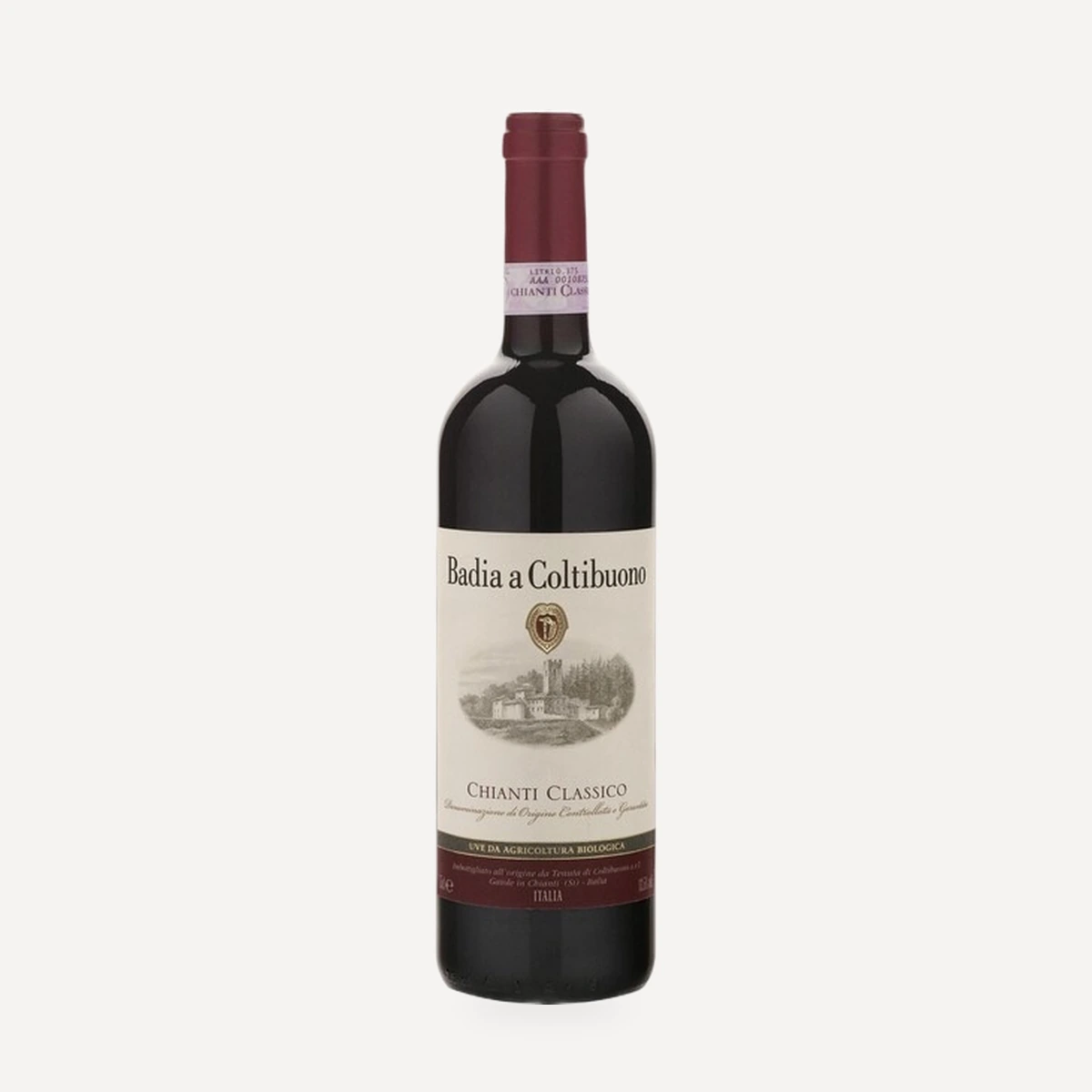
Chianti Classico
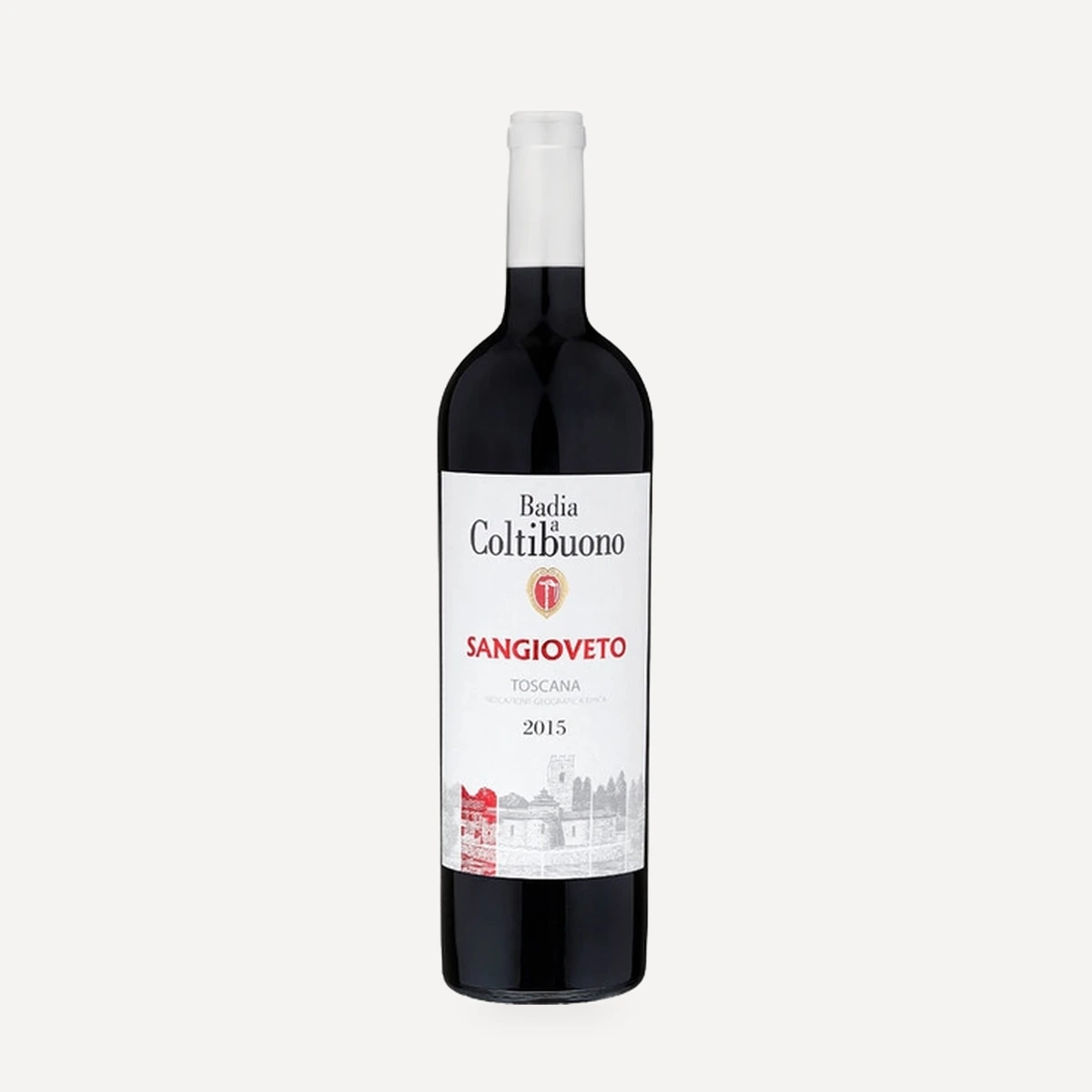
Sangioveto
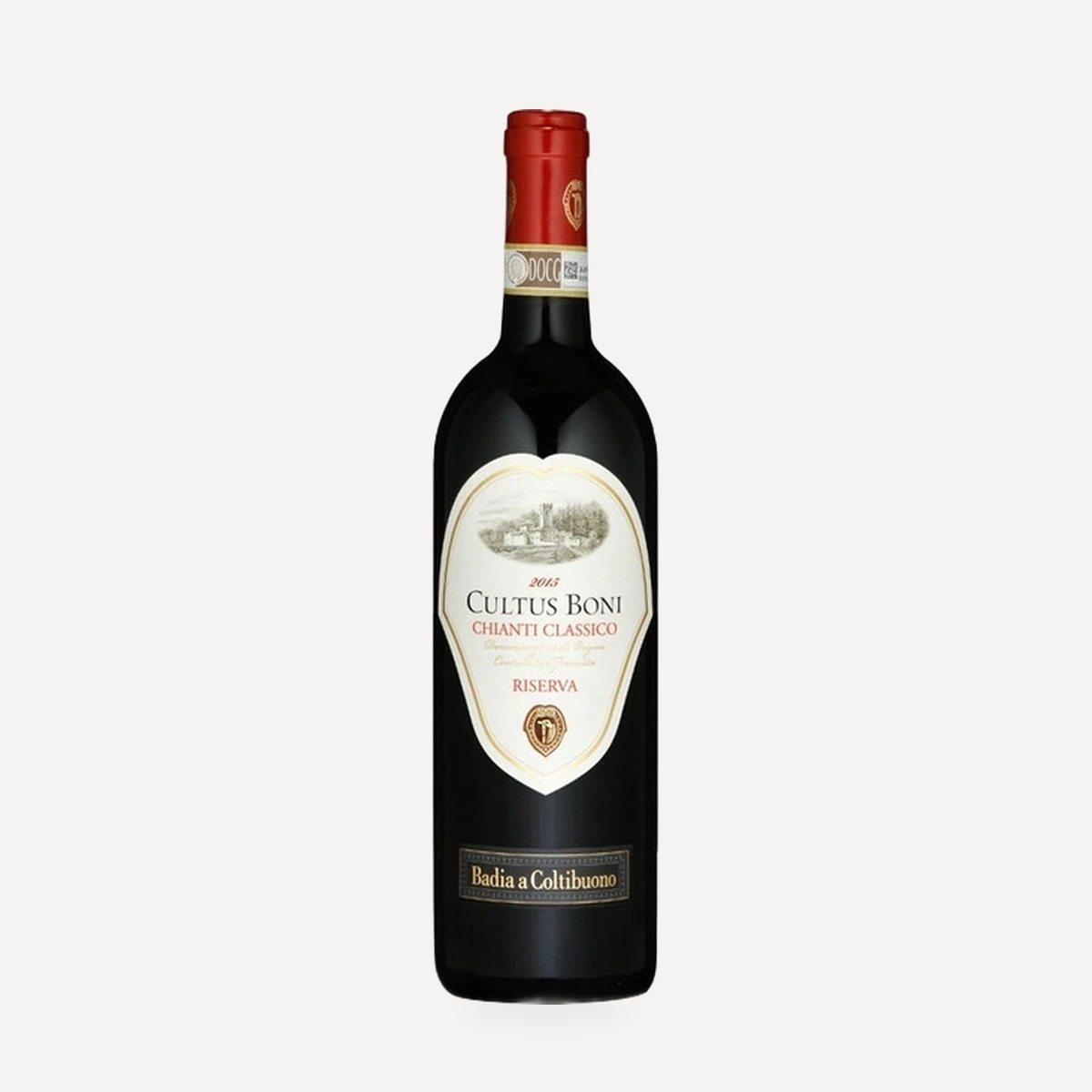
Cultus Boni
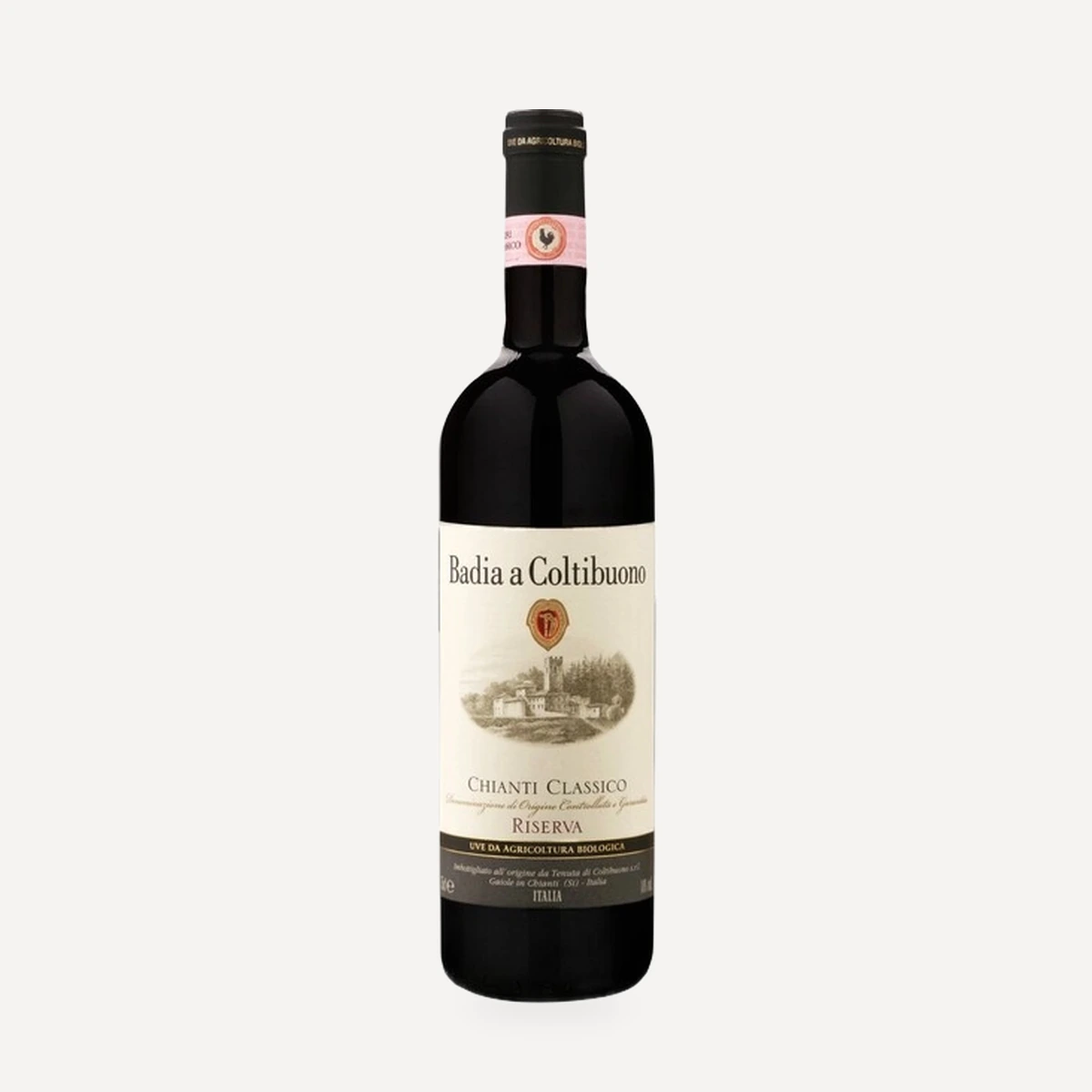
Chianti Classico Riserva
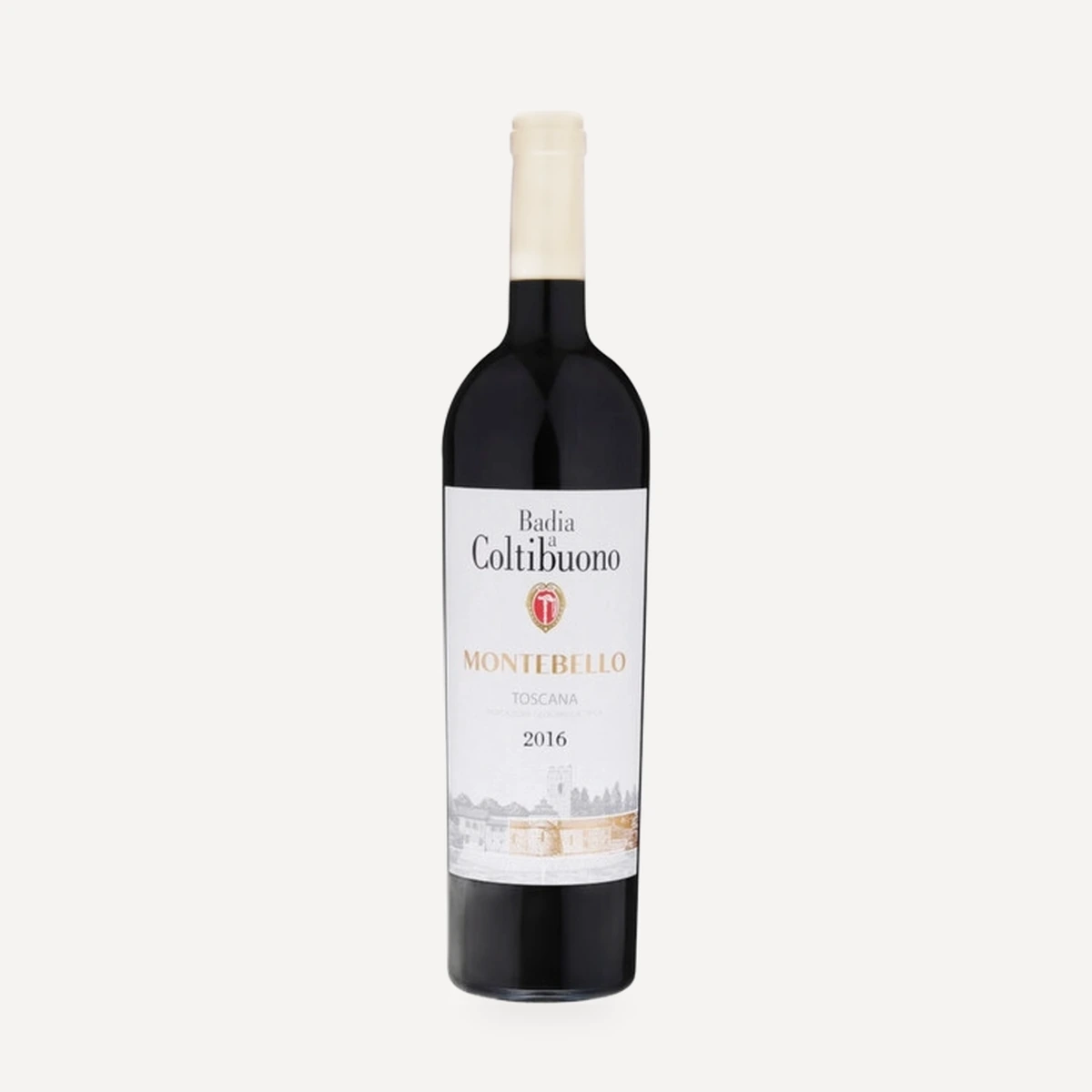
Montebello Toscana IGT
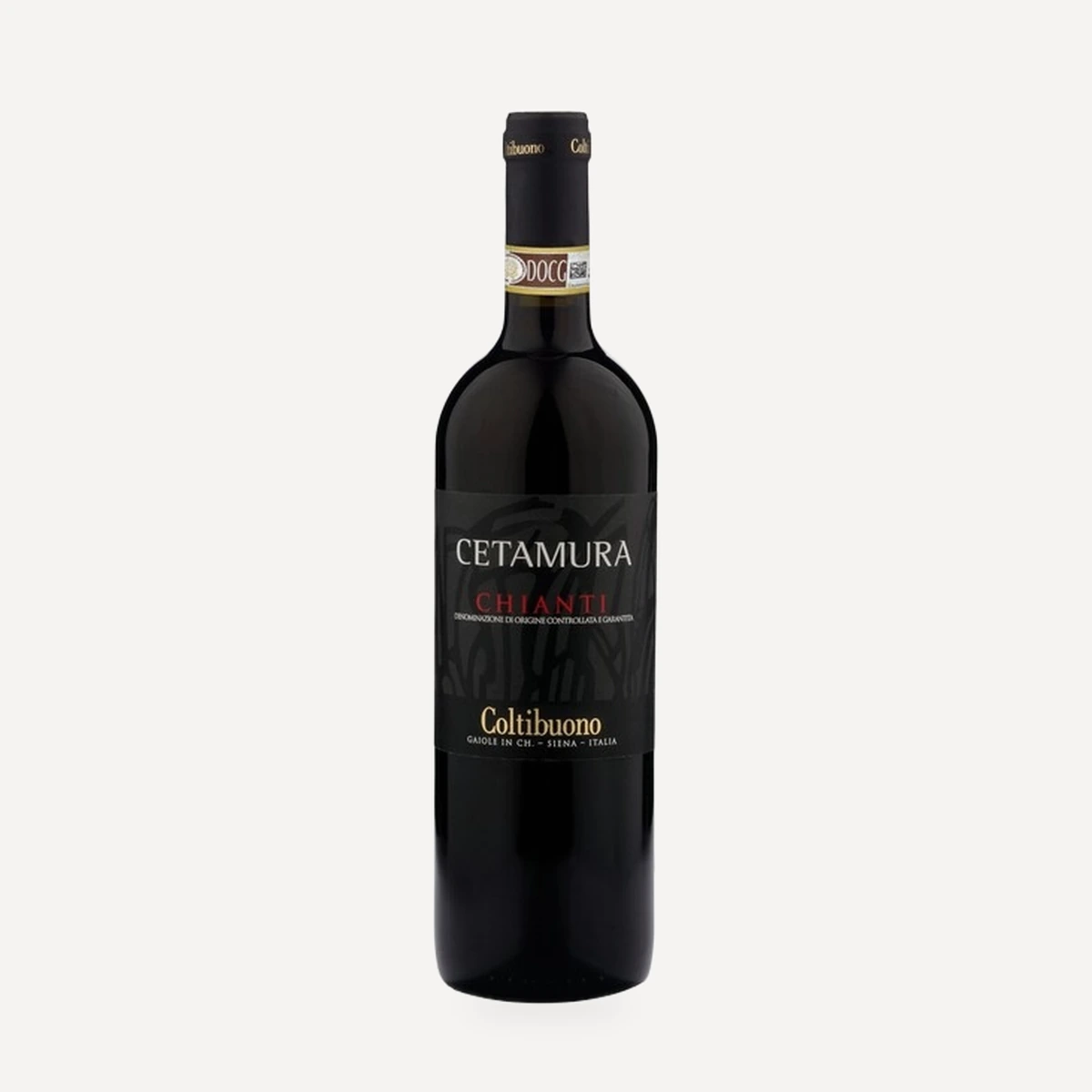
Cetamura Chianti DOCG