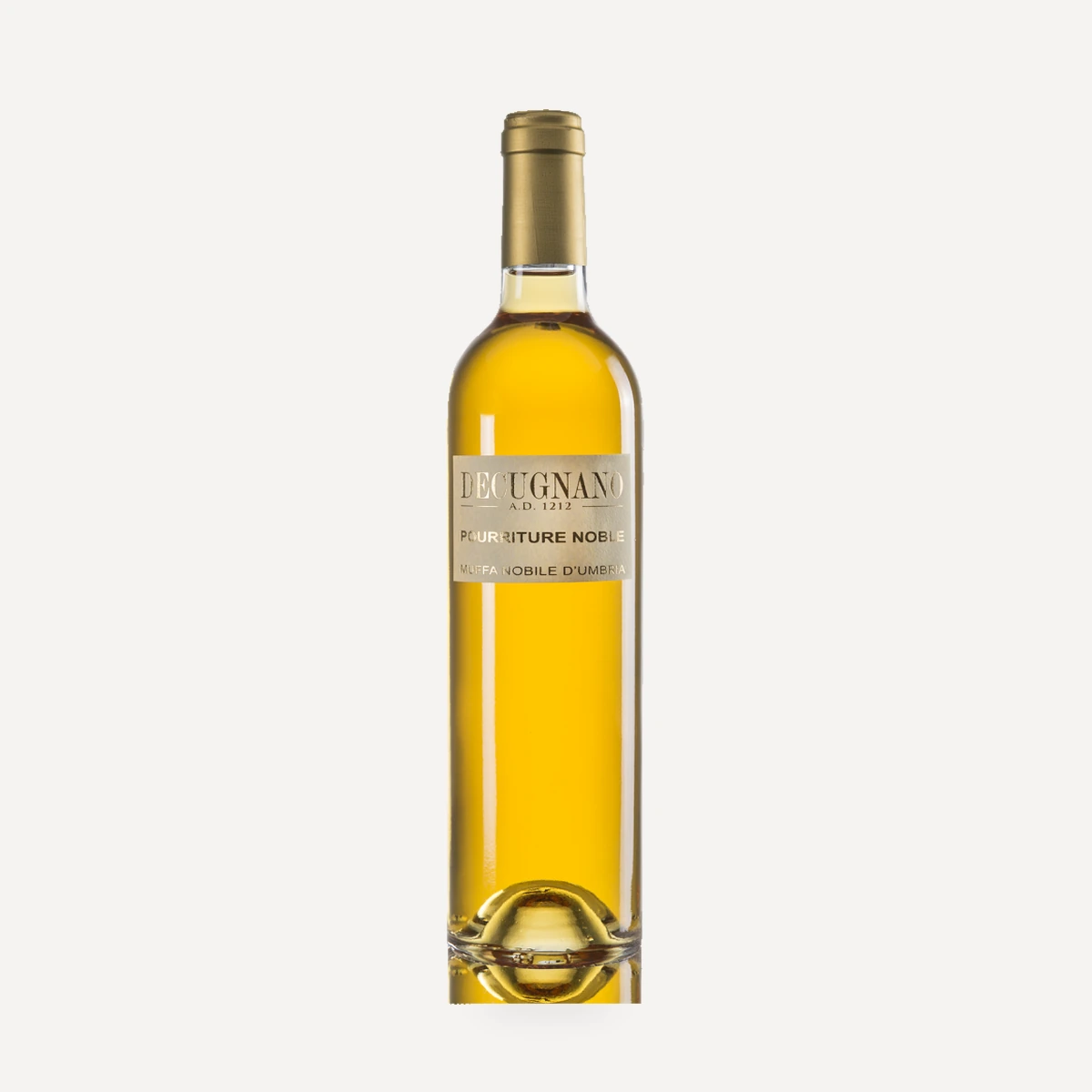
Questo vino
Vineyard and terroir
Pourriture Noble comes from selected vineyards at Decugnano whose microclimate favors the development of Botrytis cinerea as noble rot. The creation of Lake Corbara’s artificial basin after the Second World War altered the local microclimate, helping establish conditions in which botrytis could develop beneficially late in the growing season. The fungus punctures the berries, allowing water to evaporate and the fruit to shrivel; close monitoring is essential because each affected cluster must be picked at the right moment.
Grapes
Grechetto, Sauvignon Blanc and Procanico. The wine is classified as Orvieto Classico DOC Muffa Nobile.
Vinification
The botrytized grapes are selected through meticulous harvesting in multiple passes. They are pressed immediately and undergo a lengthy fermentation in stainless steel. This demanding process produces a naturally sweet wine whose concentration results from noble-rot development in the vineyard.
Technical data
Current vintage: 2020. Alcohol: 14%.
Tasting profile
Its luminous appearance may range from pale to amber, reaching gold in some vintages. The aromatic profile recalls dried apricot, dates, honey and saffron, with possible nutty and floral nuances. The palate is viscous and velvety, combining sweetness, richness and concentrated fruit. Acidity balances the sugar and gives the finish clarity and definition.
Serving and pairing
Pair with almond-based biscuits or cakes. Blue cheeses provide a particularly distinctive savory contrast.
Label / history
When Claudio Barbi arrived in Orvieto in 1981, he found abundant Botrytis cinerea but no local tradition of producing noble-rot wine; growers generally harvested before the fungus appeared. Having observed comparable vinification in Sauternes, he decided to ferment the affected grapes separately.
The name uses the French term for noble rot. Claudio Barbi chose “Pourriture Noble” at a time when consumer familiarity with fine wine was limited, giving an unmistakably French name to an Italian wine rooted in Orvieto.