Questo vino
Vineyard and terroir
Calcaia comes from approximately 6 ha of vineyards with a south-western exposure at 200–300 m above sea level. Their sedimentary soils contain marine fossils, pebbles and calcareous agglomerations. The 30-year-old vines are trained to Double Guyot at 4,500 vines per hectare, with a low approximate yield of 30 quintals per hectare.
Autumn fog, followed by sunny and ventilated evenings, creates conditions in which Botrytis cinerea develops as noble rot. It gradually dehydrates the berries and concentrates both sugar and acidity. Viticulture is inspired by biodynamic principles, without herbicides or pesticides; fertility comes from biodynamic preparations, shredded pruning material and green manure from grasses and legumes.
Grapes
The grape varieties and proportions are not specified.
Vinification
Botrytis develops unevenly from vine to vine and berry to berry. Trained pickers therefore select only suitably botrytised grapes, leaving the rest to continue ripening. Completing the harvest requires five or six manual passes between October and December.
The resulting must is dense, fragrant and concentrated. Fermentation uses indigenous yeasts in stainless steel. The technical entry specifies 20 days at 15–20 °C; the accompanying account characterizes it as slow and prolonged, ending naturally.
Tasting profile
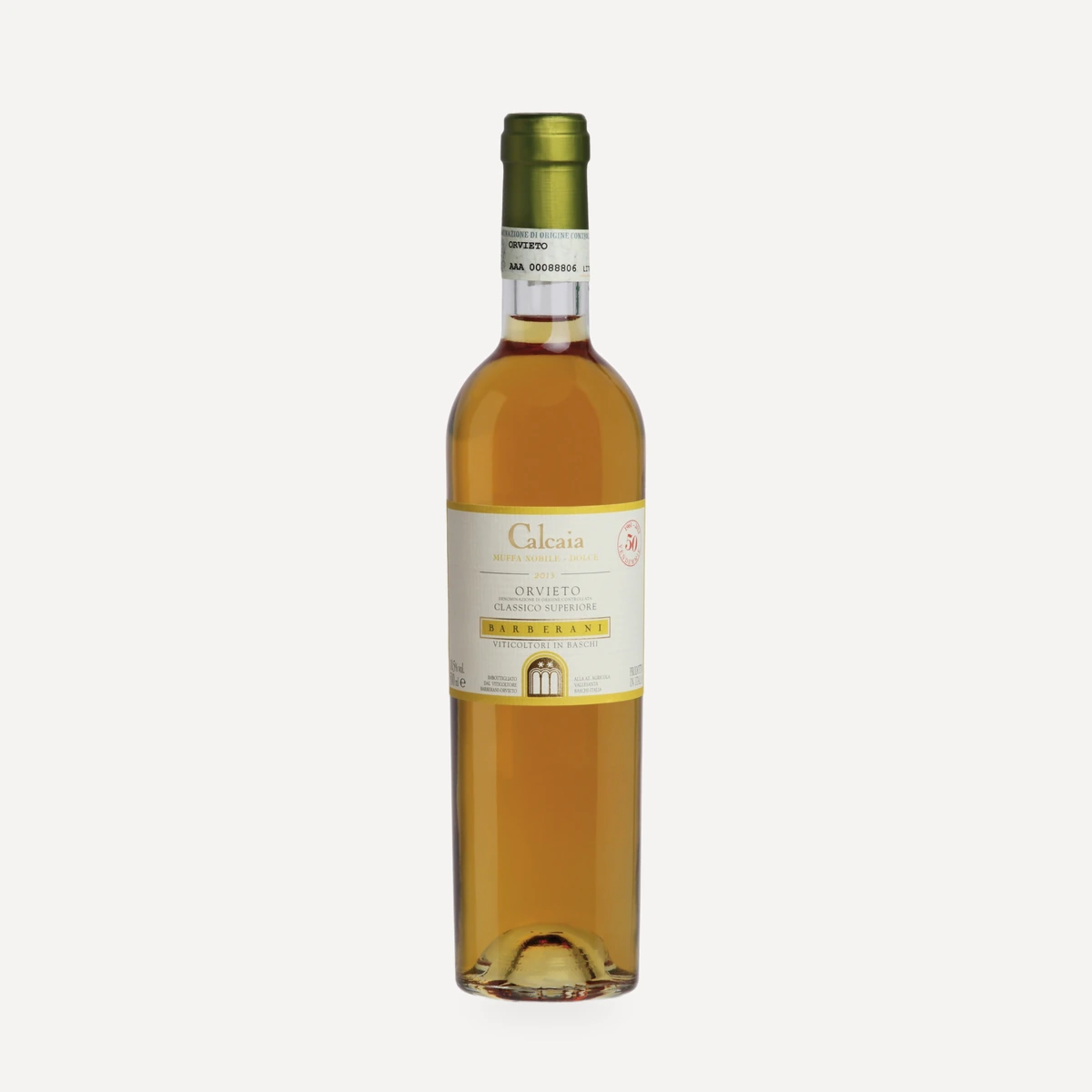
Golden yellow. The elegant bouquet combines honey, spices and saffron. The palate is sweet, mellow, harmonious and persistent.
Serving and pairing
Serve at 12–14 °C. Pair with foie gras pâté, herb-flavoured cheeses, goat’s-milk cheeses, sharp cheeses or biscuits. It can also be enjoyed alone as a meditation wine.
Label / history
Experiments with this botrytised style began in the late 1970s under Luigi Barberani. The first official vintage was 1986.