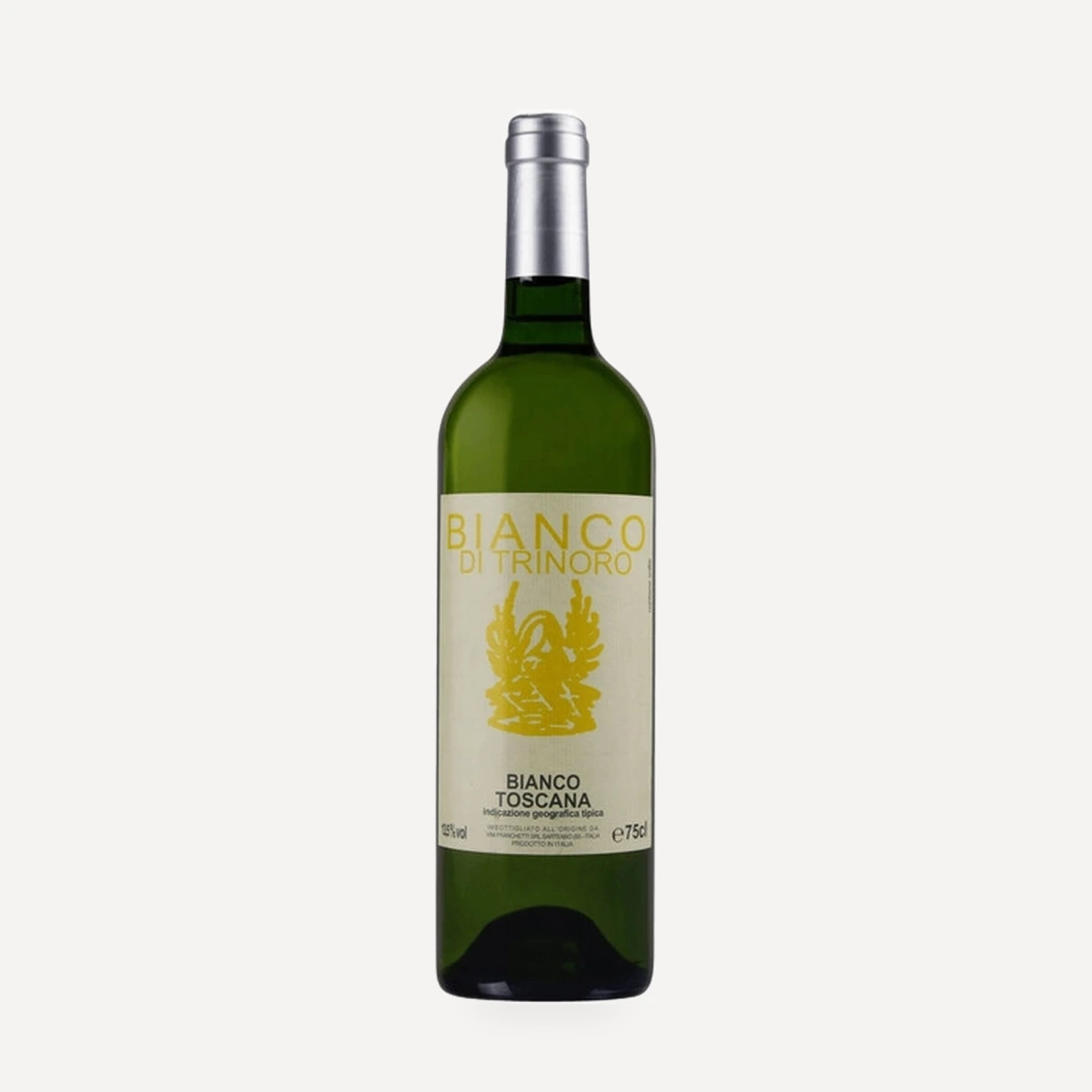
Questo vino
Vineyard and terroir
Bianco Trinoro is a single-vineyard Semillon from one of the highest parts of Tenuta di Trinoro. The sand-dominated parcel covers 5,141 m² and is surrounded by woodland, which provides a cool habitat. The general wine description places it at approximately 600 metres, while the 2023 material gives an altitude of 630 metres. It was planted in stages between 2001 and 2006 with vine material from Bordeaux and contains 5,000 vines, spaced one metre by one metre.
Grapes
100% Semillon.
Vinification
The 2023 grapes were hand-picked in two passes, on 13 and 16 September. They were gently pressed, and the must fermented in French oak barriques for approximately ten days.
Ageing
The 2023 wine matured in cement tanks for nine months before bottling.
Technical data
IGT Toscana. Production of the 2023 vintage was 2,900 bottles.
Tasting profile
Bianco Trinoro is aromatic and marked by ripe fruit, freshness and acidity. The 2023 is particularly vertical, with aromatic citrus and white-flower notes. On the palate, vivid freshness and pronounced acidity create an energetic profile. Its structure and acidity support extended ageing.
Vintage notes
The 2023 season opened with January snow and continued with a rainy winter that restored water reserves. An early start to growth in March was interrupted by colder spring temperatures. Mild conditions and weekly rain persisted into the first half of June; spring and early summer delivered 500 mm of rain and considerable downy-mildew pressure. Summer arrived at the end of June, with daily temperatures exceeding 30°C through mid-September. The crop was thinned in late July, while the leaves were retained to shade the bunches. The hot summer thickened the Semillon skins, but persistent rain through the growing cycle preserved generous, fresh pulp.
Label / history
The wine had been made intermittently since 2008, but 2017 was the first released vintage.