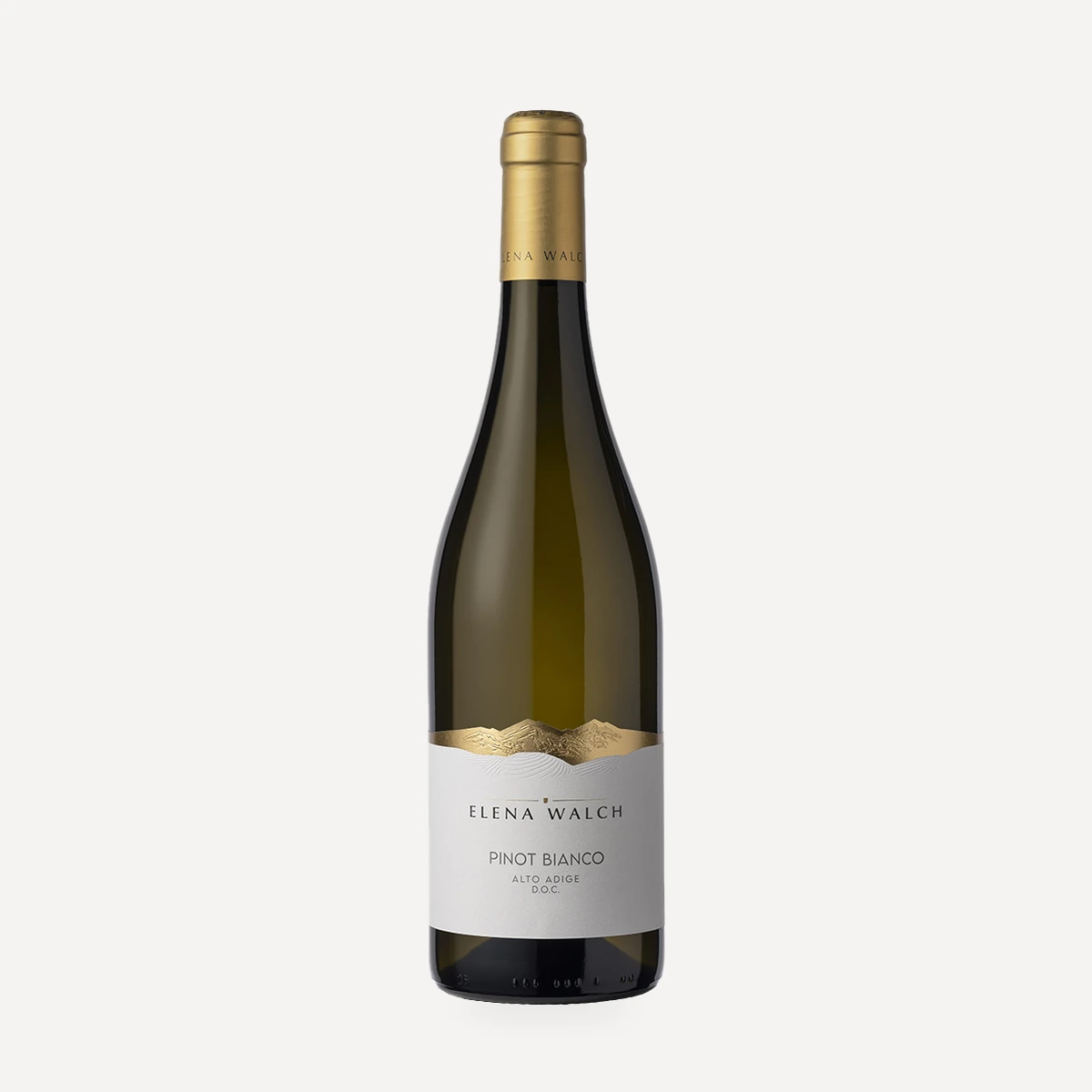
Questo vino
Vineyard and terroir
The Pinot Bianco comes from steep Alto Adige vineyards on light limestone and porphyry soils. The sites range from warmer locations at approximately 250 m to cool vineyards reaching 900 m above sea level. Mediterranean warmth combines with cooling winds from the surrounding Dolomites. The fruit is harvested entirely by hand.
Grapes
100% Pinot Bianco.
Vinification
After harvest, the grapes are carefully crushed and pressed. The fresh must undergoes static clarification at low temperature, followed by gentle fermentation in stainless-steel tanks at a controlled 20°C.
Ageing
The young wine matures for several months in stainless steel on its fine lees.
Technical data
The 2025 wine has 13.00% alcohol, total acidity of 5.5 g/L and residual sugar of 2.3 g/L. It is available in 0.75 L bottles and has an estimated ageing capacity of 3–5 years.
Tasting profile
Clear, bright straw yellow. The bouquet combines fruit, fresh apple and a touch of herbs. The palate has elegant mineral depth, lively acidity and a fresh finish.
Serving and pairing
Serve at 12–14°C. It works as an aperitif and with light starters, full-flavoured first courses, fish, white meat and poultry.
Vintage notes
The 2025 harvest began on 27 August and ended just over a month later. Relatively early flowering was followed by a warm, dry June and a distinctly cooler July, which helped retain the grapes’ natural freshness and acidity. August brought favourable ripening conditions. September alternated between sunshine and occasional rain toward the end of harvest, while the fruit arrived healthy and balanced.