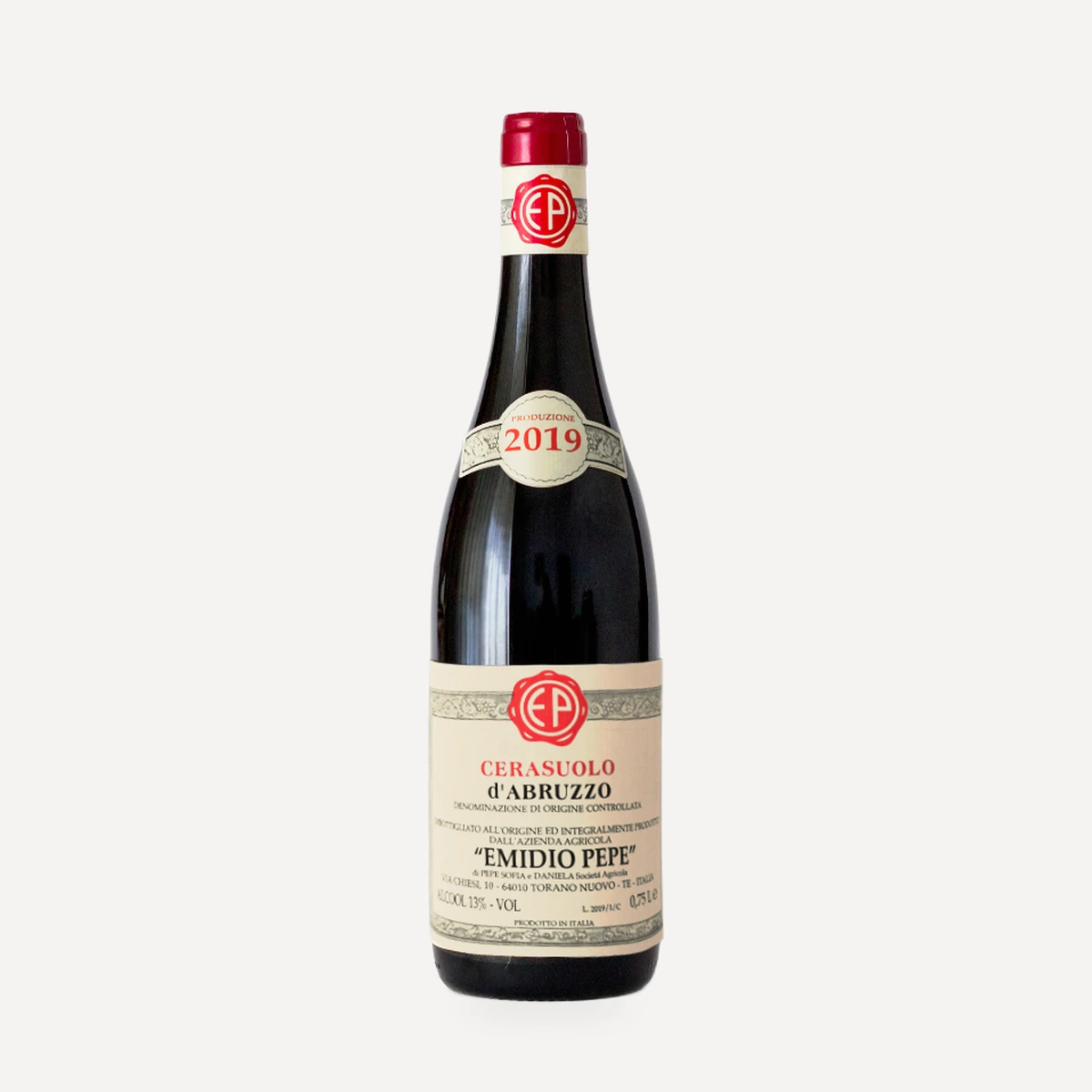
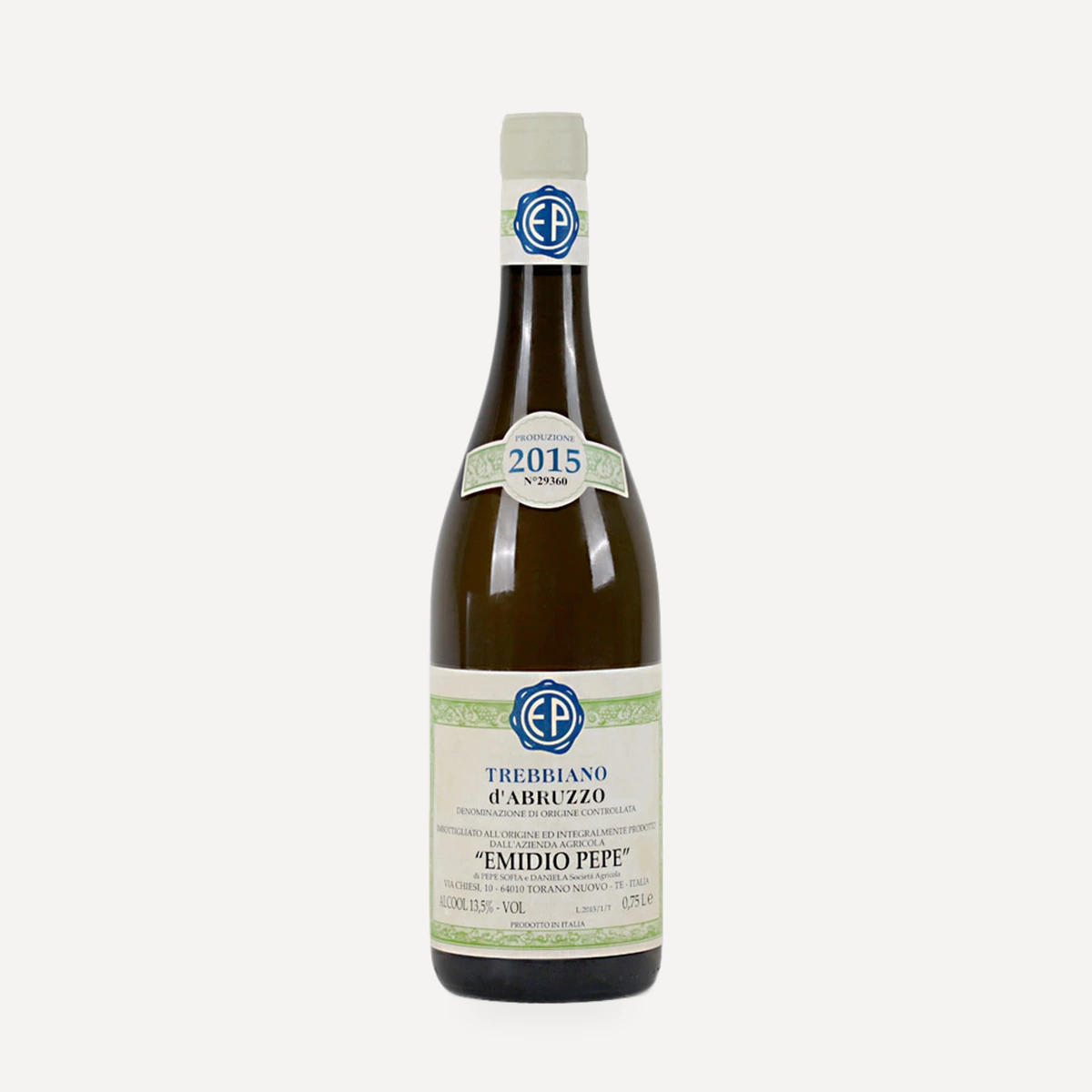
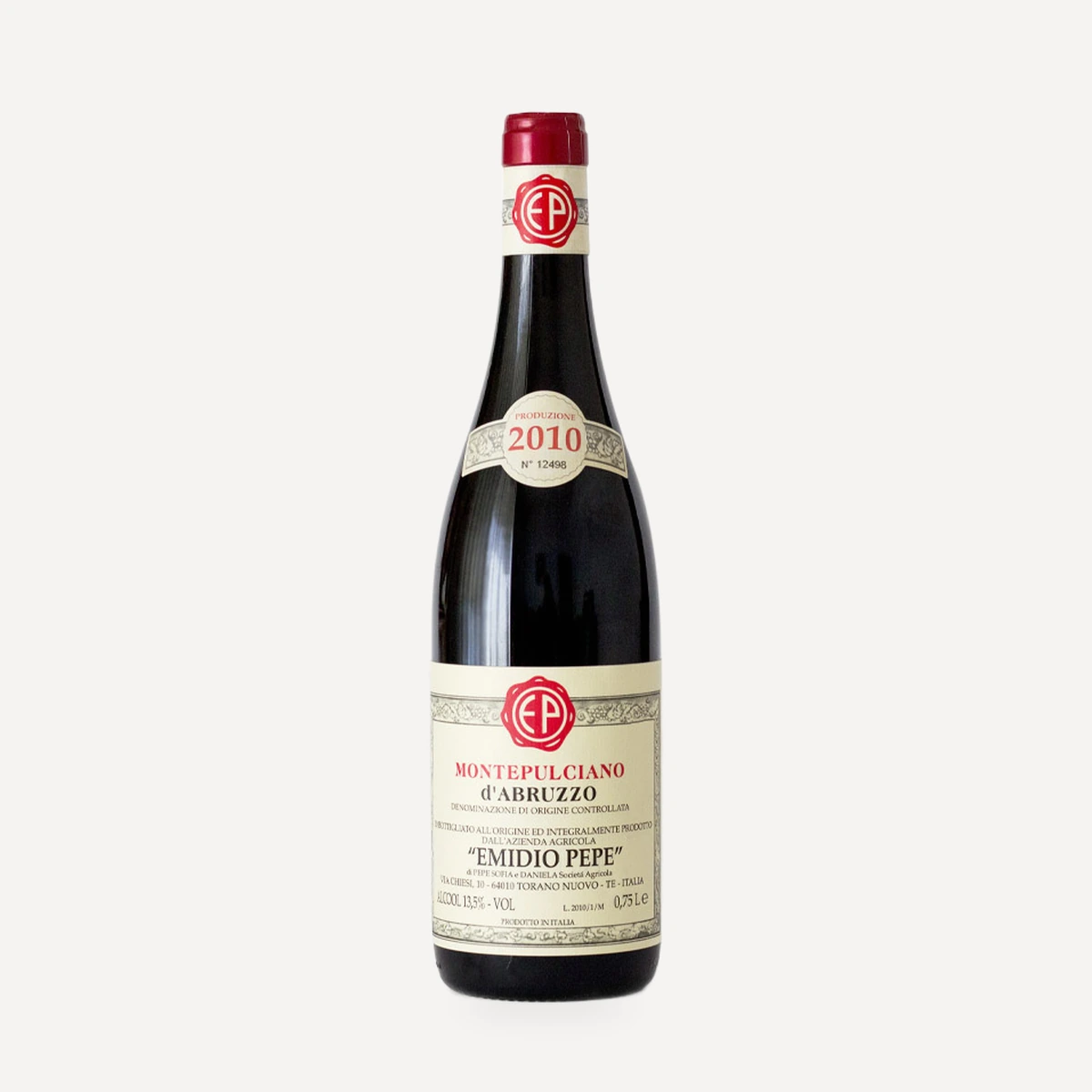
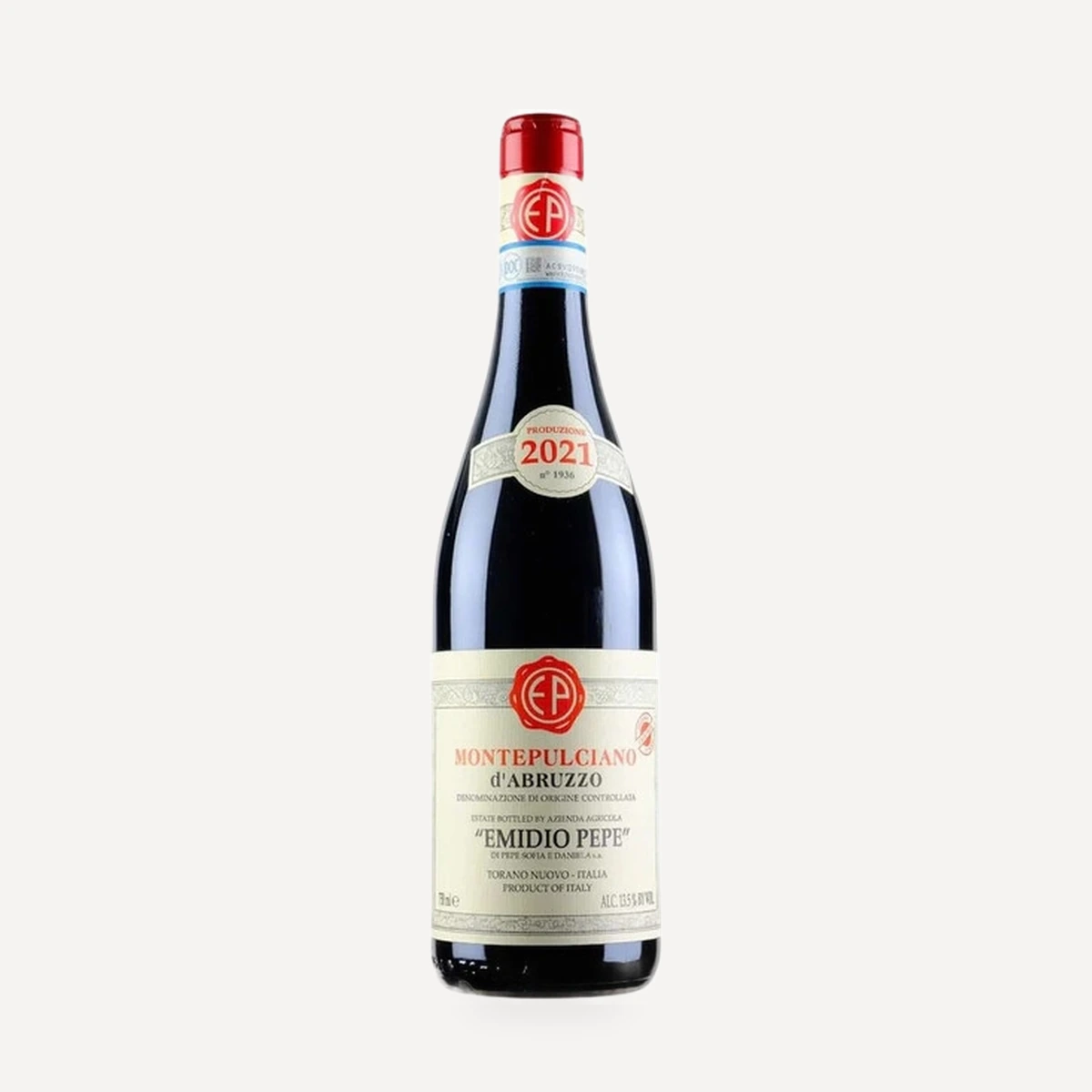
Questo vino
Vineyard and terroir
The old-vine Trebbiano selection comes from Donatella, a parcel planted in 1988 among the estate vineyards surrounding the cellar in Torano Nuovo. The broader estate comprises 17 hectares of Trebbiano d’Abruzzo, Montepulciano d’Abruzzo and Pecorino trained in pergola and rows within the Colline Teramane.
A broad solar exposure, pronounced day-to-night temperature variation and constant wind shape ripening. Maritime influence is balanced by cold currents from the Gran Sasso. The soils contain clay and limestone, and the vines root several metres deep. No chemical products are used; biodynamic preparations, permanent vegetation and cover crops foster soil life and diverse indigenous yeast populations.
Grapes
Trebbiano d’Abruzzo. The estate preserves genetically diverse old Trebbiano material through field grafting and massal selection.
Vinification
Grapes are harvested and selected entirely by hand. White grapes are crushed by foot in a large wooden vat, 350 kg at a time, for 40–45 minutes. The prolonged but gentle crushing stimulates contact between juice and skins without breaking the stems, drawing matter, flavour and aroma into the must. Only the juice passes into small concrete tanks, where fermentation begins spontaneously and continues for 30–35 days without selected yeasts or added enzymes.
Ageing
In the second spring after harvest, the wine moves directly from concrete into bottle. The old-vine bottling enters the ageing cellar and is not released for the first time until four years after vinification. It ages without filtration and may remain in the cellar beyond that point until the vintage reaches its desired expression. Bottles older than 20 years are hand-decanted and checked individually before release, topped up with the same vintage and recorked.
Tasting profile
Trebbiano d’Abruzzo combines pronounced acidity with aromatic balance and complexity. Young wines are elegant, austere and mineral; bottle age brings greater complexity, volume and depth.
Vintage notes
In 2020, a dry late summer temporarily placed Trebbiano under water stress. The estate harvested most Trebbiano early to preserve acidity, obtaining fruit with sharp acidity, low malic acid and moderate potential alcohol. Fermentation was slow and spontaneous, with higher-than-usual temperatures caused by warm weather. Rain immediately before the old-vine harvest allowed Donatella to resume ripening. The parcel was picked on 24–25 September at 12.5% potential alcohol and pH 3.25.
The Selezione Vecchie Vigne release schedule varies by market because older-vine wines are retained in the ageing cellar. The shared release document records Trebbiano vintages from 2014 through 2018 for the 2018–2020 market cycles.