Storia
Family roots
Wine was already being made at Casa Pepe by Emidio Pepe’s father and grandfather before the present winery was established. The family tradition is traced to the end of the nineteenth century, although the surviving accounts differ between 1889 and 1899. Emidio was born in 1932 and learned by working beside both earlier generations.
1964: the first vintage
Emidio founded the present winery in 1964. He began with approximately one hectare near Torano Nuovo and initially called the cellar Aurora, presenting the venture as a new beginning. That year he vinified his first commercial vintage and laid the foundations for an agricultural model based on living soils, indigenous grapes and the avoidance of chemical products.
At a time when Montepulciano and Trebbiano from Abruzzo were commonly treated as blending or early-drinking wines, Emidio committed himself to their capacity for long development. He regarded bottle ageing as essential to achieving refinement without losing energy. The ageing cellar was the first cellar built at Casa Pepe, and he began retaining bottles systematically. At least half of each production has continued to be held back until the family considers a vintage ready.
The original vinification principles were also established in 1964: manual work instead of processing machinery, foot crushing for white grapes, hand destemming for Montepulciano, spontaneous fermentation in small glass-lined concrete tanks, no filtration and prolonged bottle ageing. The original 1964 concrete tanks remain in use.
Early vineyards and massal heritage
Branella was planted in 1966 and later purchased by the family in 1981. Casa Pepe was planted in 1974. Emidio grafted the latter parcel himself in the field, using buds selected from an old vineyard. This field-grafting method preserved a diverse pool of ancestral Montepulciano and Trebbiano material. The oldest parcels, now more than fifty years old, remain the source for the estate’s massal selections.
The Trebbiano parcel Donatella was planted in 1988 and became the source of the Selezione Vecchie Vigne bottling.
Decantation and the library cellar
Emidio’s decision to combine non-filtration with long bottle ageing created substantial natural deposits, particularly in Montepulciano. During the 1970s and 1980s, he developed a manual bottle-decanting system so that mature wines could retain their sediment during ageing but be presented cleanly at release. Bottles were opened only against confirmed orders, tasted, transferred neck-to-neck into clean bottles, topped with another bottle of the same vintage and recorked under nitrogen.
The decanting threshold was initially ten years. In 2022 the family extended it to twenty years, beginning with the 2002 Montepulciano: vintages older than 2002 are released after decanting, while younger vintages remain undecanted. Trebbiano has never been subjected to this process. The decantation year, formerly printed on the cork, was moved to the bottle collar.
The library has grown to more than 350,000 bottles representing numerous vintages. Old bottles are released in small quantities as younger vintages enter the collection. In 2017, a direct Zachys auction offered 53 vintages reaching back to 1967. All 66 lots were sold; the event ran simultaneously in New York, Los Angeles and London with worldwide streaming. A second major direct offering followed in 2020, including rare formats, old vintages and the first limited release of separately bottled 2015 wines from Vigneto Casa Pepe, Vigneto Daniela and Vigneto Branella.
Biodynamics and generational transition
The family formally approached biodynamic agriculture in 2005 through reading, lectures and the work of Rudolf Steiner. Sofia Pepe recognized that many biodynamic practices were already consistent with Emidio’s established customs: refusing synthetic chemicals, observing lunar phases and treating soil vitality as the foundation of wine. Biodynamic preparations, cover crops and spontaneous vegetation were progressively incorporated.
For roughly two decades, Sofia and Daniela have directed the family business. Sofia learned beside Emidio for at least ten years before taking control of cellar knowledge; she later assumed responsibility for farming and winemaking. Daniela became co-owner with Sofia and took charge of administrative, strategic, economic and organizational management, including hospitality and investment projects.
Chiara De Iulis Pepe studied viticulture and oenology in Burgundy, worked with international markets and assumed responsibility for winemaking with the 2020 vintage. Her role now combines vineyard management, biodynamic practice, regenerative agriculture, scientific study and adaptation to climate change. Elisa De Iulis Pepe joined in 2020 and directs the agriturismo, restaurant and wider hospitality project while connecting it to the farm’s gardens, cereals and food production.
Parcel research and climate adaptation
Beginning with the 2020 vintage, the family isolated Casa Pepe and Branella, its two oldest Montepulciano parcels, and vinified them separately. Geologist Brenna Quigley mapped their soils, revealing meaningful geological and genetic differences despite their proximity.
Milk-based vineyard treatments began experimentally in 2021 on 0.8 ha of Trebbiano, expanded to 1.3 ha in 2022 and were subsequently planned for 5 ha. Sulphur and copper were eliminated from the treated vineyards.
On 17 March 2022, two days before the full moon, 2.3 ha of Montepulciano were planted across Nocetta, Elisa and Mare. Approximately 4,000 vines were deliberately spaced at low density and integrated with trees. The project developed into the Pepe Pergola, an agroforestry model designed to create layered root systems, shade the vines and soils, preserve moisture and support ripening under hotter conditions.
Recent recognition and development
On 14 October 2023, Emidio Pepe received the Golden Vines® Gucci Sustainability Award at the Opéra Garnier in Paris. The selection was made by more than 1,000 wine professionals, including Masters of Wine and Master Sommeliers.
The winery marked sixty vintages in 2024 with an international programme of tastings and dinners presenting its historical library. In 2025, Sofia and Daniela received the Order of Merit of the Italian Republic, regarding it as recognition of the family’s collective and sustained work.
By May 2026, construction was under way on a new 1,400 m² underground cellar designed around two centuries-old oak trees, expanding the estate’s infrastructure while retaining its established production principles.
Terroir
Torano Nuovo
The vineyards surround the cellar in the hills of Torano Nuovo, within the Colline Teramane. The Adriatic Sea lies approximately 12 km from Casa Pepe and Branella, while Gran Sasso is approximately 43 km away. Another estate presentation describes the general setting as about 10 km from the sea.
Maritime salinity and softer coastal conditions meet cold air descending from Gran Sasso. Broad solar exposure, substantial differences between day and night temperatures and constant wind favour slow, progressive ripening, sugar–acid balance and reduced disease pressure. The pergola canopy further slows berry development by shading the fruit.
Geology and soils
The general substrate is clay and limestone. Roots can descend several metres, obtaining water and mineral resources during difficult periods. Detailed mapping identifies heterogeneous blue-grey sandy clays dating to the Calabrian stage, approximately 1.8 million to 770,000 years old. Sandy clay layers may alternate with sandy conglomerate lenses. Younger marine conglomerates and stratified yellow sands overlie the sandy marls, while older grey-blue clays and marls occur below.
Many sites contain soft, calcareous blue clay marls and marly clays. Although compact zones can impede rooting, fractures and blue-gold mottling mark the movement of air, water, organic matter and roots. White, speckled limestone pebbles have often disintegrated into sandy lenses. These improve porosity, permeability and water storage while increasing pH and active lime. Finer, less calcareous sand creates lighter, softer zones with nearly neutral pH, particularly in Branella.
The area is relatively consistent in broad texture and chemistry. Differences between vineyards, and even within a single vineyard, therefore arise from subtle but consequential changes in clay, sand, gravel, depth, porosity, lime and pH.
Vinificazione
Organic, biodynamic and regenerative framework
Synthetic chemical products have been refused from the beginning. Copper crystals, mined sulphur and biodynamic preparations are used where required; some experimental parcels have subsequently eliminated copper and sulphur in favour of milk treatments. Lunar phases guide vineyard and cellar operations. The family began formal biodynamic study in 2005 and now combines biodynamic preparations with regenerative agriculture.
Plant material and training
Emidio established early vineyards by planting rootstocks first, allowing their roots to concentrate on depth before grafting them in the field. He selected and prepared each bud from an admired old plot. This preserved genetically diverse ancestral Montepulciano and Trebbiano material and avoided clonal standardization. Vines over fifty years old supply the estate’s continuing massal selections.
Pergola Abruzzese remains central. Its elevated canopy acts as a solar collector while shading fruit, permitting extensive photosynthesis and reserve accumulation without accelerating the berries. Montepulciano ripens beneath the leaves, which helps preserve its skin texture and moderates tannin development. The estate never removes shoot tips and does not deleaf: intact apices help the vine regulate extension and delay the start of ripening, while the complete canopy maximizes photosynthesis.
Permanent cover and soil protection
Every vineyard is covered with grass, spontaneous vegetation or a seeded cover crop. Mixtures contain as many as seventeen species. Grasses build structure and carry oxygen deeper through penetrating roots; legumes fix nitrogen, support must nutrition and attract bees; brassicas help suppress nematodes through root exudates.
The plants are allowed to grow tall and flower before being bent down as mulch. This layer reduces evaporation, can keep the soil as much as 3°C cooler than an uncovered row, preserves superficial microbial activity and drops mature seed directly onto fertile ground for natural reseeding. It avoids repeated ploughing and seeding while improving structure, nutrition, erosion resistance and water retention.
The detailed organic-seed mixture comprises rye 13.34%, wheat 13.34%, summer field bean 13.34%, winter pea 16.68%, blue lupine 2.50%, crimson clover 1.67%, Egyptian clover 3.34%, rapeseed 1.67%, lacy phacelia 5.00%, rocket 0.67%, white mustard 3.34%, radish 1.67%, common vetch 14.18%, hairy vetch 3.34%, buckwheat 3.34%, flax 1.67%, and a calendula–dill–coriander mixture at 0.92%.
Approximately 70% of the vineyards have moved to no-till management, substantially reducing tractor passages and associated carbon emissions.
Compost and circular fertility
All pressed skins, stems, lees and vineyard pruning material enter the biodynamic compost. Manure comes from a nearby biodynamic farm. The mixture is inoculated with preparations 502–507, covered with straw, fermented for eight months and spread in the vineyards to add carbon and microbial activity.
More than 10 ha around the vines participate in crop rotation. Crops include ancient wheats, evolutionary wheat populations, lentils, chickpeas, sunflowers, fava beans, spelt, barley, maize and alfalfa. The programme replenishes soils, surrounds vineyard plots with biodynamically farmed buffers and supplies the family, team, restaurant and guests.
Water, agroforestry and climate response
Well water supplies vineyard sprays, young-vine irrigation and cleaning throughout the year and is analysed monthly. Moisture is conserved through mulch, the absence of summer tillage, hemp mats or straw around young vines, greater organic matter, preparation 500 applied four times annually and keyline layouts on slopes to slow runoff.
The 2022 plantings introduced peaches, almonds, plums, apples, elms and willows around or within vineyards. Denser-canopied trees were placed toward the setting sun to screen harsher light, while lighter crowns toward sunrise allow morning light to filter into the pergola. Tree, vine and cover-crop roots occupy different depths, encouraging exchange and access to deeper moisture during drought. The pergola shades grapes and soil; the trees in turn shade the pergola. Recent hot summers produced higher acidity, lower pH, more complete phenolic ripeness and moderate potential alcohol under pergolas.
Alternative protection and biodiversity
Milk treatments began on 0.8 ha of Trebbiano in 2021, reached 1.3 ha in 2022 and were planned for 5 ha. Those parcels ceased receiving sulphur and copper. The milk is also intended to support local agricultural relationships.
Bees and other beneficial insects are treated as indicators of ecosystem health. Flowering cover crops, orchard species and mixed farming provide habitat for pollinators. Earthworms, butterflies, spiders and fireflies are also present among the vines.
Harvesting is exclusively manual, with only sound grapes selected.
Reception and manual processing
The method has remained manual since the first vintage, without processing machinery. Harvested bunches are selected by hand.
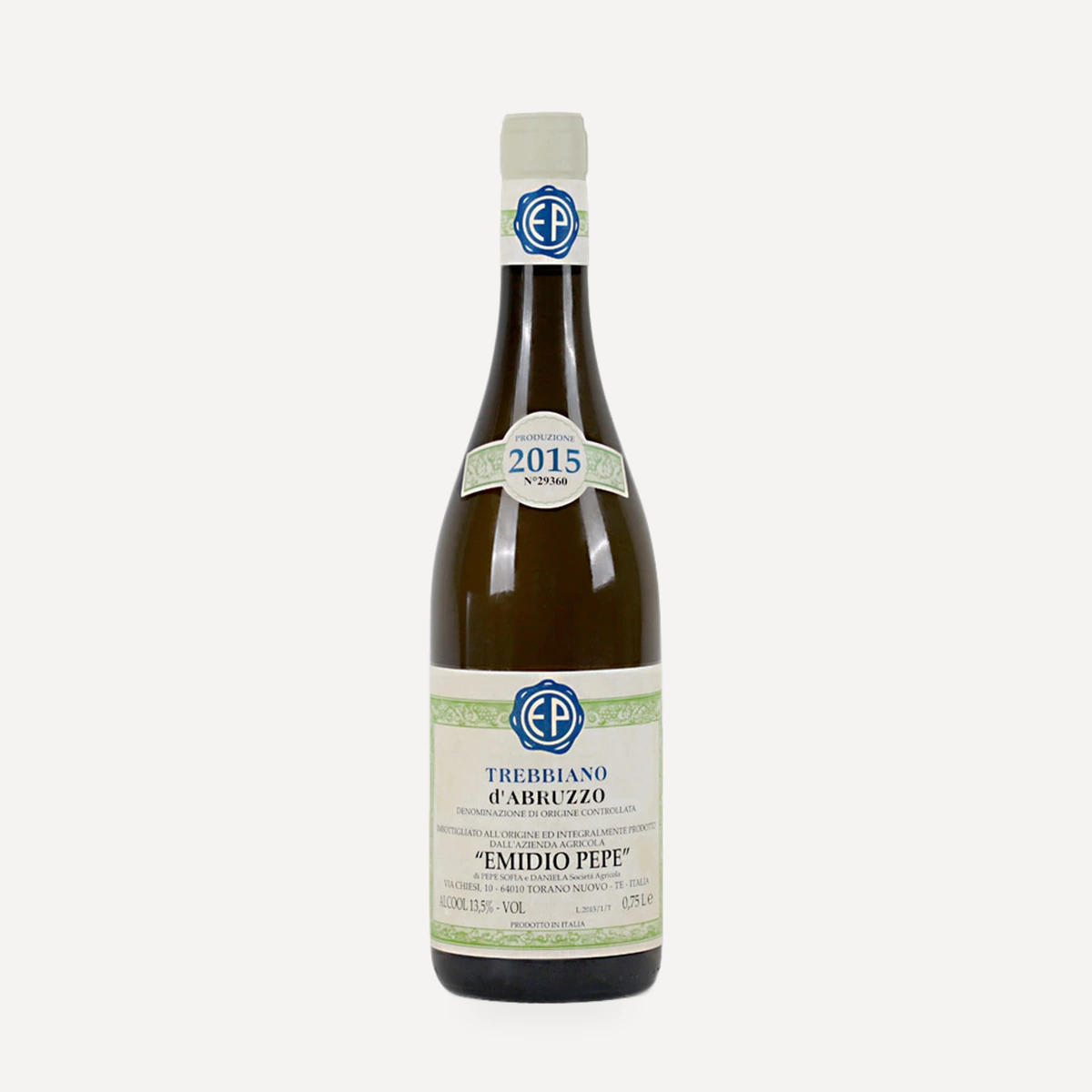
White grapes are foot-crushed in a large wooden tub. Approximately 350 kg are worked at a time for 40–45 minutes. Continuous but gentle contact between juice and skins releases matter, flavour and aroma without breaking the stems.
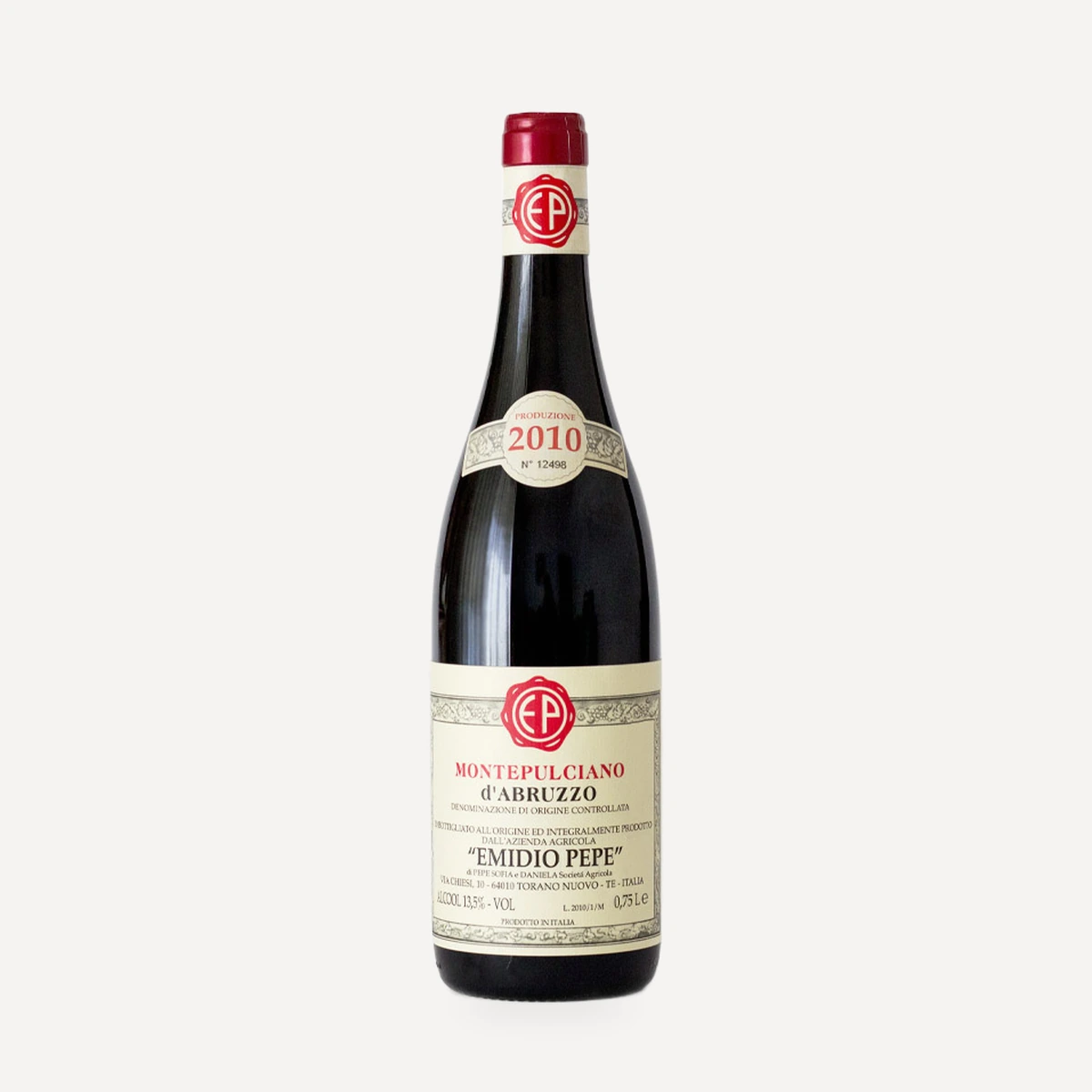
Montepulciano bunches are destemmed by two people rubbing them over a net above a wooden vat. Whole stems remain unbroken on the net while berries fall through almost intact. This avoids extracting bitter stem tannin and protects the native yeasts on the skins.
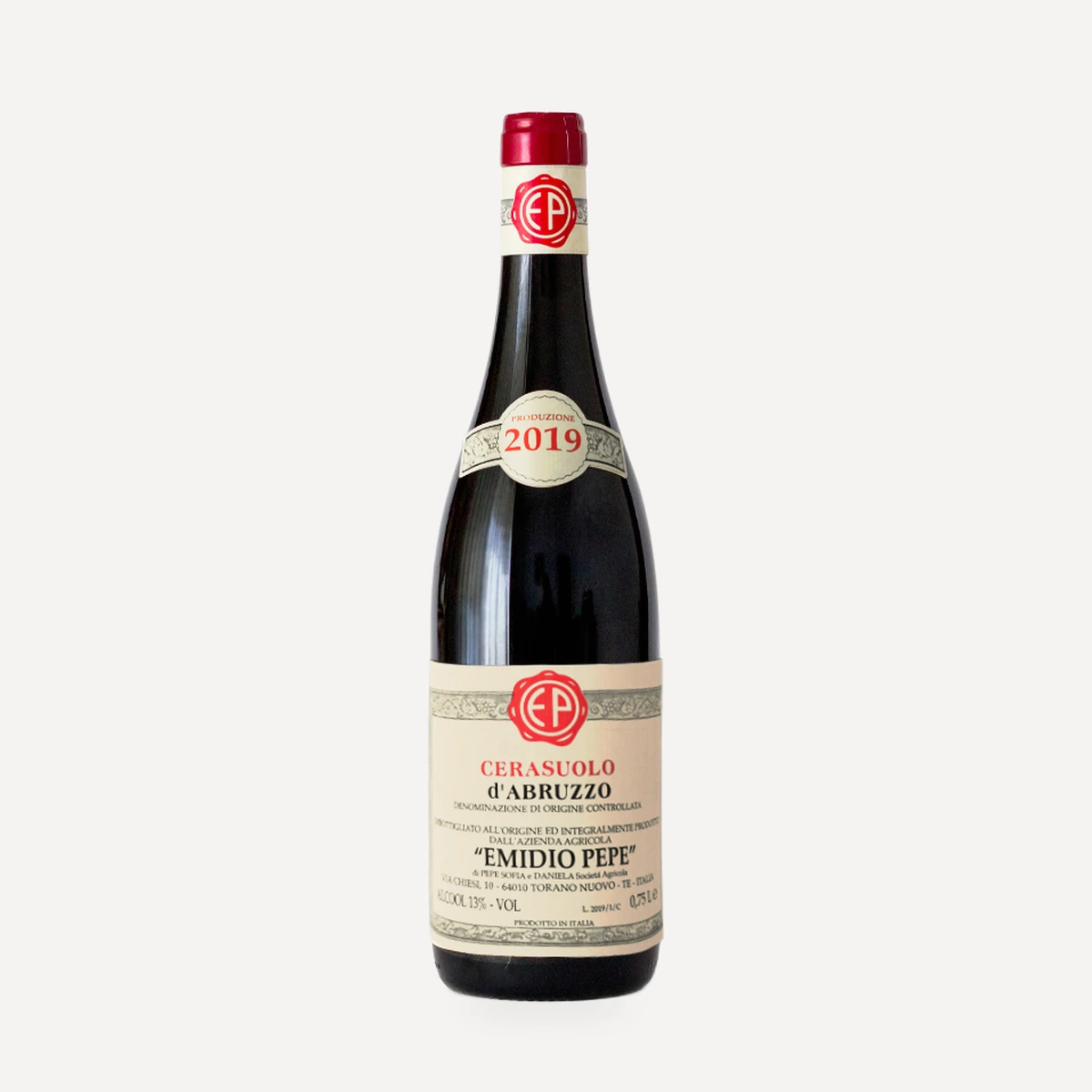
Cerasuolo follows the white-wine method: Montepulciano is foot-crushed and its juice ferments without skins. During the 2020 vintage, 43 hl were prepared with an experimental 5% of intact berries left with their pedicels after the stalks were cut away, seeking an additional intracellular fermentation component.
Fermentation and concrete
Fermentations begin spontaneously without selected yeasts or aromatic enzymes. Native yeast diversity is linked to the living vegetation and biodiversity of the vineyards. Fermentation takes place in small glass-lined concrete tanks. The original tanks used by Emidio in 1964 remain operational.
Concrete is treated as a neutral, inert and temperature-moderating habitat that accompanies the wine without adding flavour. The method allows each season to determine fermentation and wine character. Current labels declare sulphites and sulphur dioxide and indicate bottling under a protective atmosphere; no dosage is given.
Ageing and release
Bottle ageing is fundamental. At least half of production is retained, and a vintage is released only when the family considers it expressive and ready. The library contains more than 350,000 bottles. Trebbiano from old vines is bottled early to preserve vitality; malolactic fermentation may consequently develop in bottle, and naturally retained carbon dioxide can contribute to preservation.
The wines are not filtered before bottling. Natural material therefore settles in the bottle during prolonged ageing. Montepulciano older than twenty years is manually decanted only when an order is received. Six bottles are moved in a specially inclined wooden crate so the sediment remains undisturbed. Each is opened and tasted, and the wine glides directly from the old bottle’s neck into a clean bottle without a funnel. It is topped with a second bottle of the same vintage, the headspace is protected with nitrogen and a new cork is inserted. The decantation year appears on the bottle collar. Trebbiano is never decanted.
Internal comparison tastings, redox-potential measurements and dissolved-oxygen tests supported the practice. Undecanted mature bottles benefit from standing upright before service, opening several hours in advance and resting for two to three weeks after transport.
Filosofia
Emidio’s founding conviction was that Trebbiano and Montepulciano could express refinement, energy and longevity when given sufficient time. Wine is treated as a record of its season rather than a standardized product: each vintage should preserve the climate, place and culture that formed it.
The family’s five non-negotiable production pillars are pergola training, concrete fermentation, spontaneous yeast, no filtration and long ageing. Manual work is retained both as inherited practice and as a means of treating grapes with greater gentleness and precision. Concrete is valued because it remains neutral and does not impose an external flavour.
Intervention is limited, but the approach is not static. Biodynamics, regenerative farming, soil mapping, milk treatments and agroforestry have been incorporated where they support the original priorities of living soil, healthy fruit and climatic resilience. The women directing the current generation describe tradition as something to be kept alive dynamically rather than reproduced without observation.
The farm is conceived as a three-dimensional agricultural organism. Vines, spontaneous plants, crops, trees, microorganisms, insects, food production and hospitality are meant to reinforce one another. The Pepe Pergola extends this idea vertically: visible canopy layers are matched by deeper and more varied root layers below ground.
Long ageing expresses the same respect for natural pace. Bottles are not released according to a fixed commercial schedule; substantial stocks remain in the cellar until a vintage reaches the expression sought by the family. Sediment is considered part of the wine’s living substance and is left in place for as long as possible.
Vini
Cerasuolo d’Abruzzo
Trebbiano d’Abruzzo DOC
Montepulciano d’Abruzzo DOC
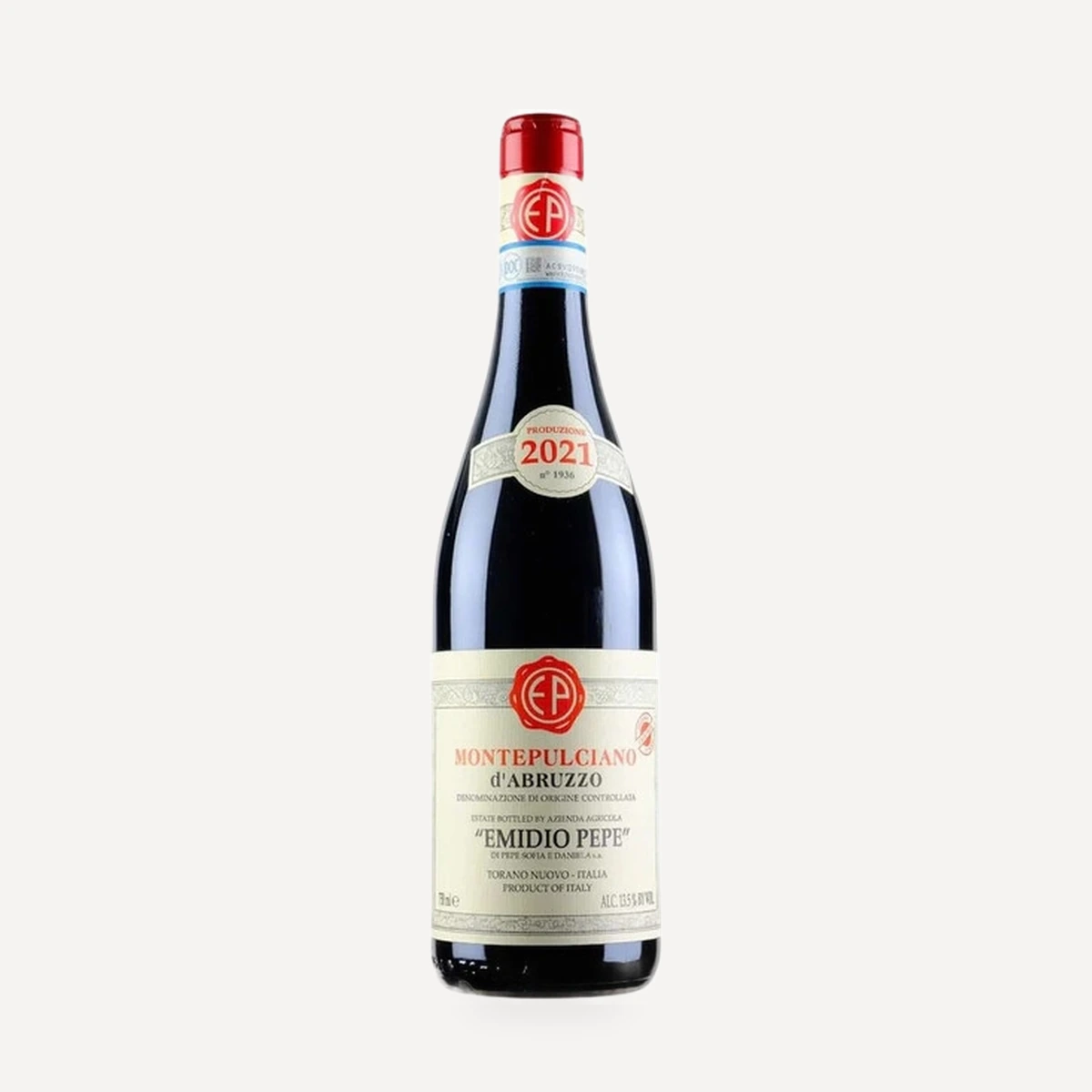
Montepulciano d’Abruzzo Vigneto Casa Pepe
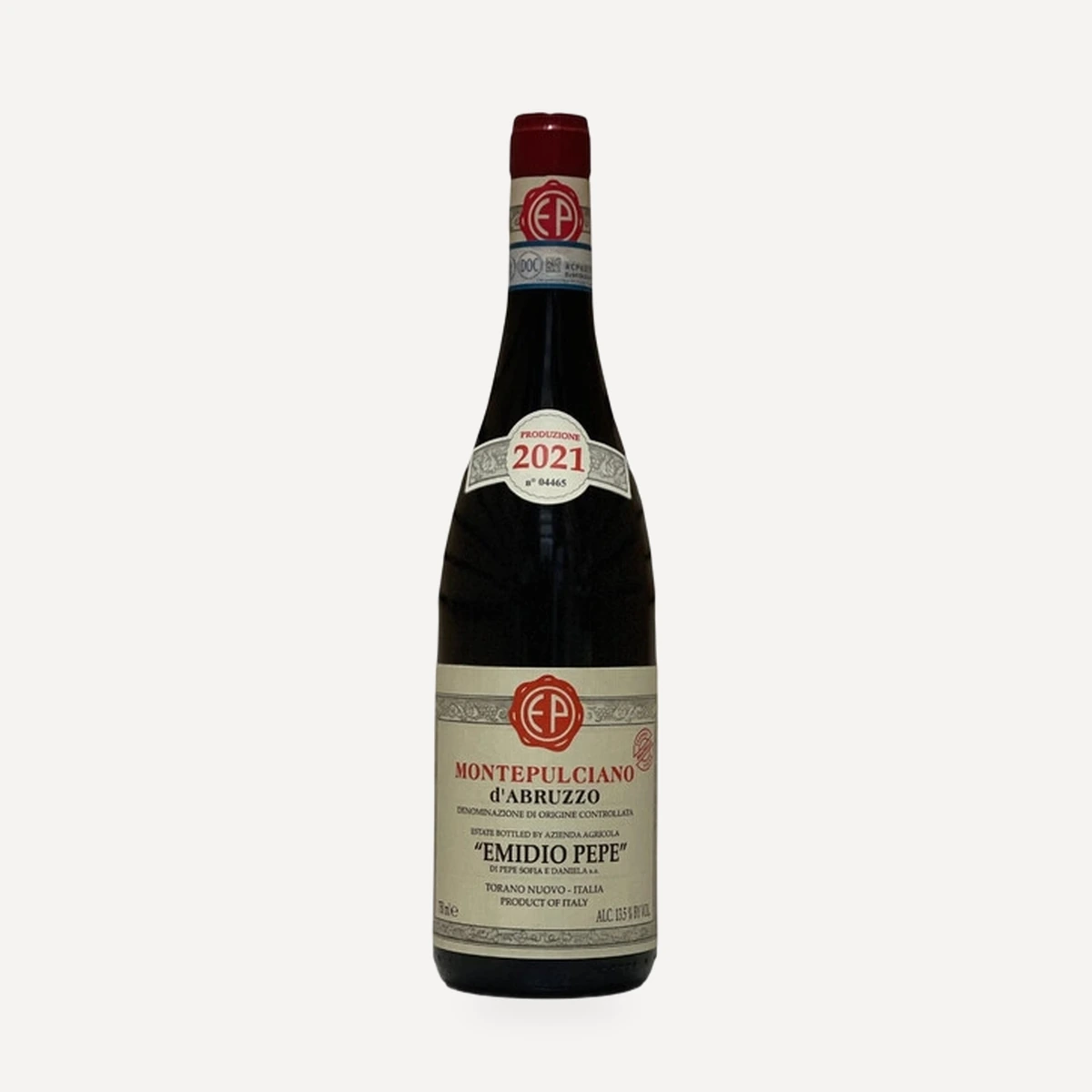
Montepulciano d’Abruzzo Vigneto Branella