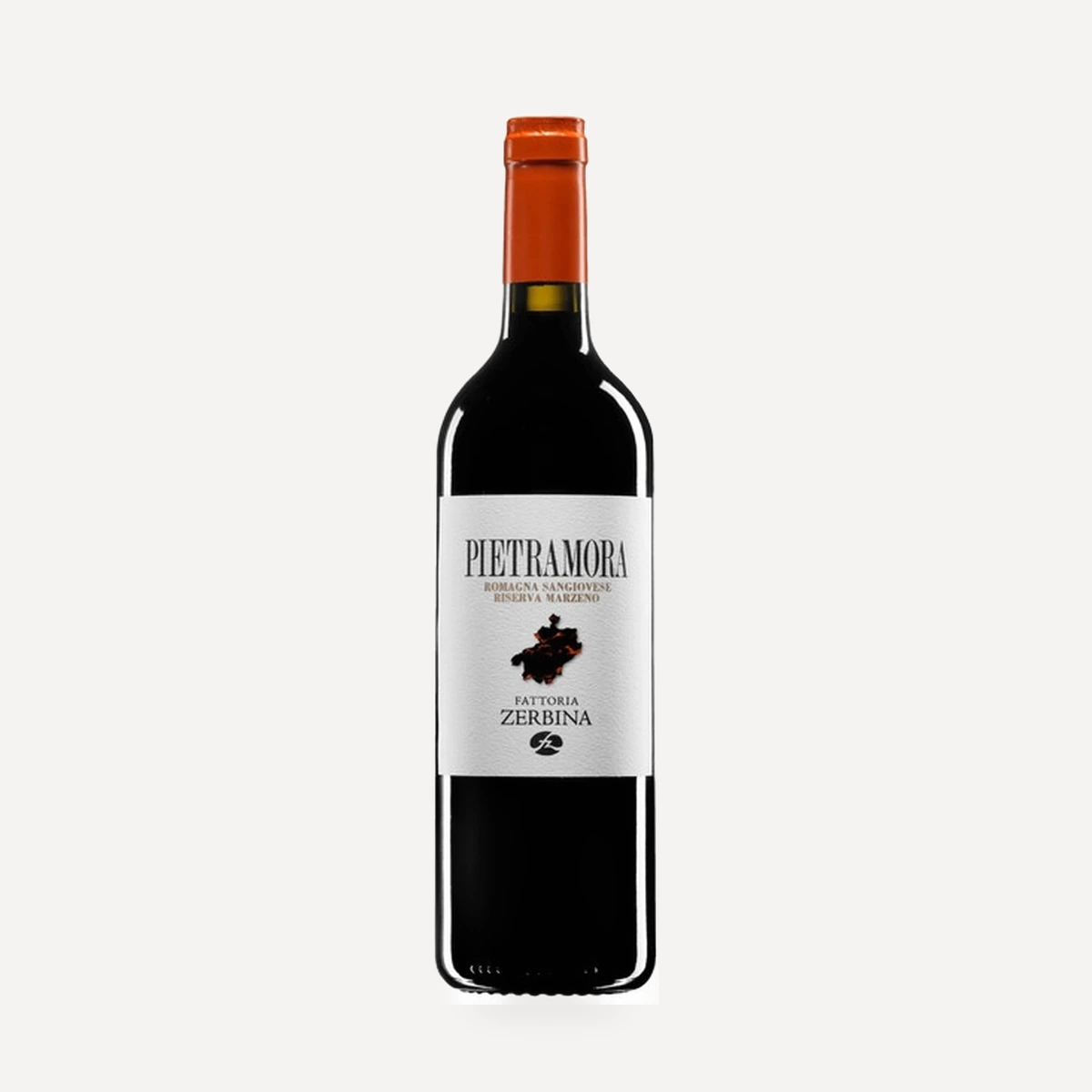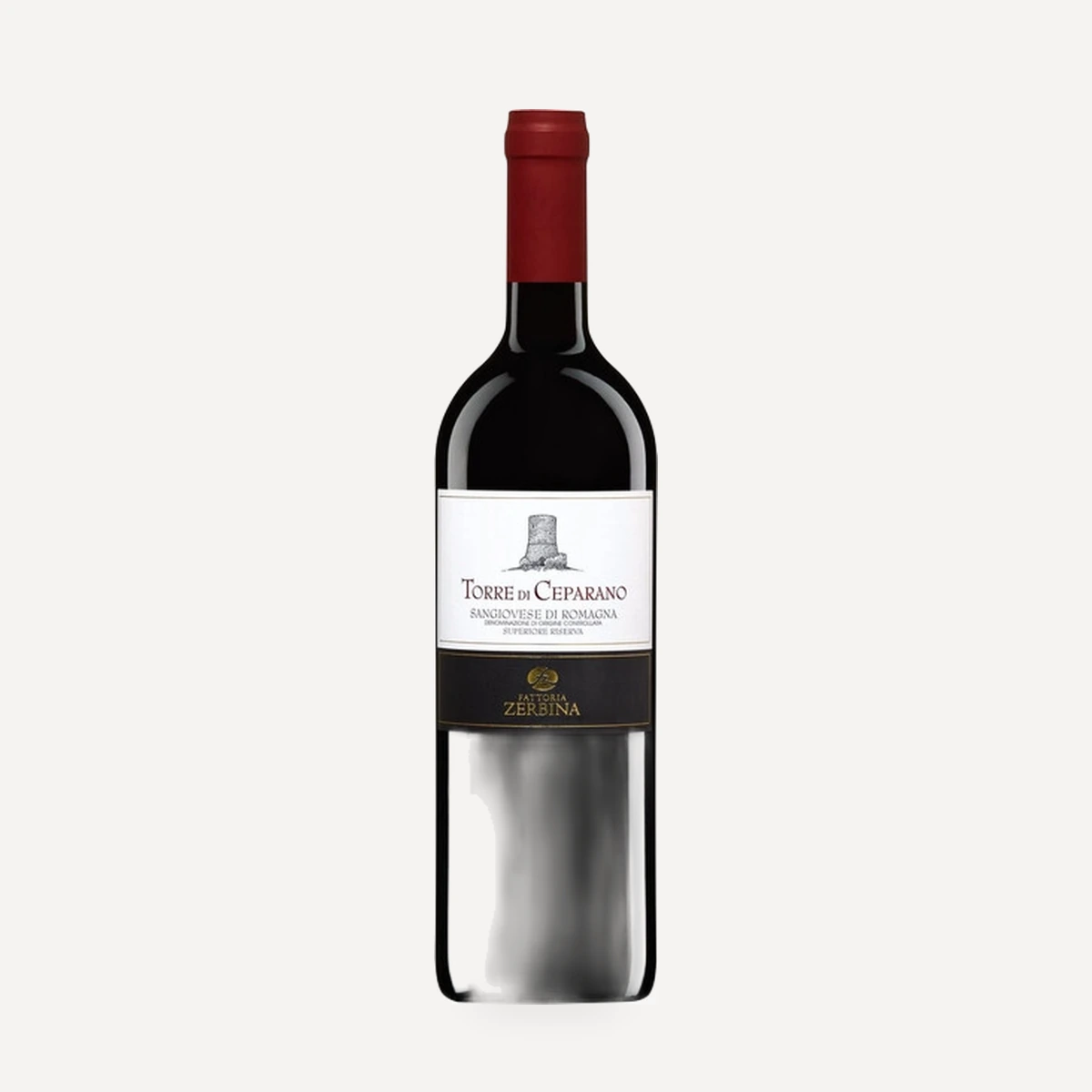
Questo vino
Vineyard and terroir
The estate's 28 hectares of vineyards lie across the varied low hills of the Tuscan-Romagnol Apennines, on soils that proved especially well suited to Sangiovese. The estate chose the local Sangiovese di Romagna clone after studying clones from Tuscany and Romagna. The alberello training method, an ancient system, was introduced in 1990. The vines are tied to tall stakes so that sunlight reaches the whole vine, which supports photosynthesis and makes the plants easier to care for and the grapes easier to harvest. The estate plans to convert all its vineyards to this system.
Vinification
Merlot is harvested in September, Ancellotta and Sangiovese in October. Each variety is vinified separately, so the percentages in the final blend can be set according to the quality of each variety's harvest. Fermentation takes place in stainless steel tanks. Skin maceration lasts 15–21 days before fermentation.
Ageing
The wine ages for 12 months in French oak barrels of 225 and 500 litres. 5% of the barrels are new and the rest are in their second or third year of use. A small proportion of American and Hungarian oak is also used, up to a maximum of 10%. A further 8 months of ageing in bottle follow, in the Fattoria Zerbina cellar.
Tasting profile
Full-bodied, with concentrated spicy notes developed through long ageing in oak barrels.
Label / history
In 2016 the wine received the highest rating in the "Guida Romagna da Bere" wine guide. Fattoria Zerbina was founded in 1966 by Vincenzo Geminiani, who planted the first vineyards on the hills of Marzeno. In 1987 management passed to his granddaughter Cristina Geminiani, at first assisted by the oenologist Vittorio Fiore. She is trained in oenology and agriculture and graduated from the University of Milan. She founded the public organization "Invitation to Romagna", which brings together producers in Emilia-Romagna. Besides Sangiovese (80%), the estate grows Trebbiano, Albano, Cabernet Franc, Chardonnay and Sauvignon.