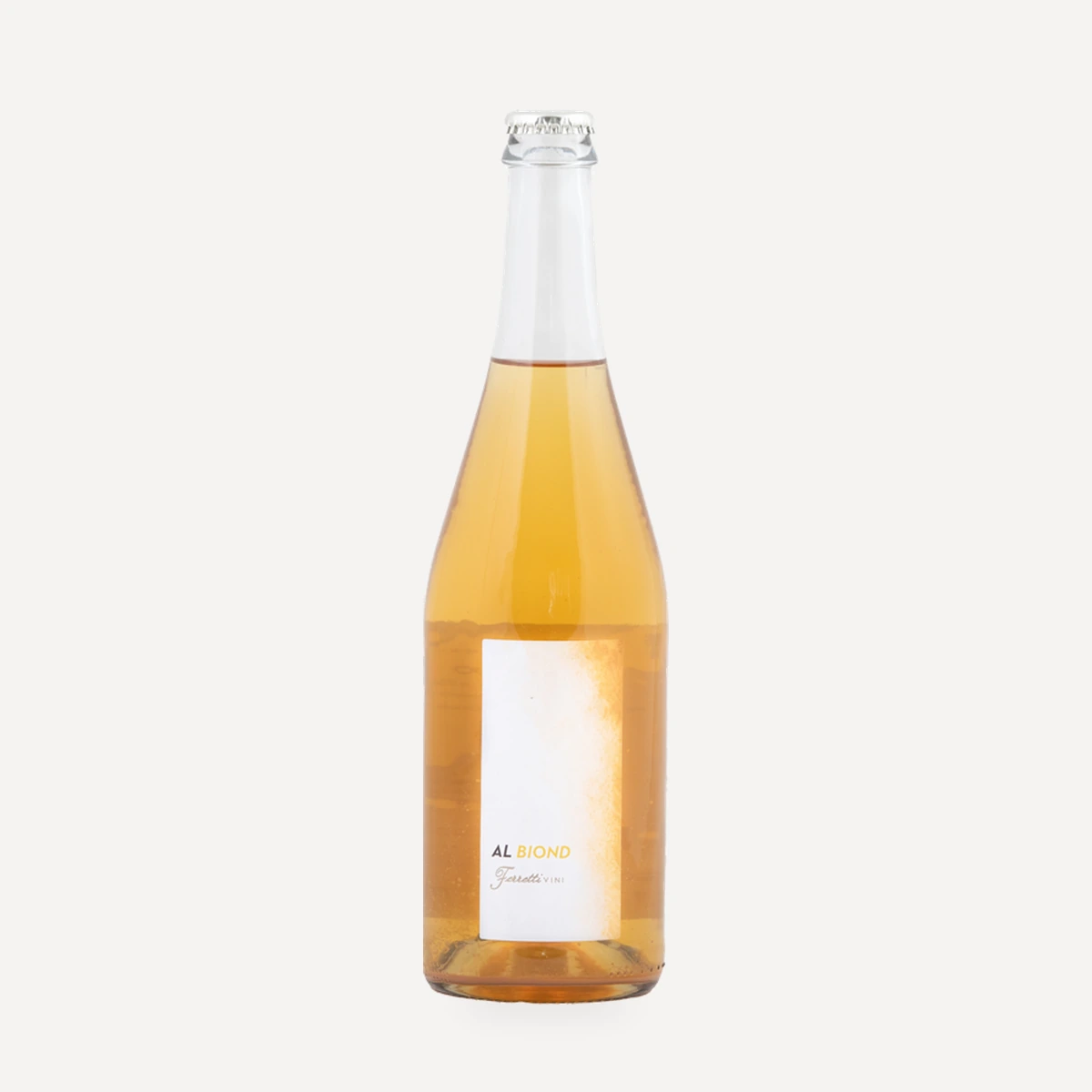
Questo vino
Grapes
A blend of 98% Trebbiano from several varieties and 2% Malvasia. The vines were planted in 2014.
Vinification
A dry, lightly sparkling, skin-macerated white. For the latest listed vintage, 2021, maceration lasted seven days. Fermentation is spontaneous, driven by indigenous yeasts without temperature control. Only low doses of sulfites are added, and the wine is not clarified.
Ageing
At least six months on the lees.
Technical data
Alcohol: 10.5% vol. Production is approximately 700 bottles.
Tasting profile
Deep yellow, acquiring orange nuances as it evolves in bottle, with fine and reasonably persistent bubbles. Malvasia contributes a light aromatic note when young; this recedes during ageing as tertiary aromas emerge. The palate is dry and full, with barely perceptible tannin and a lightly bitter, refreshing finish that encourages another sip.
Serving and pairing
Serve at 8–10°C. Pair with fish or white meats, or serve as an aperitif.
Vintage notes
Spring frost and an extremely dry summer caused severe losses and low yields in 2021. Slow fermentations shaped a white wine described as characteristic of that vintage alone. Seven days of skin contact produced an intense golden color; the nose combines fruit and flowers, while the palate begins soft before firm, drying tannin emerges.
The balanced, productive 2020 season produced moderate grape sugar and balanced acidity; skin maceration lasted five days. The similarly balanced 2019 season retained particularly fine acidity and received three to four days of skin contact. Heavy spring rain and fungal disease caused very low yields in 2018; maceration also lasted three to four days.