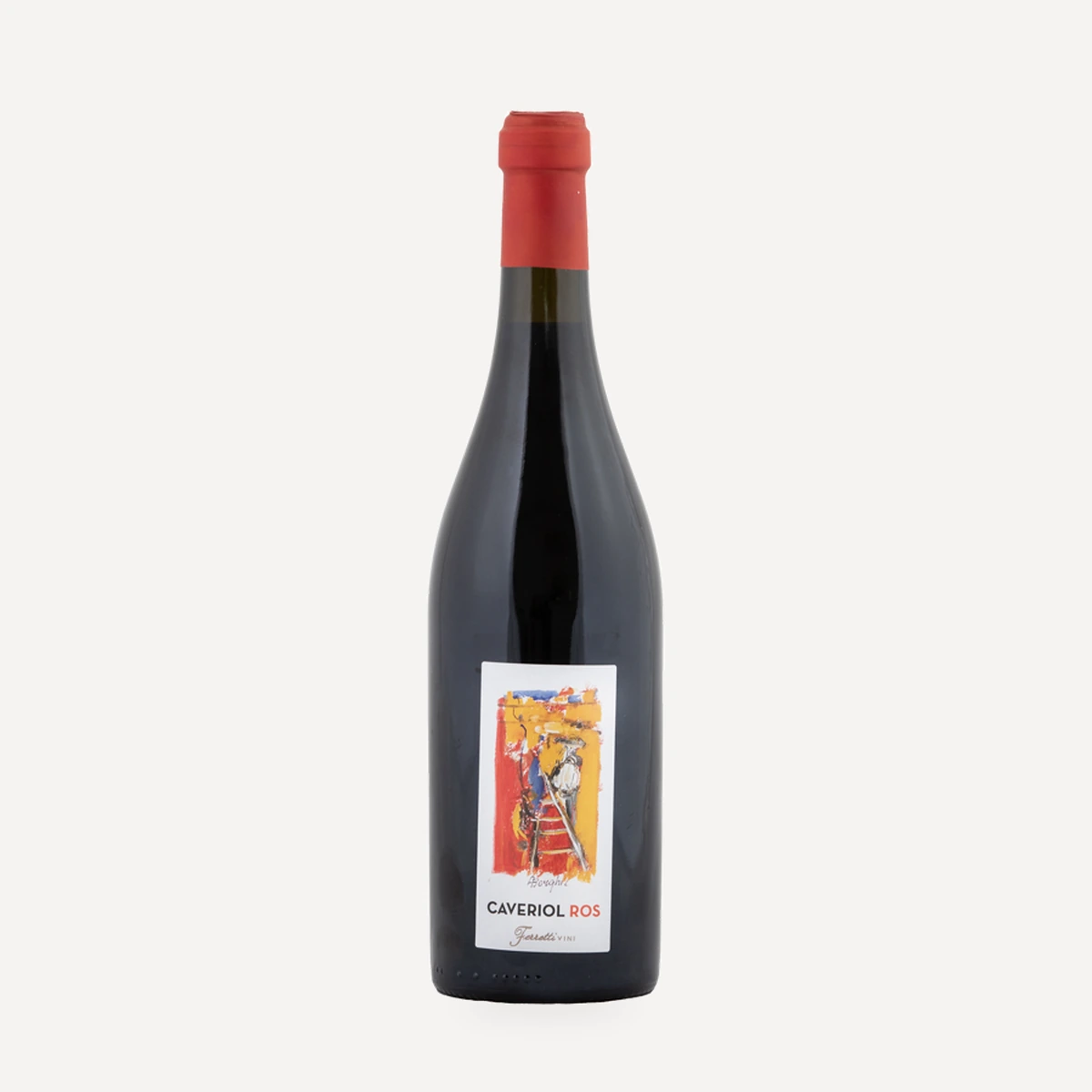
Questo vino
Vineyard and terroir
The vines were planted in 1972.
Grapes
A blend of 25% Lambrusco Grasparossa, 25% Maestri, 20% Salamino, 20% Marani and 10% Ancellotta.
Vinification
The must macerates in steel for 3–4 days. Fermentation is spontaneous, driven by indigenous yeasts at uncontrolled temperature. Only low doses of sulphites are added. The wine is neither clarified nor filtered and undergoes its second fermentation in bottle.
Ageing
At least nine months on the lees.
Technical data
Lambrusco dell’Emilia IGP. Dry sparkling red. Alcohol: 11.5%. Production: approximately 2,000 bottles.
Tasting profile
Deep violet in colour, with abundant, persistent foam. Light fruit is framed by spicy and animal nuances, including bay leaf and leather. The palate is structured, with almond and cinchona flavours that develop into a spicy, tannic finish.
Serving and pairing
Serve at 14–15°C with substantial dishes from Reggio Emilia, especially game or pappardelle with wild-boar sauce.
Vintage notes
The 2021 season brought spring frost and a very dry summer, causing severe losses and low yields. Its wine has violet foam, firm tannins, good structure and persistence, and a delicate red-fruit character expected to evolve well in bottle. The productive 2020 season delivered moderate sugar and balanced acidity; the resulting wine retained fruity, vinous aromas after extended ageing, with an enveloping palate and moderate alcohol. The 2019 season was balanced and productive, with moderate sugar and notably strong acidity. Heavy spring rain and fungal disease caused very low yields in 2018. Late spring frost and summer drought reduced the 2017 crop; uneven ripening produced relatively high alcohol and less-supported acidity. Warm conditions and cool nights gave the 2016 wine high sugar, balanced acidity and notable overall equilibrium. The very warm 2015 season had little nocturnal temperature variation, high sugar and low acidity, yet produced a characteristic nose and a balanced, persistent palate.