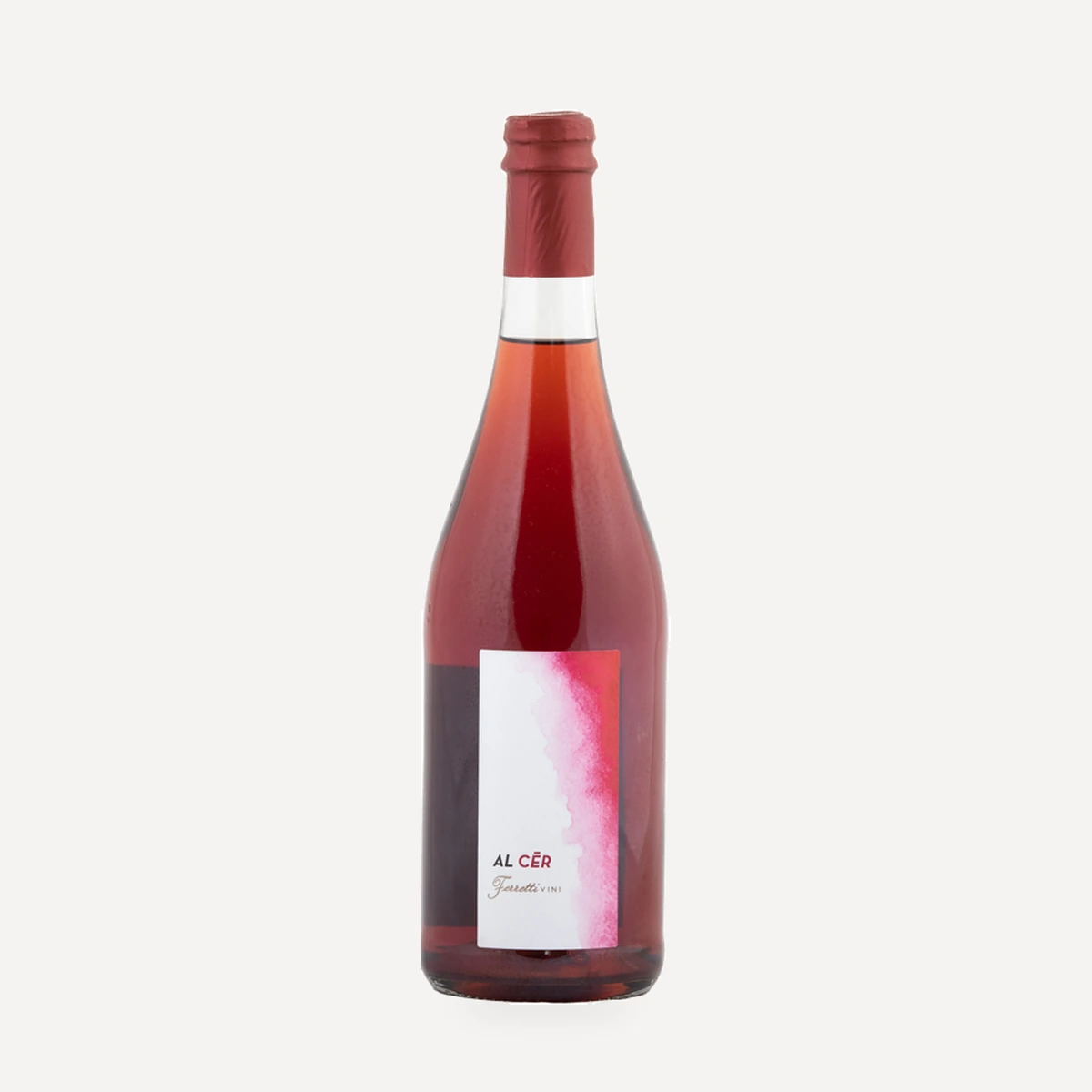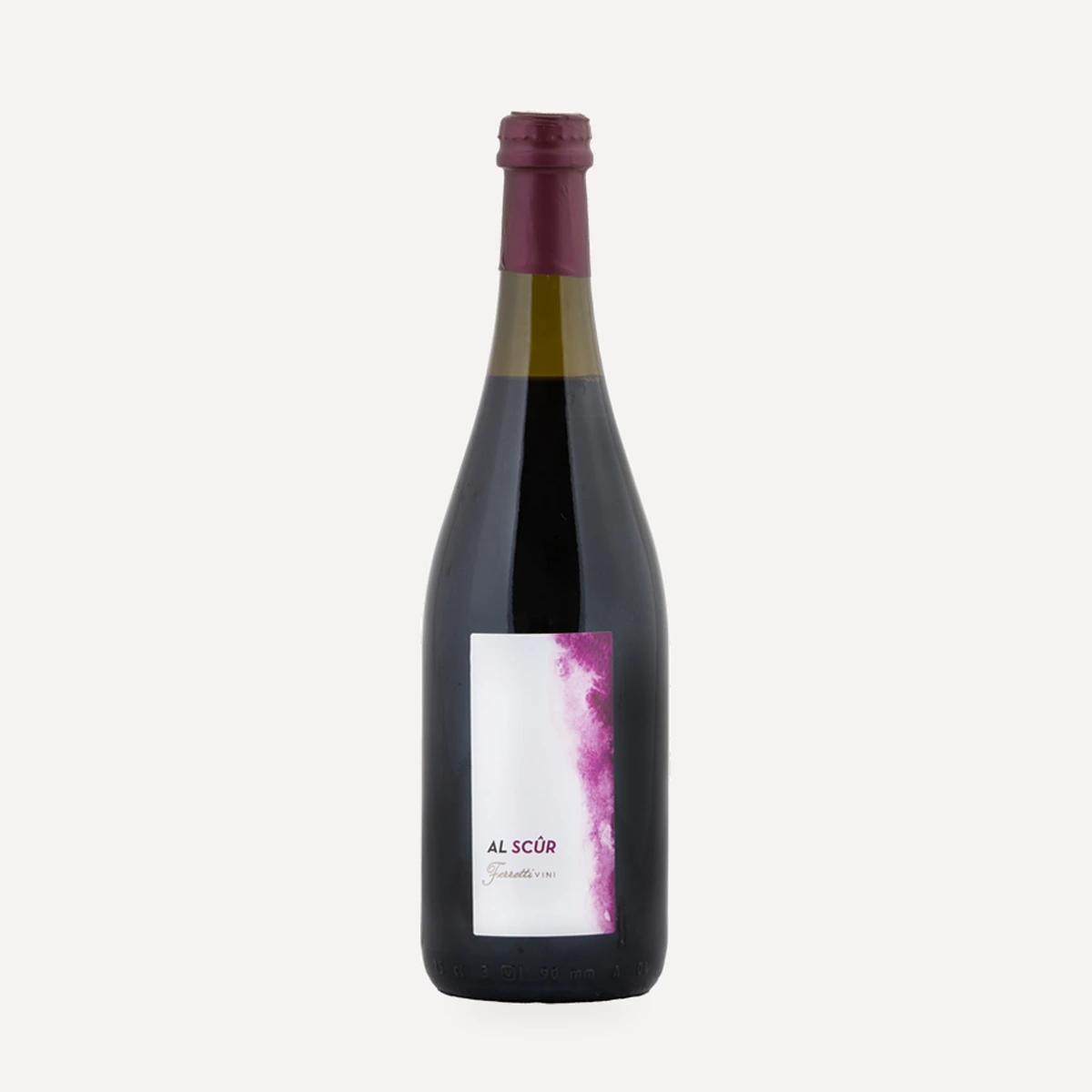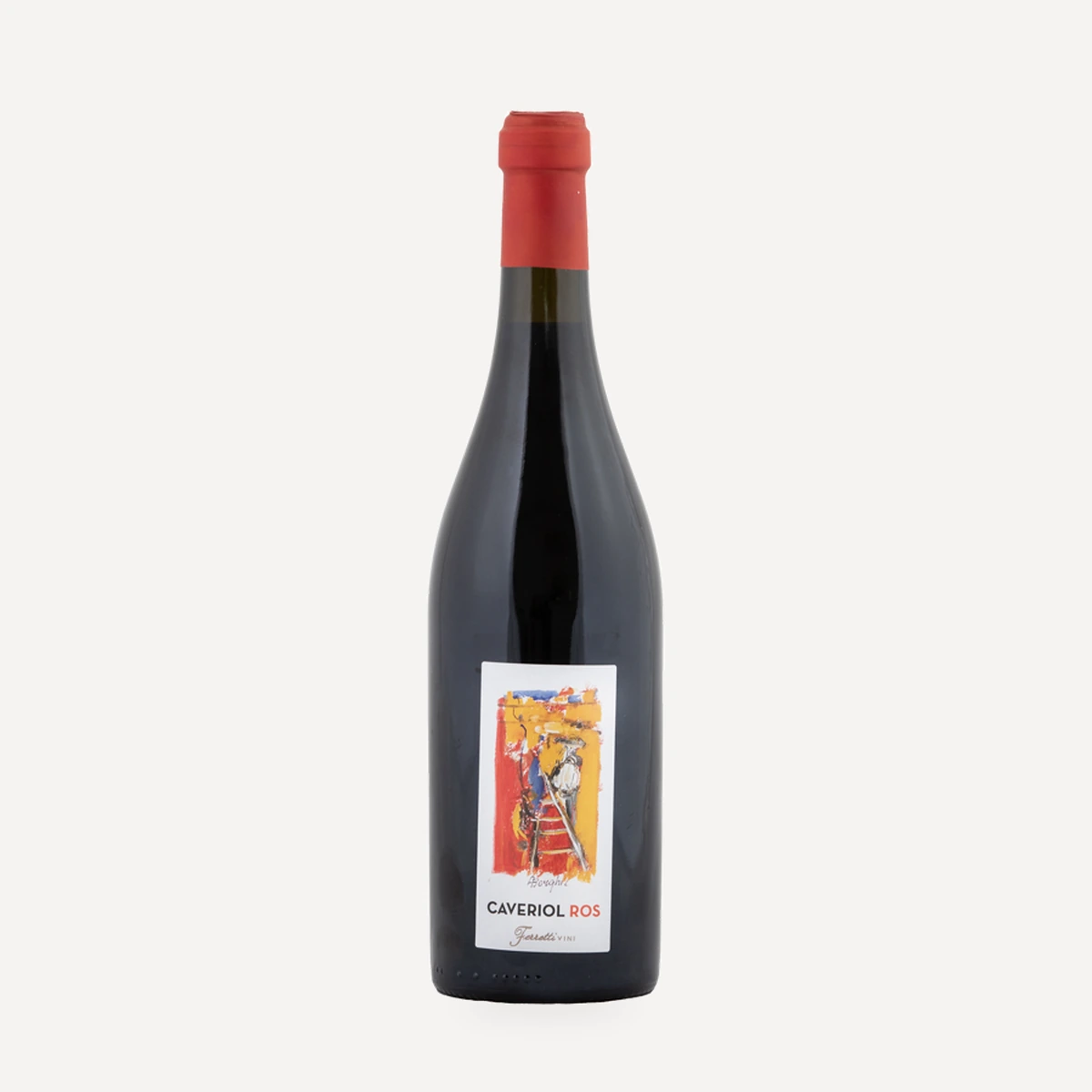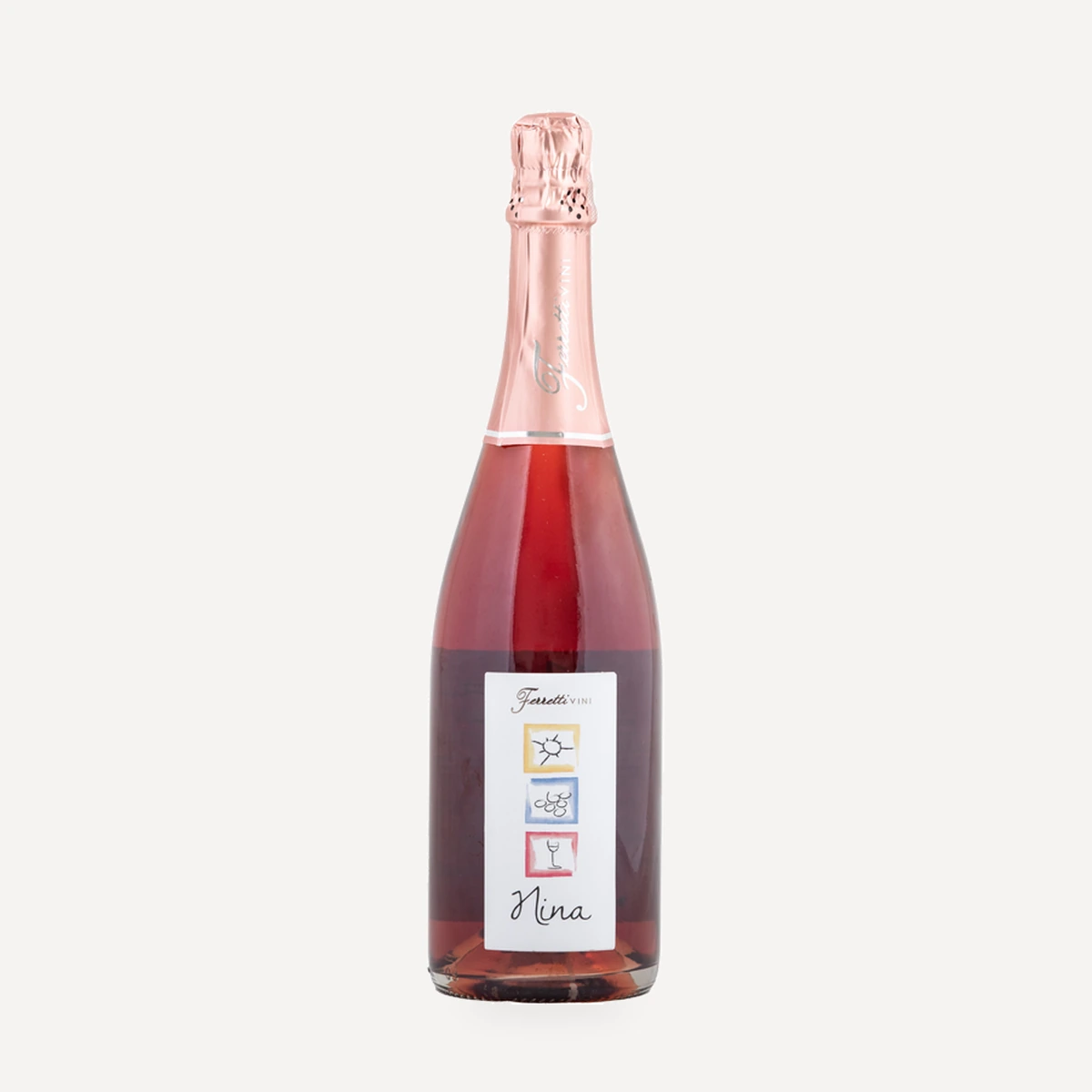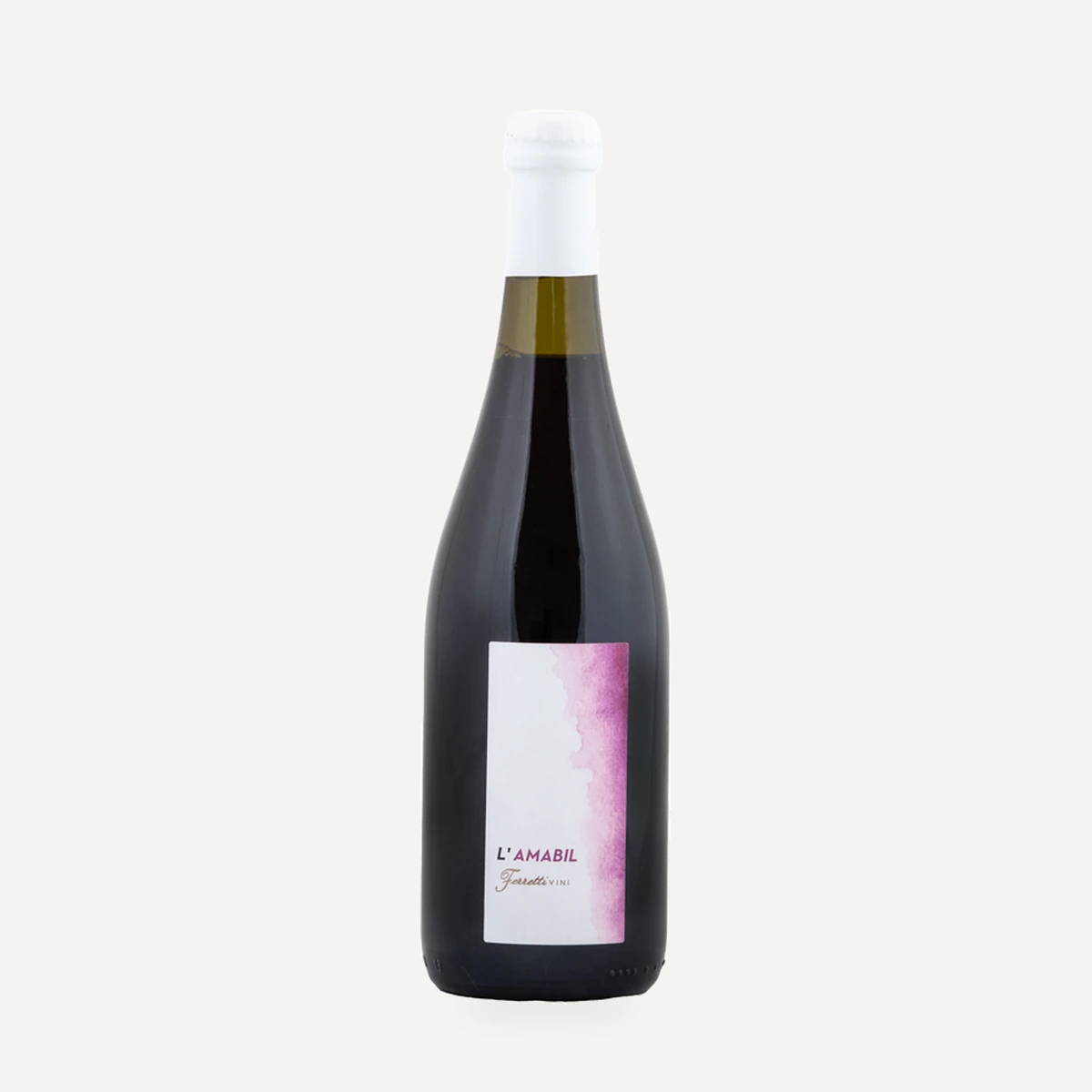
Questo vino
Grapes
A blend of 80% Lambrusco Grasparossa, 10% other Lambrusco varieties and 10% Ancellotta. The vines were planted in 2012.
Vinification
This semi-dry sparkling red undergoes approximately 36 hours of skin maceration. Fermentation is spontaneous, driven by indigenous yeasts without temperature control. Only low doses of sulfites are added, and the wine is not clarified.
Ageing
At least six months on the lees.
Technical data
Lambrusco dell’Emilia IGP. Alcohol: 11.5% vol. Production is approximately 900 bottles.
Tasting profile
Garnet red with abundant, persistent foam. The focused, elegant nose offers rose and small red berries. The palate is full, with a gentle sweetness that remains restrained; a bitter counterpoint and a finish tending toward dryness bring balance. Soft tannins cleanse and dry the palate.
Serving and pairing
Serve at approximately 10°C. Its delicate character suits convivial drinking and does not require a food pairing.
Vintage notes
Spring frost and an extremely dry summer caused severe losses and low yields in 2021. The resulting Lambrusco is bright red and scented with red fruit. It begins soft on the palate, then lively acidity and tannin extend the finish.
The balanced, productive 2020 season produced moderate grape sugar and balanced acidity. The similarly balanced 2019 season retained particularly fine acidity. Heavy spring rain and fungal disease caused very low yields in 2018. Late spring frost and summer drought reduced yields in 2017; uneven ripening produced reds with higher alcohol and less supporting acidity. The warm 2016 season retained balance through cool nights, with high grape sugar and balanced acidity.