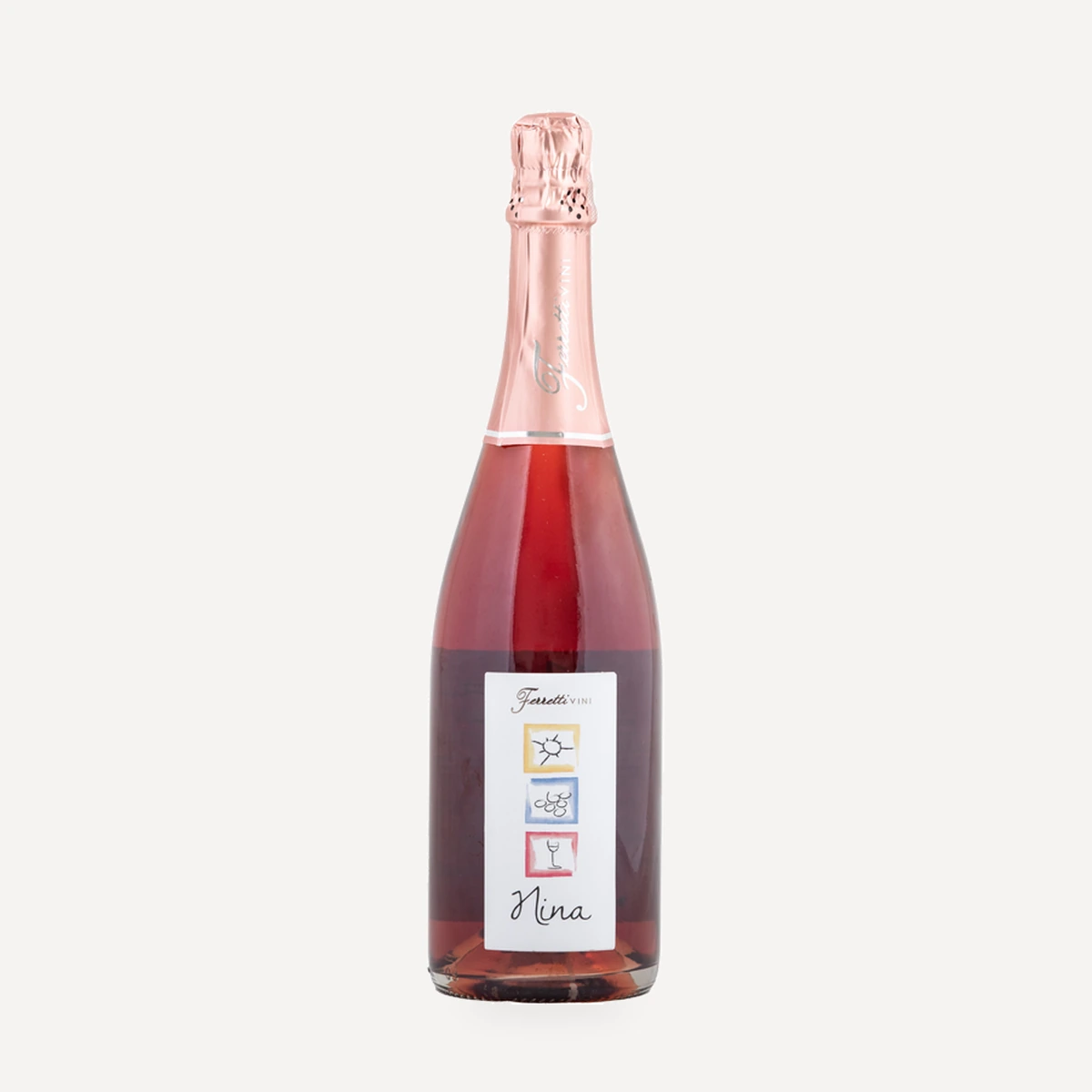
Questo vino
Vineyard and terroir
The vines were planted in 2011.
Grapes
100% Fortana.
Vinification
The grapes undergo approximately eight hours of skin maceration. Fermentation is spontaneous, driven by indigenous yeasts at uncontrolled temperature. Only low doses of sulphites are added, and the wine is not clarified.
Ageing
At least six months on the lees.
Technical data
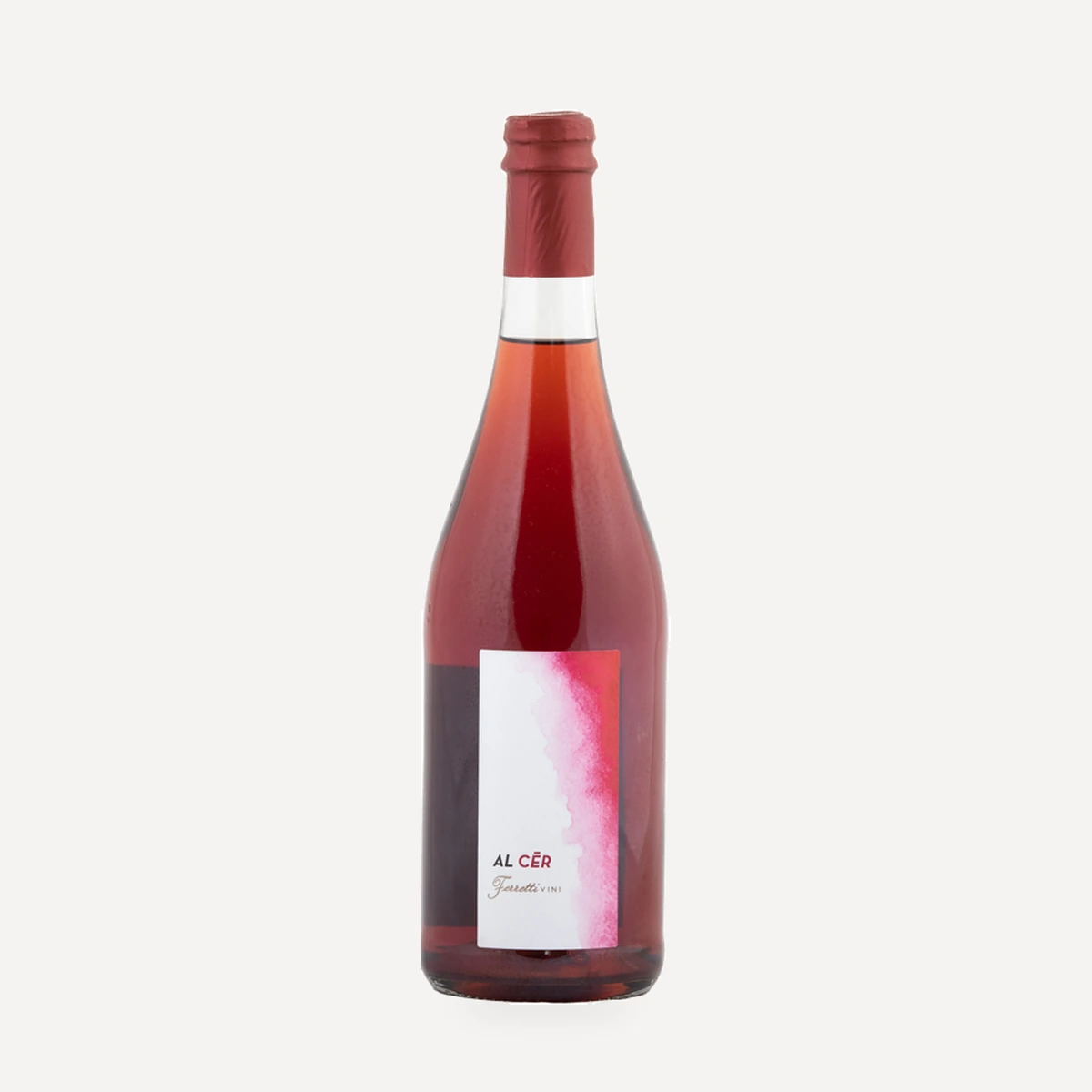
Traditional-method quality sparkling rosé. Alcohol: 12%. Production: approximately 1,000 bottles.
Tasting profile
Bright, deep pink with reddish reflections and fine bubbles. Ripe strawberry, woodland berries and blueberry mingle with rose, developing bread-crust nuances with time. The palate is fresh, fruity and persistent; evolution brings elegant toasted notes and a bitter almond accent supported by alcohol and tannin.
Serving and pairing
Serve at approximately 10°C. Suitable as an aperitif, with cured meats and gnocco fritto, or with more assertive foods such as blue cheese and marinated eel.
Vintage notes
The balanced and productive 2019 season yielded grapes with moderate sugar and notably strong acidity. Its wine is deep pink with fine, persistent foam, red-fruit aromas, a soft initial impression, freshness, savouriness and a persistent palate. Heavy spring rain and fungal disease caused very low yields in 2018. That vintage developed from red-fruit aromas towards bread crust and slight oxidative nuances during extended ageing; even after 40 months, acidity and savouriness sustained its structure and persistence. Late spring frost and summer drought reduced the 2017 crop, while uneven ripening led to relatively high alcohol and less-supported acidity, particularly in red wines. Warm conditions and cool nights in 2016 produced high sugar and balanced acidity.