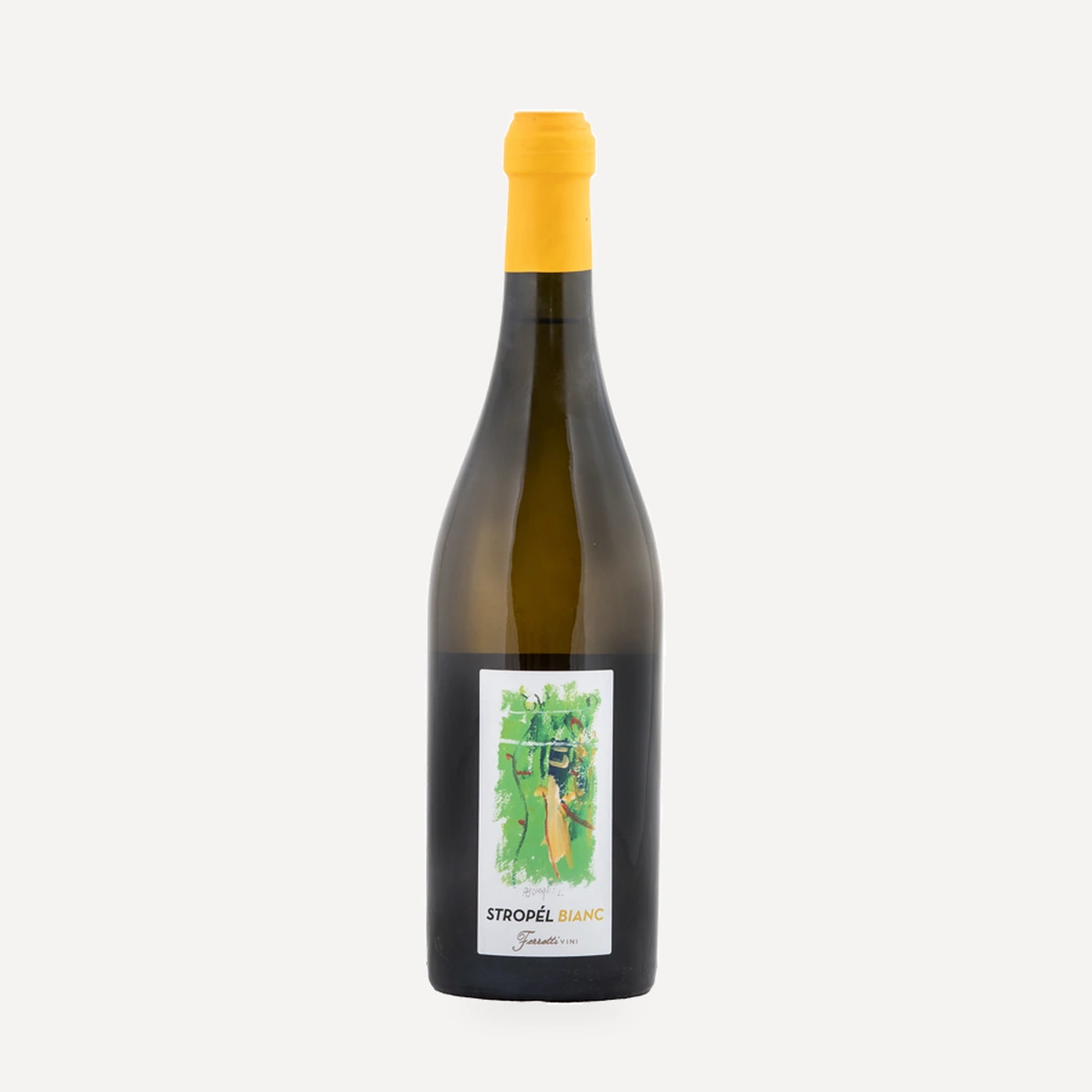
Questo vino
Vineyard and terroir
The vines were planted in 2014.
Grapes
A blend of 25% Malvasia Aromatica, 25% Malvasia Bianca, 20% Trebbiano, 20% Moscato Bianco and 10% Pignoletto.
Vinification
Fermentation is spontaneous, driven by indigenous yeasts at uncontrolled temperature. Low doses of sulphites are added, and the wine is not clarified.
Ageing
At least six months on the lees.
Technical data
Bianco dell’Emilia IGP. Dry sparkling white. Alcohol: 11.5%. Production: approximately 2,000 bottles.
Tasting profile
Straw yellow, with an abundant mousse and fine, persistent bubbles. Malvasia and Moscato shape the aromatic profile, combining floral and fruity notes of peach and pear with acacia honey and grapefruit; these aromas gradually develop towards yeast. The palate is dry and full, with freshness, a light savoury edge and a persistent, pleasantly bitter finish.
Serving and pairing
Serve at 8–10°C. Suitable as an aperitif and with fish, cured meats or white meats; it can also accompany simple cakes and fruit tarts.
Vintage notes
Spring frost and a very dry summer caused severe losses and low yields in 2021. The wine is straw yellow with fine foam, floral and fruity aromas, lively acidity, savouriness and good persistence. The balanced, productive 2020 season produced moderate sugar and balanced acidity. The similarly balanced and productive 2019 season combined moderate sugar with notably strong acidity. Heavy spring rain and fungal disease caused very low yields in 2018. Late spring frost and summer drought reduced the 2017 crop, while uneven ripening led to higher alcohol and less-supported acidity, particularly in red grapes. Warm conditions and cool nights in 2016 produced grapes with high sugar and balanced acidity.