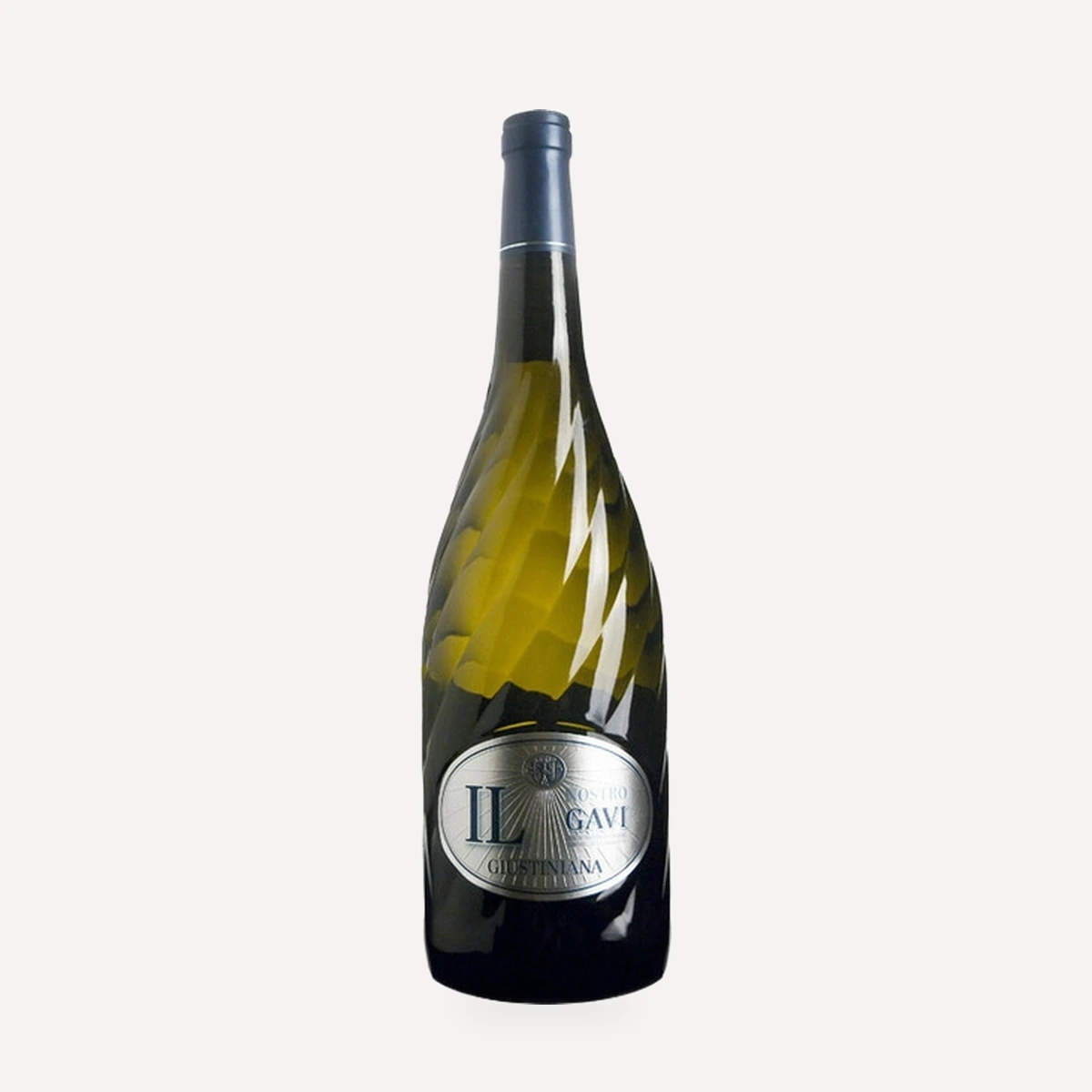
Storia
Origins in the 13th century
La Giustiniana traces its story to the 13th century. The surviving estate brings that long agricultural history together in a complex comprising the villa, a smaller house, a farmhouse, a chapel and vineyards. These elements are presented as part of the historical development of Gavi itself.
The agricultural villa
The estate developed around a neoclassical villa positioned on top of a hill in the Alto Monferrato. From this elevated site, the villa overlooks the surrounding Cortese vineyards and the rolling landscape influenced by mild winds from Liguria.
A new phase from 2016
In 2016, winegrowers and winemakers Magda Pedrini and Stefano Massone assumed responsibility for the historic La Giustiniana brand. Their work combines experience with research, planning and innovation. The estate now comprises 40 hectares of Cortese vineyards devoted to Gavi DOCG del Comune di Gavi.
Terroir
Tenuta La Giustiniana lies at Rovereto di Gavi in Piemonte’s Alto Monferrato, a landscape of rolling, fertile hills influenced by mild winds arriving from nearby Liguria. The neoclassical villa occupies the top of one of these hills and overlooks the surrounding vineyards.
All vineyards have a southerly exposure. Their elevations range from 300 to 500 metres, and the estate gives its latitude as 44°41′.
Two contrasting soil profiles are associated with the estate’s Cortese vineyards. The Lugarara source area has Pliocene grey marls with loose sandy material. The Montessora source area is characterized as red soil, formed by alluvial gravels alternating with iron-rich clays. These vineyards lie within Rovereto di Gavi and supply Gavi DOCG del Comune di Gavi.
Vinificazione
Viticulture is directed toward achieving full and even grape maturity, reflecting the principle that wine quality begins in the vineyard. The estate has experimented with new training approaches while combining longstanding Piedmontese agricultural practices with modern planting materials and technologies that support the mechanization of vineyard work.
All vineyard sites face south and stand between 300 and 500 metres above sea level. Cortese is trained to Guyot in the source vineyards described for Lugarara and Montessora, at a density of 4,000 vines per hectare. Harvesting combines manual and mechanical work and occurs in the first week of September. The average reported yield is 9 tonnes per hectare for Lugarara’s source vineyards and 7.5 tonnes per hectare for Montessora’s source vineyards.
Production brings established local techniques together with modern, state-of-the-art machinery. The operational emphasis remains on preserving the quality and maturity achieved in the vineyard, with human work, technological development and respect for the surrounding territory treated as complementary elements.
Filosofia
La Giustiniana’s philosophy connects labour, modernity and history. Human work and respect for the territory and its past are placed alongside research, innovation, modern planting materials and state-of-the-art equipment.
Tradition is treated as a working foundation rather than an alternative to technology. Longstanding Piedmontese agricultural knowledge is combined with experimentation and mechanization, with the principal objective of obtaining the best possible grape maturity. The central quality principle is that wine must first be made in the vineyard.
Environmental respect forms part of the estate’s forward-looking approach, while continuity with the agricultural knowledge of the past remains a stated priority.
Vini
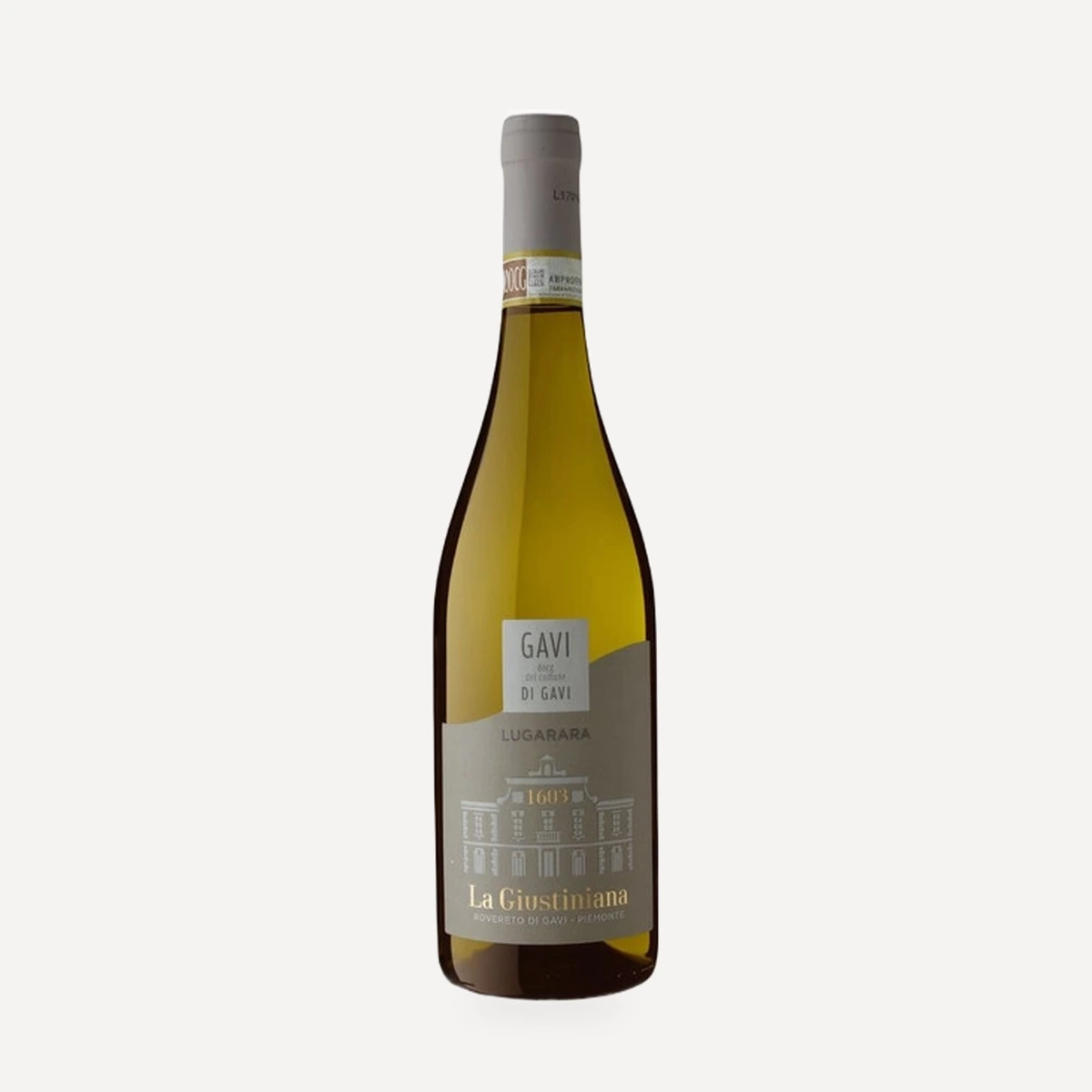
Gavi del Comune di Gavi Lugarara DOCG
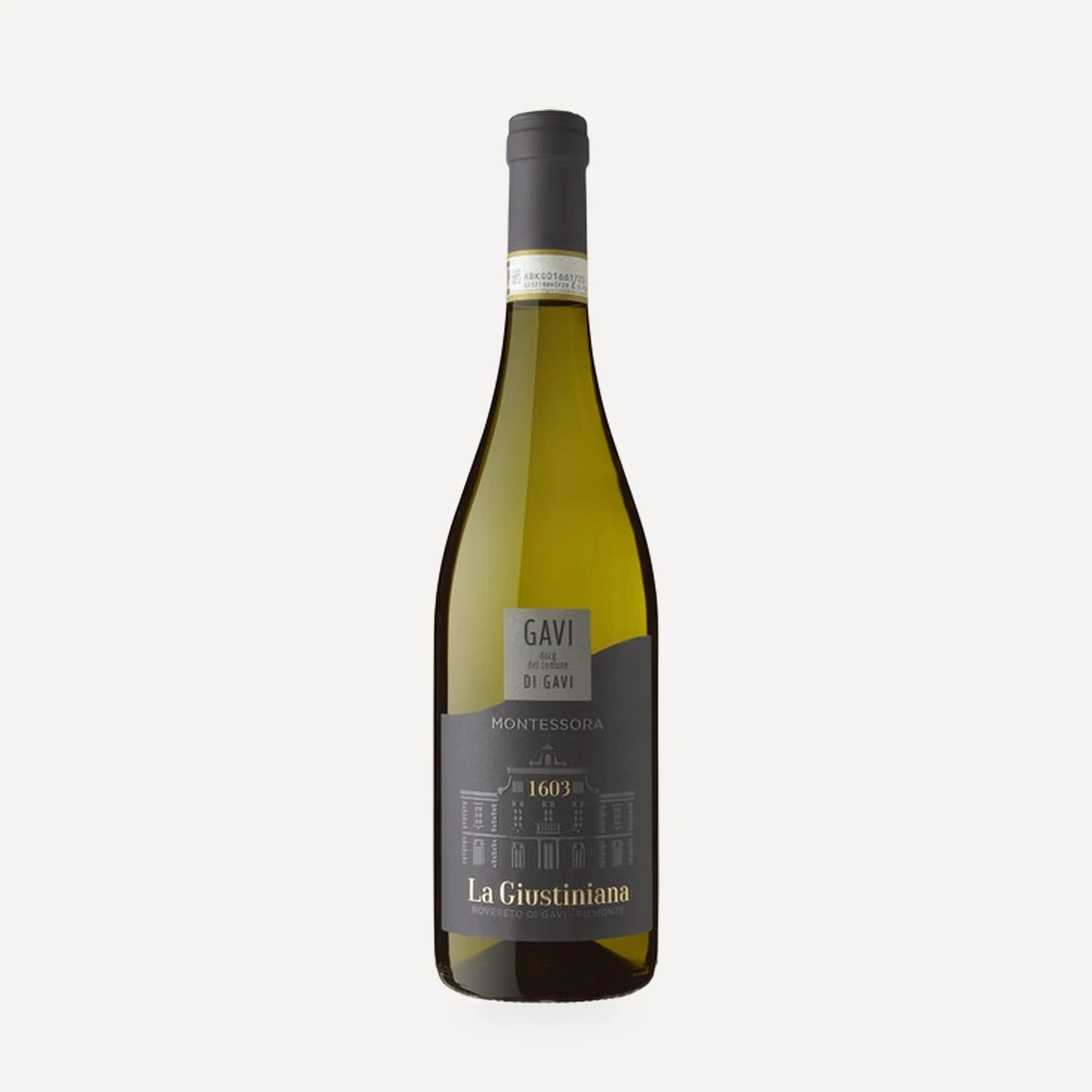
Gavi del Comune di Gavi Montessora DOCG
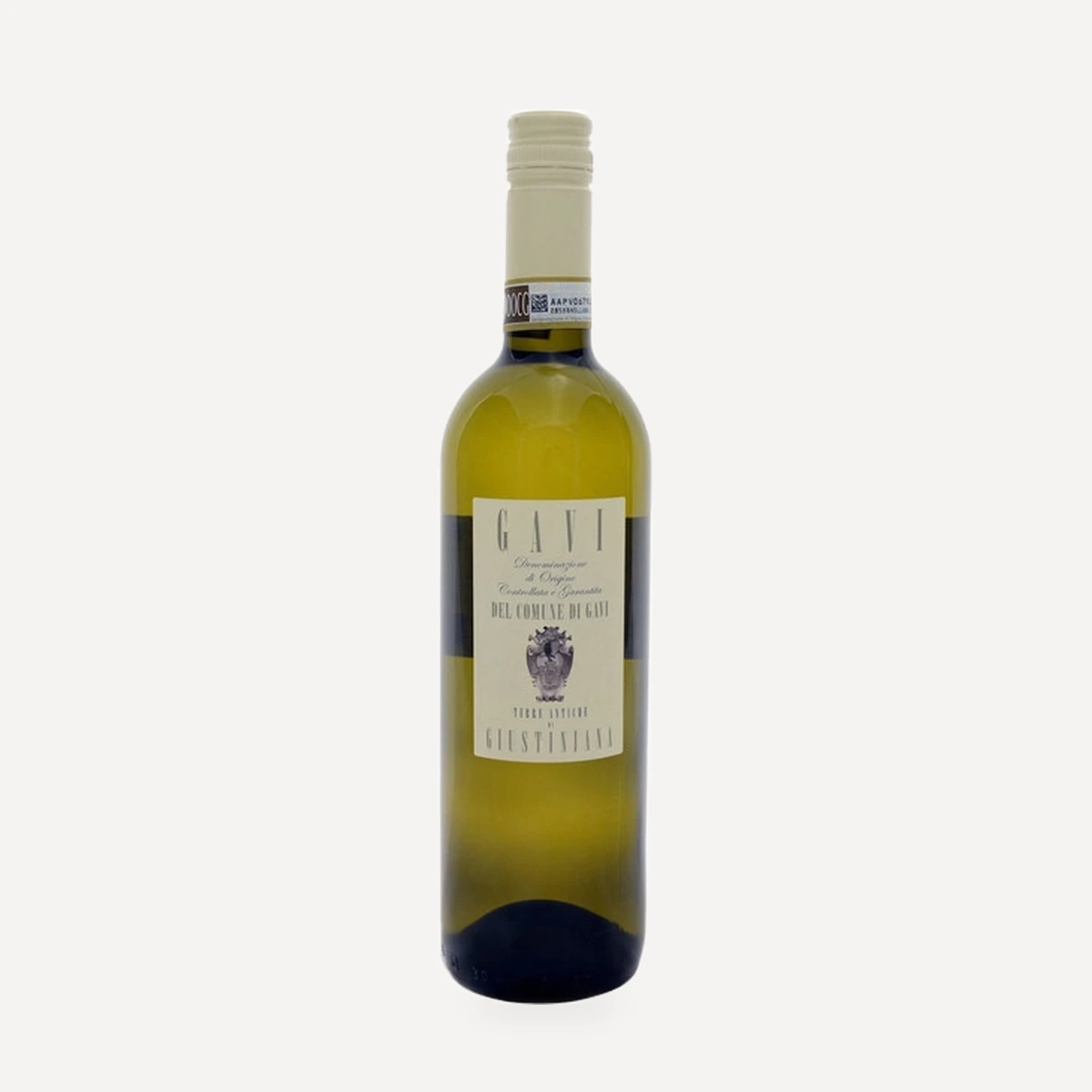
Terre Antiche di Giustiniana Gavi di Gavi DOCG