Storia
Foundation and heritage
La Marca was founded in 1968. Its identity is rooted in Treviso and the wider Veneto region, and its wines represent a cooperative community of 5,000 local growers. The name refers to the historic Marca Trevigiana, the northeastern Italian territory centered on Treviso and associated with a long tradition of Prosecco production.
Expansion of the Prosecco range
La Marca developed a portfolio spanning Prosecco D.O.C. and Conegliano Valdobbiadene Prosecco Superiore D.O.C.G. Its flagship expression was joined by a rosé, a sweeter Demi Sec, and a premium D.O.C.G. bottling now presented as Icon. The range has subsequently expanded to include a carbonated, dealcoholized sparkling beverage containing less than 0.5% alcohol by volume.
2020: Prosecco Rosé
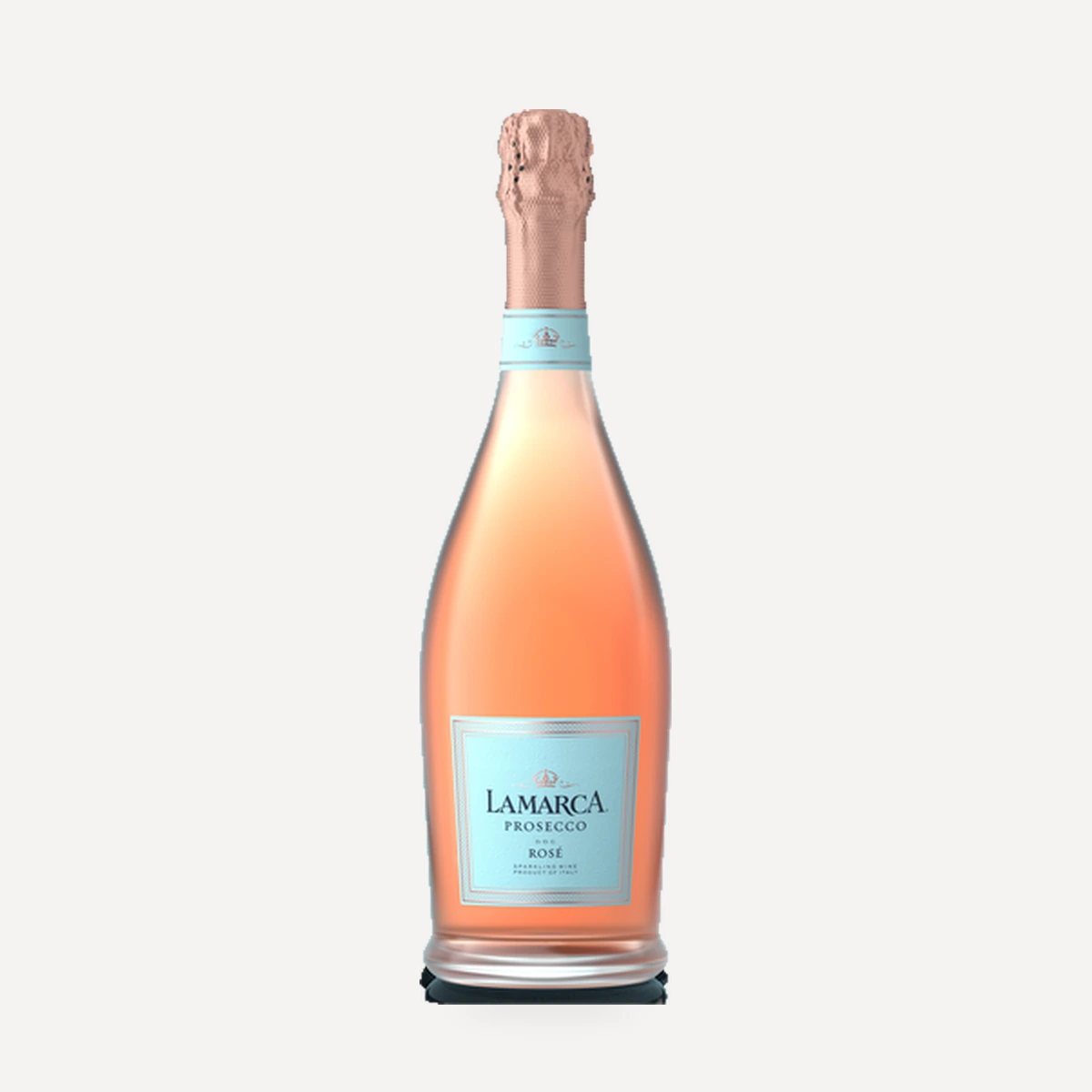
La Marca Prosecco Rosé was released in 2020 after the Consortium for the Protection of Prosecco D.O.C. completed research into the new category. The resulting model combined Glera with 10–15% Pinot Noir, adding the structure and red-fruit character of Pinot Noir to Glera’s lighter floral profile.
Icon and Conegliano Valdobbiadene
The premium D.O.C.G. expression was previously presented as Luminore Prosecco Superiore and is now identified in the current portfolio as Icon. It comes from the steep, terraced Conegliano Valdobbiadene hills, recognized by UNESCO as a World Heritage Site in 2019. Grapes for this wine are harvested by hand.
Terroir
La Marca is based in Treviso in Veneto, northeastern Italy, approximately one hour from Venice. The surrounding wine country lies between views toward the Adriatic Sea and the Dolomite mountains. Its landscape includes green, gently rolling and hillside vineyards receiving plentiful rainfall and sunshine.
The cooperative’s vineyards extend through Treviso’s hills along the Piave River. The area has a moderate climate and well-drained clay and chalk soils. These conditions support fruit with fresh flavors and high acidity.
The Conegliano Valdobbiadene zone used for Icon lies north of Treviso in the foothills of the Dolomites. Its vineyards occupy steep, terraced slopes rather than the valley floor. The terrain entails lower yields and hand harvesting and is associated with greater fruit concentration and aromatic complexity. The hills have a distinctive cultivated landscape shaped by centuries of viticulture and were recognized by UNESCO in 2019.
Vinificazione
La Marca’s wines represent 5,000 local growers working with Glera and Pinot Noir across Treviso. Grapes for the flagship Prosecco are selected from small vineyards throughout the Prosecco D.O.C. area.
In Conegliano Valdobbiadene, steep and terraced terrain makes mechanical harvesting impractical; grapes for Icon are picked by hand. D.O.C.G. production is also subject to vineyard-location assessment and stricter harvest-yield limits. For Prosecco Rosé, the cooperative supplies both Glera and Pinot Noir from hillside vineyards in the Treviso area.
Metodo Italiano
La Marca produces its sparkling wines through the Metodo Italiano, also identified as the Charmat method. The wines first undergo primary fermentation as still wines. A second fermentation in large tanks creates the bubbles while retaining the fresh, fruit-forward aromas of Glera.
Flagship Prosecco
Grapes are selected from small vineyards throughout the Prosecco D.O.C. area. After harvest they are crushed and pressed in gentle membrane presses. The juice is cold-settled before primary fermentation in upright stainless-steel tanks at no more than approximately 18.3°C. The resulting still wine rests on its lees before secondary fermentation.
Prosecco Rosé
Glera and Pinot Noir are vinified separately. After harvest, the Glera is crushed and immediately pressed in gentle membrane presses; its juice is cold-settled and fermented in upright stainless-steel tanks. Pinot Noir ferments on its skins before gentle pressing. Following the individual fermentations, the two components are assembled to form the rosé base wine. Secondary fermentation lasts at least 60 days to build structure and complexity. The category model uses 10–15% Pinot Noir with Glera.
Non-Alcoholic Sparkling
The non-alcoholic expression is produced in Italy from Italian grapes as a carbonated, dealcoholized wine containing less than 0.5% alcohol by volume.
Filosofia
La Marca presents itself as an ambassador for Prosecco, Veneto, and an accessible expression of Italian hospitality. Its identity joins the work of 5,000 local growers with a focus on the land and the character of Glera.
The winemaking objective is a bright, fruit-forward sparkling style: Metodo Italiano is used to retain Glera’s freshness and aromatic expression, producing lively bubbles, crisp structure, and a delicate floral character. Across the range, the brand positions Prosecco as part of both everyday gatherings and major celebrations, emphasizing approachability rather than formality.
Vini
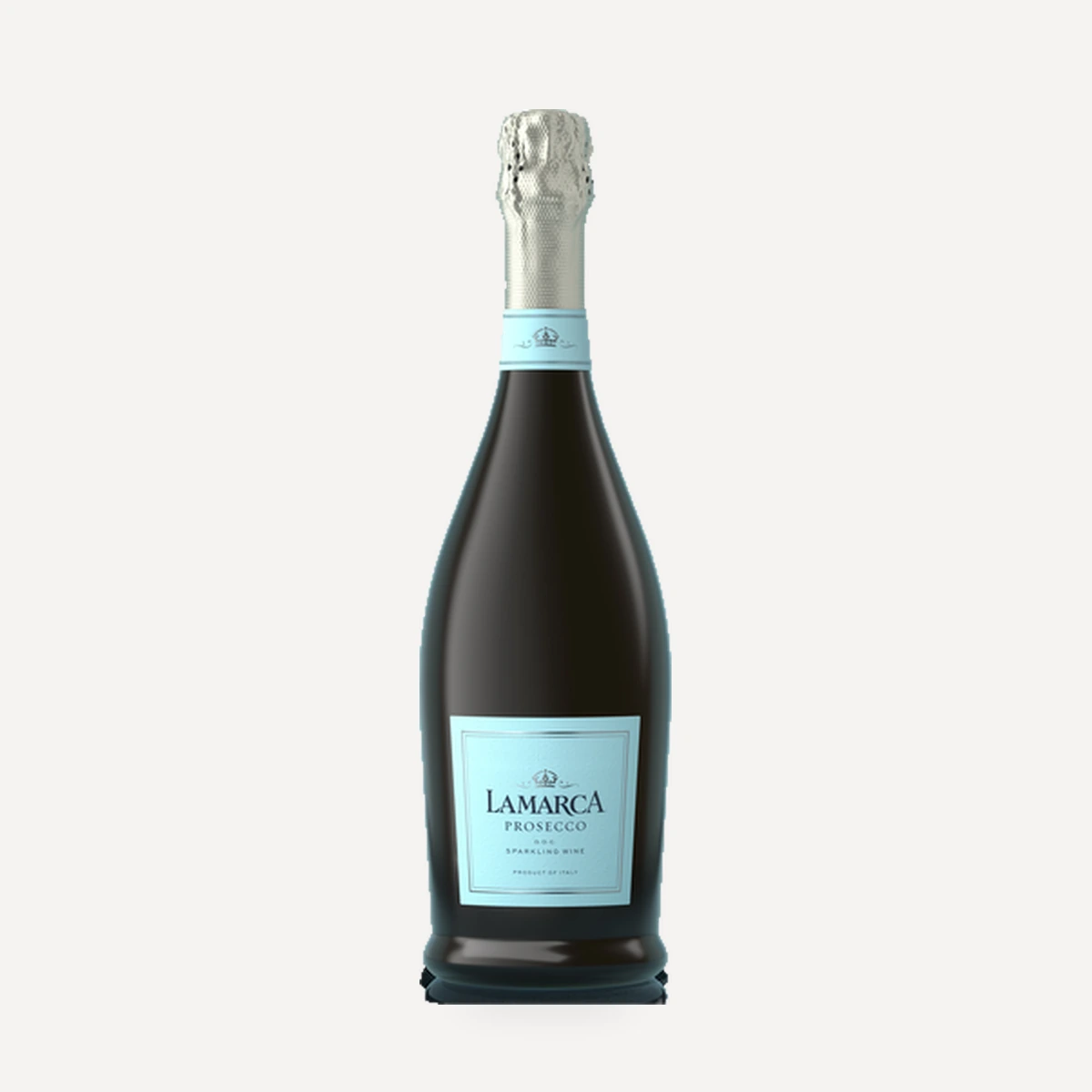
La Marca Prosecco D.O.C.
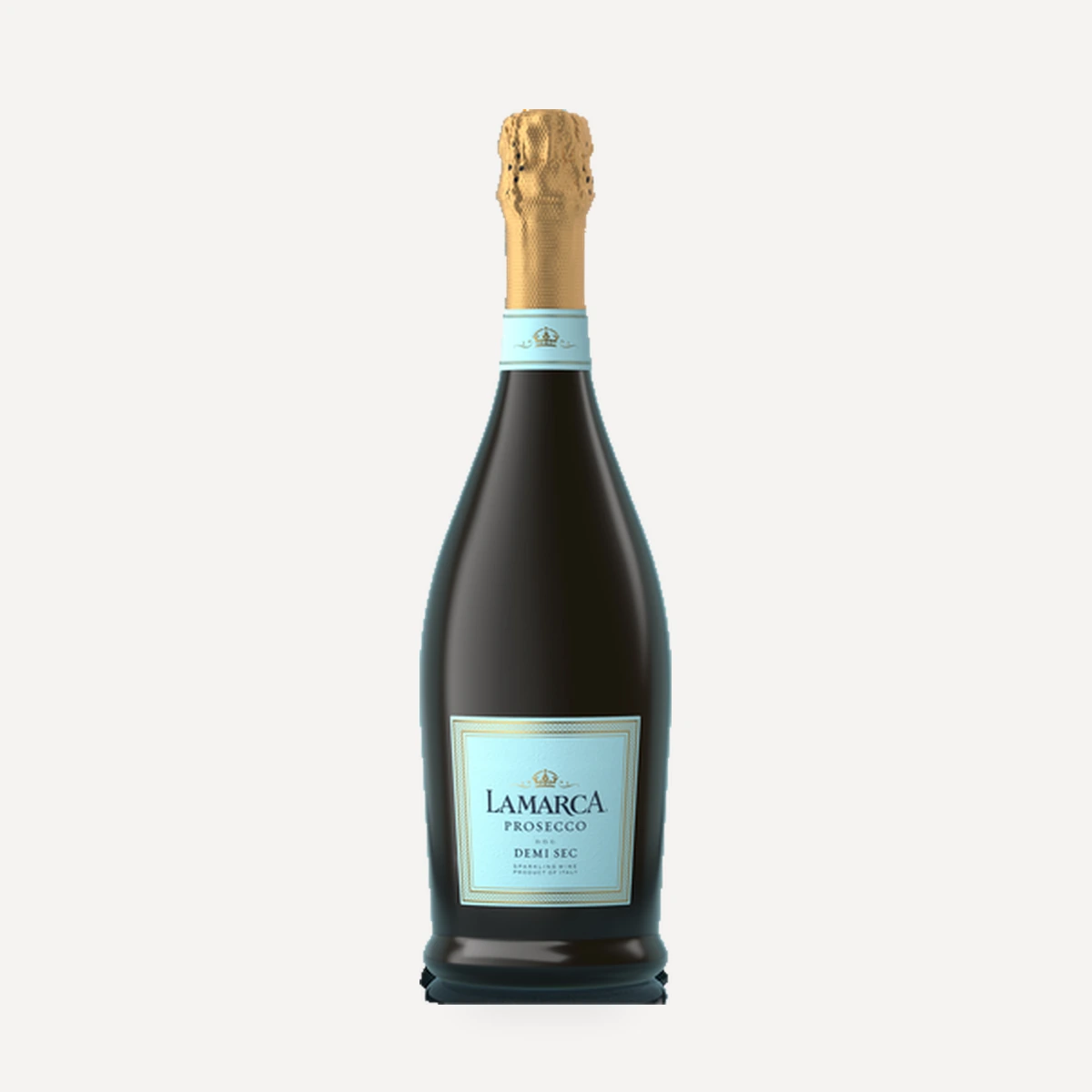
La Marca Prosecco Demi Sec D.O.C.