Storia
Path into wine
Paolo Morandini was born in the Monti Lessini. A combination of circumstances and personal determination led him into the wine sector, where he learned production techniques and developed an approach centred on sustainability.
2019: first vintage
In 2019, Morandini decided to place his own identity behind the project and produced La Venta’s first vintage from the small amount of land available to him in Valpolicella. From the outset, he adopted a sustainable approach in both vineyard and cellar, with the aim of making artisanal wines that retain their natural character.
A return to an earlier Valpolicella model
La Venta presents its methods as both traditional and unconventional. Although some choices may appear innovative in the contemporary market, Morandini regards them as a faithful expression of Valpolicella winegrowing before commercial influences and market rules reshaped local practice. Each wine is tied to an individual vineyard and is intended to reflect its place and vintage.
Terroir
La Venta works in Valpolicella, with two named vineyard locations in the hills of Marano di Valpolicella. Both lie at 360 metres above sea level but differ in orientation: Ziviana faces south, while Tenda has a south-eastern exposure.
The vineyards are treated as distinct expressions of place and vintage. Tenda is an older site planted in 1998 and trained to pergola trentina; Ziviana was planted in 2017 and is trained to pergola veronese.
Vinificazione
Paolo Morandini follows organic methods in the vineyard and has completely renounced chemical or synthetic products. Plant protection is limited to copper and sulfur.
The absence of pesticides and herbicides is supported by labour-intensive canopy and crop management. Green pruning, leaf removal and cluster thinning are among the measures used to maintain vine and fruit health. At Tenda, thinning is carried out in August and the resulting yield is 60 quintals per hectare, or 6,000 kg/ha.
Harvesting is manual. Fruit from both named sites is picked around the middle of October into 15 kg crates. The overall objective is to preserve the individual character of each vineyard and allow the growing season to remain legible in the finished wine.
La Venta follows an artisanal, low-intervention cellar approach. Fermentations are spontaneous, with the current wines fermented in either stainless steel or cement according to the cuvée. The wines are neither filtered nor fined.
Added sulfites are kept to a minimum. The technical information for both current wines gives total sulfur dioxide at approximately 30 mg/L. This restrained handling is intended to preserve the natural character of the fruit and the identity of the individual vineyard and vintage.
Filosofia
La Venta’s philosophy joins organic vineyard work with restrained cellar intervention. Paolo Morandini regards organic agriculture as fundamental to producing wines that retain authenticity and natural character. His environmental approach excludes chemical and synthetic treatments and relies on copper, sulfur and detailed manual work in the canopy.
In the cellar, the same principle is expressed through spontaneous fermentation, the absence of filtration and fining, and minimal sulfite additions. The intention is to preserve rather than reshape the fruit’s characteristics.
Morandini describes this method as simultaneously revolutionary and traditional. Choices that may appear unconventional in a modern commercial setting are presented as a return to the way Valpolicella was made before market rules and external influences became dominant. Each wine is devoted to one vineyard so that site and vintage remain central to its identity.
Vini
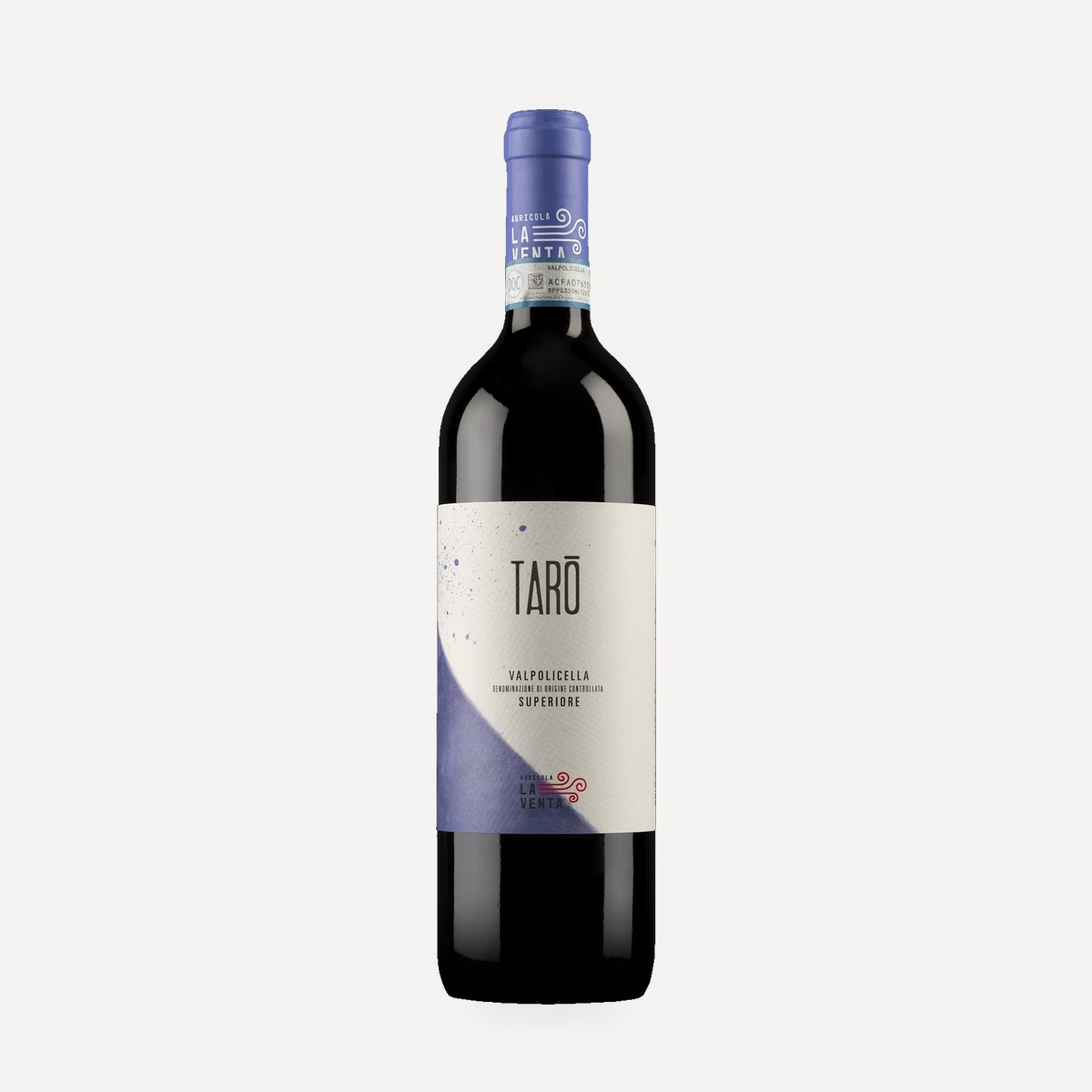
Tarō