Storia
Family roots in Brognoligo
The Dal Bosco family has longstanding roots in Brognoligo. Genealogical research conducted by Prof. Massimiliano Bertolazzi traces the family’s presence in the village back to 1644.
Late nineteenth-century vine material
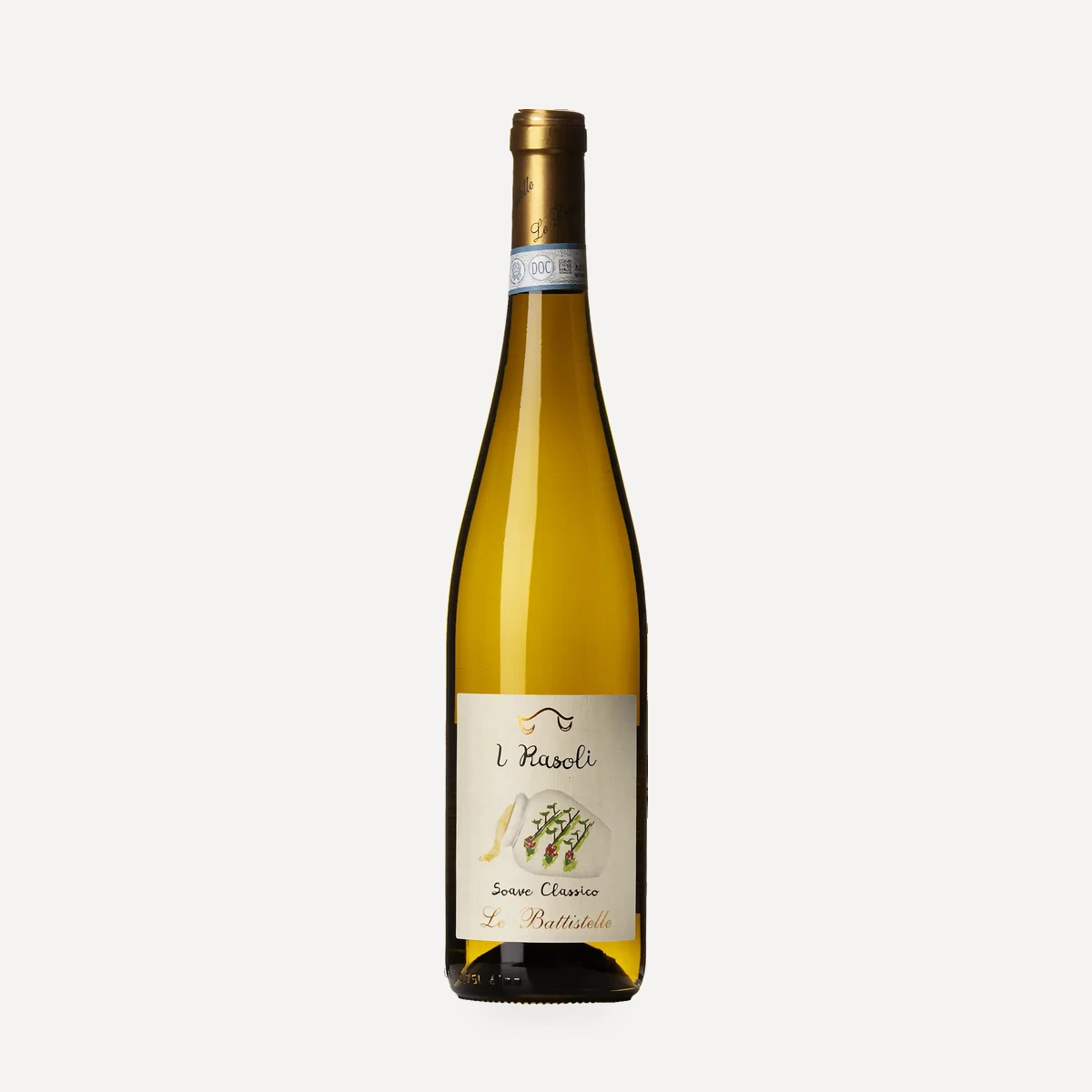
Research into century-old vines in the family’s historic vineyards identified plant material associated with an old French clone that is no longer obtainable. It was probably introduced in the late nineteenth century as an early response to phylloxera. This discovery inspired the family to establish a very small own-rooted parcel using canes selected from the surviving old vines. The project became the basis of I Rasoli, conceived as both a preservation of local vine history and a new beginning for that material.
2002: estate vinification begins
Le Battistelle was created in 2002 by Gelmino Dal Bosco and his wife Cristina. Before then, the family delivered its grapes to a local cooperative. Establishing the estate marked the decision to vinify the family’s own Garganega and bottle wines under its own identity.
The name Le Battistelle comes from the Battistelle vineyard on Monte Castellaro. This was described as the estate’s largest contiguous holding when the vineyard area was still reported as 9 hectares. The present vineyard holding covers 14 hectares, divided among numerous small hillside plots in the Soave Classico zone.
The family today
Gelmino and Cristina remain central to the estate, which is now also worked by their children Andrea and Gloria. Together, the family divides its responsibilities among vineyard work, cellar operations and hospitality. Le Battistelle continues as a small, family-run agricultural estate based at Brognoligo.
Terroir
Soave Classico setting
Le Battistelle is based in Brognoligo, a hamlet of Monteforte d’Alpone in the province of Verona. Its vineyards lie within Soave Classico, the historic, entirely hilly part of the Soave denomination confined to hills in the communes of Monteforte d’Alpone and Soave.
The wider Soave territory covers approximately 6,700 hectares in 13 Veronese communes. It is divided into the approximately 1,700-hectare historic Classico zone and two broader sectors of roughly 2,400 hectares each: Colli Scaligeri and the wider Soave DOC area. Within this landscape, delimited Unità Geografiche Aggiuntive identify places with distinct environmental characteristics.
The estate works in several UGAs, including Brognoligo, Carbonare, Foscarino and Monte Grande. Vineyard locations also include the vicinity of Monte Castellaro, Le Battistelle, Valle delle Rugate, Tremenalto, Monte Grande and Monte Carbonare.
Landform and soils
The landscape is defined by rocky, steep hills and strongly fragmented vineyard holdings. Soils are predominantly volcanic. Individual sites include basaltic and tuffaceous formations, while some deeper volcanic soils also contain substantial clay and silt. The hills retain old pergolas and dry-stone retaining walls built from heavy local volcanic rock.
Brognoligo’s vineyards are relatively secluded and difficult to reach because they lie away from major transport and urban routes. The village has no artisan-industrial estate, and the surrounding viticultural landscape has remained comparatively intact and removed from industrial sources of environmental pollution.
Vine age and wine-growing implications
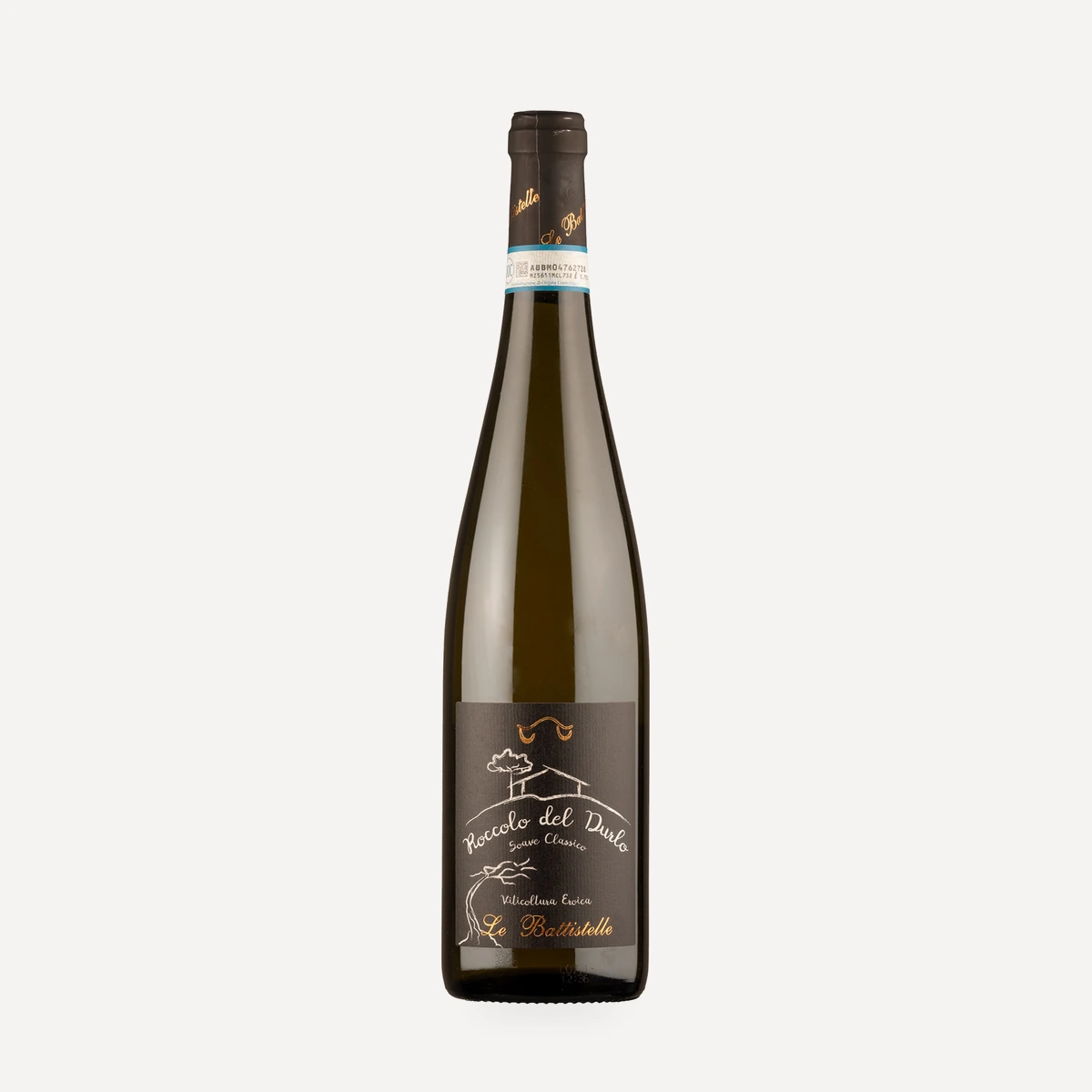
Plot fragmentation is particularly pronounced, and the vineyards are older on average than those in other parts of the denomination. Several vines in Roccolo del Durlo and the historic holdings are more than a century old. The combination of steep slopes, volcanic soils and old Garganega vines underpins the estate’s emphasis on structured, mineral wines capable of developing over time.
Vinificazione
Le Battistelle’s 14 hectares are divided into numerous small hillside vineyards. The steepest sites cannot be mechanized, including for pruning and harvesting, so cultivation depends on manual work. Old pergolas and dry-stone walls require continual maintenance, while the walls preserve terraces built from the area’s heavy volcanic rock.
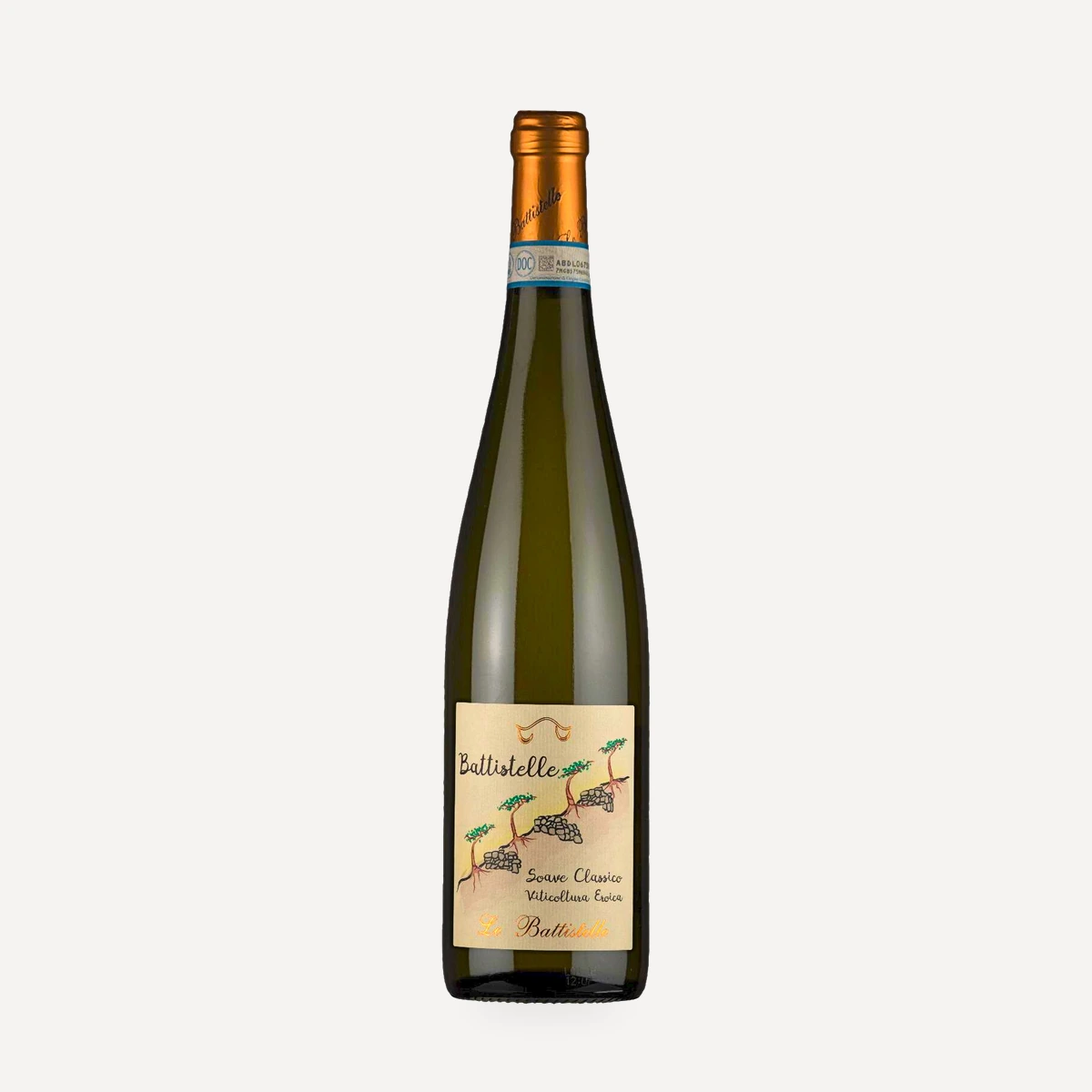
Battistelle and Roccolo del Durlo qualify for use of the “Viticoltura Eroica” logo granted by the CERVIM research centre. The designation recognizes the demands of cultivating their steep slopes, where manual labour and its associated costs are substantially higher. The estate connects this work with conserving the landscape and maintaining techniques developed through long experience.
The farming approach is based on integrated pest management. Agronomic and plant-protection measures are used only when considered necessary, with the aim of limiting phytosanitary products while protecting the vines and their surrounding environment.
Grapes are harvested by hand. Selection is particularly strict for I Rasoli and the late-picked fruit from Roccolo del Durlo, while fruit for the passito wines is selected from older vineyards and dried naturally after harvest. I Rasoli is also pressed manually with a traditional press.
The cellar works exclusively with Garganega and adapts vinification to the origin and intended style of each lot.
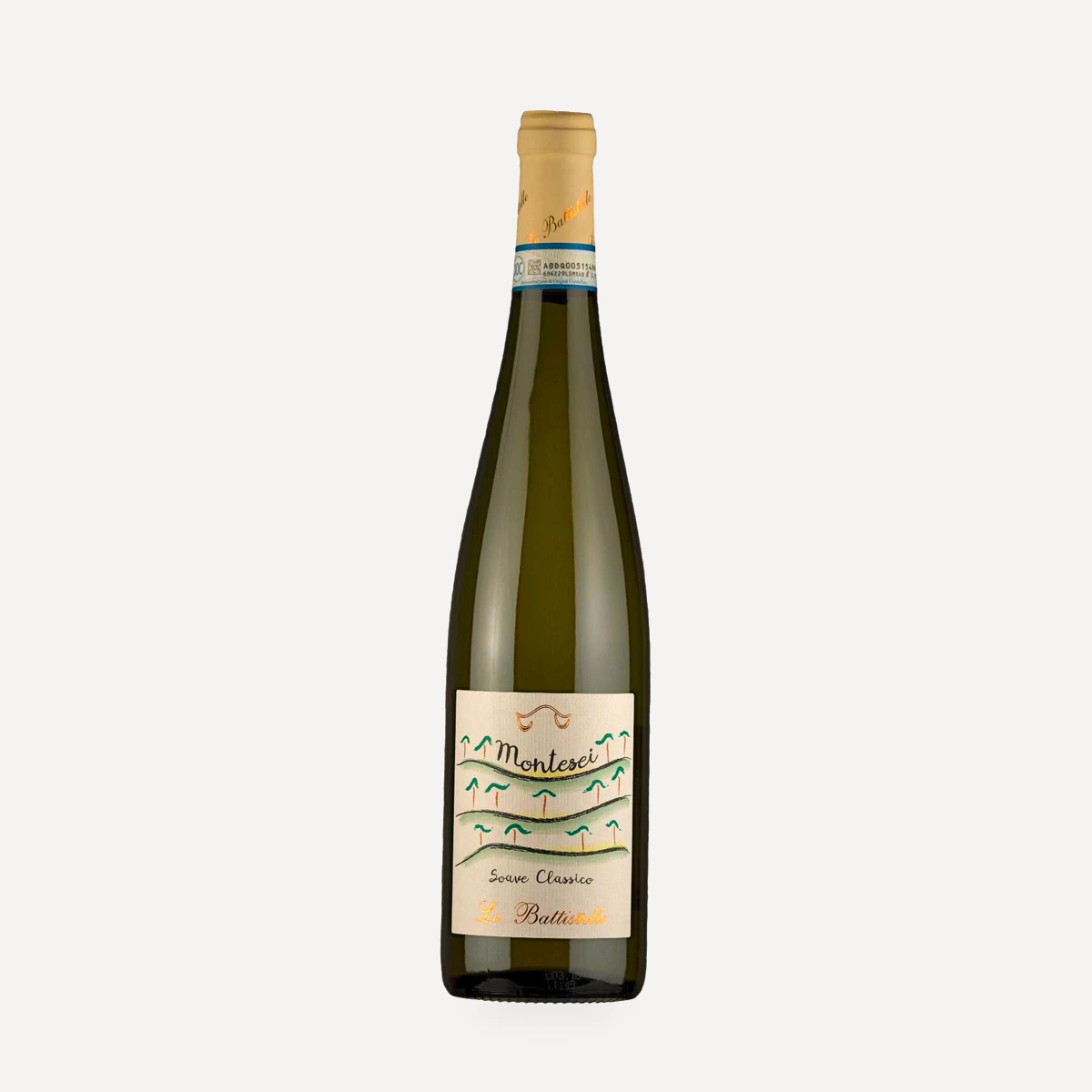
For the dry Soave wines, grapes are generally destemmed and gently pressed, followed by immediate chilling or cold clarification of the must. Fermentation takes place in temperature-controlled stainless steel. Montesei ferments for approximately 15 days and remains on its fine lees for four months before one month of bottle ageing. Battistelle ferments for about 20 days, then matures for six to eight months in stainless steel on fine lees with frequent bâtonnage.
Roccolo del Durlo is made from carefully selected, late-picked grapes. After destemming, the fruit undergoes approximately 48 hours of cold skin-contact maceration, followed by gentle pressing. Fermentation lasts about 25 days in temperature-controlled stainless steel, and the wine then remains in steel on fine lees for roughly eight months with regular bâtonnage.
I Rasoli is harvested and selected by hand and pressed manually with a traditional press. The must undergoes a cold stainless-steel fermentation of approximately 20 days before transfer to a lightly glazed terracotta amphora for maturation.
Settembrino is produced by immediate destemming, gentle pressing and cold settling of the must. The first temperature-controlled stainless-steel fermentation lasts about 15 days. A second fermentation then takes place in a pressurized tank for approximately 60 days according to the Metodo Italiano.
For Passito della Gloria, Garganega is harvested into boxes in early September and dried naturally in those boxes for three to four months. Pressing and fermentation take place in stainless steel, followed by approximately two years of steel maturation.
Sacripante follows the old Vin Santo di Brognoligo tradition. The best bunches are selected from the oldest vineyards and dried for three to four months. The grapes are pressed manually toward the end of the year, and the must settles naturally in the cold winter temperatures. Fermentation is spontaneous and initiated through a pied de cuve: a small portion of must is warmed and then used to start fermentation in the full lot. Maturation lasts no less than four years.
Filosofia
Le Battistelle is organized around family management, the preservation of Brognoligo’s vineyard landscape and an exclusive focus on Garganega. Its quality philosophy gives priority to traditional local vine material and to viticulture directed toward recognizable expressions of individual hillside origins.
Tradition is treated as a working practice rather than as a decorative reference: old pergolas and basalt dry-stone walls are maintained, steep vineyards remain under manual cultivation, and the knowledge required to work them is carried forward. The “heroic viticulture” approach links wine production with the conservation of the environment, the protection of the landscape and the continuation of techniques developed over generations.
The estate regards Garganega as a variety whose strength lies less in overt primary aroma than in its capacity to develop with time. This informs the use of extended fine-lees maturation, late harvesting for selected parcels and long ageing for traditional passito. Sustainability is expressed through restraint in vineyard interventions and integrated pest management, using available protective measures only when genuinely required.
Vini
Soave DOC Classico I Rasoli
Soave DOC Classico Battistelle
Soave DOC Classico Montesei