Storia
Three generations of winegrowers
Malibran’s history spans three generations of the Favrel family, each represented by a winegrower closely associated with work in the vineyards and cellar. Gregorio Favrel, remembered as “Gorio” and also known as “Gorio Maibran,” is portrayed as a philosopher of the land. The estate’s Gorio was dedicated to him and became the first Conegliano Valdobbiadene DOCG produced by Malibran.
The following generation is represented by Girolamo, known as “Momi,” whose defining contribution was his tireless work in the vineyard. Maurizio Favrel represents the third generation and is characterized by a careful, sensitive approach to the traditional col fondo style.
Sottoriva and the continuity of bottle refermentation
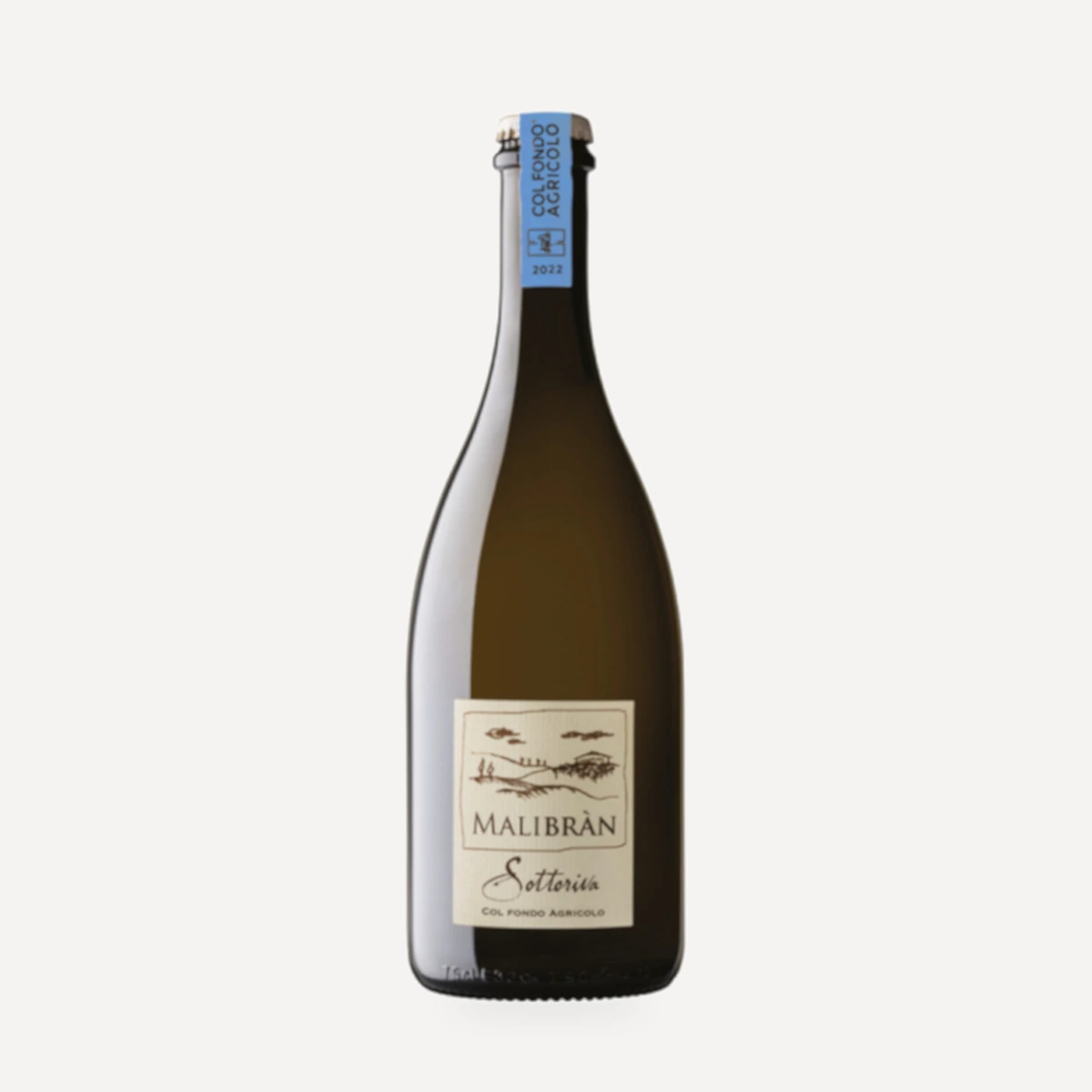
Malibran has produced Sottoriva for more than 50 years. The wine is presented as the label that most directly embodies the estate’s history and its long continuity with naturally refermented, undisgorged Glera from the Colli Trevigiani. Malibran also belongs to ColFondo Agricolo, an association of hillside winegrowers devoted to this form of bottle-refermented Glera.
The historic cellar and its renewal
The original cellar occupied an old granary at the center of agricultural life in the rural hamlet of Sottoriva. That building was subsequently renovated and enlarged to create the present center for vinification and wine production. Its design retains the relationship between the agricultural structure’s past and the requirements of a modern working cellar.
Recognition of the growing area and estate development
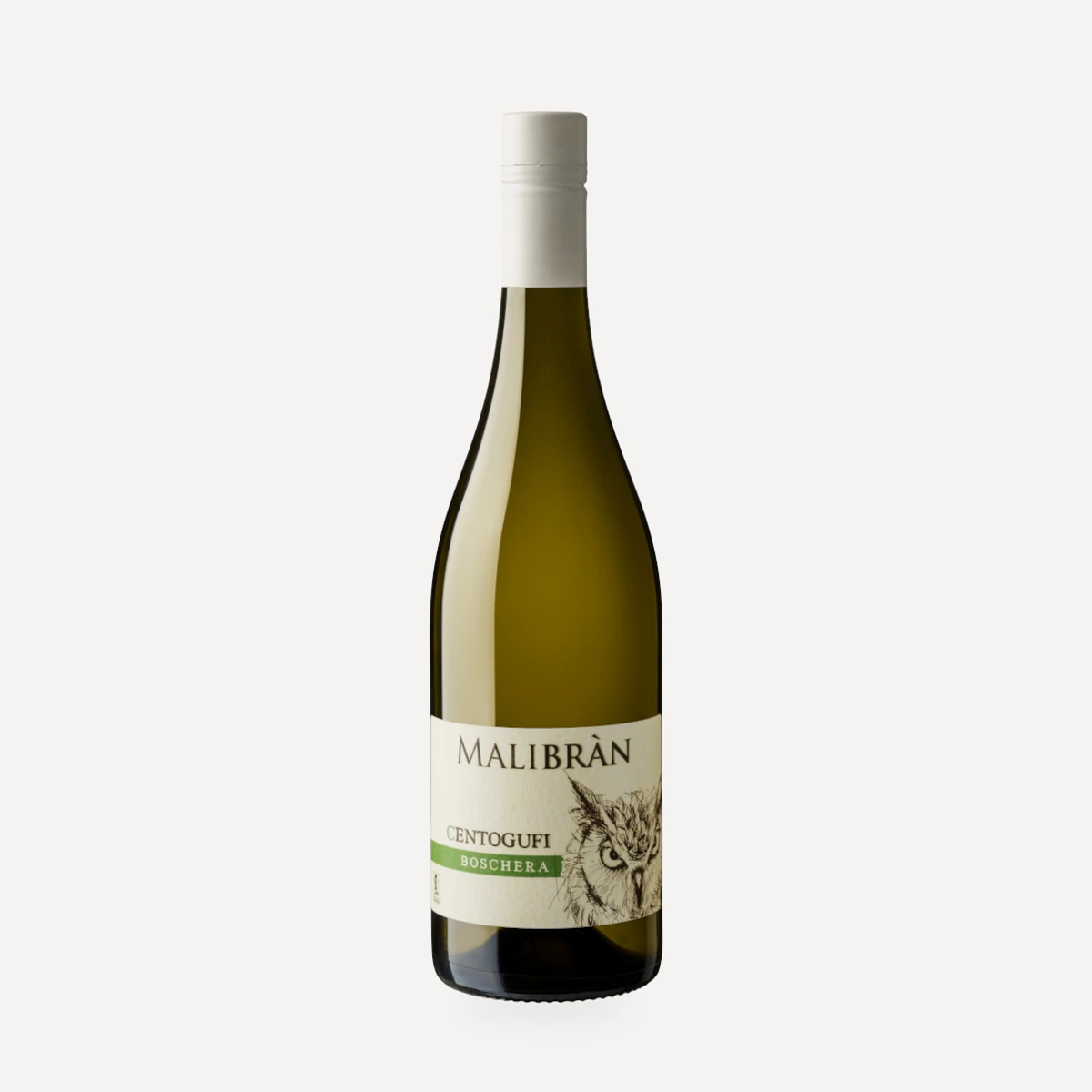
In 2009, the hilly belt between Conegliano and Valdobbiadene received DOCG recognition across its 15 constituent municipalities. Malibran’s vineyards lie within and around this Treviso landscape, with Glera as the principal variety and later plantings of Boschera, Incrocio Manzoni 13.0.25 and Raboso broadening the estate’s viticultural base.
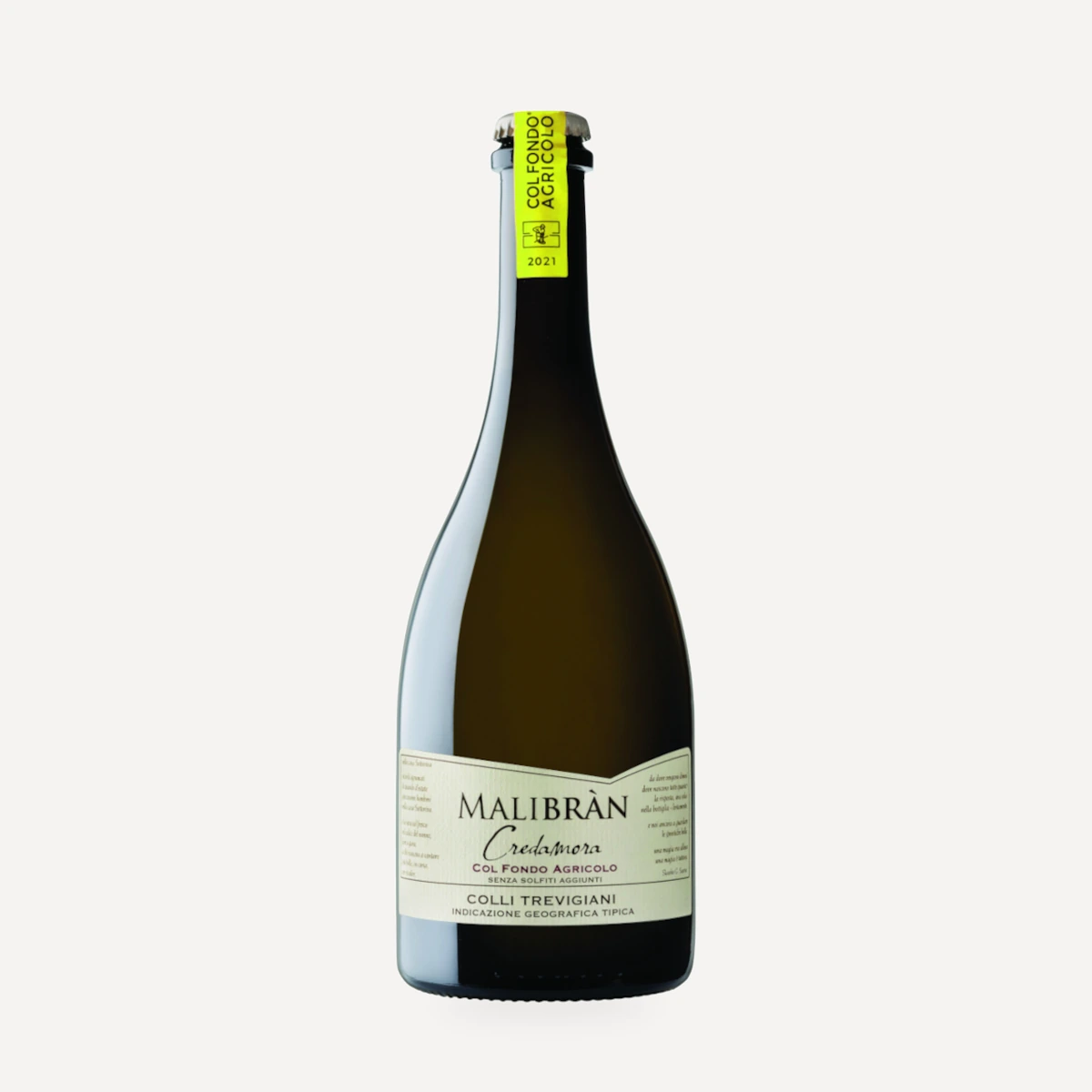
Credamora was first produced in the 2012 vintage from a north-facing vineyard. Its introduction added a second expression to Malibran’s long-established ColFondo Agricolo tradition.
Independent production and biodiversity
Across the third generation, Malibran has retained direct control of the production chain: the family tends its own grapes, transforms them in its cellar, bottles the wines and handles their sale. Membership of FIVI, the Italian Federation of Independent Winegrowers, reflects this structure.
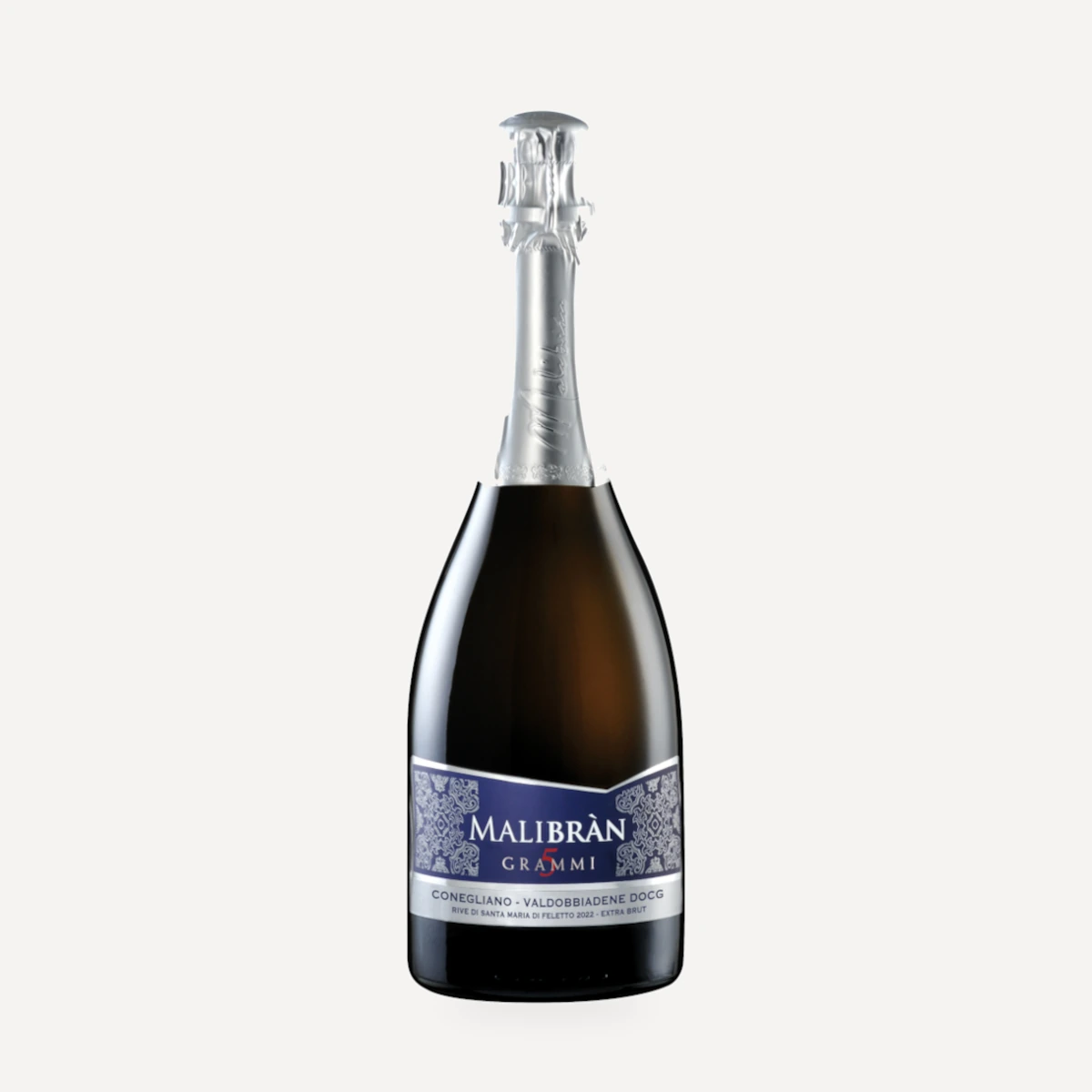
The estate subsequently obtained Biodiversity Friend quality certification. The vineyard used for 5 Grammi, in the Rive di Santa Maria di Feletto, achieved a record biodiversity score of 245, with 17 families of organisms identified, including some described as very rare.
Terroir
Malibran’s vines are distributed across the hills and adjoining areas of the Province of Treviso, with the estate based at Susegana. The core landscape lies in the Conegliano–Valdobbiadene hills, a succession of sloping vineyards, woodland and small settlements. Glera is the principal variety in the estate’s 15 ha of vineyards.
The mapped holdings extend through Susegana, Susegana Barriera, Santa Maria di Feletto, Collabrigo, Cozzuolo, Collalto, Sarmede and Ponte della Priula. This distribution places the estate’s varieties in distinct settings rather than concentrating them in a single continuous vineyard.
The single, particularly steep vineyard used for 5 Grammi lies in the Rive di Santa Maria di Feletto. Its clay soil incorporates morainic material and sandstone. The Sarmede site used for Boschera has clay derived from alluvial and morainic origins. At Susegana, the source area associated with Teatrale has loose, well-drained alluvial soil formed through centuries of sedimentation of gravel carried by floods of the Piave. The north-facing vineyard associated with Credamora has clay-ferrous soil of alluvial and morainic origin.
Vinificazione
Malibran farms 15 ha of vineyards, principally planted to Glera on hilly ground. Boschera, Incrocio Manzoni 13.0.25 and Raboso have been added to the estate’s plantings over more recent years.
The viticultural approach combines sustainable agriculture with traditional manual work. Vineyard care is treated as the first essential stage in attaining quality, and the family personally tends its grapes throughout the year. Its stated principles include respect for nature and natural cycles, low environmental impact and integration of farming into the surrounding landscape.
Malibran holds Biodiversity Friend quality certification, a voluntary standard for crop-producing farms committed to sustainable, low-impact agriculture integrated into the landscape. The certification assesses the variety and quantity of plant and animal life present within a territory. The 5 Grammi vineyard in the Rive di Santa Maria di Feletto received a record score of 245, with 17 families of organisms identified, including some very rare examples.
Training systems documented for individual sites include narrow, two-arched Sylvoz at Santa Maria di Feletto and in the source vineyard for Credamora, and both Sylvoz and Guyot for Boschera at Sarmede. Incrocio Manzoni 13.0.25 and Raboso are grown together at Ponte della Priula.
Malibran directly manages the complete chain from vineyard work and grape transformation through bottling and sale, consistent with its membership of FIVI, the Italian Federation of Independent Winegrowers.
The production cellar developed from the old granary that once formed the center of agricultural activity in the rural hamlet of Sottoriva. Renovation and enlargement transformed the historic building into the estate’s modern center for vinification and wine production. Both the architecture and the estate’s approach to vinification and sparkling-wine production are conceived as a dialogue between contemporary requirements and inherited practice.
The range demonstrates two broad sparkling-wine traditions. Conegliano Valdobbiadene DOCG wines form one part of production, while Malibran’s longstanding ColFondo Agricolo work centers on Glera naturally refermented in bottle and left undisgorged. Sottoriva, made for more than 50 years, matures in bottle on its deposited yeasts and is unfiltered. Credamora follows the same natural bottle-refermentation tradition and has been vinified without added sulfites since its first 2012 vintage. Malibran is a member of the ColFondo Agricolo group of hillside growers dedicated to this expression of Glera.
Filosofia
Malibran defines itself through attachment to the land and through the work of winegrowers who know the vineyards and cellar directly. The family’s aim is to make only those wines for which its own sites are naturally suited, preserving a close relationship between the finished wine, the individual terroirs and the local wine culture.
The estate presents vineyard work as the foundation of quality. Its farming philosophy combines sustainable agriculture, traditional manual labor and respect for nature and its cycles, understood as a contemporary development of the family’s rural origins. Biodiversity is treated as part of agricultural responsibility, with the grower cast as a custodian of the territory’s environmental integrity.
In the cellar, Malibran seeks a balance between modernity and tradition. This applies both to the renewed historic building and to its vinification and sparkling-wine practices. The stated goal is balance without losing the wine’s connection to the land and its origins.
Family continuity is central to this identity: Gregorio, Girolamo and Maurizio represent three generations of vineyard and cellar work. Independent control from vine to bottle, alongside the preservation of the col fondo tradition, gives practical expression to those family values.
Vini
Sottoriva
5 Grammi
Credamora
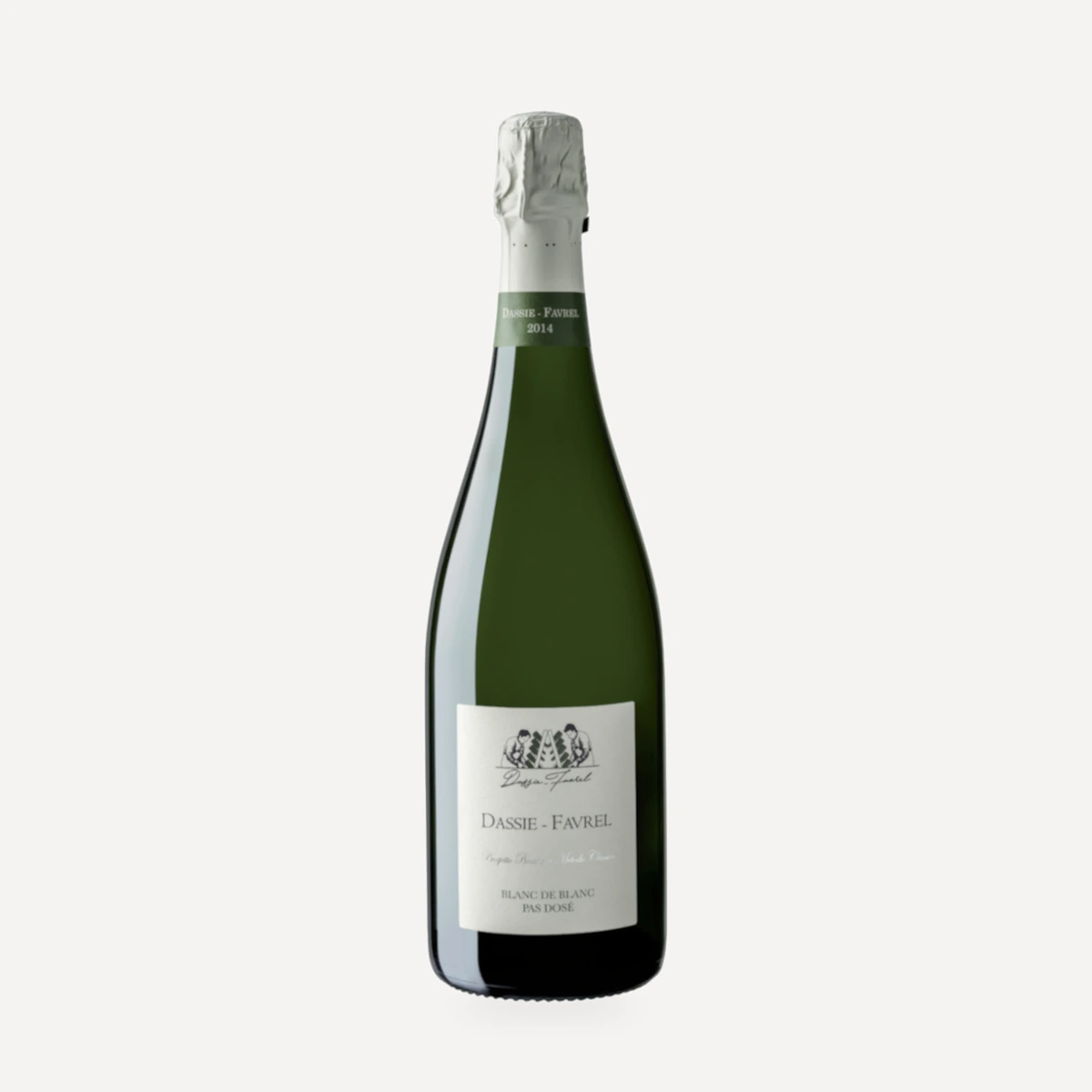
Dassiè – Favrel
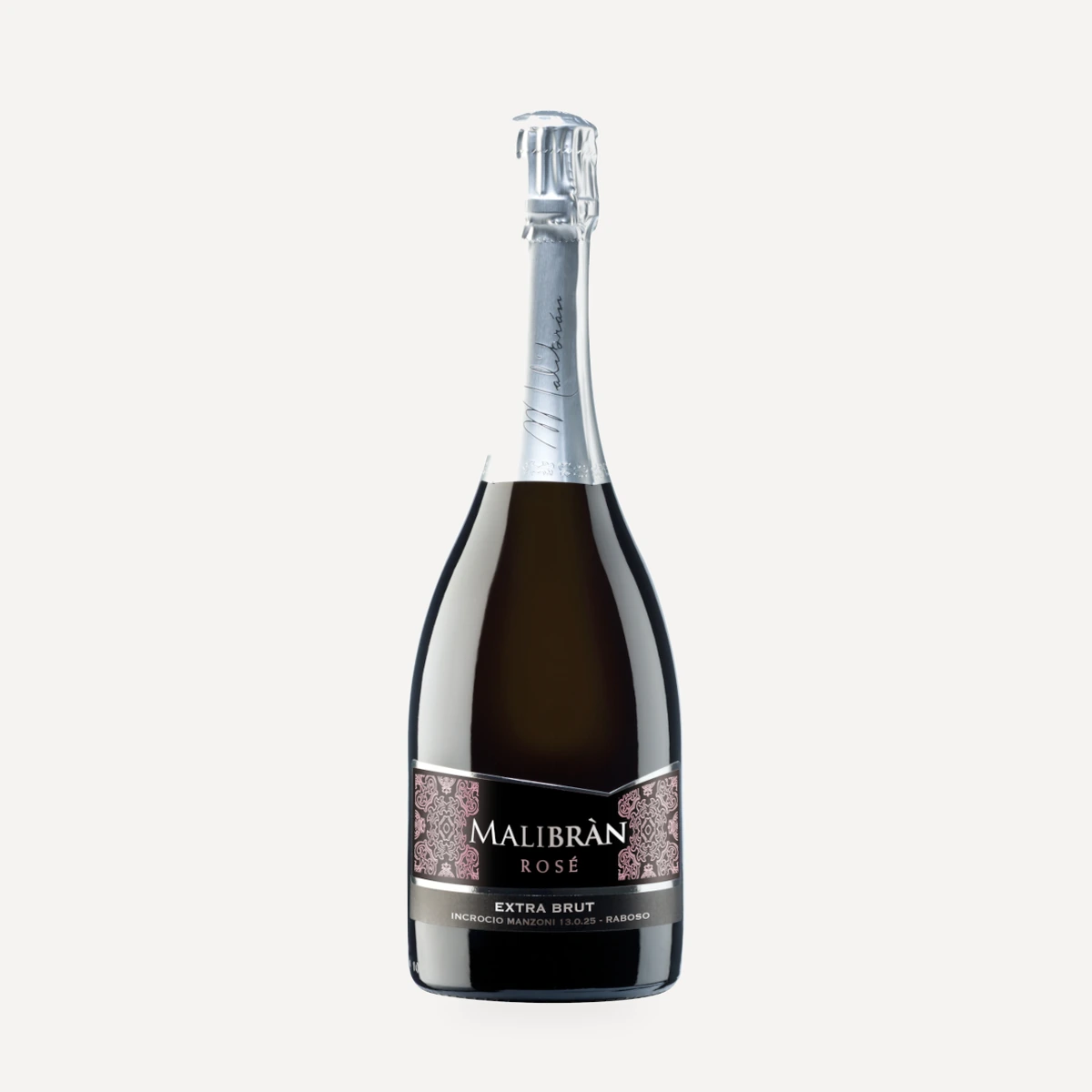
Incrocio Manzoni 13.0.25 – Raboso Extra Brut Rosè
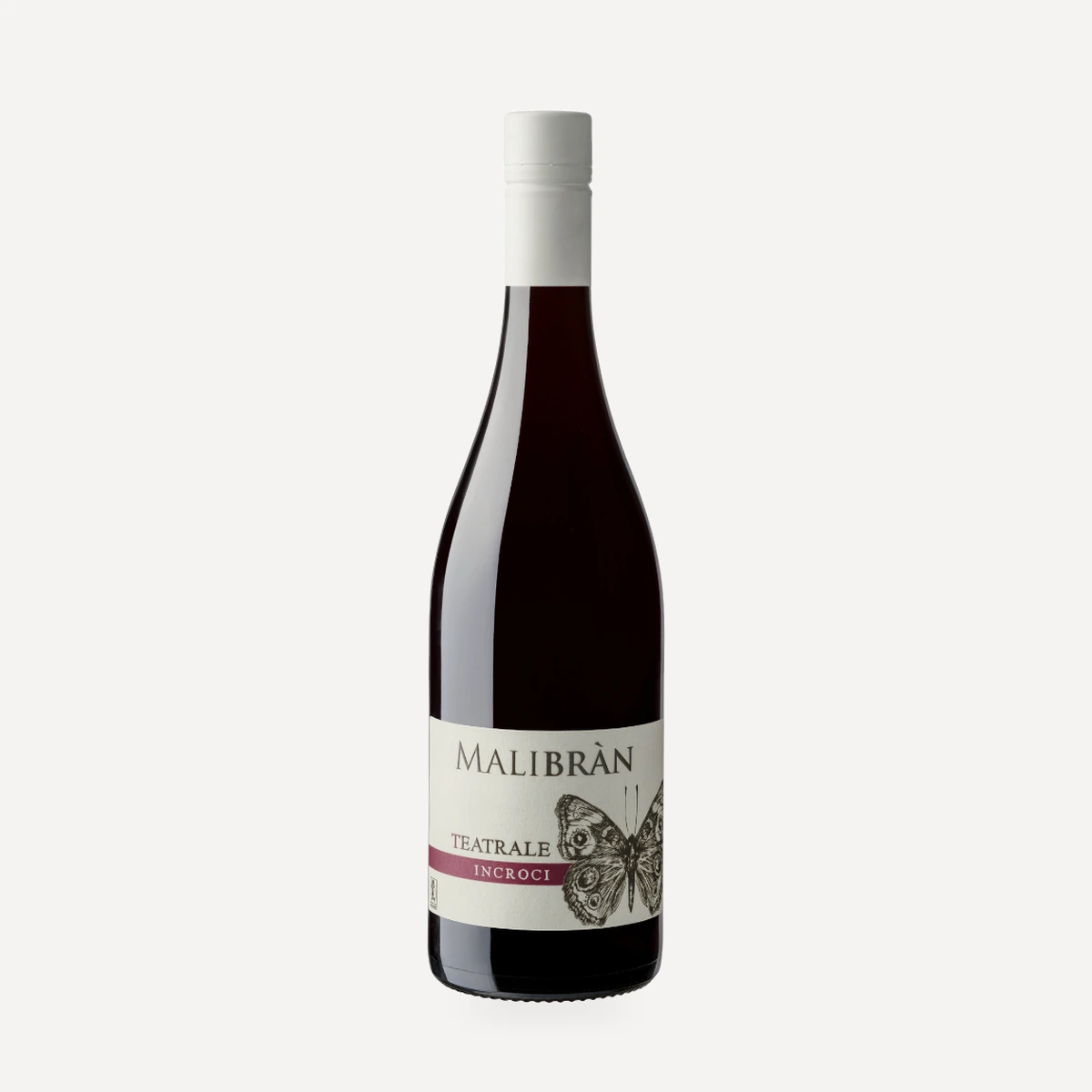
Teatrale
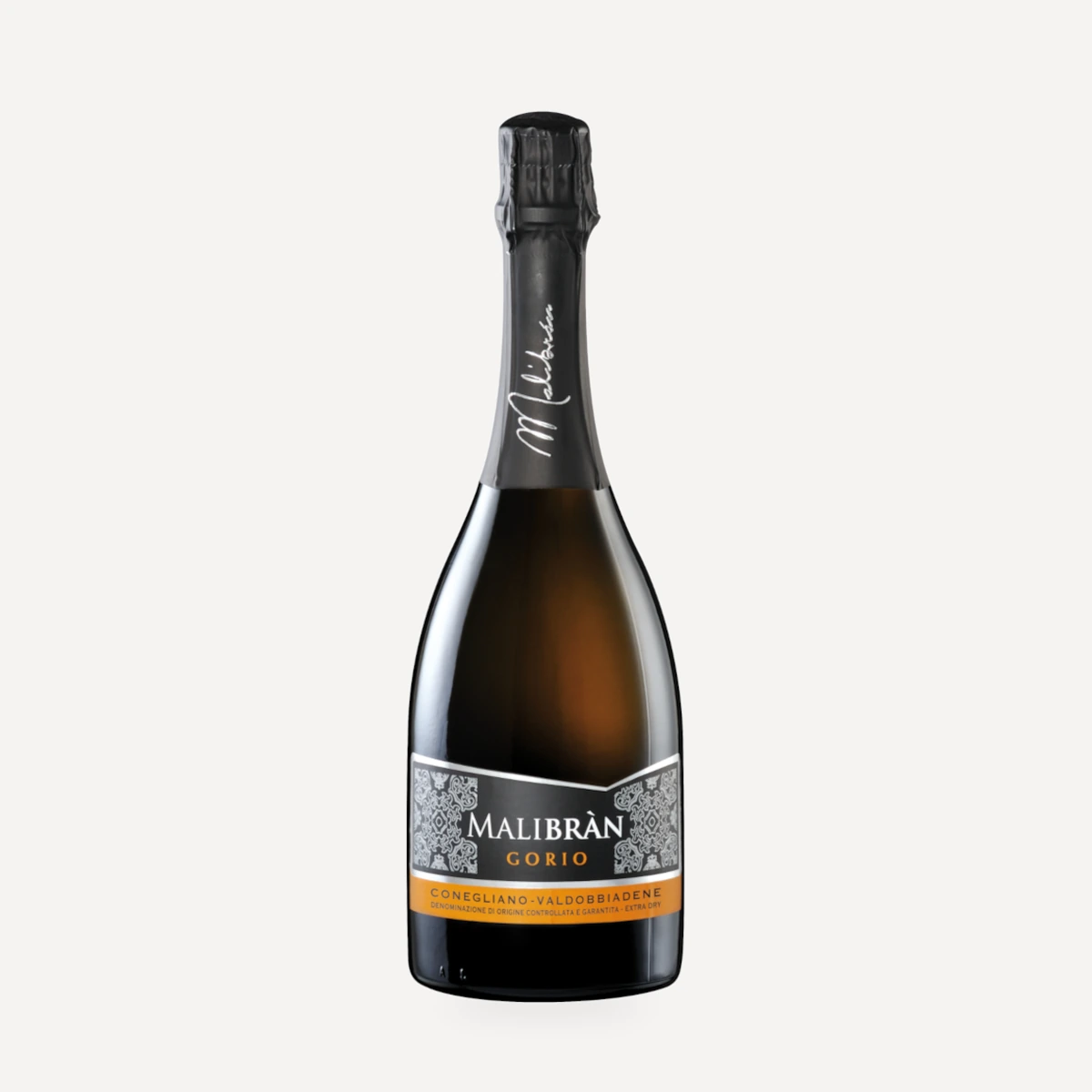
Gorio
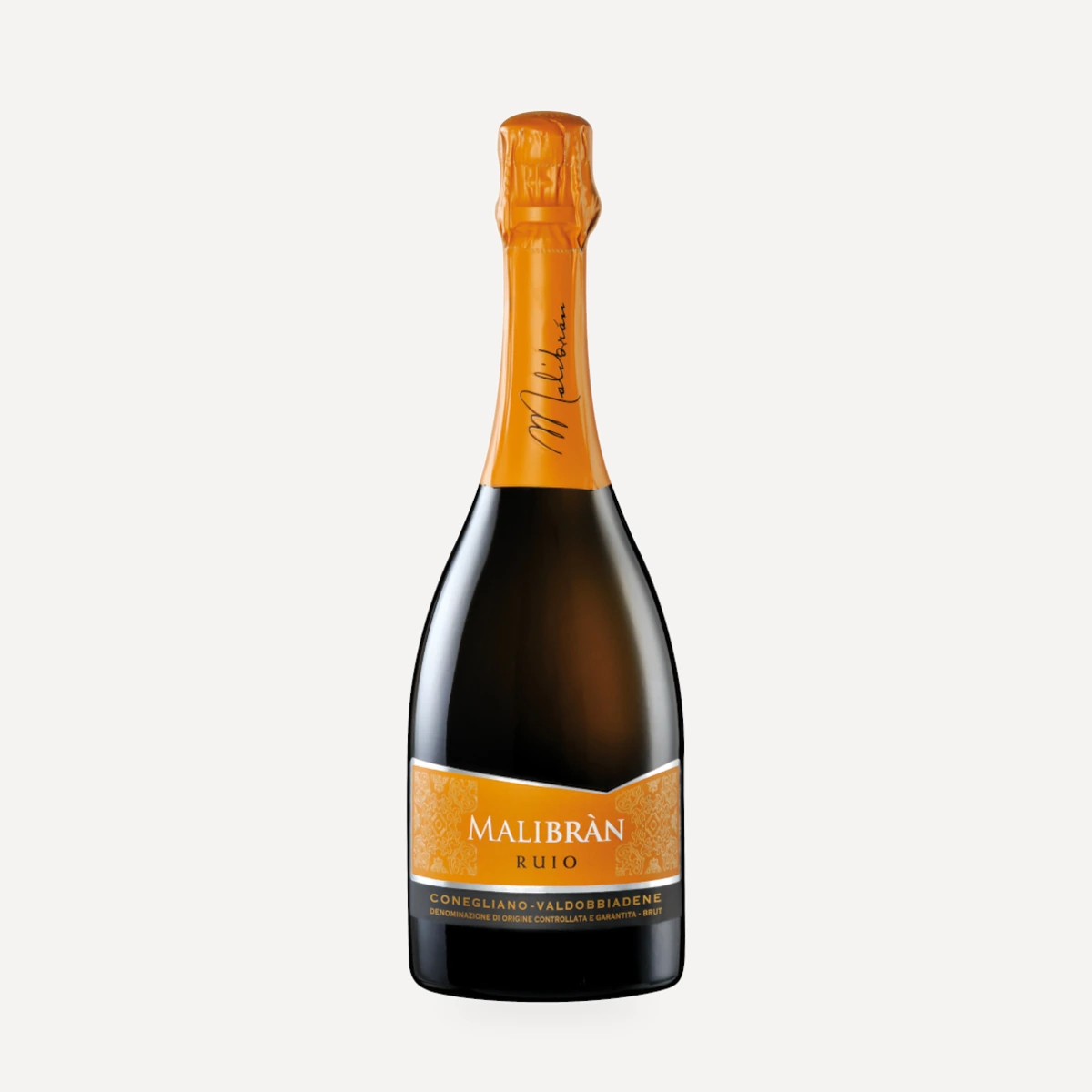
Ruio